Mom Who Pushed Her 1-Year-Old Into a Pool Says the Viral Moment Was Eight Weeks in the Making
The video begins with a moment that can be difficult to watch without context.
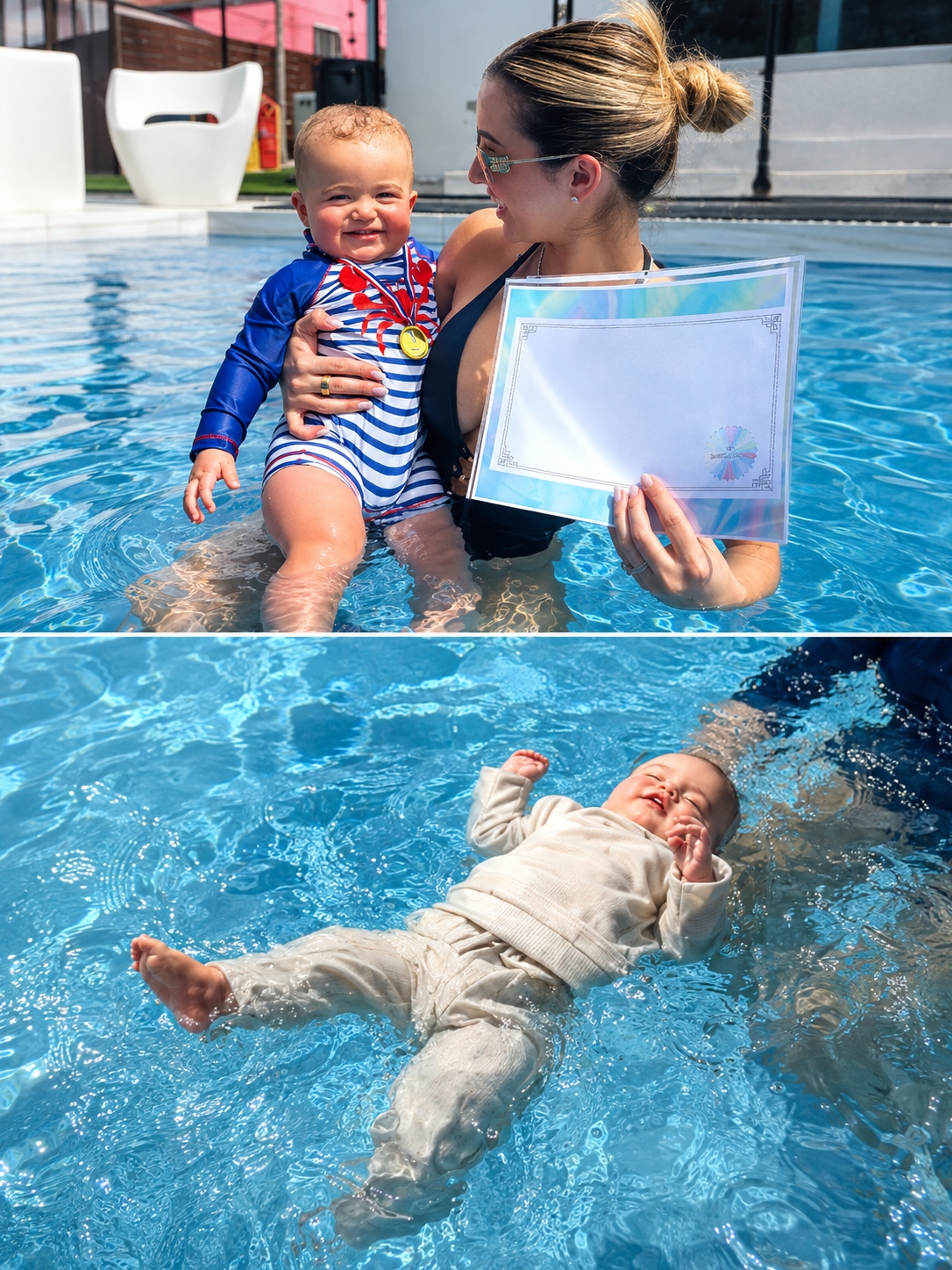
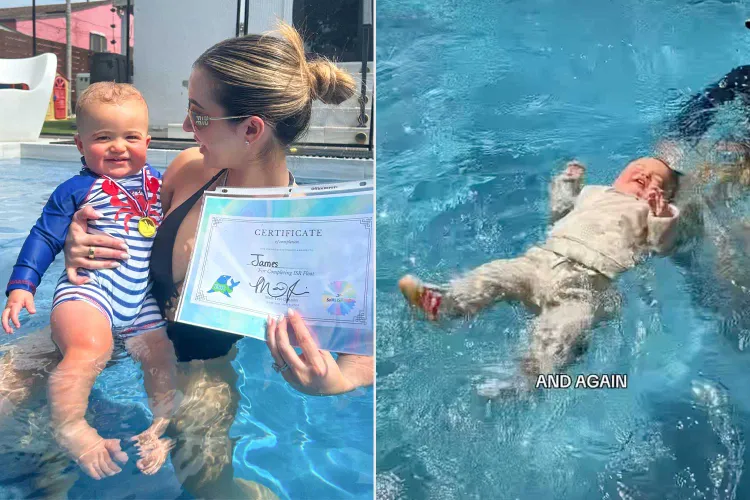
Rachel Santana Krtausch pushes her 1-year-old son, James, into a swimming pool while he is wearing heavy winter clothes and sneakers. He drops beneath the surface, then calmly turns onto his back and begins to float.
His instructor remains only a few feet away, watching closely and prepared to step in.
To millions of viewers scrolling past the clip, it looked sudden and alarming. To Krtausch, it was the final step in a carefully structured eight-week survival-swimming program designed to prepare her son for one of a parent’s greatest fears: an accidental fall into water.
The Miami mother knew the video might provoke strong reactions. What the brief clip did not show was the preparation behind it—32 short lessons, gradual instruction and a mother who had spent weeks watching her baby learn how to breathe, rotate and stay afloat.
“It was his final test,” Krtausch explained.
Why Water Safety Felt Urgent
Krtausch, 31, is a registered nurse living in South Florida, where pools, beaches and other bodies of water are part of everyday life.
For her, water safety was not an abstract concern.
Miami’s warm climate means families can encounter water throughout the year. James had already spent time splashing in pools and visiting the beach with his parents, but Krtausch understood that being comfortable around water was not the same as knowing what to do during an emergency.
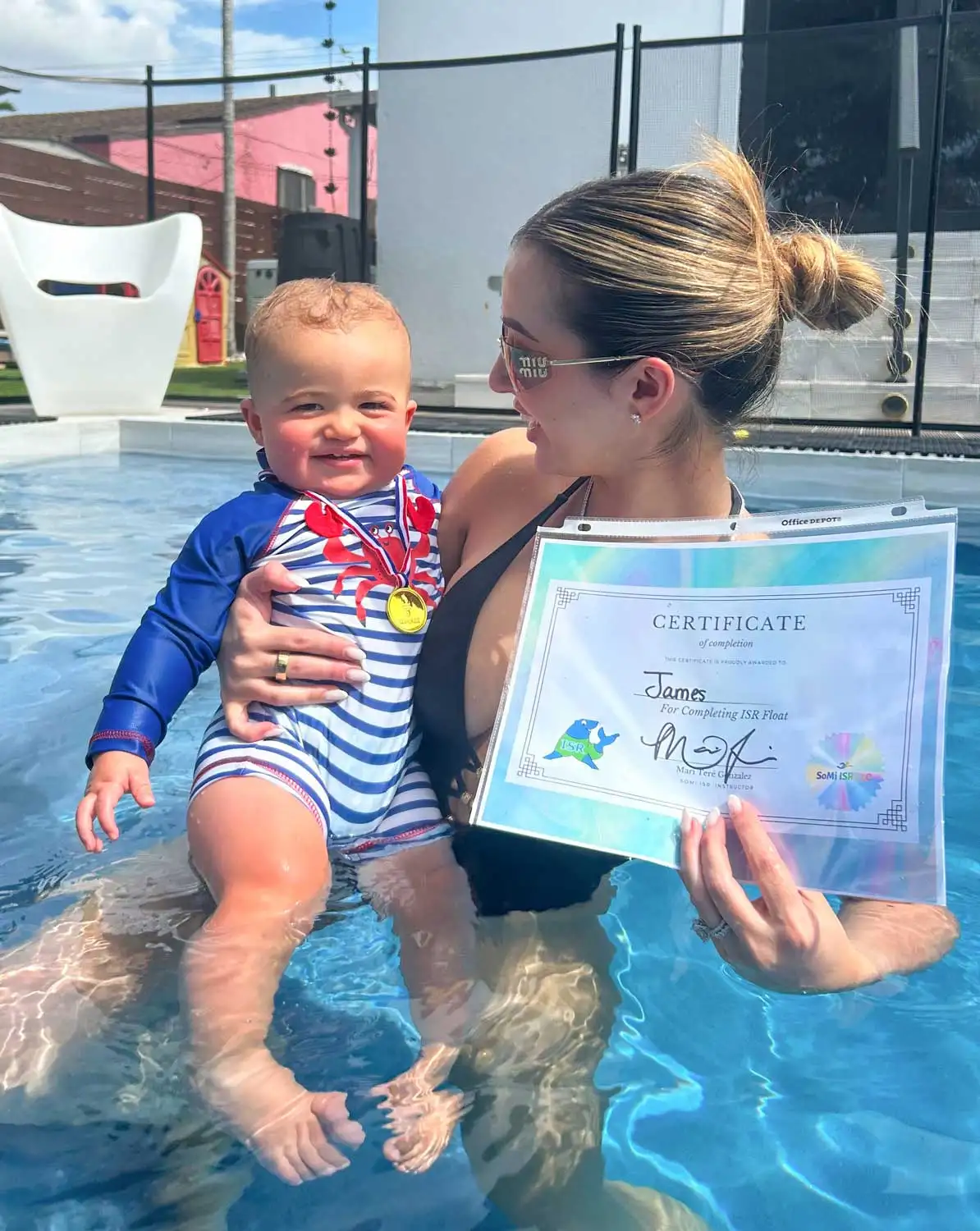
She enrolled him in Infant Swimming Resource, commonly known as ISR, when he was 9 months old.
The program teaches infants and young children survival skills intended to help them respond after unexpectedly entering the water.
Krtausch searched through the official directory of certified instructors and chose SoMi ISR in Miami. James then began a demanding routine: four lessons each week for eight weeks.
Each session lasted only 10 minutes.
The short schedule was designed around the needs of a baby, but the repetition required the family to reorganize much of its weekly routine.
The First Lessons Were Difficult to Watch
James did not immediately enjoy the experience.
Krtausch said he strongly resisted the lessons at first. The water, movements and expectations were unfamiliar, and he reacted like a baby placed in a challenging new situation.
Watching him become upset was difficult for his mother.
She knew why she had enrolled him, but understanding the goal did not eliminate the emotional strain of seeing her child uncomfortable.
Krtausch said parenthood sometimes requires making choices that feel hard in the moment because of the protection they may provide later.
She credited James’ instructor, Mari, with helping both mother and child through those early sessions.
Mari remained calm, patient and attentive to James’ signals. Her steady approach helped Krtausch trust the process while James gradually became more confident.
The skills were introduced step by step.
He learned breath control. He practiced rotating onto his back. He learned to find a floating position and maintain it independently.
Only after those abilities became familiar did the instructor introduce different ways of entering the water.
By the end of the program, Krtausch said the difference in her son was remarkable.
The baby who had once become overwhelmed during lessons could now respond calmly, roll over and breathe while floating.
Why He Wore Winter Clothes
James first completed a survival test while wearing lightweight summer clothing.
His final assessment added another challenge.
He was dressed in heavy winter clothes and sneakers before entering the pool.
To some viewers, that detail made the video appear even more disturbing. Krtausch said it was included because real accidents do not happen only when children are wearing swimsuits.
A child may fall into water while dressed in pajamas, everyday clothes or shoes. Once soaked, those items become heavier and can make it more difficult to rotate or remain afloat.
The winter clothing was therefore intended to simulate a more demanding emergency.
Krtausch said the entry was meant to catch James by surprise, just as an actual fall might. His instructor was already in the pool and ready to intervene immediately if he struggled.
When James entered the water, the wet clothes and sneakers pulled against him.
He still managed to turn over.
He found his back, held the floating position and kept his face above the surface.
For Krtausch, the seconds felt deeply emotional.
She trusted the instructor and knew how much preparation had taken place, but she was still watching her baby enter the water fully dressed.
The nervousness disappeared only after she saw him respond exactly as he had been taught.
She felt proud, relieved and grateful.
The Clip Left Out the Preparation
As the video spread online, Krtausch noticed a common misunderstanding.
Some viewers assumed she had simply pushed James into a pool and expected instinct to take over.
She said that interpretation could not have been further from the truth.
The viral moment came only after eight weeks of consistent training with a certified instructor. Every movement James used in the test had been introduced and practiced beforehand.
The environment was controlled.
His instructor was within reach.
The clothing challenge was planned.
The purpose was not to frighten him for a dramatic video. It was to see whether he could use his training under conditions closer to an accidental fall.
Krtausch also emphasized that survival swimming is not a replacement for supervision.
Even a child who can roll and float must still be watched closely around water. The lessons add another layer of protection; they do not make a pool, beach or lake safe without an attentive adult.
That distinction became central to the message she hoped viewers would take from the video.
Eight Weeks Cost About $1,400
The program required a substantial commitment from the family.
Krtausch said the eight-week course cost approximately $1,400.
Beyond the price, the schedule required four lessons every week. The family had to arrange its days around the sessions and remain consistent long enough for James to build the skills gradually.
Krtausch recognized that many families who want similar instruction may not be able to afford it.
After James completed the program, she partnered with SoMi ISR to create the James Scholarship.
The scholarship will provide one Miami family with the same eight-week course at no cost, covering the approximately $1,400 value.
For Krtausch, the scholarship became a way to turn the attention around her son’s video into practical help for another child.
The viral clip had already started a conversation.
She wanted that conversation to lead to access.
Graduation Did Not End His Training
James will continue practicing even after completing the final assessment.
Krtausch said he is expected to begin maintenance lessons every other week. As he grows, the family will continue following the instructor’s recommendations before eventually moving him into more traditional swimming instruction.
The goal is to preserve the skills rather than assume one course will last forever.
James is still a baby.
His body, coordination and understanding will change rapidly, which means his training must develop with him.
Krtausch hopes he never faces a real emergency in which he needs to float alone.
Still, knowing that he has practiced the response gives her greater peace of mind.
That is the difficult truth behind the celebration.
A parent teaches a survival skill while hoping the child will never need to use it.
A Frightening Image With a Protective Purpose
The short video captured only the most dramatic seconds of James’ training.
It did not show his first uneasy lessons, the patient instructor beside him or the weeks spent learning each movement separately.
It did not show the family reorganizing its schedule, paying for the course or watching his confidence grow.
Without those details, the image of a mother pushing a fully dressed baby into a pool could easily appear reckless.
With them, the moment becomes something else: a carefully supervised graduation test at the end of a long process.
Krtausch posted the clip to raise awareness about water safety and show what structured instruction had taught her son.
She expected questions.
She did not expect the moment to reach so many people.
Now she hopes the attention encourages families to think seriously about drowning prevention, professional instruction and the importance of constant supervision.
The most important part of the video was not the push.
It was what happened next.
A 1-year-old boy entered the water unexpectedly, found the skill he had practiced for eight weeks and turned himself toward the air.