New Jersey Mother Charged After Missing 17-Year-Old Son Found Hiding in Basement Crawl Space

A New Jersey mother is facing a criminal charge after police say an extensive search for her supposedly missing 17-year-old son ended with officers discovering the teenager inside a basement crawl space at her own home.
Jennifer Buckley, of East Brunswick, has been charged with obstructing the administration of law after investigators concluded that she allegedly knew where her son was while officers devoted significant time and resources to finding him.
The case began on the evening of September 15, when the teenager’s father contacted East Brunswick police after his son failed to arrive for a scheduled custody drop-off.
What initially appeared to be a potentially dangerous missing-child situation soon took an unexpected turn.
Police say discrepancies began emerging in Buckley’s account.
When detectives returned to her residence and conducted another search, they found the teenager alive — concealed inside a crawl space in the basement.
Authorities say he had been at the house during the search.
Father Called Police After Son Never Arrived
The investigation began at approximately 7:47 p.m. on September 15.
The teenager had reportedly been expected at his father’s home around 6 p.m. but never arrived.
Concerned by his absence, the father contacted police.
Buckley allegedly told officers that she could not locate her son.
According to police, she also said the teenager had been upset and did not want to go to his father’s house.
More alarmingly, Buckley reportedly expressed concern that the boy could be a danger to himself.
Given his age and the possibility that he might be experiencing an emotional crisis, officers treated the disappearance seriously.
The teenager was entered into the National Crime Information Center database as a missing person, making his information available to law enforcement agencies more broadly.
Patrol officers and detectives then began what police described as an extensive effort to locate him.
Police Devoted Significant Resources to the Search
Missing juvenile cases can escalate quickly, particularly when authorities receive information suggesting the child may be at risk of self-harm.
That appears to have been the situation facing East Brunswick officers.
Police personnel dedicated significant resources to searching for the teenager while detectives began reconstructing his movements and speaking with people connected to the family.
Investigators were operating under the belief that the boy’s location was unknown.
But as detectives continued questioning those involved, they said aspects of Buckley’s story did not appear to match the information they were gathering.
Police have not publicly detailed every inconsistency that raised suspicion.
Those discrepancies were apparently significant enough, however, that investigators decided to return to the mother’s residence.
That second look changed the entire case.

Teenager Found Inside Basement Crawl Space
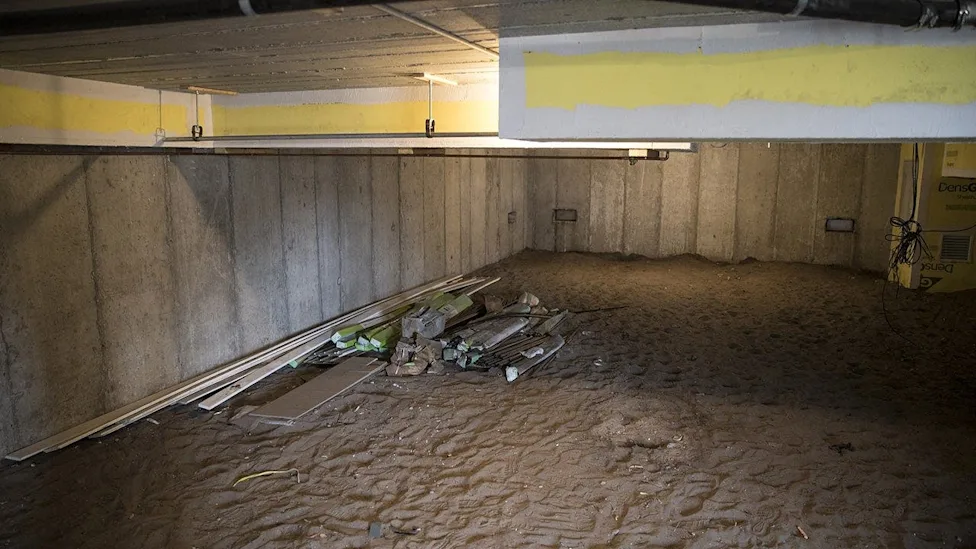
During a search of the home, officers discovered the 17-year-old hiding inside a crawl space in the basement.
He was alive and unharmed.
The discovery immediately transformed the investigation from a missing-person search into a potential obstruction case.
According to authorities, detectives determined that the teenager had remained at the residence during the period when police were trying to locate him.
Investigators further allege that Buckley knew he was there and helped conceal his whereabouts from officers.
Police have not released a detailed description of the crawl space or said how long the teenager remained inside it at any one time.
They have also not publicly explained whether he entered the space on his own initiative or exactly how his mother allegedly assisted him.
Those details may emerge later through court proceedings.
Mother Charged With Obstruction
Buckley was arrested and charged with obstructing the administration of law under New Jersey law.
The charge generally involves intentionally preventing or interfering with a public servant performing an official function.
In this case, police allege that Buckley’s statements caused officers to expend time and resources searching for a teenager whose location she already knew.
She has not been convicted, and the allegation will still have to be established through the legal process.
Buckley is expected to appear in court on October 6.
It was not immediately clear from publicly available information whether she had retained an attorney who could comment on her behalf.

Police Chief Says False Information Can Put Others at Risk
East Brunswick Police Chief Frank LoSacco praised the officers and detectives involved in the search while emphasizing the consequences of misleading law enforcement.
Missing-child investigations often require departments to redirect personnel quickly, sometimes pulling officers away from other emergencies.
When authorities believe a juvenile may be in immediate danger, the response can involve multiple patrol units, detectives, database alerts and coordination with other agencies.
Police say that is why knowingly providing false information is not treated as a harmless act.
Resources committed to one false lead may be unavailable to another person facing a genuine emergency.
In this case, the concern was heightened because Buckley allegedly suggested that her son could be a danger to himself.
That possibility meant every hour mattered.
Why the Teen Did Not Want to Go to His Father Remains Unclear
One of the biggest unanswered questions is why the teenager apparently did not want to go to his father’s home.
Police have only said Buckley told them the boy was upset and reluctant to make the scheduled drop-off.
Authorities have not publicly described the custody arrangement between the parents or disclosed whether there had been previous disputes involving the teenager.
They have also not accused the father of wrongdoing.
Online speculation has already tried to fill in those gaps, but there is currently no verified evidence supporting theories about why the teenager wanted to remain with his mother.
That distinction matters.
The criminal allegation currently concerns Buckley’s alleged interference with the police investigation — not the broader family relationship or custody situation.
Teen Was Found Safe
For police and the boy’s family, the most important immediate outcome was that the teenager was located alive and physically unharmed.
Missing-child cases can have very different endings, and investigators initially had reason to believe this case could involve a teenager in serious emotional danger.
The discovery in the basement crawl space eliminated those immediate fears.
At the same time, however, it created a new set of questions.
Why was the teenager hiding?
Whose idea was it?
How much did Buckley know?
And what exactly did she tell officers as they continued searching?
Those questions are now likely to become central to the criminal case against her.
An Unusual Missing-Person Case
The incident stands out because of the contrast between the scale of the search and where the teenager was ultimately found.
Police entered his information into a national missing-person database.
Officers searched for him.
Detectives followed leads.
His father waited for answers.
And investigators were reportedly being told that his location was unknown.
Yet according to police, the teenager never left his mother’s home.
Cases like this can be frustrating for investigators because missing juvenile reports are treated as emergencies for good reason.
Authorities cannot assume that a teenager who fails to arrive somewhere is simply hiding or refusing to cooperate.
They must consider possibilities ranging from runaway behavior to self-harm, exploitation or abduction until evidence shows otherwise.
That is why Buckley’s alleged deception has become the focus of the case.
Court Proceedings Will Determine What Happened
The police account currently provides only one side of the story.
Buckley will have an opportunity to respond to the charge and challenge the state’s evidence.
The teenager’s perspective has also not been publicly detailed, and because he is a minor, authorities have released relatively little information about him beyond what was necessary during the missing-person search.
For now, the known timeline is relatively simple.
A 17-year-old failed to arrive at his father’s home on September 15.
His mother told police she could not find him and raised concerns about his safety.
Officers launched a widespread search.
Detectives noticed inconsistencies.
They returned to the home.
And there, inside a crawl space in the basement, they found the teenager they had been looking for.
He was safe.
His mother, however, was arrested.
The next stage of the case will take place not in a missing-person investigation, but in court, where prosecutors will have to prove that Jennifer Buckley intentionally obstructed officers who believed they were trying to find a teenager in danger.