Police Came to Ask About Shoplifting — Then the Encounter Uncovered Two Active Warrants
A police visit that began with questions connected to a shoplifting investigation quickly became something far more complicated after officers discovered that two people at the residence appeared to have active arrest warrants.
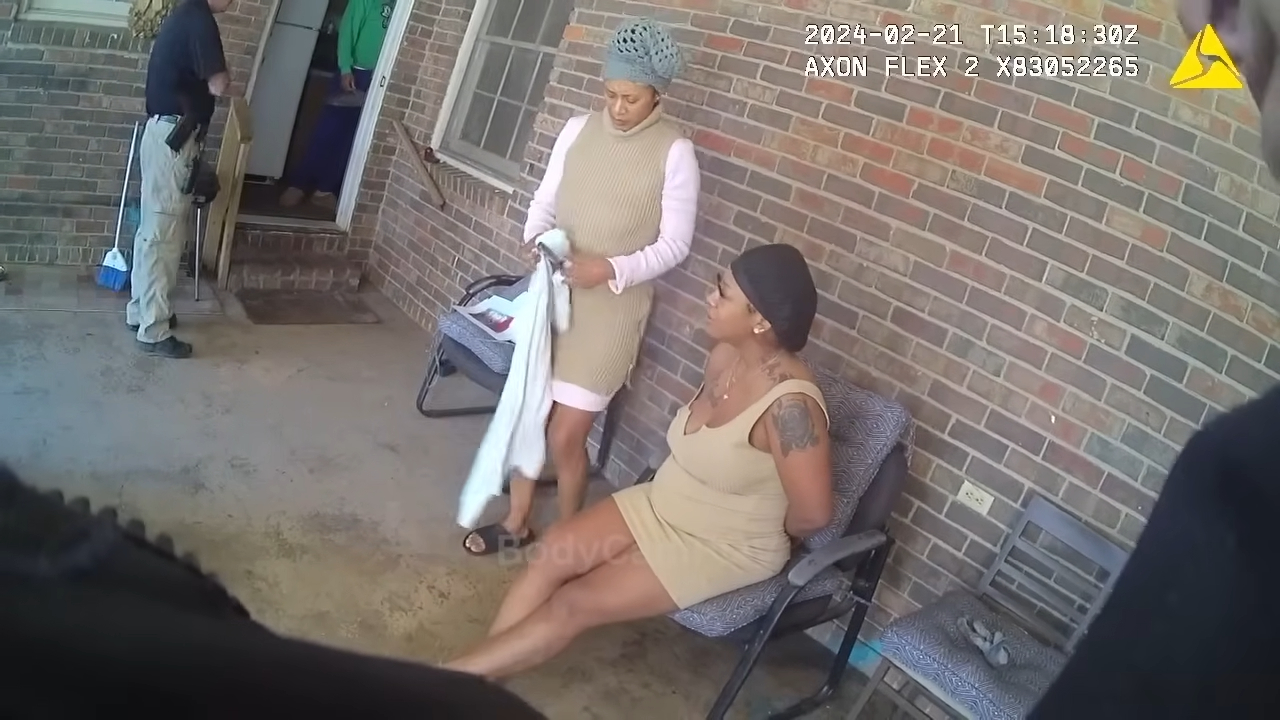
Body-camera footage dated February 21, 2024, captures the tense encounter outside a brick home, where officers speak with a woman and several members of her family. What initially appears to be a follow-up investigation soon shifts into a dispute over an outstanding traffic-related warrant, an alleged attempt to pull away from police, and the unexpected discovery that a second person inside the home was also wanted.
By the end of the footage, officers are dealing with two separate warrants — and a scene that bears little resemblance to the reason they apparently came to the property in the first place.
A Shoplifting Investigation Takes an Unexpected Turn
The confrontation begins with officers discussing information connected to a woman and a vehicle at the residence.
The conversation references Madison County and a shoplifting investigation, but one officer soon makes an important distinction.
He tells the woman that she does have an arrest warrant — but says it is not related to the suspected shoplifting.
Instead, according to the officer, the warrant is connected to a traffic matter.
That revelation immediately changes the tone of the encounter.
The woman reacts with disbelief and repeatedly challenges what police are telling her. Family members also become involved, questioning whether officers actually have a warrant and arguing over what police are legally entitled to do.
At one point, the woman insists there is no valid warrant. Another person at the home similarly disputes the officers’ claims and urges the woman to know her rights.
Police, however, maintain that the warrant is showing as active in their system.
What had begun largely as a conversation now becomes an arrest.
Tension Rises as Officers Attempt to Take Her Into Custody
As officers move to detain the woman, the interaction becomes noticeably more physical and heated.
The body-camera footage becomes chaotic for several moments as the woman and officers move near the doorway and covered parking area. She loudly protests the arrest while relatives continue questioning police.
After she is handcuffed, the woman is seated in a chair outside the home.
The dispute does not end there.
An officer indicates that she had pulled away during the arrest and discusses an obstruction-related allegation. The woman strongly disagrees with that characterization, arguing that she had not been trying to fight the officers.
Her frustration is obvious.
She questions how pulling away could be treated as obstruction and repeatedly argues that police are misrepresenting what happened.
The footage itself captures only part of the physical encounter and does not establish the final disposition of any additional charge. However, the officers clearly discuss her movement during the arrest as potentially constituting obstruction of a law-enforcement officer.
For the woman, that means an encounter that already involved an outstanding warrant could now create an additional legal problem.
But the situation was not finished escalating.
Police Ask About Another Person Inside the House
While the woman remains detained outside, officers begin asking whether another person is at the residence.
Family members initially appear reluctant to provide information, and the atmosphere remains confrontational.
Police eventually explain why they are asking.
According to an officer heard in the footage, the second individual has a separate warrant connected to an allegation involving abandonment of a child.
The officer tries to persuade those at the residence to have the man come outside voluntarily.
His message is straightforward: if the man comes out and cooperates, the situation can be handled relatively easily. If he refuses, the officer warns, the sheriff’s office could become involved in locating and arresting him.
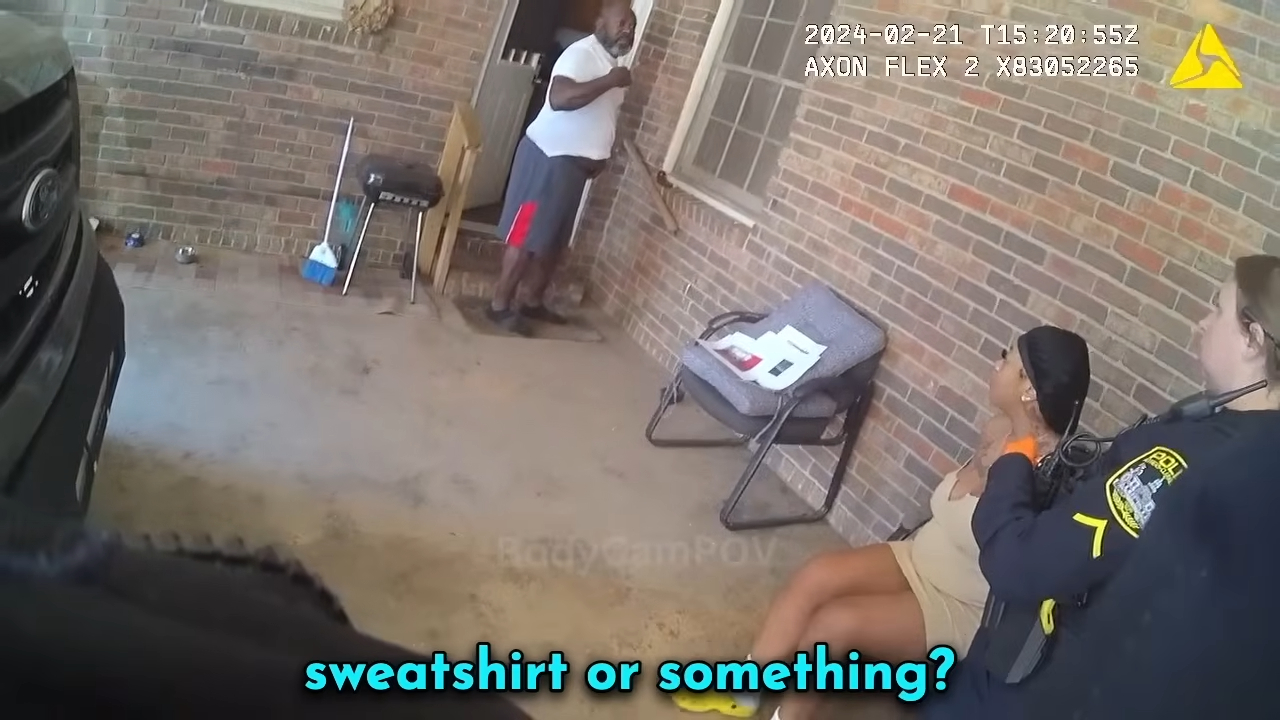
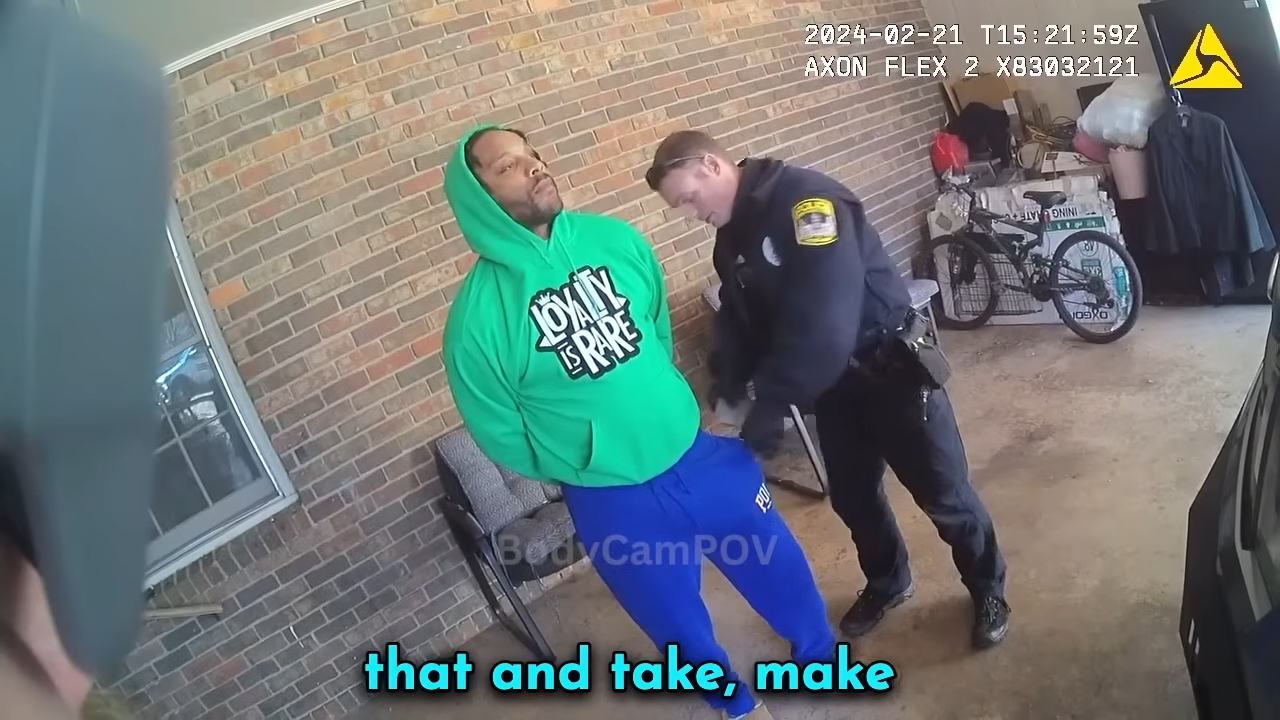
The family continues arguing with police, but eventually a man wearing a bright green sweatshirt emerges.
An officer asks if he is Jared.
The encounter then shifts to the second warrant.
The Man Says the Warrant Was Already Handled
Unlike the earlier struggle involving the woman, the man’s interaction with police is considerably calmer.
Officers place him in handcuffs while explaining that a warrant associated with his name is appearing as active.
The man does not appear to dispute his identity, but he does dispute the status of the case.
He tells officers that he believed the matter had already been taken care of.
That claim leads to another important moment in the footage.
Rather than simply dismissing his explanation, officers appear to double-check the information. The man remains cooperative as they discuss the warrant and the possibility that something may not have been updated correctly.
But the officer ultimately tells him that the warrant is still showing in the system.
The body-camera footage captures a common source of confusion during warrant arrests: a suspect may genuinely believe a court matter has been resolved, while law enforcement is operating from records that continue to list the warrant as active.
From the officers’ perspective, the information available to them at the scene determines what happens next.
Two Arrests From One Police Visit
Eventually, both detainees are moved toward police vehicles.
Officers search them before transport and continue explaining what will happen next.
The man remains comparatively calm, while the woman continues expressing frustration and asking family members to make phone calls on her behalf.
The extraordinary part of the encounter is how quickly its purpose changes.
Police arrived dealing with questions surrounding suspected shoplifting.
They then informed one woman of an unrelated traffic-related warrant.
Her reaction during the arrest led officers to discuss a possible obstruction allegation.
Then, while still at the same residence, officers discovered that a second person they were asking about apparently had a separate active warrant involving an entirely different matter.
Within minutes, one investigative visit had effectively become multiple law-enforcement actions.
The Footage Shows Only Part of the Legal Story
Body-camera footage can document what officers and civilians said and did during an encounter, but it does not by itself establish guilt.
The shoplifting accusations referenced during the conversation remain allegations. The videos also do not show the full court records behind either warrant, nor do they reveal the ultimate outcome of any obstruction allegation or other criminal proceeding.
Still, the footage offers a striking look at how rapidly a routine investigative visit can change once officers begin checking names, vehicles and outstanding records.
A conversation about shoplifting became an arrest over an unrelated warrant.
That arrest became an argument over obstruction.
And before officers left the property, another person inside the same home was also being detained over a second active warrant.
What began as officers asking questions at a front door ended with two people being taken toward police vehicles — all in the space of one increasingly complicated encounter.