The Day Twenty Children Stepped Off a Train—and Turned a Prairie Town Into Something More Than a Community
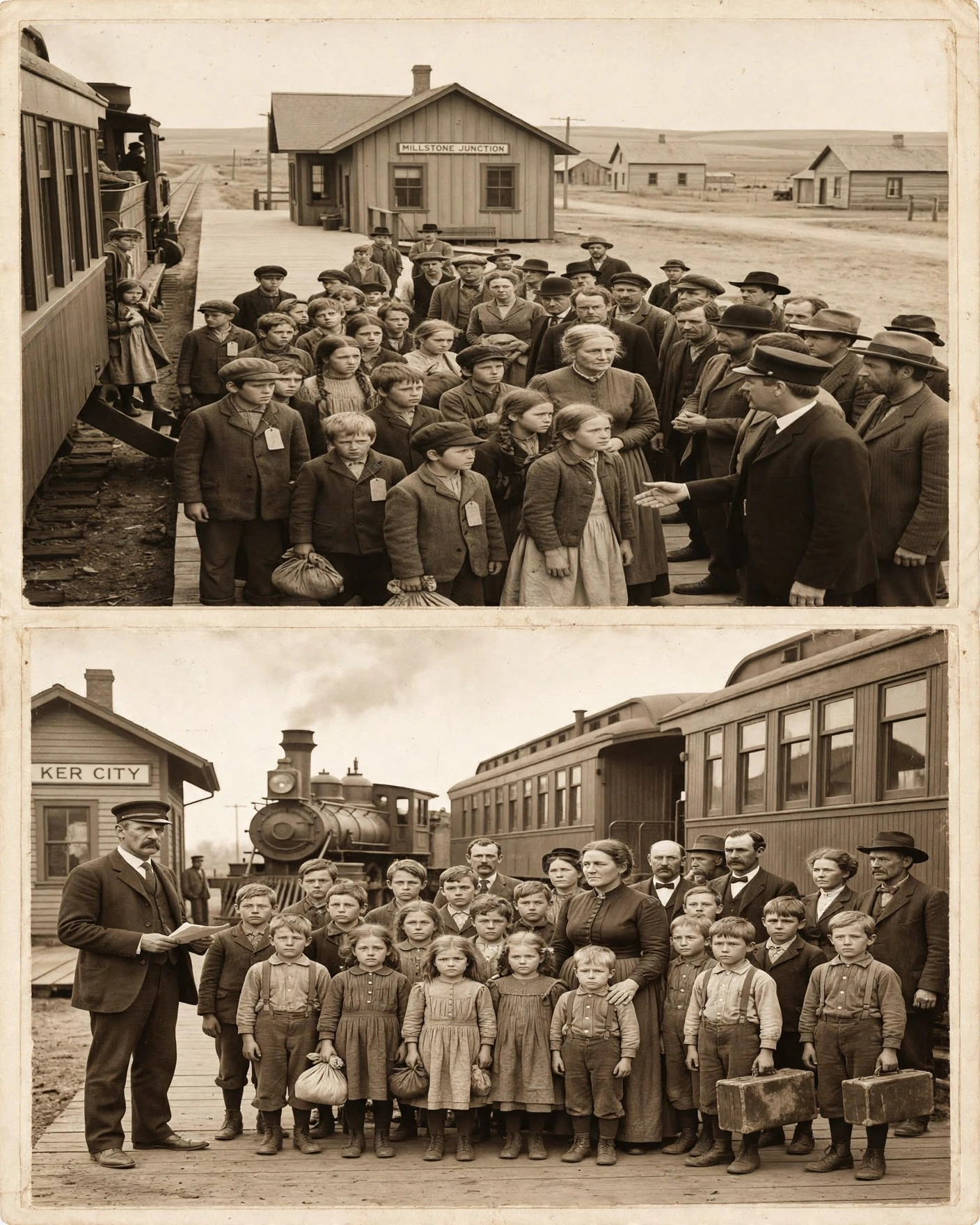
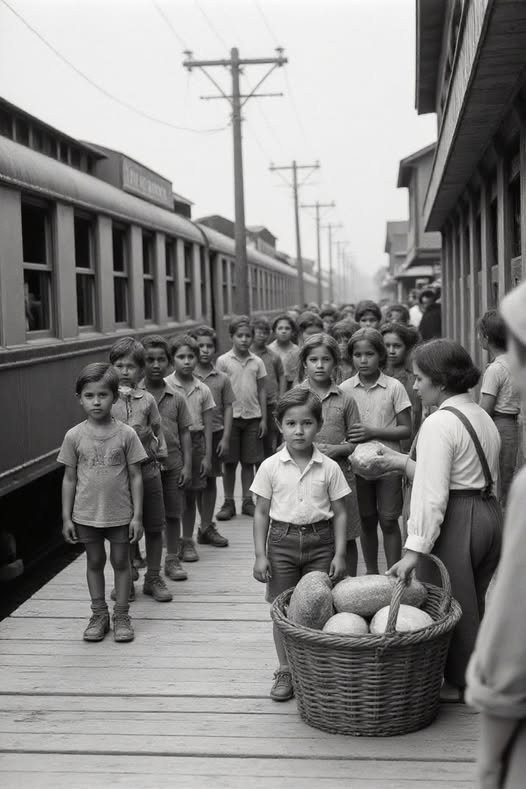
The train slowed as it approached the small prairie town, its whistle echoing across open land that stretched farther than most of the arriving children had ever seen.
Inside one of the cars sat twenty boys and girls, clutching small bundles that held everything they owned. They had traveled far—far from crowded cities, far from the only lives they had ever known—and now they were about to step into a place that would shape their futures in ways none of them could imagine.
For the people waiting at the station, it was just another day in a quiet settlement.
But when those children stepped onto the platform, everything began to change.
The arrival was part of what became known as the Orphan Train movement, a program that relocated thousands of children from overcrowded urban areas to rural communities across America. Many of these children had been left without families, living in poverty, or struggling to survive in environments where opportunity was almost nonexistent.
The idea behind the program was simple, at least on paper: give children a chance at a better life by placing them with families who could care for them.
But in reality, the experience was often uncertain, emotional, and deeply personal—for both the children and the communities receiving them.
In this prairie town, the arrival of twenty children would leave a lasting mark.
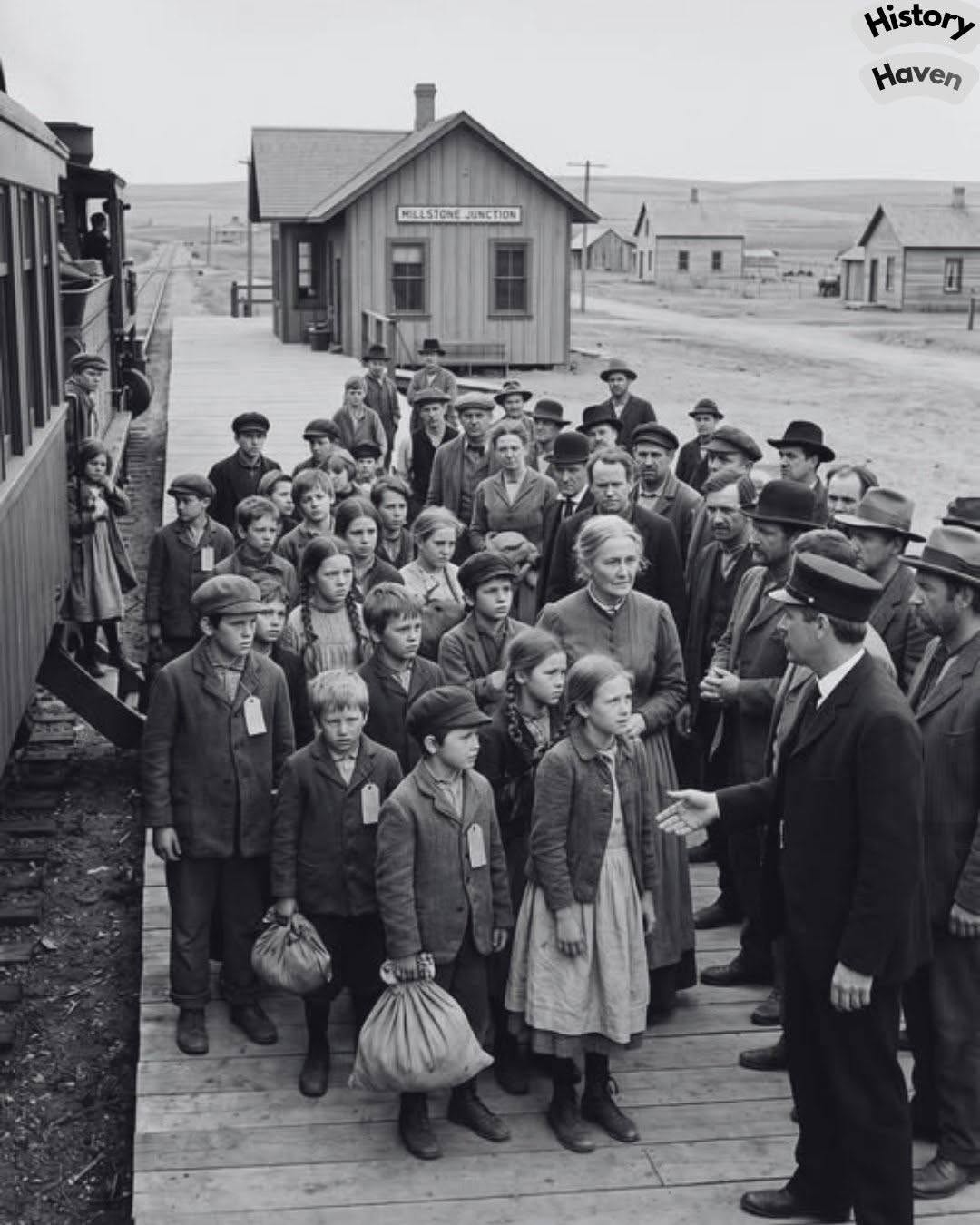
The town itself was small, shaped by hard work and close-knit relationships. Life revolved around farming, seasons, and survival. People knew one another. Trust was built over time, and every new face stood out.
When word spread that a group of children would be arriving by train, curiosity mixed with hesitation.
Some families came prepared to welcome a child into their home. Others came simply to observe, unsure of what the day would bring.
For the children, the moment carried a different weight.
They had already left behind everything familiar. Some had lost parents. Others had been separated from siblings or placed in institutions where affection was rare. The train ride itself was not just a journey—it was a dividing line between what they had known and what lay ahead.
When the doors opened, they stepped into a future filled with questions.
Would they be chosen?
Would they be wanted?
Would they belong?
The process that followed was both hopeful and heartbreaking.
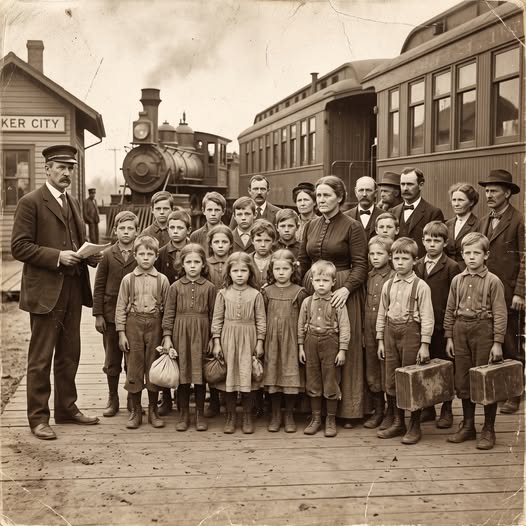
Families gathered to meet the children, sometimes selecting them based on age, health, or the help they could provide on a farm. For the children, it meant standing quietly, waiting for someone to see them not as a burden, but as a member of a future family.
Some were chosen quickly.
Others waited longer, watching as names were called and new lives began forming around them.
Yet what happened in this town did not follow the usual pattern entirely.
Instead of remaining distant or purely practical, the community began to respond with something deeper.
As families welcomed the children into their homes, a shift took place—not just within individual households, but across the town itself. The presence of these twenty young lives created new connections, new responsibilities, and a shared sense of purpose.
The children were no longer just arrivals from a train.
They became part of the town’s story.
Over time, relationships grew in ways that extended beyond expectation. Bonds formed not only between children and their new families, but among the children themselves. They carried shared experiences—memories of loss, of travel, of uncertainty—that tied them together even as they adjusted to new lives.
For many, the transition was not easy.
Adapting to rural life required learning new skills, new routines, and new expectations. The work was hard. The environment was unfamiliar. And the emotional weight of the past did not disappear overnight.
But something else began to take shape alongside those challenges.
Belonging.
The town, once defined by its small population and quiet rhythms, began to feel different. Schools filled with new voices. Homes expanded not just in size, but in meaning. The presence of the children brought energy, change, and, in many cases, renewed hope.
The impact was not limited to the children alone.
Families who had opened their doors found themselves transformed as well. Caring for a child who had known hardship required patience, understanding, and compassion. It changed perspectives, deepened empathy, and, in many cases, strengthened the bonds within the household.
Neighbors supported one another in ways they hadn’t before.
What began as an act of charity gradually became something more enduring.
It became community.
As the years passed, the children grew into adults. They worked the land, attended school, built families of their own, and contributed to the life of the town that had taken them in.
Their presence was no longer new.
It was permanent.
The prairie settlement that had once received them as strangers had become the place they called home.
And the legacy of that single train arrival continued to unfold.
Stories were passed down—about the day the children came, about the uncertainty that filled the station, and about how those moments led to lasting change. What had once been a temporary event became part of the town’s identity.
The deeper meaning of the story lies in what it reveals about human connection.
The Orphan Train movement was not without complexity or hardship. It placed children into unfamiliar situations, often with little control over their futures. But in this town, something meaningful emerged from that uncertainty.
People chose to care.
They chose to accept responsibility.
They chose to turn a moment of arrival into a lasting commitment.
For the twenty children who stepped off that train, the journey did not end at the station.
It began there.
They arrived carrying loss, fear, and unanswered questions.
They stayed long enough to build something new.
And in doing so, they helped transform a quiet prairie town into something greater than a place on a map.
They turned it into a family.
A family not defined by blood, but by choice, resilience, and the willingness to open a door when it mattered most.