The Mule: The Incredible True Story of Leo Sharp, the Elderly Drug Courier Behind Clint Eastwood’s Movie
If The Mule had not been inspired by a real man, its premise might sound almost too unusual to believe.
Clint Eastwood plays Earl Stone, an elderly horticulturist whose flower business is collapsing. Desperate for money and estranged from his family, Earl accepts what initially appears to be a simple driving job.
Soon, he discovers that the packages hidden in his truck belong to a Mexican drug cartel.
Instead of walking away, Earl keeps driving.
The money gets better.
The shipments get bigger.
And before long, an old man who looks nothing like a stereotypical drug trafficker becomes one of the cartel’s most valuable couriers.
The film was inspired by Leo Sharp, a World War II veteran and respected daylily grower who really did spend years transporting enormous quantities of cocaine for a trafficking organization connected to the Sinaloa cartel.
By the time federal agents caught him in 2011, Sharp was 87 years old and carrying 104 kilograms of cocaine in his pickup truck.
That part isn’t Hollywood exaggeration.
But The Mule also invents much of Earl’s personal life, changes locations and names, and creates dramatic incidents that nobody knows occurred during Sharp’s years on the road.
So how much of Clint Eastwood’s movie really happened?
Was Clint Eastwood’s Character Really Named Earl Stone?
No.
The man who inspired the movie was Leo Earl Sharp Sr.
He was born in 1924 and became nationally famous after journalist Sam Dolnick chronicled his remarkable story in a 2014 New York Times Magazine feature about the Sinaloa cartel’s elderly courier.
For the movie, screenwriter Nick Schenk transformed Leo Sharp into Earl Stone.
Other names and locations were changed as well.
Sharp’s world was primarily connected to Michigan and Indiana, while the fictional Earl Stone is based around the Chicago area.
There is another significant difference.
Eastwood’s Earl is presented as a Korean War veteran.
Sharp served during World War II.
Is Earl Stone Supposed to Be an Exact Portrait of Leo Sharp?
Not entirely.
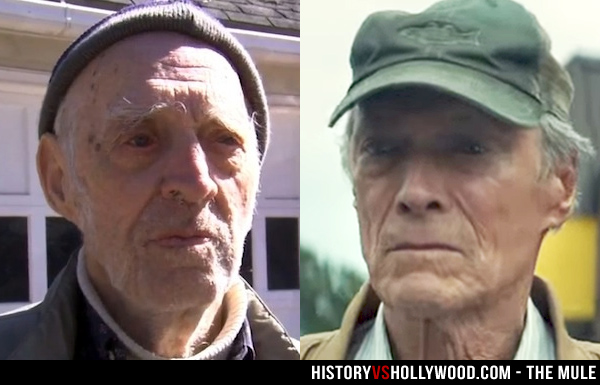
Eastwood used Sharp’s unusual criminal career as the foundation for Earl, but he did not attempt a literal impersonation.
The director and actor has explained that another elderly man influenced the performance: his own grandfather.
Eastwood remembered visiting his grandfather’s chicken farm and observing how he moved and spoke as he grew older.
Those memories helped Eastwood create Earl’s physical mannerisms.
That makes the character a mixture of two people — Sharp supplied the extraordinary drug-running story, while Eastwood’s grandfather helped shape the elderly man audiences see on screen.
Was Leo Sharp Really Famous for Growing Flowers?
Yes.
Before he became known to federal agents as a drug courier, Sharp had already developed a very different reputation.
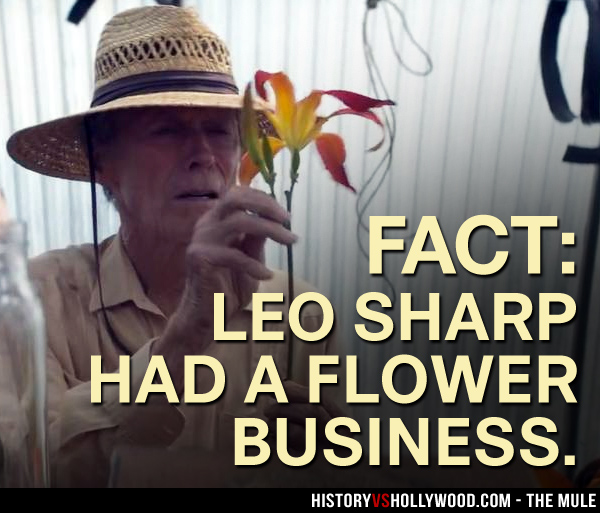
He was an accomplished daylily hybridizer.
Sharp operated Brookwood Gardens and spent decades breeding unusual varieties of daylilies. He was respected within the gardening community, attended conventions and sold flowers to customers through his business.
Some of his cultivars remain known among daylily enthusiasts years after his death.
The movie therefore did not invent Earl’s passion for flowers.
In reality, Sharp’s horticultural career was one of the reasons his later criminal life seemed so extraordinary.
He didn’t look like someone connected to an international cocaine operation.
He looked like an aging flower grower.
And that was exactly what made him useful.
Did the Internet Really Help Destroy His Flower Business?
There is truth behind that idea.
Sharp had built much of his business around traditional mail-order flower catalogs.
As commerce increasingly shifted online during the late 1990s, that business model became less effective.
His flower operation experienced financial trouble.
According to accounts surrounding the case, money problems were part of the background to Sharp’s decision to begin transporting money and eventually narcotics.
The movie simplifies this into a symbolic confrontation between Earl and a changing world.
Earl has spent his life perfecting flowers, only to discover that customers now prefer buying things online.
That emotional theme is dramatized, but the decline of Sharp’s catalog-based business had a real basis.
How Old Was Sharp When He Became a Drug Mule?
Nobody has established the exact date of his first job.
Authorities, however, had evidence that Sharp was transporting drugs by around 2000, when he was approximately 76.
That means his involvement may have lasted for roughly a decade before his arrest.
The movie shifts the chronology somewhat and depicts Earl entering the business later in life.
But the central reality is even more remarkable:
Sharp was already well into his seventies when he became involved with a major drug-trafficking organization.
Was Leo Sharp Initially Tricked Into Carrying Drugs?
Probably not.
This is one area where the movie makes Earl significantly more innocent at the beginning.
In The Mule, he agrees to drive a package without initially realizing that he has entered the drug business.
Once he eventually opens the bag and discovers cocaine, he understands what he has become involved in.
Accounts of Sharp’s real life suggest a more deliberate progression.
His attorney said that Sharp was introduced to people connected to the trafficking operation through workers around his flower farms.
His earliest assignments reportedly involved transporting cash.
From there, the work escalated into moving drugs.
In other words, there is little reason to believe Sharp accidentally became one of the Sinaloa organization’s most productive couriers without understanding what he was doing.
Why Would a Cartel Want an Elderly Flower Farmer Driving Cocaine?
Because almost nobody would suspect him.
Sharp had several characteristics that made him unusually valuable.
He was elderly.
He had legitimate identification.
He had spent most of his life outside serious criminal activity.
And he did not resemble the image police officers might immediately associate with a cartel courier.
That was not an accident.
Investigators said trafficking organizations sometimes deliberately recruited drivers who did not fit criminal stereotypes.
Sharp could drive enormous distances through the United States without looking particularly suspicious.
An elderly man hauling flowers or traveling between farms was far less likely to attract attention than a young courier already known to police.
For years, the strategy worked.
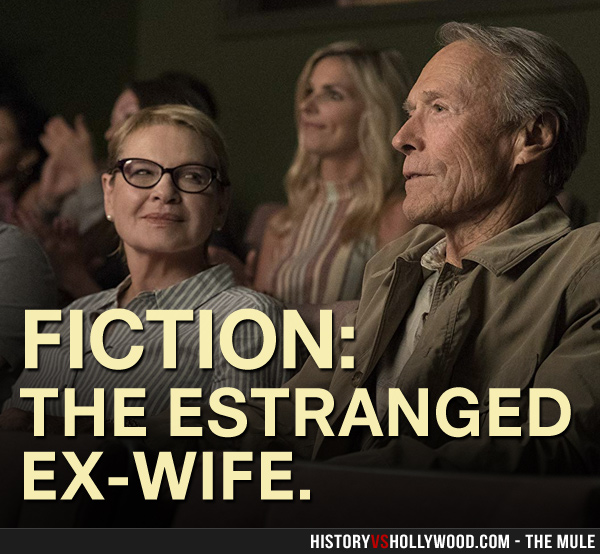
Was Earl Really Estranged From His Family?
This is largely a movie invention.
One of the emotional foundations of The Mule is Earl’s realization that he sacrificed his family while pursuing work and personal freedom.
His former wife Mary resents him.
His daughter barely speaks to him.
His granddaughter is one of the few relatives still willing to maintain a relationship.
Eventually, Earl begins realizing that all of the money he earns cannot replace the years he missed.
That makes for a strong Clint Eastwood character drama.
It is not, however, a reliable reconstruction of Leo Sharp’s family life.
The source material offered relatively little information about Sharp’s marriage and relationships with his children.
Available records indicate that he was married and had three children. His wife Ann was still alive when Sharp died.
There is no evidence supporting the elaborate estrangement storyline depicted in the film.
Did All of Earl’s Wild Adventures on the Road Really Happen?
No one knows — and most were created for the film.
The factual record tells investigators a great deal about what Sharp transported, where the organization operated and how he was eventually caught.
It tells us much less about what he did during the thousands of miles he drove between assignments.
That gave the filmmakers considerable room to invent.
The parties, sexual encounters, roadside interactions and many of Earl’s personal experiences are fictional.
Eastwood himself acknowledged that filmmakers simply did not know what Sharp encountered during his years of driving.
The movie therefore uses those empty spaces to develop Earl as a character rather than pretending every scene is documented history.
Did Sharp Really Spend Some of His Drug Money Helping Other People?
Accounts about Sharp suggest that he could be generous with the money he made.
His illegal earnings helped stabilize his flower business, but he was also remembered as someone who sometimes spent money freely and assisted others.
The Mule turns that quality into a major part of Earl’s personality.
After the money begins arriving, Earl helps pay for his granddaughter’s education, supports local causes and finances improvements at a veterans’ organization.
Those specific scenes are dramatized.
But the idea that Sharp did not simply hide every dollar for himself appears to have some basis in reality.
It contributes to one of the moral contradictions at the center of the story:
Sharp could behave generously while making that generosity possible by transporting massive quantities of cocaine.
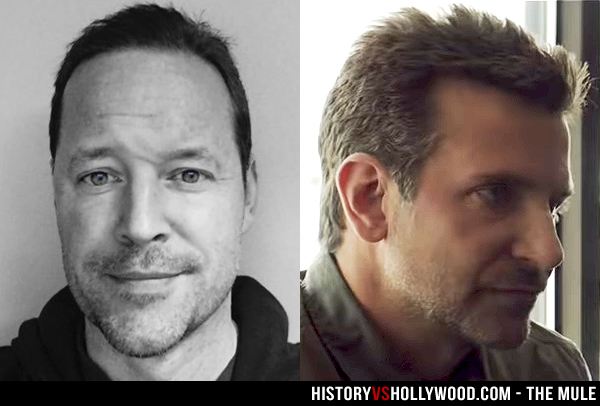
Is Bradley Cooper’s DEA Agent Based on a Real Person?
Yes.
Bradley Cooper plays DEA agent Colin Bates, who gradually closes in on Earl.
The character was inspired by real DEA Special Agent Jeff Moore.
Moore had previously worked as a police officer and undercover narcotics investigator before joining the DEA.
He became involved in the investigation of a Detroit-area trafficking network connected to the Sinaloa cartel.
The real investigation did not play out exactly like the movie’s cat-and-mouse relationship between Bates and Earl.
But Moore was one of the agents whose work ultimately led authorities to Leo Sharp.
How Did the DEA Discover the Elderly Courier Called “Tata”?
Investigators reached Sharp by working their way through the cartel’s distribution network.
One important breakthrough came from a man connected to the Detroit operation who began cooperating with authorities.
Investigators learned that the organization had an unusually old courier known as “Tata,” a Spanish term for grandfather.
At first, they didn’t even know exactly who Tata was.
Then agents watched a meeting in which the mysterious elderly courier arrived to collect bags of cartel money.
The man was Leo Sharp.
His age surprised investigators.
They expected someone elderly and frail.
Instead, Sharp was still physically capable enough to spend long hours driving across the country.
Once agents knew his identity, the supposedly invisible grandfather became somebody they could follow.
Did Sharp Really Transport Hundreds of Kilograms of Cocaine?
Yes.
If anything, the enormous scale of Sharp’s operation is one of the least exaggerated aspects of The Mule.
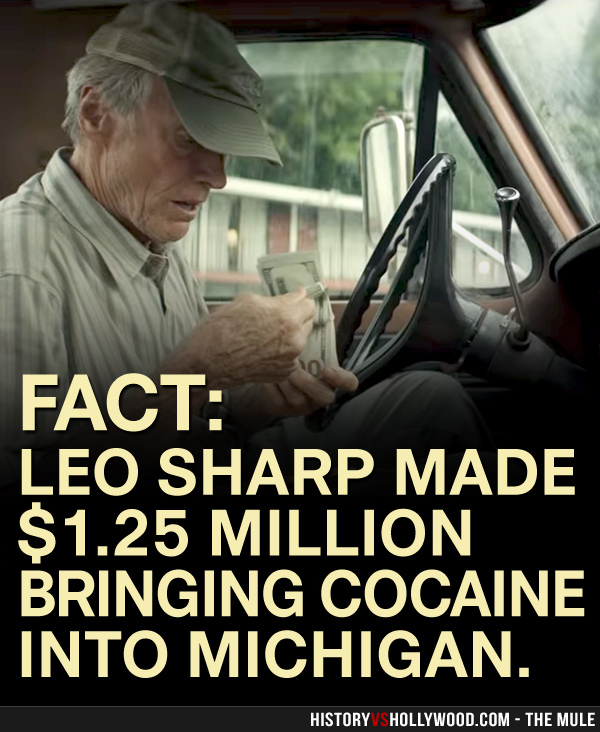
Federal prosecutors said he participated in seven separate trips that moved more than 1,200 kilograms of cocaine across the country into Michigan.
Sharp received more than $1 million for his work.
The government described him as a courier for a trafficking organization with direct ties to Joaquín “El Chapo” Guzmán’s Sinaloa cartel.
During the investigation, authorities also seized millions of dollars in narcotics proceeds and indicted 19 people connected to the broader operation.
So the sight of Clint Eastwood casually driving around with a truck full of cocaine may seem absurd.
The amount of narcotics behind the true story was anything but small.
How Much Cocaine Was Sharp Carrying When Police Finally Stopped Him?
104 kilograms.
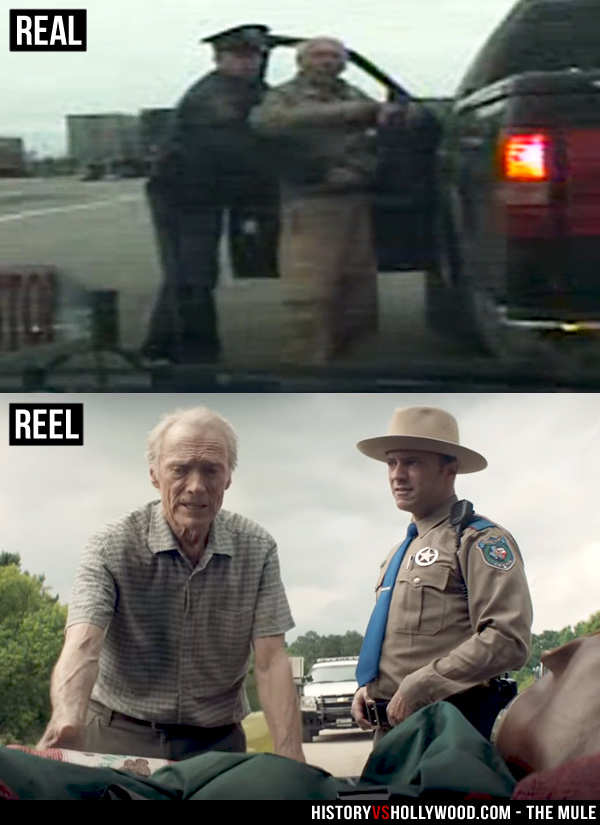
On October 21, 2011, Sharp was driving a Lincoln pickup truck along Interstate 94 toward Detroit.
By then, federal agents knew Tata’s identity and believed he was making another major delivery.
DEA officers positioned themselves along a long section of highway and tracked his truck as he traveled.
Rather than immediately surrounding Sharp with federal vehicles, investigators arranged for a state trooper to conduct what looked like an ordinary traffic stop.
Sharp was 87 years old.
A drug-detection dog alerted officers to the truck.
Inside the locked bed were duffel bags containing 104 kilograms of cocaine.
After years of driving for the organization, Tata’s career was over.
Did His Arrest Happen Exactly Like It Does in The Mule?
Not quite.
The film adds more cinematic tension.
Earl eventually encounters a large law-enforcement operation and realizes there is nowhere left to drive.
In reality, authorities wanted the arrest to appear routine.
A state trooper stopped Sharp on the highway while federal agents remained involved behind the scenes.
A police dog helped establish probable cause to search the vehicle.
The sequence was less like a dramatic roadblock confrontation and more like a carefully planned controlled stop.
Ironically, the real scene did not need much Hollywood embellishment.
An 87-year-old flower farmer standing beside a pickup containing more than 100 kilos of cocaine was already strange enough.
Did the Cartel Really Force Sharp to Keep Working at Gunpoint?
That claim remains disputed.
Sharp eventually portrayed himself as an elderly man who had become trapped inside an organization he could no longer safely leave.
His defense argued that his age, declining health and cognitive condition made him vulnerable.
Wiretapped conversations did suggest that Sharp had become reluctant to continue making deliveries.
But prosecutors rejected the idea that he had simply been helplessly forced into the operation.
They pointed to the length of his involvement, the enormous volume of narcotics he transported and the substantial amount of money he earned.
The movie dramatizes the danger by showing cartel members threatening Earl directly.
Whether anything precisely like those scenes happened to Leo Sharp has never been established.
What Sentence Did Leo Sharp Receive?
Sharp pleaded guilty in October 2013 to conspiracy to distribute cocaine.
On May 7, 2014 — his 90th birthday — he was sentenced to three years in federal prison.
The court also ordered financial penalties totaling $500,000, including forfeiture involving property he owned in Florida.
Sharp’s age and health were major issues during sentencing.
His defense presented evidence of cognitive decline and argued that imprisonment would be unusually harsh for a man nearing 90.
Prosecutors countered that age could not erase years of transporting huge quantities of cocaine.
The judge ultimately imposed a sentence dramatically shorter than those normally associated with trafficking at that scale.
Sharp even proposed an unusual alternative to prison: he suggested he could repay the government by growing papayas in Hawaii.
The court did not accept the offer.
Did He Really Spend Three Years Behind Bars?
No.
Sharp served approximately one year.
His health deteriorated significantly while incarcerated, and he was released in 2015.
He died on December 12, 2016, at age 92.
So while The Mule ends with Earl entering prison and returning to his flowers behind bars, the real Sharp’s final chapter was considerably shorter.
His remarkable second career as a drug courier had lasted far longer than his actual imprisonment.
Is Andy Garcia’s Cartel Boss Supposed to Be El Chapo?
Loosely.
Andy Garcia plays Laton, a powerful cartel leader who enjoys a lavish lifestyle before being killed as leadership changes inside the organization.
The character represents the higher levels of the cartel connected to Earl’s operation.
The real trafficking network was linked to the Sinaloa cartel led by Joaquín “El Chapo” Guzmán.
But Laton’s fate should not be interpreted as something that happened to Guzmán.
El Chapo was not murdered during the Sharp investigation.
He was arrested in Mexico in February 2014 in an unrelated operation and later became the subject of an entirely different international prosecution.
The film simplifies cartel politics by creating a fictional boss whose removal immediately changes Earl’s circumstances.
How Accurate Is The Mule Overall?
The biggest pieces are real.
Leo Sharp really was an elderly World War II veteran.
He really grew daylilies.
His flower business really struggled.
He really became a trusted courier for an organization linked to the Sinaloa cartel.
He really transported enormous amounts of cocaine for years.
Federal agents really knew him by the cartel nickname Tata.
And he really was caught at age 87 while driving a pickup containing 104 kilograms of cocaine.
But the movie transforms those facts into something more personal.
Earl’s broken marriage, estranged daughter, granddaughter, missed family milestones and emotional redemption are primarily screenwriting inventions.
His road adventures are largely imagined.
The specific threats from cartel enforcers are dramatized.
And the film compresses a complicated federal investigation into a more traditional pursuit between Earl and Bradley Cooper’s agent.
That means The Mule is accurate where its central premise sounds most unbelievable.
The old flower grower carrying millions of dollars’ worth of cocaine?
Real.
Many of the quieter family scenes that make Earl seem human?
Hollywood.
The Real Leo Sharp Story May Be Stranger Than the Movie
The most fascinating thing about Leo Sharp wasn’t simply his age.
It was how ordinary he could appear.
Before the DEA knew him as Tata, Sharp had spent decades building a legitimate reputation around flowers.
Gardeners knew his daylilies.
Customers traveled to buy his plants.
He was a veteran, a businessman, a husband, a father and eventually a great-grandfather.
Nothing about that description suggests someone capable of becoming an important link in a multinational cocaine network.
That was precisely his value.
A younger courier might attract suspicion.
A man with a criminal record might be stopped.
Leo Sharp could drive past police officers looking exactly like what he was:
An old man in a pickup truck.
For years, nobody looked beneath that image.
By the time agents finally did, they discovered that one of the least likely drug runners imaginable had quietly moved staggering quantities of cocaine across the United States.
Clint Eastwood’s movie invents a personal redemption story around that fact.
Reality supplies something arguably more unsettling.
Leo Sharp did not become valuable to the cartel despite looking harmless.
He became valuable because he looked harmless.