The Murder Case Against Him Once Collapsed. Then His Wife’s Remains Were Found — With a Strange Chemical in Her Bones

For years, the disappearance of Suzanne Morphew seemed trapped between suspicion and uncertainty.
Her husband, Barry Morphew, had already been charged once with killing her. Then the case against him fell apart before trial.
For a time, it appeared prosecutors might never get another chance.
Then Suzanne’s remains were found.
And inside her bone marrow, investigators say they discovered traces of a rare mixture of animal tranquilizing drugs — chemicals that have now become one of the most important pieces of evidence in a murder case that is moving toward trial again.
In September 2026, the case took another dramatic turn.
Barry Morphew, now 58 and once again charged with first-degree murder in his wife’s death, was returned to jail after prosecutors accused him of repeatedly violating the conditions of his release. On Sept. 8, an Alamosa County judge increased his bond from $3 million to $10 million cash only.
Morphew has pleaded not guilty and continues to deny killing his wife. He is presumed innocent unless proven guilty in court.
But six years after Suzanne disappeared, prosecutors are preparing to put him on trial again — this time with evidence they did not have when the first case collapsed.
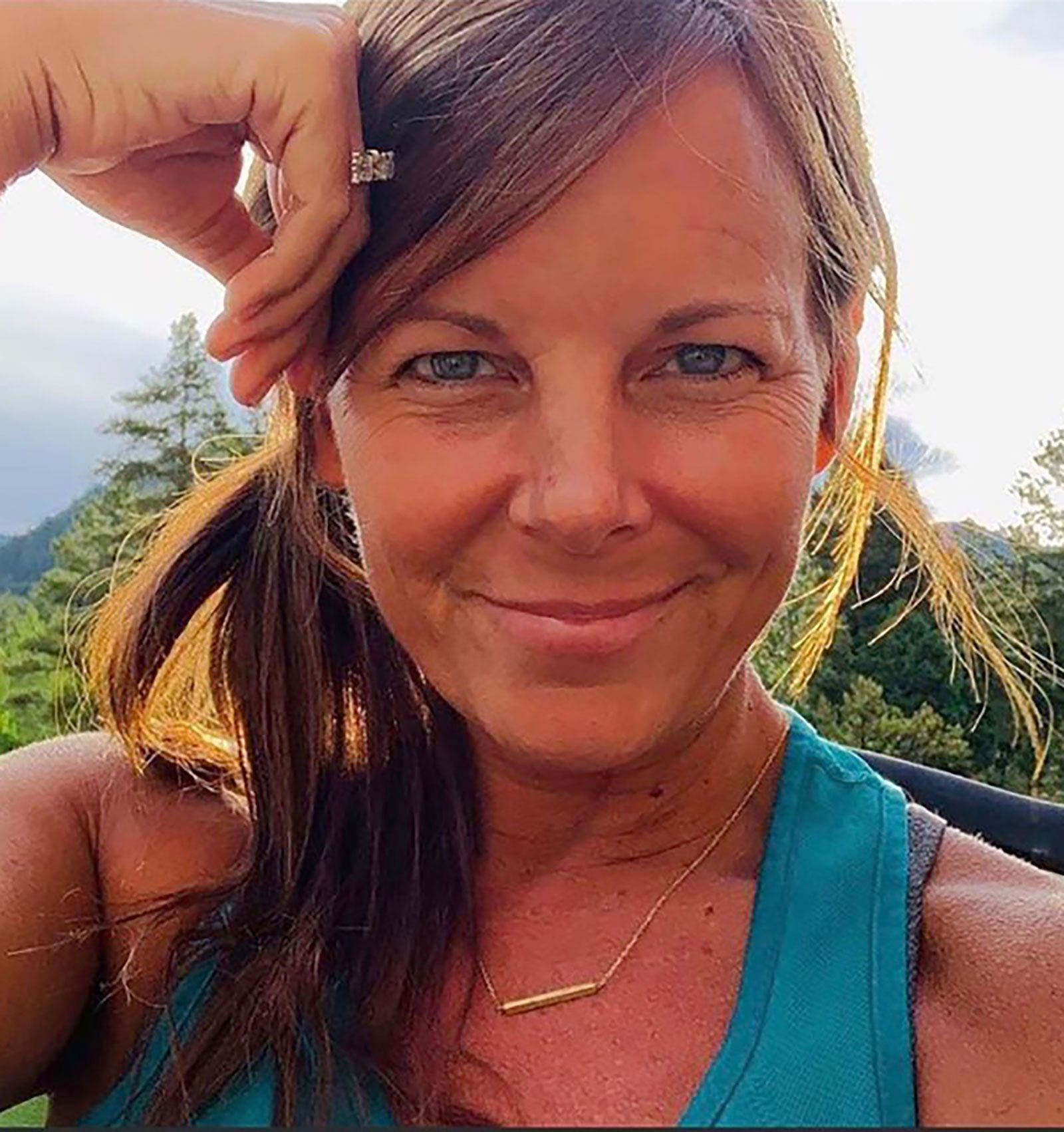
Suzanne Morphew, a 49-year-old mother of two, was reported missing on Mother’s Day, May 10, 2020.
At the time, she and Barry were living near Salida, Colorado.

Her disappearance quickly attracted national attention. Search teams combed the area, investigators conducted interviews, and suspicion eventually centered on her husband.
Barry was arrested in 2021 and charged with murder even though Suzanne’s body had not been found.
Prosecutors alleged that the couple’s marriage was deteriorating and that Suzanne wanted to leave. Barry maintained that he had nothing to do with her disappearance.
Then, shortly before the case was scheduled to go to trial in 2022, prosecutors dismissed the charges without prejudice.
That legal phrase was crucial.
It meant the case was dismissed, but prosecutors retained the ability to bring charges again if new evidence emerged.
At the time, the prosecution had suffered major evidentiary setbacks and said investigators were still searching for Suzanne’s remains.
For Barry Morphew, the dismissal meant freedom from the murder charge.
For Suzanne’s family, it meant more waiting.
Then came September 2023.
Human remains were discovered near Moffat, Colorado, in Saguache County, less than an hour south of the Morphews’ former home.
They were identified as Suzanne.
The discovery transformed the investigation.
According to the later grand jury indictment, most of Suzanne’s skeletal remains were recovered from a shallow, concealed grave. Investigators found clothing and a medical port, but there was no obvious perimortem trauma visible on the bones.
That could have made the cause of death difficult to establish.
Instead, toxicology testing revealed something far more unusual.
Investigators tested Suzanne’s bone marrow for a chemical mixture known as BAM.
BAM is made up of three drugs: butorphanol, azaperone and medetomidine. It is used to chemically immobilize or sedate animals.
According to the indictment, all three compounds were detected in Suzanne’s remains.
Investigators also detected a metabolite of butorphanol — an important detail because prosecutors say it indicates Suzanne’s body had begun processing the drug before she died. That, they argue, makes accidental contamination after death far less likely.
The coroner ultimately classified Suzanne’s death as a homicide “by unspecified means” in the setting of intoxication involving the three BAM components.
That finding gave prosecutors a new forensic theory.
Barry Morphew had experience using BAM.
According to the indictment, witnesses told investigators that Barry used the tranquilizer while working with deer. Barry himself had previously acknowledged using BAM in both Indiana and Colorado, including sedating a deer at the Morphew property in April 2020 — only weeks before Suzanne disappeared.
Prosecutors allege that connection is significant.
But it is not, by itself, proof of murder.
The defense is expected to challenge both the forensic interpretation of the drug evidence and the prosecution’s attempt to connect Barry to Suzanne’s death.
In June 2025, a Colorado grand jury indicted Barry Morphew again on a charge of first-degree murder.
This second prosecution is fundamentally different from the first.
The first case proceeded without Suzanne’s body.
The new case includes her remains, toxicology evidence and a formal homicide determination.
Barry pleaded not guilty.

Then, while awaiting trial, another problem emerged.
He had been released on a $3 million surety bond with significant restrictions on where he could travel.
According to prosecutors, GPS monitoring later showed him making trips outside the activities permitted under his release conditions, including visits to Denver International Airport, restaurants and other locations.
The situation escalated after an Aug. 26, 2026, traffic incident in Denver.
Prosecutors alleged that Morphew was involved in a crash and then left the scene.
They argued that his conduct demonstrated not only a willingness to ignore court orders but also a potential flight risk.
Morphew’s attorneys pushed back.
They noted that he had lived under investigation for years without fleeing and argued against treating the incident as evidence that he planned to disappear.
Judge Amanda Hopkins was not persuaded.
Morphew was arrested Sept. 3 on a warrant for failure to comply with release conditions.
Five days later, Hopkins increased his bond to $10 million cash only.
In court, the judge sharply criticized Morphew’s behavior, saying he had repeatedly shown a lack of respect for court orders and would not comply when restrictions interfered with how he wanted to live.
Prosecutors had asked for the higher bond partly because they believed his actions showed a risk of flight.
The judge also pointed to what she described as his capacity to commit new offenses while on bond.
For now, Morphew remains in custody unless he can meet the new $10 million cash-only requirement.
His murder trial is expected in 2027.
When that trial begins, jurors will confront a case with an unusually complicated history.
They will hear about a woman who vanished on Mother’s Day.
They will hear about a husband who was charged, saw the case dismissed, and then was charged again years later.
They will hear about a hidden grave and skeletal remains.
And they will almost certainly hear extensive testimony about three obscure chemicals found in bone marrow.
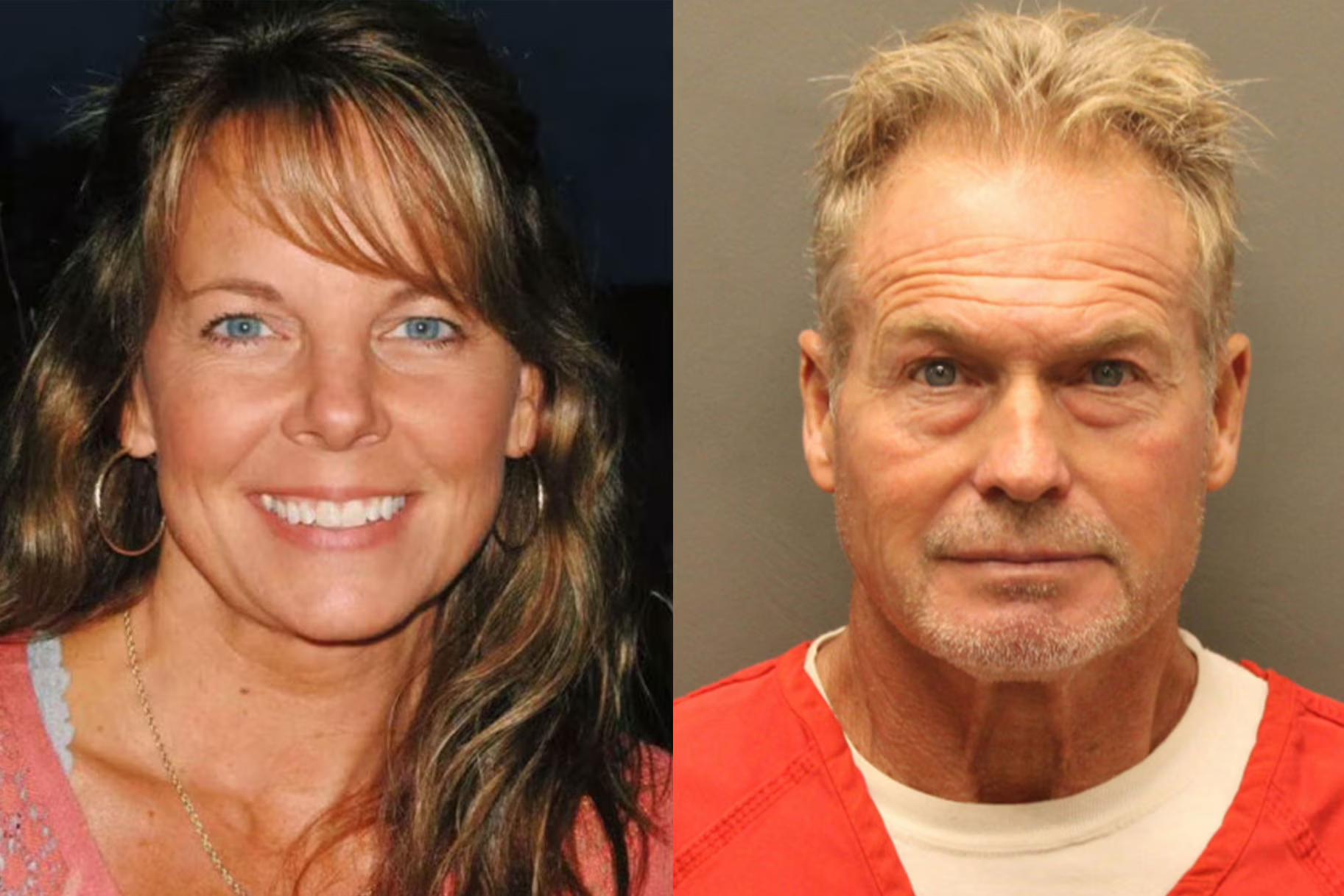
But prosecutors will still have to prove much more than the presence of BAM.
They will have to establish beyond a reasonable doubt that Barry Morphew intentionally caused Suzanne’s death.
The defense will have the opportunity to challenge the science, the timeline, the witnesses and every inference prosecutors ask jurors to make.
That distinction matters.
Barry has not been convicted of Suzanne’s murder.
He continues to deny responsibility.
Yet the case that once appeared to have collapsed permanently now looks very different from the one prosecutors abandoned in 2022.
Back then, Suzanne was still missing.
Today, investigators have her remains.
They have a homicide ruling.
They have toxicology results indicating exposure to a rare animal tranquilizer.
And they have a defendant whom prosecutors say had experience with that same drug mixture.
Nearly six and a half years after Suzanne Morphew disappeared, the mystery is no longer simply about where she went.
The question is now whether prosecutors can prove how she died — and who was responsible.
And at the center of that renewed case is a forensic detail almost no one could have predicted when the investigation began:
Three animal tranquilizing chemicals, still detectable in her bones years after her death.