The Mysterious Child Who Walked Out of the Forest With a Story Nobody Wanted Recorded
The Morning a Stranger Appeared in the Ozark Woods
In the autumn of 1915, when the forests of the Missouri Ozarks were turning gold and the first cold winds were starting to sweep through the valleys, a small farming community came face-to-face with a mystery unlike anything it had ever known. The people who lived there were used to hardship. They knew about brutal storms, sickness, timber camp accidents, and the constant dangers of the endless wilderness around their homes. The Ozarks were a place where you learned to rely on yourself, because the land could be merciless and the nearest help was often many miles away.
But on one particular morning, the residents of a remote valley encountered something they simply could not explain.
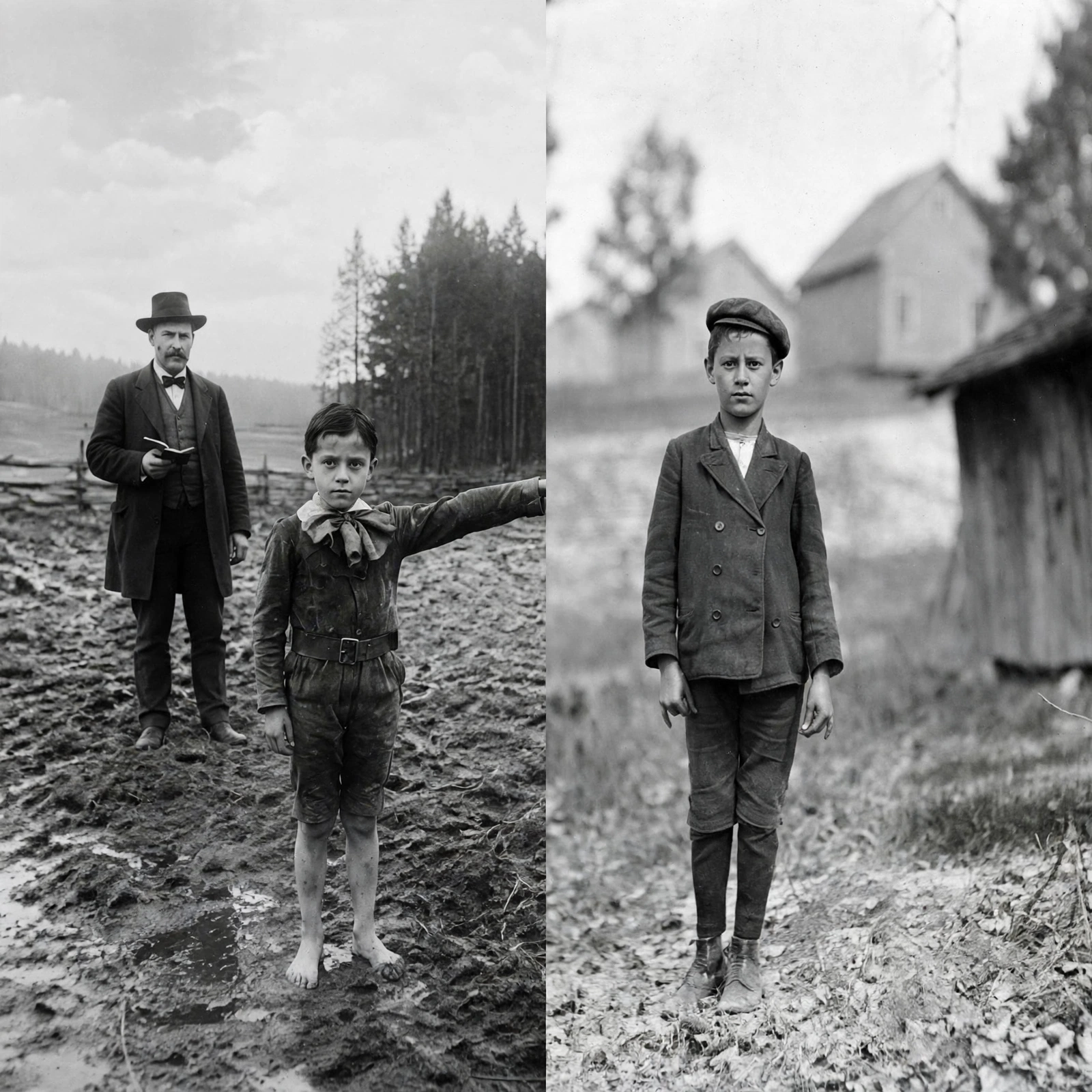
A farmer named Harlan Whitmore found a young boy sitting alone in one of his fields just after sunrise. The child looked exhausted, terrified, and completely unfamiliar to everyone who saw him. He had no shoes, his clothes were torn and strangely made, and he carried nothing that could tell anyone who he was or where he had come from.
The discovery immediately threw the community into confusion, because in that valley, everyone knew everyone. Families had lived there for generations. Children grew up together, worked together, and went to the same small schoolhouse. A stranger appearing out of nowhere was unusual — but a child appearing with no past at all was almost impossible to comprehend.
Harlan later described the boy as looking like he had been walking for days. His feet were caked in dirt and covered in scratches, and his face had the hollow, haunted look of someone who had been through something far beyond normal childhood fear.
The first question on everyone’s mind was simple.
Who was he?
But the boy refused to answer.
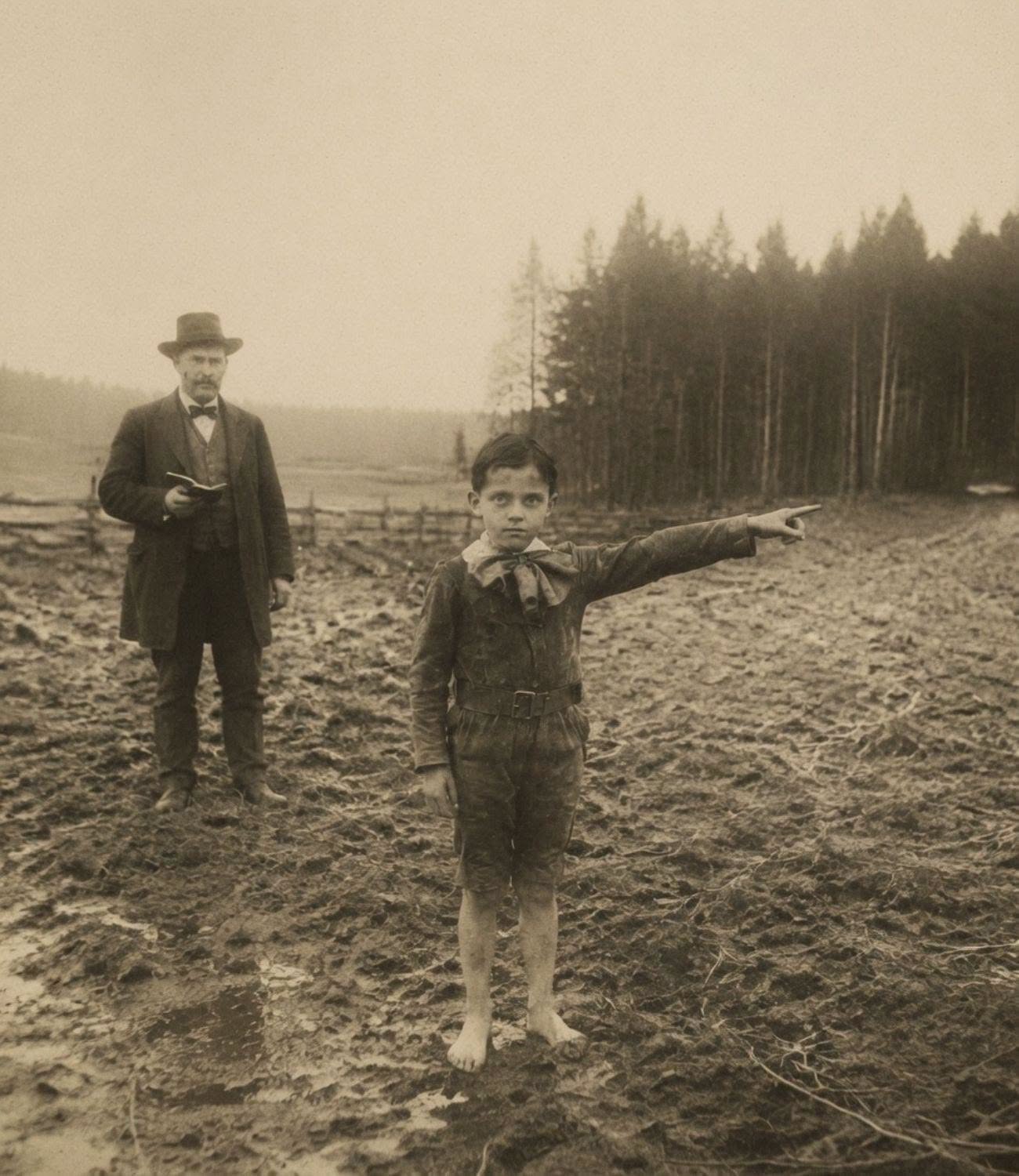
When the sheriff arrived and gently asked the child where he belonged, the boy stayed silent for a long time. He stared past the crowd that had gathered around him, toward the thick, unbroken wall of trees on the horizon.
Then he pointed toward the forest.
And according to the accounts that were passed down, he said just one word.
“Others.”
That single word would become the beginning of a mystery that would haunt the community for decades.
The Child Who Would Not Give His Name
The sheriff who handled the case, according to the surviving versions of the story, was a man named Elias Carter — a local lawman who knew nearly every family in the region by name. He had spent years dealing with everyday problems: stolen livestock, arguments between neighbors, missing hunters, and accidents deep in the woods.
But this case was different.
The boy wasn’t just lost.
He seemed afraid of being found.
In the first few hours after his discovery, the sheriff tried to get some basic information. He asked the boy his name, where his parents were, and how long he had been in the forest. But every question was met with either complete silence or vague answers that only created more questions.
The child seemed to understand the world around him, but he described it in a way that confused every adult listening.
He didn’t talk about roads.
He didn’t mention any nearby towns.
He didn’t name a single family member.
Instead, he spoke about places hidden deep beyond the trees and about people who lived far away from any settlement the locals knew about.
The sheriff’s first thought was that the boy might have been separated from a traveling family or gotten lost during a hunting trip. The Ozarks were vast, and it was easy for children to wander too far. Accidents happened all the time.
But several details didn’t add up.
The boy’s clothing didn’t match anything people wore in the area. Local women examined the fabric and the stitching but couldn’t identify the material. It looked handmade, but not in any style they recognized.
The boy also seemed unfamiliar with ordinary, everyday objects.
Some accounts claim he reacted strangely to things like oil lanterns, farm tools, and household items, although those details are now considered part of the folklore around the story rather than verified historical fact.
What interested the sheriff most was the child’s repeated mention of “others.”
Whenever he was asked who they were, the boy would go completely quiet.
Not confused.
Not unsure.
Afraid.
The Forest Beyond the Known Trails
In 1915, the Missouri Ozarks were still a land of immense, untamed wilderness. Even though logging operations and small settlements had spread, huge sections of forest remained almost impossible to navigate. Deep hollows, steep ridges, and isolated valleys created places where a person could disappear for days without a trace.
For generations, locals had told stories about those woods.
Some were practical warnings about dangerous terrain and wild animals. Others were old folk tales passed down from parents to children on long winter nights. The forest was both a source of survival and a source of mystery.
The boy’s story became so powerful because it tapped right into those ancient fears.
According to the legend, he told the sheriff that he had not been alone.
There were others living beyond where ordinary people ever went.
He described groups of people who avoided towns and stayed hidden from the outside world. He claimed they moved through the forest without making a sound and knew secret paths that no outsider could ever find.
The sheriff reportedly put together a small search party to investigate the area where the boy said he had come from. The men followed old trails deep into the timber, looking for any sign of a camp, a family, or any evidence that could explain the child’s appearance.
What they found, depending on which version of the story you hear, only made the mystery deeper.
Some accounts describe abandoned shelters hidden among the trees. Others talk about strange markings carved into old tree trunks or signs of recent human activity where no one should have been living.
However, no official records have ever confirmed any of those discoveries.
And the lack of evidence became part of the mystery itself.
Was the boy describing something real?
Was he repeating stories he had heard from someone else?
Was he a traumatized child whose memories had been distorted by fear?
Or had the isolation of the Ozark wilderness simply created a story that grew bigger with every retelling?
Those questions have never been answered.
The Four Days That Changed the Investigation
The most mysterious part of the entire legend centers on the four days the boy spent in the sheriff’s care.
During that time, the child reportedly began to reveal more about what he had experienced before he walked out of the forest.
According to later retellings, Sheriff Carter kept detailed notes during several interviews with the boy. However, those notes supposedly vanished — or were never made public at all.
This detail is what has made the story so popular among mystery researchers and folklore historians.
The idea that information was hidden or suppressed appears in many unexplained stories throughout history. Sometimes documents are genuinely lost. Sometimes memories change over time. And sometimes, communities choose silence because certain events are too disturbing to talk about.
The legend of the Ozark boy follows that exact pattern.
The child’s statements were said to have deeply unsettled the adults who heard them. They weren’t frightened because the boy seemed dangerous. They were unsettled because he described a world that existed completely outside their understanding.
He spoke as if he had crossed a boundary between two different societies.
The known world of farms, churches, and small towns.
And another world hidden beneath the endless canopy of trees.
Whether that second world existed only in the boy’s imagination or represented something truly unknown remains the central question of the story.
A Community Torn Between Belief and Doubt
As word of the mysterious child spread, the small community reportedly split into two camps.
Some residents believed the boy had encountered something truly unusual in the forest. They pointed to his strange clothing, his obvious fear, and his inability to explain where he came from as proof that there was more to the story.
Others were far more skeptical.
They believed there had to be a simple, rational explanation.
Perhaps the boy came from another isolated family living deep in the hills. Perhaps he had suffered a trauma and couldn’t communicate clearly. Perhaps the details had simply been exaggerated over the years.
This division reflected a larger tension that has always existed in rural communities.
People who live close to nature know that not everything can be immediately explained. They respect the unknown because they live with it every day.
At the same time, they also understand the value of hard evidence.
The Ozarks have always been full of stories passed down through generations. Some are based on real events. Others grow out of imagination, fear, and the very human need to make sense of mysteries.
The story of the boy found in 1915 sits right on the line between those two worlds.
It feels like history.
But it also has the shape of a legend.
What Happened to the Boy After the Forest?
The final chapter of the boy’s story remains uncertain.
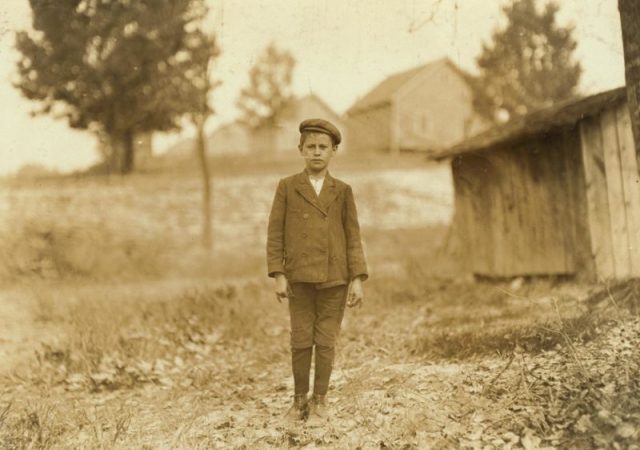
Some versions claim he was eventually taken in by a local family and lived out the rest of his life quietly under a new name. Others suggest he disappeared a second time, walking back into the wilderness he had come from and never being seen again.
No verified records have ever clearly identified him.
No confirmed newspaper reports provide a complete explanation of who he was.
And that absence of facts is exactly what has allowed the mystery to survive for more than a century.
In many ways, the unanswered questions became more powerful than any answer could have been.
A documented, official explanation would have ended the story.
Instead, the uncertainty transformed the boy into a symbol.
He became a symbol of every unanswered question history leaves behind.
Every person who vanished without a trace.
Every corner of the world that remains unexplored.
Every moment when ordinary life briefly brushes up against something completely unknown.
Reflection: The Stories the Forest Keeps
The legend of the Ozark boy of 1915 endures because it speaks to something much deeper than just a mystery.
It reminds us of a time when large parts of America were still truly wild, when communities were separated by miles and miles of forest, and when a person could actually vanish beyond the edge of civilization.
Today, modern technology has changed how we experience the world. Satellites can map the most remote areas. Cameras record almost everything. Information travels around the world in an instant.
And yet, our fascination with stories like this remains just as strong.
Perhaps it’s because we still believe, deep down, that there are places we don’t fully understand.
Perhaps it’s because every generation wonders what might exist just beyond what we can see.
Whether the boy was a lost child, a victim of circumstance, or simply a figure created through decades of storytelling, the mystery surrounding him taps into a timeless human curiosity.
The forest has always represented the unknown.
And sometimes, the most unforgettable stories are not the ones with clear, neat endings.
They are the ones that leave us standing at the edge of the trees, staring into the darkness, still wondering who — or what — might be waiting just beyond.