Willem Dafoe’s Strange Road to Stardom: The Stories Behind One of Hollywood’s Most Fearless Actors
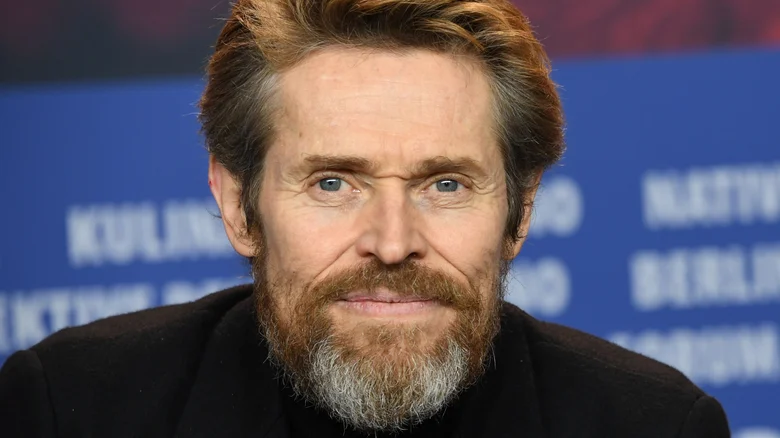
Willem Dafoe has spent decades building one of the most unpredictable careers in Hollywood.
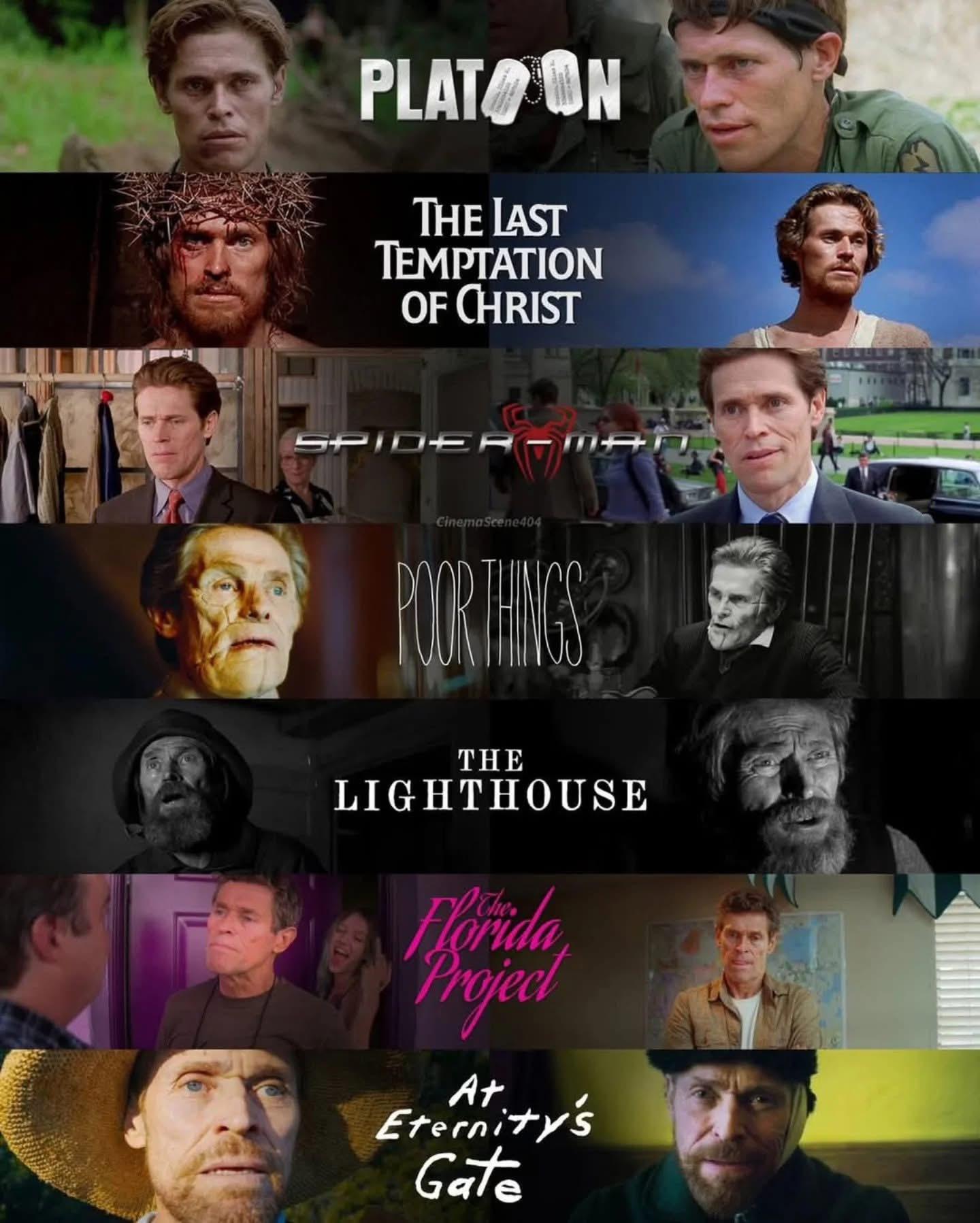
He can disappear into an eccentric Wes Anderson character, terrify audiences as Norman Osborn in Spider-Man, play a compassionate soldier in Platoon, transform himself into Vincent van Gogh, or take on roles so strange that many established actors might hesitate before saying yes.
That willingness to take risks has become part of Dafoe’s reputation.
But the unusual choices did not begin after he became famous.
Long before the Oscar nominations and blockbuster movies, Dafoe was already collecting the kinds of stories that sound almost too strange to be true. He was thrown out of high school because of a filmmaking project. One of his earliest movie opportunities disappeared after he laughed at the wrong moment. He once claimed he could ride a motorcycle when he absolutely could not.
And when his career finally exploded with Platoon, the experience included a political revolution, military-style training and a frightening illness.
Dafoe’s path to Hollywood was anything but conventional.
Willem Dafoe Wasn’t Originally “Willem”
For someone with such a distinctive screen presence, it seems appropriate that Dafoe also has a distinctive name.
But “Willem” wasn’t the name his parents originally gave him.
He was born William James Dafoe in Wisconsin in 1955. His father was also named William, and growing up in a large family left the younger Dafoe looking for a way to distinguish himself.
Eventually, a friend began calling him “Willem,” essentially turning William into a slightly different-sounding nickname.
Dafoe liked it.
By the time he began pursuing acting professionally, the nickname had become so closely tied to his identity that he continued using it. The unusual name audiences now immediately recognize was therefore not a carefully invented Hollywood stage name. It grew naturally out of his childhood.
His Interest in Filmmaking Once Got Him Kicked Out of School
Dafoe’s willingness to experiment appeared early.
While still in high school, he became interested in film and video. For one project, he interviewed several students with unconventional interests and lifestyles.
The subjects reportedly included a student associated with Satanism, a naturist and someone advocating marijuana legalization.
Dafoe intended to edit the material before presenting the finished project.
Unfortunately, someone at the school encountered the raw footage first.
Without the context Dafoe planned to provide through editing, the material looked considerably more scandalous than an ordinary school assignment. School officials apparently believed he had been making something inappropriate.
The result was dramatic: Dafoe was expelled.
Rather than becoming the end of his creative ambitions, the incident pushed him further away from conventional expectations. He soon left his hometown and continued pursuing the arts.

His First Big Movie Opportunity Ended Because He Couldn’t Stop Laughing
Dafoe eventually found his way into experimental theater before Hollywood began paying attention.
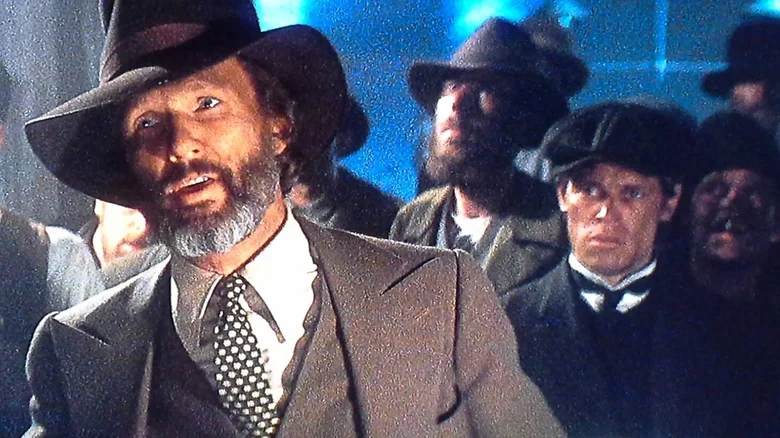
One of his earliest film opportunities came through director Michael Cimino’s enormous Western production Heaven’s Gate.
Getting the job already required some improvisation.
Dafoe was asked to perform material in Dutch despite not actually speaking Dutch. He found someone who could help him learn enough of the language to get through the audition.
It worked.
His part reportedly began expanding during production, suggesting that the young actor might have stumbled into an unexpectedly important first movie role.
Then came an extraordinarily long lighting setup.
Dafoe and other performers were required to stand around while the crew worked for hours. During the wait, another actor whispered a dirty joke to him.
Dafoe laughed.
Director Michael Cimino heard him and told him to step away.
As Dafoe later remembered the incident, that was essentially the end of his involvement.
His first potential breakthrough had disappeared because he laughed at the wrong time.
Then He Lied About Knowing How to Ride a Motorcycle
Losing one job apparently didn’t convince Dafoe to become more cautious.
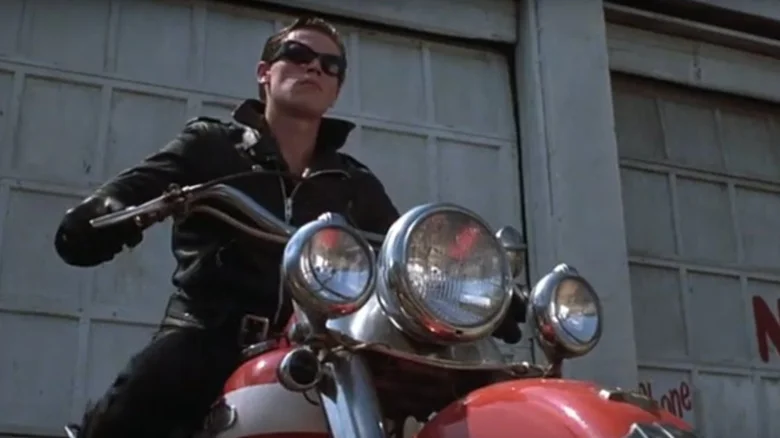
When he was considered for The Loveless, the 1982 biker movie co-directed by Kathryn Bigelow and Monty Montgomery, there was an obvious question for an actor playing a motorcycle rider:
Could he actually ride one?
Dafoe said yes.
He couldn’t.
The truth became considerably harder to hide when production required him to climb onto a large vintage Harley-Davidson.
With no online tutorials available in the early 1980s, Dafoe recalled desperately trying to learn the mechanics of riding from books.
When he finally attempted it for real, things did not exactly go according to plan. Instead of smoothly demonstrating his hidden motorcycle skills, he found himself being carried along by a machine he barely knew how to control.
Fortunately, the filmmakers gave him time to learn.
The role survived, and Dafoe eventually became comfortable enough on motorcycles that he would return to biker territory in Walter Hill’s Streets of Fire.
Platoon Put Him in the Middle of Something Bigger Than a Movie
Dafoe’s career changed permanently with Oliver Stone’s Platoon.
Released in 1986, the Vietnam War drama gave Dafoe one of his most recognizable roles as Sgt. Elias and earned him his first Academy Award nomination.
Getting the movie made, however, became an adventure of its own.
The production was preparing to film in the Philippines when the country entered a historic period of political upheaval. Dafoe arrived just as the People Power Revolution was unfolding and the regime of President Ferdinand Marcos was collapsing.
Production was temporarily thrown into uncertainty.
Instead of experiencing political unrest from a comfortable Hollywood distance, Dafoe found himself watching history unfold around him before filming eventually resumed.
Oliver Stone also wanted the actors to experience something resembling military exhaustion before cameras rolled.
The cast went through demanding training designed to strip away some of the comforts normally associated with actors on a movie set.
For Dafoe, the realism became even less glamorous after he became seriously ill.
During production, he drank water he believed had been treated adequately. He later discovered that the source was far less clean than expected — with a dead pig reportedly lying upstream.
Dafoe became deliriously sick for roughly a day.
The difficult shoot ultimately produced the movie that transformed his career. Sgt. Elias became one of the defining performances of Platoon, particularly because of the character’s unforgettable final moments.
Hollywood Stardom Didn’t Stop Him From Voicing a Puppet in a Freezer
Dafoe’s résumé also contains some wonderfully strange detours.
British television viewers may have heard his voice without realizing it.
For a period, Dafoe voiced Clarence, a puppet polar bear used in Birds Eye frozen-food commercials. Clarence lived inside refrigerators and promoted the company’s products.
It’s a surprisingly modest job for an actor associated with serious dramas and Oscar nominations.
Dafoe later explained that the original concept sounded more sophisticated than what eventually appeared on television. He had imagined something closer to an animated character.
Instead, audiences got a glove puppet polar bear.
Dafoe still did the job.
It is the kind of unexpected credit that fits remarkably well into his unconventional career.

Few Major Actors Have Died More Memorably On Screen
If Willem Dafoe appears in a movie, audiences might want to prepare themselves for the possibility that his character isn’t making it to the final credits.
Across his enormous filmography, Dafoe has accumulated dozens of fictional deaths.
But quantity isn’t really what makes the pattern interesting.
Some of those deaths became defining images from the films themselves.
His death as Elias in Platoon, arms raised as enemy soldiers close in, became one of the most recognizable images in war-movie history.
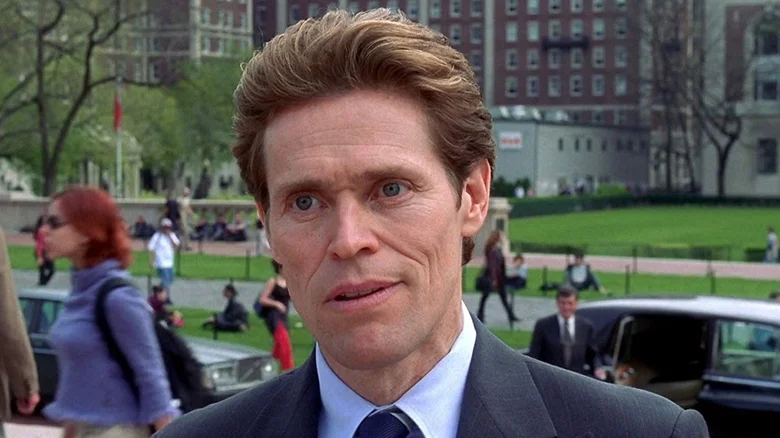
He has played Jesus during the crucifixion in The Last Temptation of Christ. He met another dramatic fate as vampire Max Schreck in Shadow of the Vampire. And as Norman Osborn in Sam Raimi’s Spider-Man, his Green Goblin discovered that his own deadly glider could be turned against him.
For an actor known for going completely into his characters, Dafoe has become unusually talented at giving those characters memorable exits.
His Real Life Is Much Calmer Than His Characters Suggest
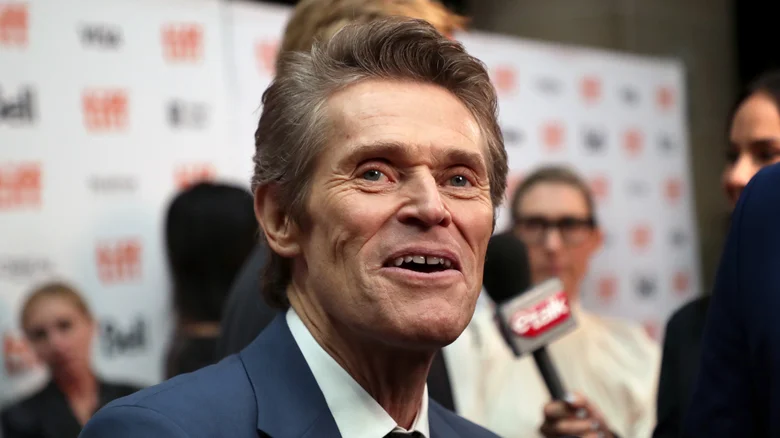
Dafoe’s face and voice have made him particularly effective at playing dangerous, eccentric and deeply disturbed characters.
His off-screen lifestyle sounds considerably less chaotic.
As he grew older, Dafoe became increasingly devoted to maintaining his physical and mental health.
He has practiced Ashtanga yoga and meditation and has described his diet as largely vegan. The routines help explain how an actor born in 1955 has remained capable of taking on physically demanding performances decades into his career.
He has also deliberately avoided turning his private life into a permanent celebrity spectacle.
For Dafoe, remaining somewhat ordinary away from the cameras appears to serve the work. The less audiences know about the person underneath, the easier it can be for him to vanish into the next character.
That gap between Dafoe and his characters can be particularly amusing considering some of the darker things he has discussed in interviews.
He once acknowledged having thoughts and dreams involving murder, only to make clear that he would be spectacularly unsuited to becoming an actual criminal. His nervous personality, he suggested, would probably expose him almost immediately.
It’s exactly the sort of dry, unsettling humor audiences might expect from the man who played some of cinema’s strangest villains.
He Actually Learned to Paint to Become Vincent van Gogh
By the time Dafoe made At Eternity’s Gate, he no longer needed to exaggerate his abilities to land movie roles.
Instead, he found himself doing the opposite: learning an entirely new skill because the director wouldn’t allow him to fake it.
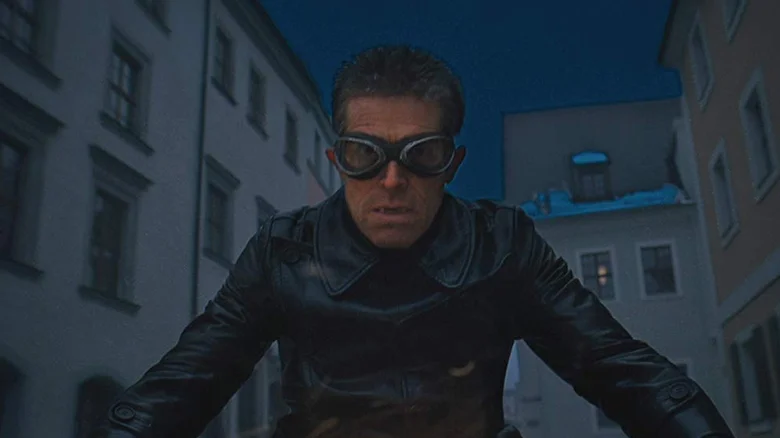
The 2018 film starred Dafoe as Vincent van Gogh and was directed by Julian Schnabel, who is himself an accomplished painter.
Schnabel wanted Dafoe to understand painting physically rather than simply imitate an artist’s movements for the camera.
There would be no professional hand double quietly producing the paintings while Dafoe pretended.
He had to paint.
Under Schnabel’s guidance, Dafoe learned not only how to handle brushes and materials but also how a painter observes the world.
The experience affected him deeply.
And it led to another major milestone: Dafoe received an Academy Award nomination for his performance as van Gogh.
Willem Dafoe Built a Career by Refusing to Become Predictable
Looking across Willem Dafoe’s life, one theme appears again and again.
He rarely chooses the safest route.
As a teenager, his experimental filmmaking got him expelled. As an unknown actor, he learned Dutch phonetically for an audition and pretended he could ride a motorcycle because he wanted the job.
Later, he endured jungle training and illness while making the film that finally made him famous.
And even after becoming one of the most respected actors of his generation, he continued accepting projects that demanded something new from him — sometimes physically, sometimes creatively and sometimes simply because the idea seemed strange enough to be interesting.
That may be the real explanation for Dafoe’s longevity.
Audiences never quite know which Willem Dafoe they are going to get next.
And after more than four decades of movies, he still seems determined to keep it that way.