I Am the Night: The Real Story of Fauna Hodel and the Dark Family Mystery Behind the Series
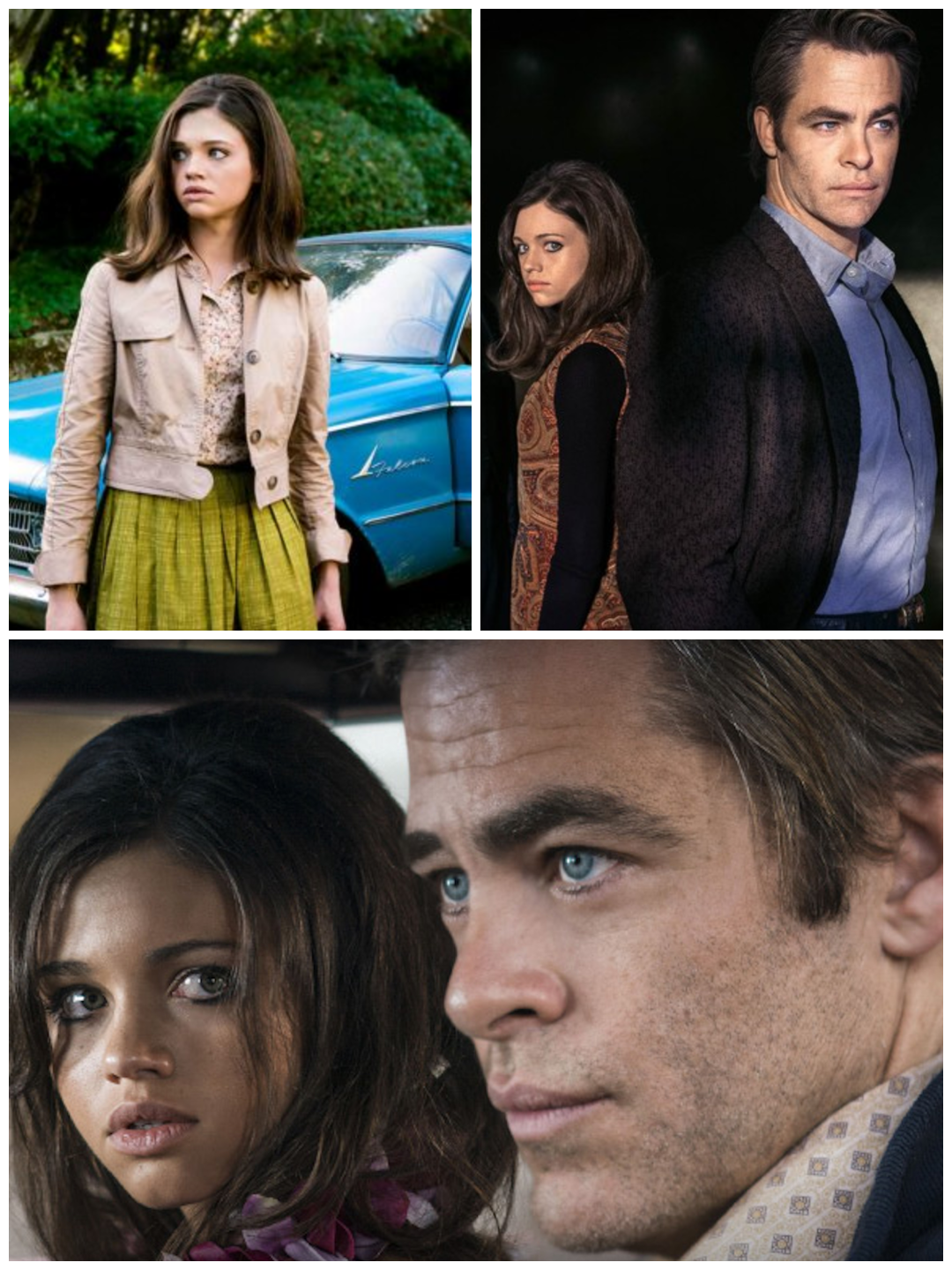
TNT’s I Am the Night begins with a young woman searching for something that should have been simple: the truth about who she was.
Instead, that search pulled her into the history of one of Los Angeles’ most controversial families — and eventually toward the still-unsolved murder of Elizabeth Short, better known as the Black Dahlia.
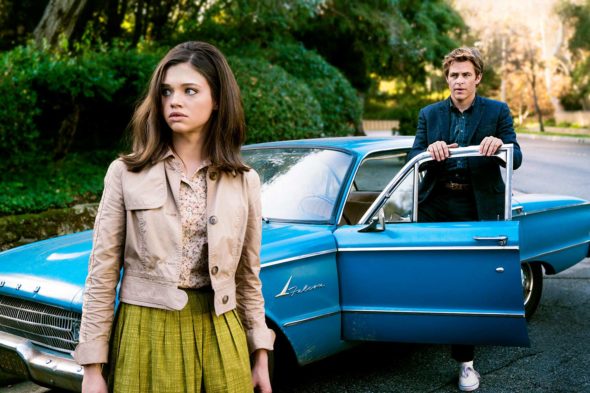
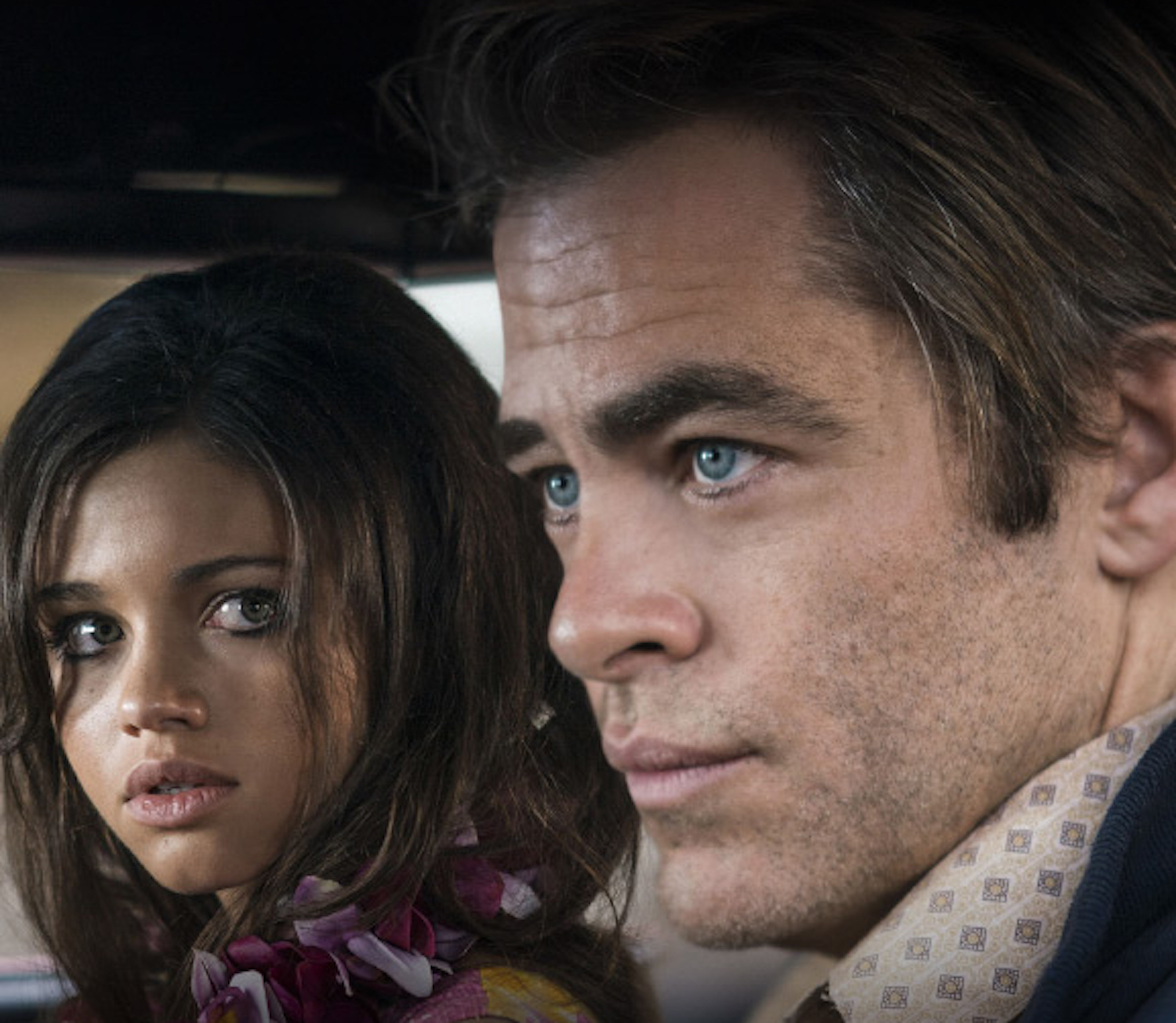
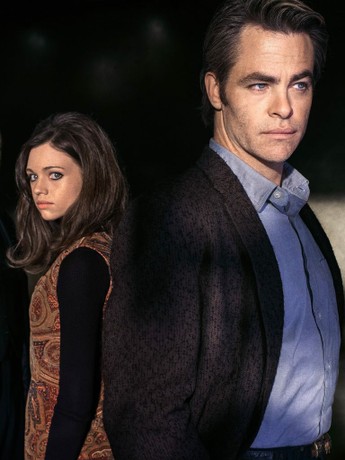
India Eisley plays Fauna Hodel, a young woman raised in a Black family in Nevada who discovers that much of what she had been told about her birth was either incomplete or false. Chris Pine stars alongside her as journalist Jay Singletary, who joins Fauna as she investigates her past.
The broad outline comes from real events and from Fauna Hodel’s memoir, One Day She’ll Darken.
But the television version adds fictional characters, compresses timelines and turns Fauna’s long, deeply personal search for identity into something closer to a noir mystery.
The real story was less cinematic in some ways.
In others, it was even stranger.
Did Fauna Hodel Really Grow Up Poor in Nevada?
Yes.
Fauna Hodel was born on August 1, 1951, at Saint Elizabeth’s Hospital in San Francisco.
She did not grow up with the Hodel family.
Instead, she was taken to Nevada and raised by Jimmie Lee Greenwade and her common-law husband in Sparks, just outside Reno. Jimmie Lee worked as a maid, while her partner worked shining shoes, and Fauna later described a childhood marked by financial hardship.
The family raising her was Black.
Fauna, however, had unusually light skin.
Her birth certificate appeared to provide an explanation: it identified her mother as Tamar Hodel while describing her father as Black, although his name was withheld.
For years, Fauna believed that meant she was biracial.
Only much later would she learn that the story surrounding her racial identity was far more complicated.
Why Did Her Family Call Her “Pat”?
The television series uses the tension surrounding Fauna’s identity as one of its central themes, and that struggle came directly from her life.
Although she had been born Fauna Hodel, the family raising her called her Patricia Ann Greenwade, or Pat.
She was also sometimes called “White Patty” because of her complexion.
Fauna grew up believing that she was part Black and even remembered expecting her skin to become darker as she got older.
It never did.
That left her in an increasingly confusing position.
She said she experienced prejudice from both Black and white people and struggled with the feeling that she did not completely belong to either world.
At the same time, Fauna emphasized that there was genuine love in her adoptive family, particularly from her grandmother, whose religious faith became important to her.
Her search for biological identity would eventually become one of the defining journeys of her life.
Was Chris Pine’s Journalist Jay Singletary a Real Person?
No.
This is one of the biggest inventions in I Am the Night.
Chris Pine’s Jay Singletary — a troubled journalist who becomes involved in Fauna’s investigation — did not exist as a single historical person.
Director Patty Jenkins explained that the character was intended to represent various men who existed around the broader story, including journalists and investigators connected in some way to the Black Dahlia case.
The series therefore gives Fauna a partner who allows the mystery to unfold like a detective story.
In reality, Fauna did not travel around Los Angeles solving her family mystery with a disgraced reporter.
Her investigation unfolded much more gradually, over many years.
When Did Fauna First Learn She Had Been Given Away?
Fauna knew from childhood that Jimmie Lee was not her biological mother.
Strictly speaking, she had been given away rather than formally adopted.
Jimmie Lee showed Fauna her birth certificate, which listed her biological mother as Tamar Hodel. Her father’s identity was absent, although the document described him as Black.
That single piece of paper created more questions than answers.
Why had Tamar given her away?
Who was her father?
Why didn’t Fauna look the way she thought a biracial child was supposed to look?
And who exactly were the Hodels?
Fauna later said she became obsessed with searching for clues, comparing herself to a young detective.
The title of her memoir, One Day She’ll Darken, came from the strange expectation surrounding her childhood — the belief that the supposedly mixed-race girl’s complexion would eventually change.
Was Jimmie Lee’s Drinking Problem Real?
Yes.
The miniseries did not invent the instability in Fauna’s childhood.
Fauna described Jimmie Lee as an alcoholic whose life could become chaotic and sometimes abusive. She recalled her mother getting into fights and spending periods in jail.
Their relationship was complicated.
Fauna believed Jimmie Lee loved her deeply, but she also felt that her light skin created resentment and tension inside the household.
The contradiction followed Fauna for years: she could be deeply loved by the family raising her and still feel uncertain about whether she truly belonged there.
That emotional struggle ultimately became just as important to Fauna’s story as the mystery of the Hodel family itself.
How Did Fauna Actually Find Her Biological Family?
The real breakthrough did not come from a journalist.
It came from a nun.
Fauna had begun investigating her origins when she was still young, repeatedly studying the limited information on her birth certificate.
Years later, while working at Saint Mary’s Hospital in Reno, she became friendly with a nun named Sister Hillary.
Fauna told her the story.
Sister Hillary knew that Fauna had been born at Saint Elizabeth’s Hospital in San Francisco and decided to help. She traveled there and investigated the hospital’s records.
She returned with an extraordinary piece of information.
Fauna’s maternal grandfather was Dr. George Hodel.
That discovery opened the door to everything that followed.
Fauna eventually contacted George, who was then living in Asia. She told him that she wanted to find Tamar.
George reportedly tried to discourage her, but eventually revealed that Tamar was living in Hawaii.
Finding her was surprisingly simple.
Fauna contacted telephone information and obtained a number for Tamar.
In 1974, when Fauna was around 23, she traveled to Hawaii to finally meet the woman who had given birth to her.
What Did Tamar Tell Fauna About Her Birth?
The meeting produced answers, but it also created new uncertainties.
Tamar told Fauna that she had suffered sexual abuse within her family and accused her father, George Hodel, of having an incestuous relationship with her when she was a girl.
That history immediately raised a disturbing question for Fauna:
Could George Hodel have been both her grandfather and her biological father?
According to Fauna’s account, Tamar denied it.
She reportedly said that an earlier pregnancy involving George had ended in an abortion. Tamar instead told Fauna that Fauna had been conceived later when another white man sexually assaulted her.
If Tamar’s version was accurate, Fauna’s birth certificate had deliberately given false information about her father’s race.
But Fauna was never entirely certain what to believe.
Other relatives warned her that Tamar could be unreliable and manipulative, and Fauna spent many years struggling with whether she could trust her biological mother’s version of events.
She later said it took more than two decades before she could finally open herself emotionally to Tamar.
The central mystery of Fauna’s parentage was therefore never resolved as neatly as television storytelling might suggest.
Did George Hodel Really Watch Fauna From a Distance?
According to Fauna, yes.
This is one of the stranger elements of her memoir.
Fauna recalled repeatedly noticing people who seemed to be following or monitoring her.
One incident particularly stayed with her.
While she was in San Diego with her daughter Yvette, an older man reportedly emerged from a limousine, approached them and silently stared before returning to the vehicle.
At the time, Fauna did not recognize him.
Later, after seeing photographs, she became convinced the man had been George Hodel.
Fauna and her husband Billy also suspected that their telephone calls might have been monitored because they sometimes heard unusual clicks and echoes on the line.
Before Jimmie Lee died, she allegedly told Fauna that a man posing as a chauffeur had kept watch over her for years.
Fauna came to believe George had been monitoring her life.
Why he would have done so, however, remains uncertain.
Protection, fear, family secrecy and self-preservation have all been suggested as possible motives.
What Happened to Fauna’s Cousin Johnny?
Another disturbing incident deepened Fauna’s suspicions.
According to her account, a cousin named Johnny unexpectedly contacted her after they had been out of touch for years.
His behavior during the call seemed strange. He reportedly made sexualized comments toward Fauna and spoke in a way she did not recognize from the cousin she remembered.
During that conversation, Fauna again noticed noises on the telephone that made her wonder whether someone was listening.
Johnny planned to visit her.
He never arrived.
Instead, his sister called to say that he had died under violent circumstances.
Fauna and her husband eventually wondered whether his death had somehow been connected to the suspicious phone call and whether someone monitoring them had become involved.
They suspected George Hodel.
However, their belief was never established as fact, and no evidence has conclusively proved that George Hodel had anything to do with Johnny’s death.
Why Was Fauna Given Away in the First Place?
The answer remains tangled in allegations surrounding the Hodel family.
In 1949, George Hodel was accused of sexually abusing his teenage daughter Tamar.
Witnesses testified during the case, but Hodel was ultimately acquitted.
Tamar later gave birth to Fauna in 1951.
She identified the baby’s unnamed father as Black.
Tamar would later offer an unusual explanation for that decision, saying that at the time she had idealized Black people in contrast to the white adults around her.
She was also a ward of the court and reportedly believed she had been told she could not keep her baby.
Fauna was eventually placed with Jimmie Lee Greenwade.
According to accounts surrounding the family, the arrangement began after a woman approached Jimmie Lee, who was working as a restroom attendant at a hotel and casino, about taking in an expected mixed-race baby.
Jimmie Lee agreed.
Fauna was taken to Nevada and raised there, largely separated from the complicated history of the Hodel family.
One possibility is that relatives wanted to distance themselves from a baby whose existence might revive questions surrounding Tamar, George and the earlier incest accusations.
But exactly who made which decisions — and why — remains disputed.
Was George Hodel Really Fauna’s Father as Well as Her Grandfather?
No definitive answer has ever emerged.
This is one of the darkest questions surrounding Fauna’s story, but it is important not to present speculation as established fact.
Tamar maintained that George had sexually abused her and that one pregnancy had resulted from their relationship.
She told Fauna, however, that this was not the pregnancy that produced her.
According to Tamar, that earlier pregnancy ended in an abortion and Fauna was conceived later by another white man.
Fauna herself remained uncertain.
She hoped George was not her biological father but acknowledged that she had never been able to completely resolve the question.
As a result, the possibility that George Hodel was both Fauna’s grandfather and father remains an allegation and theory — not a proven fact.
Who Was the Black Dahlia?
The name “Black Dahlia” belonged to Elizabeth Short, a 22-year-old woman whose murder became one of the most famous unsolved cases in American history.
Short’s body was discovered in Los Angeles on January 15, 1947.
The brutality and unusual precision of the crime immediately attracted enormous attention from police and the press.
Investigators considered numerous suspects over the years.
Among them was Dr. George Hodel.
Because of the apparent anatomical knowledge involved in the crime, authorities investigated suspects with medical backgrounds. Hodel, a physician, later drew particular interest from Los Angeles police after the allegations involving his daughter Tamar placed him under scrutiny.
The Black Dahlia murder was never officially solved.
George Hodel was never convicted — or even formally charged — with killing Elizabeth Short.
Where Did the Name “Black Dahlia” Come From?
Elizabeth Short did not use the name herself in the way later popular culture sometimes suggests.
The nickname emerged in press coverage after her death.
The 1946 film noir The Blue Dahlia, starring Alan Ladd and Veronica Lake, was still familiar to audiences at the time.
Combined with photographs of Short wearing dark clothing, the film’s title reportedly helped inspire newspapers to call the murdered young woman the “Black Dahlia.”
The name became inseparable from the case and helped turn an already shocking homicide into one of Los Angeles’ most enduring true-crime mysteries.
Could George Hodel Have Been a Serial Killer?
George’s son Steve Hodel believes so.
Steve, a former LAPD homicide detective, later investigated his own father and wrote Black Dahlia Avenger, arguing that George Hodel murdered Elizabeth Short.
He has gone considerably further than that.
Steve has attempted to connect his father to other unsolved killings in different locations, including crimes committed after George left the United States and eventually lived in Manila.
Steve considers similarities between several cases evidence of a broader pattern.
His conclusions remain controversial.
Critics have argued that many of the connections are circumstantial or speculative.
George Hodel therefore remains one of the most famous suspects associated with the Black Dahlia investigation, but the case against him has never been proved in court.
How Did Fauna Become Connected to the Black Dahlia Case?
The connection came entirely through George Hodel.
When allegations that George had abused Tamar became public, police began examining other parts of his life.
By then, Elizabeth Short’s murder was already more than two years old.
Authorities eventually placed Hodel under surveillance and secretly recorded conversations inside his home.
One recorded remark became especially notorious because Hodel appeared to discuss the possibility of having killed the Black Dahlia while suggesting that authorities could no longer prove it.
The statement increased investigators’ suspicions but did not result in a prosecution.
For Fauna, discovering that this man was her grandfather transformed her search for her biological family into something far darker.
She had begun by trying to understand why she had been given away.
She eventually discovered that the family name on her birth certificate was connected to one of America’s most infamous unsolved murders.
Did Fauna Tell Her Own Story Before I Am the Night?
Yes.
The television series was based largely on Fauna’s memoir, One Day She’ll Darken, which recounts roughly the first 25 years of her life.
Fauna drew partly from journals she had kept over the years and also spoke publicly about her experiences in interviews and documentary material.
Patty Jenkins became interested in adapting Fauna’s story long before the miniseries reached television.
Fauna knew that a screen project was being developed, although she did not live to see the completed series.
She died from breast cancer on September 30, 2017, at age 66.
I Am the Night premiered in 2019.
Was There an Earlier Movie About Fauna?
Yes — although audiences never officially got to see it.
A film called Pretty Hattie’s Baby was produced in the early 1990s and drew inspiration from Fauna’s childhood.
Alfre Woodard played the woman raising a light-skinned child whose origins were connected to a mysterious and powerful family.
Fauna was closely involved with the production.
Despite millions of dollars reportedly being spent and filming being nearly complete, the movie was never released.
Financial and legal problems were cited as major obstacles.
Fauna herself suspected that George Hodel might somehow have played a role in preventing the movie from reaching audiences because of the damage it could do to his reputation.
There is no established evidence proving that theory.
Decades later, I Am the Night finally brought a dramatized version of Fauna’s story to a major television audience.
Did Fauna Hodel Have a Family of Her Own?
Yes.
Fauna had two daughters.
She gave birth to her first daughter, Yvette, when she was 16.
Her younger daughter, Rasha, had a different father.
For a woman whose childhood had been dominated by racial uncertainty and questions about belonging, Fauna eventually found meaning in the differences within her own family.
She described one daughter as biracial while the other was blond and blue-eyed.
Rather than seeing those differences as another source of division, Fauna came to view them as something beautiful.
Her daughters, she said, represented “the color of love.”
The Real I Am the Night Story Was Ultimately About More Than the Black Dahlia
The Black Dahlia connection is understandably the most sensational element of Fauna Hodel’s story.
George Hodel was a real suspect.
His relationship with Tamar generated disturbing accusations.
And the possibility that Fauna’s existence was connected to secrets the Hodel family desperately wanted buried created irresistible material for a crime drama.
But reducing Fauna’s life to the Black Dahlia mystery misses much of what made her story remarkable.
Long before she knew anything about Elizabeth Short, she was a girl in Nevada staring at a birth certificate and wondering why the facts written there didn’t seem to match the person she saw in the mirror.
She believed she was biracial.
She waited for her skin to darken.
She struggled to understand where she belonged.
Then she learned that the family she had spent years trying to find carried secrets far more complicated than anything she could have imagined.
I Am the Night turns that journey into a noir thriller by giving Fauna a fictional reporter and bringing the Black Dahlia investigation closer to the center of the action.
The real Fauna took a much longer road.
There was no Jay Singletary leading her through the mystery.
There was a birth certificate.
A helpful nun.
A telephone call to a grandfather living overseas.
A trip to Hawaii.
And decades spent trying to decide which pieces of her family’s story could actually be trusted.
That uncertainty may be the biggest difference between television and real life.
A television mystery eventually needs answers.
Fauna Hodel’s story never gave her all of them.