Willie Nelson Wrote “On the Road Again” on an Airsickness Bag — Before the Melody Even Existed

Few songs announce Willie Nelson as quickly as “On the Road Again.”
The opening rhythm arrives, Nelson begins singing about returning to the highway, and within seconds almost everyone knows what is coming.
The song has become bigger than country music. It is played on road trips, in movies, at sporting events and anywhere people want to capture the feeling of leaving home and heading somewhere new.
It sounds like the kind of song Nelson must have carried around in his head for years.
After all, few musicians have spent more of their lives touring.
But “On the Road Again” did not begin during a lonely night on a tour bus or after months of carefully shaping lyrics in a notebook.
It began on an airplane while Nelson was discussing a movie.
Someone asked whether he could write a song about life on the road.
The idea came almost immediately.
There was only one problem.
Nelson did not have a proper notebook in front of him.
So he grabbed something available on the plane and started writing.
An airsickness bag.
Within minutes, the words to one of the most recognizable traveling songs in American music were taking shape on something designed for passengers who felt sick.
And at that point, Nelson had not even figured out what the melody would sound like.
The Song Began With a Movie
Around 1979, Nelson was preparing for Honeysuckle Rose, the 1980 film in which he would play Buck Bonham, a touring country singer struggling to balance life on the road with his responsibilities at home.
The role was not exactly a stretch.
Nelson knew touring.
By then, he had spent years moving from one stage to another, traveling with musicians who had become almost like an extended family.
The filmmakers wanted the movie to have a song that captured that existence.
While traveling by plane with director Jerry Schatzberg and executive producer Sydney Pollack, Nelson was asked whether he could come up with something about musicians constantly traveling around the country.
Nelson later remembered the conversation as remarkably casual.
What kind of song did they want?
Something about being on the road.
That phrase apparently triggered everything.
Being on the road again.
Nelson immediately recognized that the idea could work.
Then he began writing.
The Airplane Supplied His “Notebook”
Nelson did not need an elaborate songwriting ritual.
There was no piano nearby.
No recording studio.
No stack of yellow legal pads.
He simply used what was available.
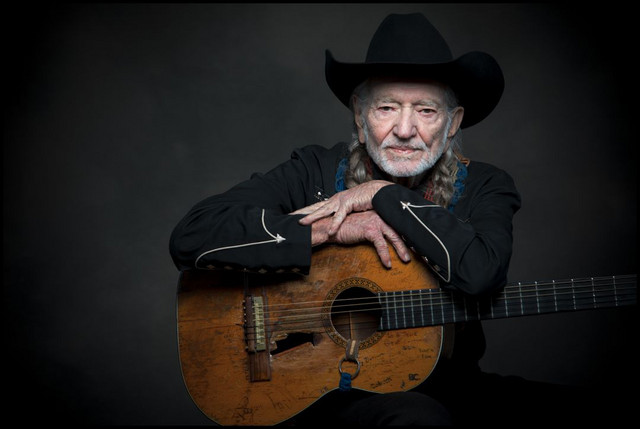
Over the years, Nelson described grabbing an envelope or an airsickness bag; in later recollections, he confirmed the famous version of the story that he had written the lyrics on the airplane sickness bag.
The image could hardly be less glamorous.
One of the most enduring songs of Nelson’s career began on a disposable object tucked into an airplane seat.
But the words arrived quickly.
The central idea was already clear: the joy was not simply reaching another city.
It was traveling.
It was making music with friends.
It was the movement itself.
Nelson reportedly completed the lyrics in less than 10 minutes.
For a song that would ultimately come to represent much of his public identity, the writing process was almost absurdly fast.
Then the filmmakers wanted to know something obvious.
What did it sound like?
Nelson had another problem.
It did not sound like anything yet.

There Was No Melody
The lyrics had arrived before the music.
Nelson had the concept and the words, but he had not yet composed the melody that millions of people would eventually recognize almost instantly.
That came later.
According to Nelson’s recollection, he developed the melody about a week afterward, when the time came to record the song.
This detail makes the airplane story even stranger.
Nelson had confidently presented the beginnings of a new movie song before one of its most important elements existed.
He simply trusted that he would find it.
When he did, he gave the song a driving rhythm that sounded perfectly suited to movement.
The music feels almost like transportation itself.
Once it starts, it wants to keep going.
The Song Became the Perfect Theme for Honeysuckle Rose
In Honeysuckle Rose, Nelson played a musician whose life revolves around touring.
That made “On the Road Again” a natural centerpiece.
But the song quickly escaped the movie.
Listeners did not need to know anything about Buck Bonham or the film’s storyline to understand what Nelson was singing about.
The idea was universal.
The road represented freedom.
For Nelson specifically, it represented something even more personal.
Touring was not merely a business obligation that interrupted his real life.
In many ways, touring was his real life.
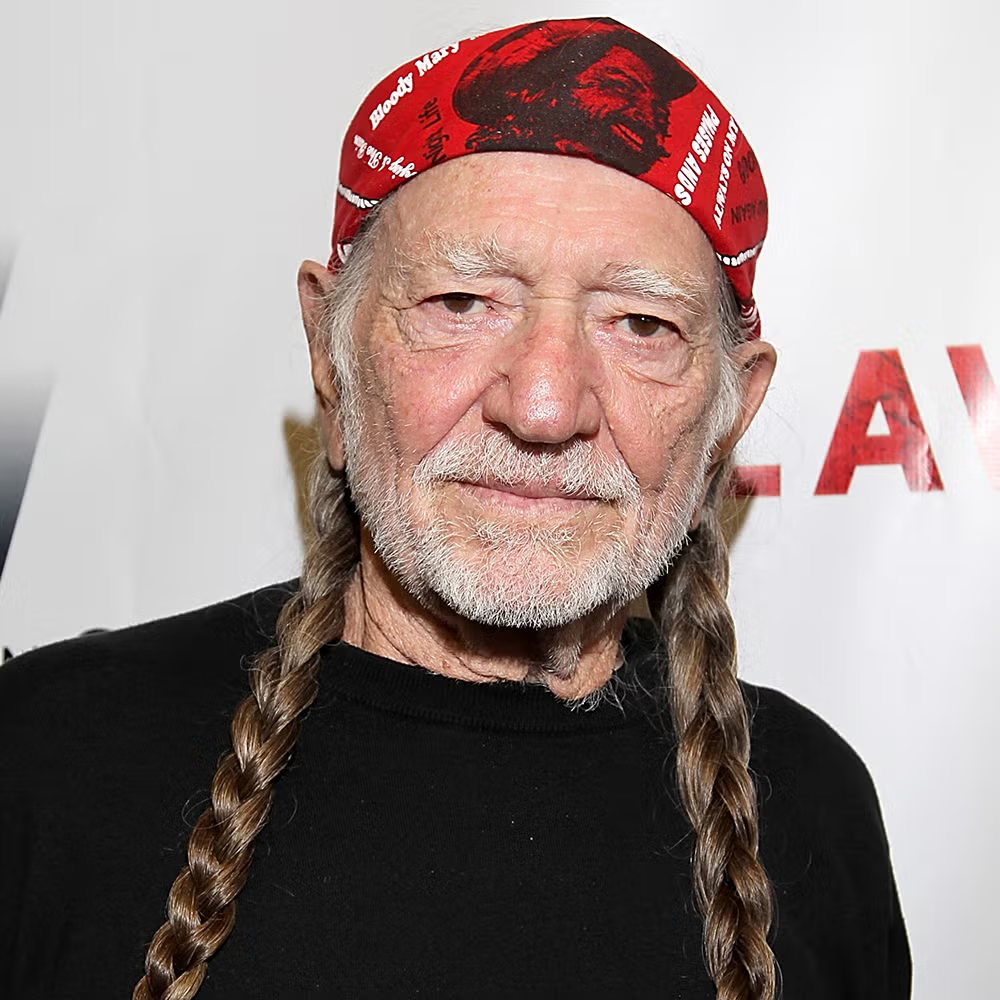
His band was known as the Family.
Night after night, they traveled together, played together and moved toward another town.
Without intentionally setting out to write an autobiography, Nelson had created something remarkably close to one.
He later observed that those few lines had essentially captured the story of his life.
Even the Famous Recording Had a Loose, Live Quality
The creation of the song was spontaneous, and its recording retained some of that same character.
During the filming of Honeysuckle Rose, Nelson and his band performed music live before audiences.
Engineer Bradley Hartman later recalled that “On the Road Again” was recorded multiple times at different locations before the right performance emerged.
The version ultimately used for the record came from a performance at Austin’s Soap Creek Saloon.
Hartman remembered one particular take having an energy that immediately separated it from the others.
The performance was genuinely live.
That was appropriate.
A song about loving life as a traveling musician did not need to feel clinically perfect.
It needed to move.
“On the Road Again” Became Much Bigger Than the Movie
Released in 1980, “On the Road Again” reached No. 1 on Billboard’s country chart and crossed into the pop Top 20.
It also earned Nelson a Grammy for Best Country Song and an Academy Award nomination for Best Original Song.
More importantly, it became permanent.
Plenty of No. 1 country songs disappear from everyday culture after their moment passes.
“On the Road Again” did the opposite.
Its title became a phrase people could use even without thinking about Willie Nelson.
Going on vacation?
On the road again.
Beginning another tour?
On the road again.
Leaving for another long drive?
Someone inevitably starts singing it.
For Nelson, the association became almost impossible to separate from his image.
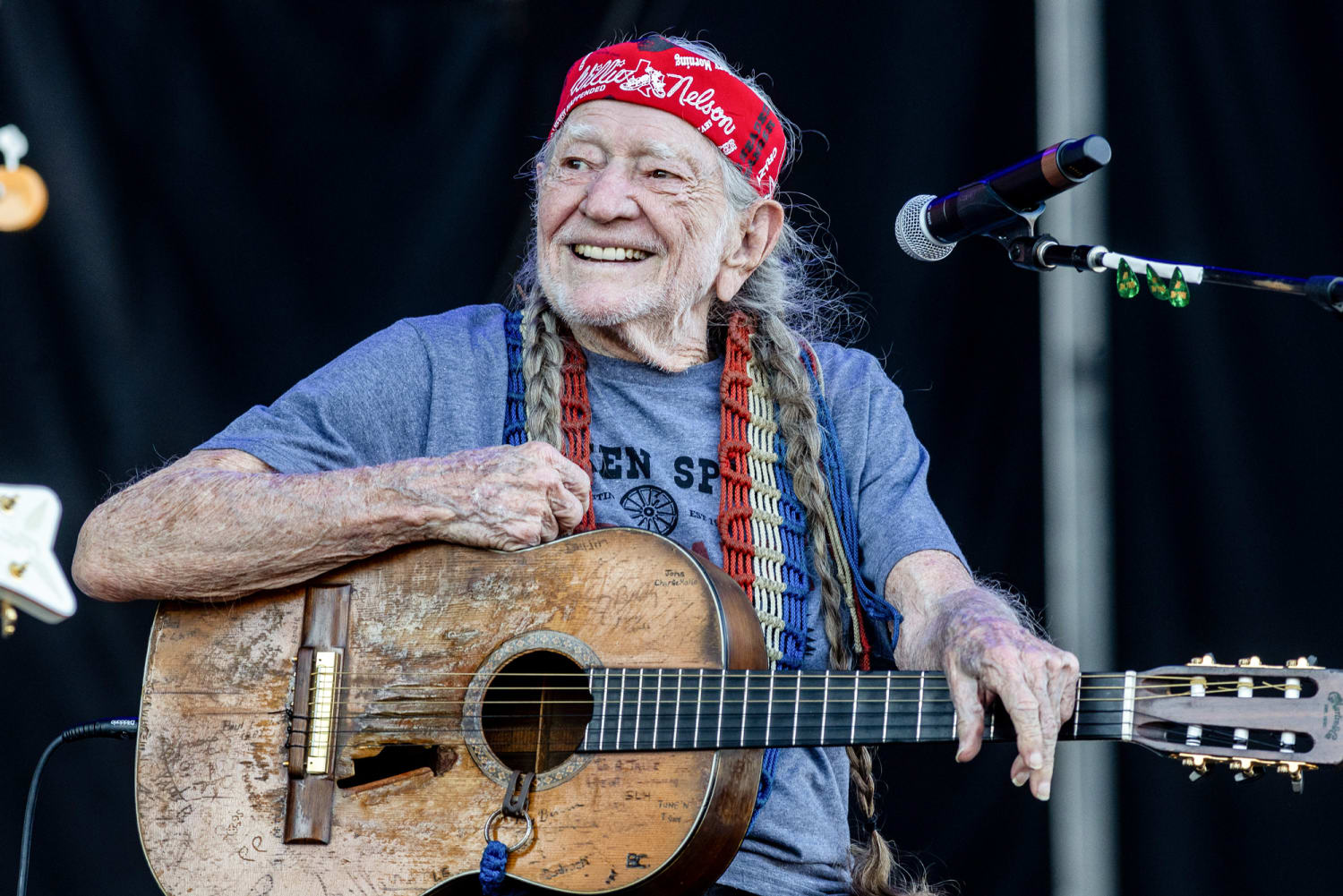
The man famous for spending decade after decade traveling had somehow written the perfect anthem for himself without even sitting down intending to create one.
Sometimes a Great Song Doesn’t Need a Great Origin
Songwriting legends often become romanticized.
People imagine inspiration arriving at midnight after heartbreak, or musicians spending months searching for exactly the right line.
“On the Road Again” offers almost the opposite story.
Willie Nelson was sitting on an airplane.
The people making Honeysuckle Rose needed a song.
They asked him for one about touring.
Nelson realized that “on the road again” was essentially the entire idea.
He grabbed what was available, scribbled the words down and finished the lyrics within minutes.
There was not even a melody yet.
That would come later.
Then the movie arrived, the record became a hit, and those casually written words grew into one of the most recognizable songs of Nelson’s career.
Decades later, audiences still sing it whenever the highway opens up in front of them.
And it all started with Willie Nelson looking around an airplane for something — anything — he could write on.
The nearest piece of paper happened to be an airsickness bag.