He Waited 166 Days for a New Heart — Years Later, He Became the Cardiologist Treating Patients Just Like Him
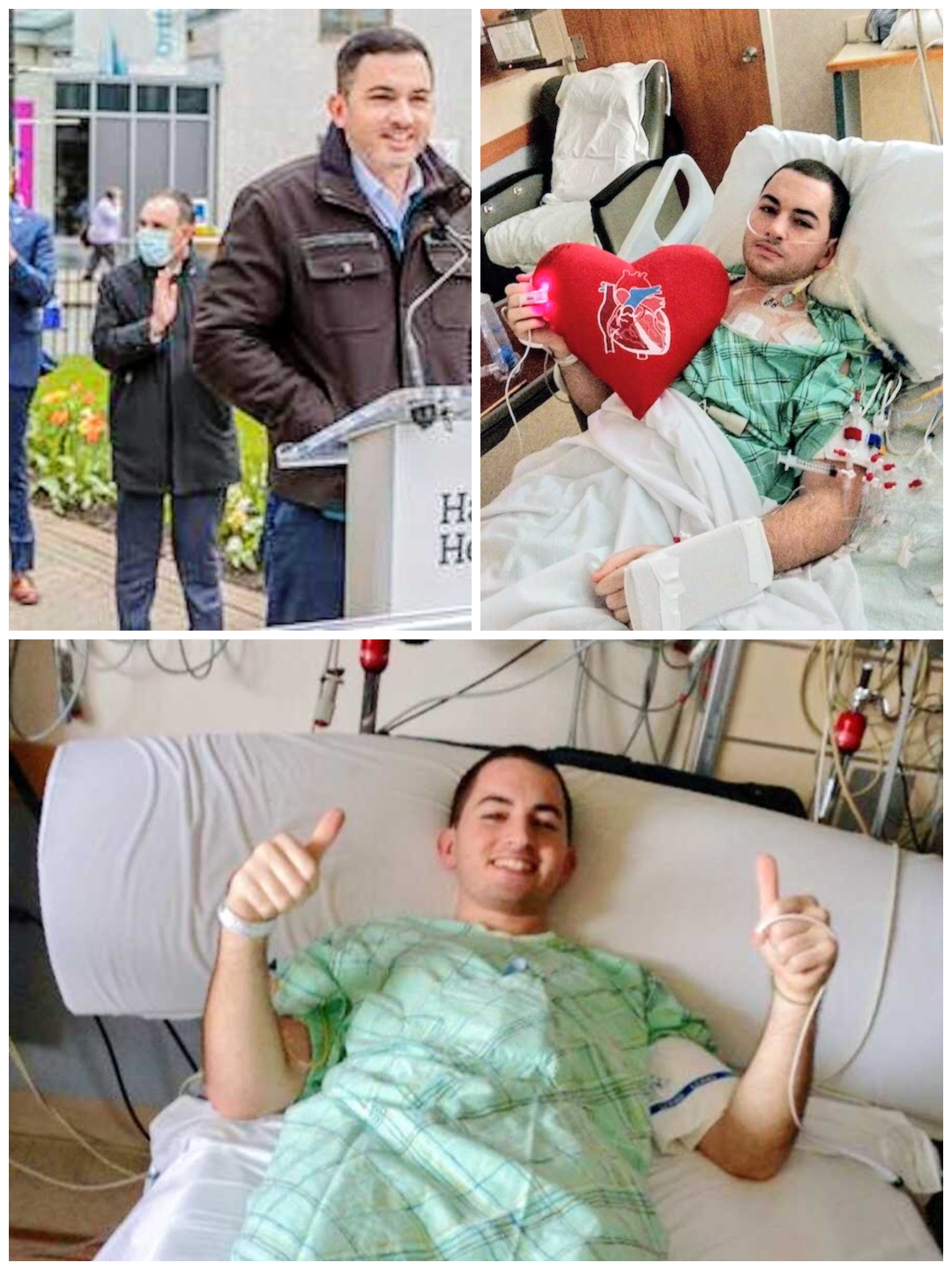
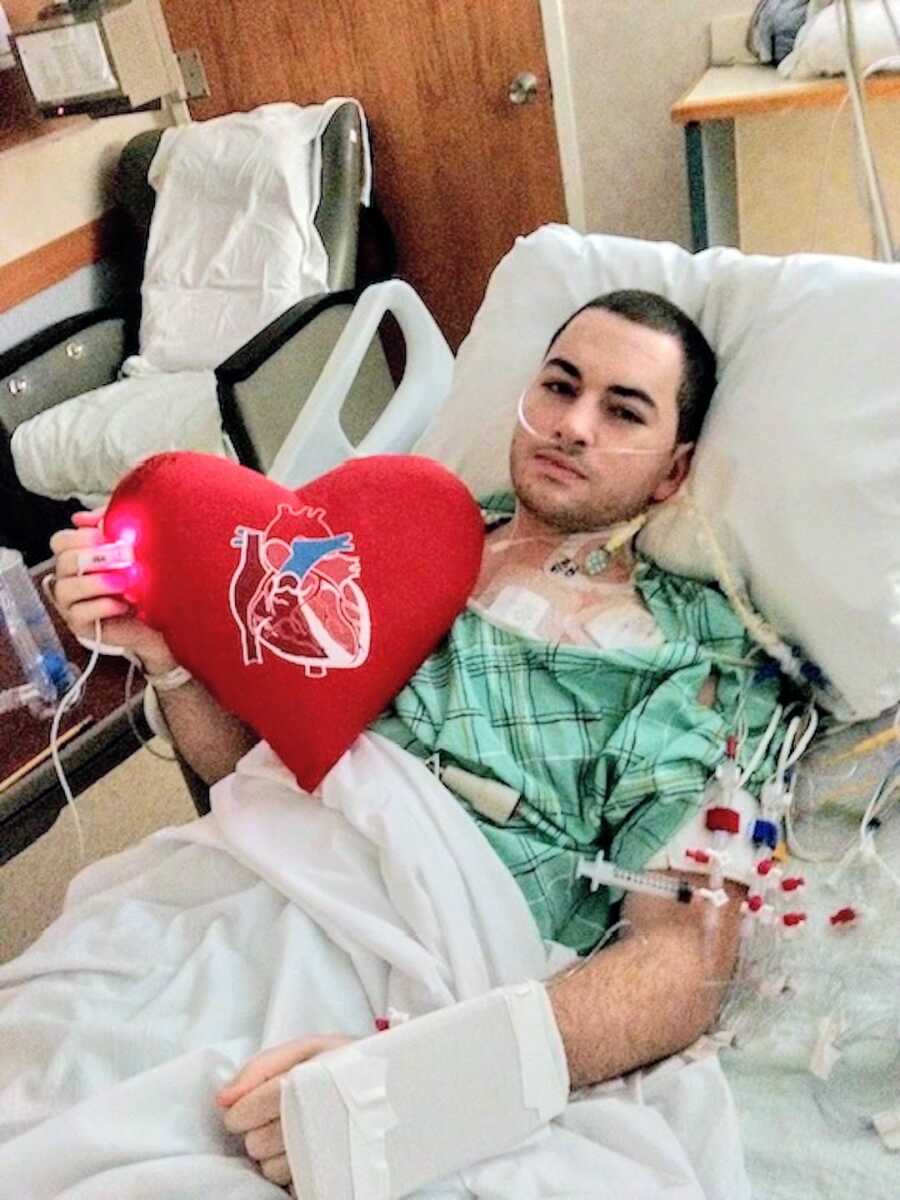
For 166 days, Colby Salerno lived inside a cardiac intensive care unit waiting for a heart that might never come.
He was only 24. His medical ambitions had been put on hold, walking even short distances was becoming difficult, and the future he had spent years imagining suddenly depended on an organ donor he had never met.
Then one night, a nurse entered his hospital room with the news he had been waiting more than five months to hear.
A donor heart was available.
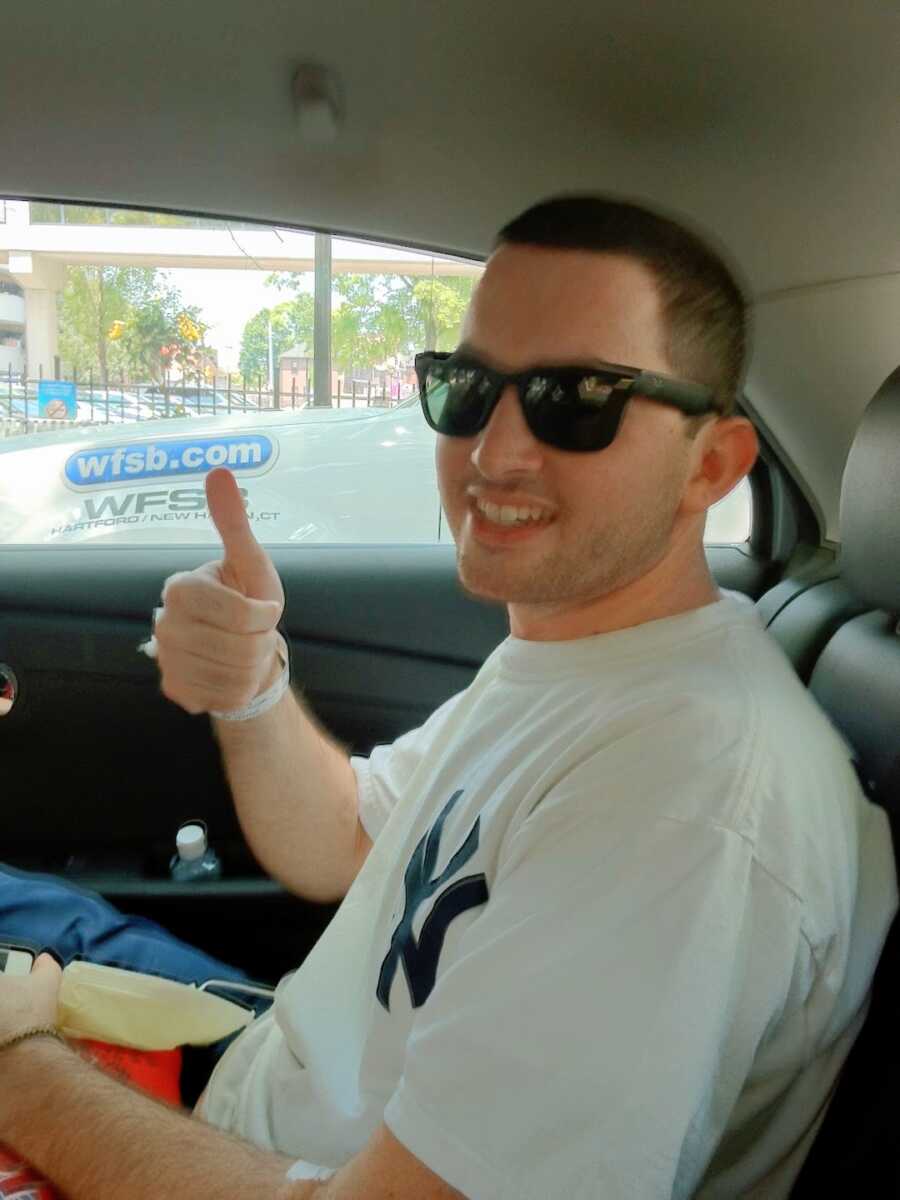
Ten days after the transplant, Salerno walked outside and felt sunlight on his face for the first time in nearly six months.
But receiving a new heart did much more than save his life. It eventually brought him back into the same world of medicine that had cared for him—this time as a physician.
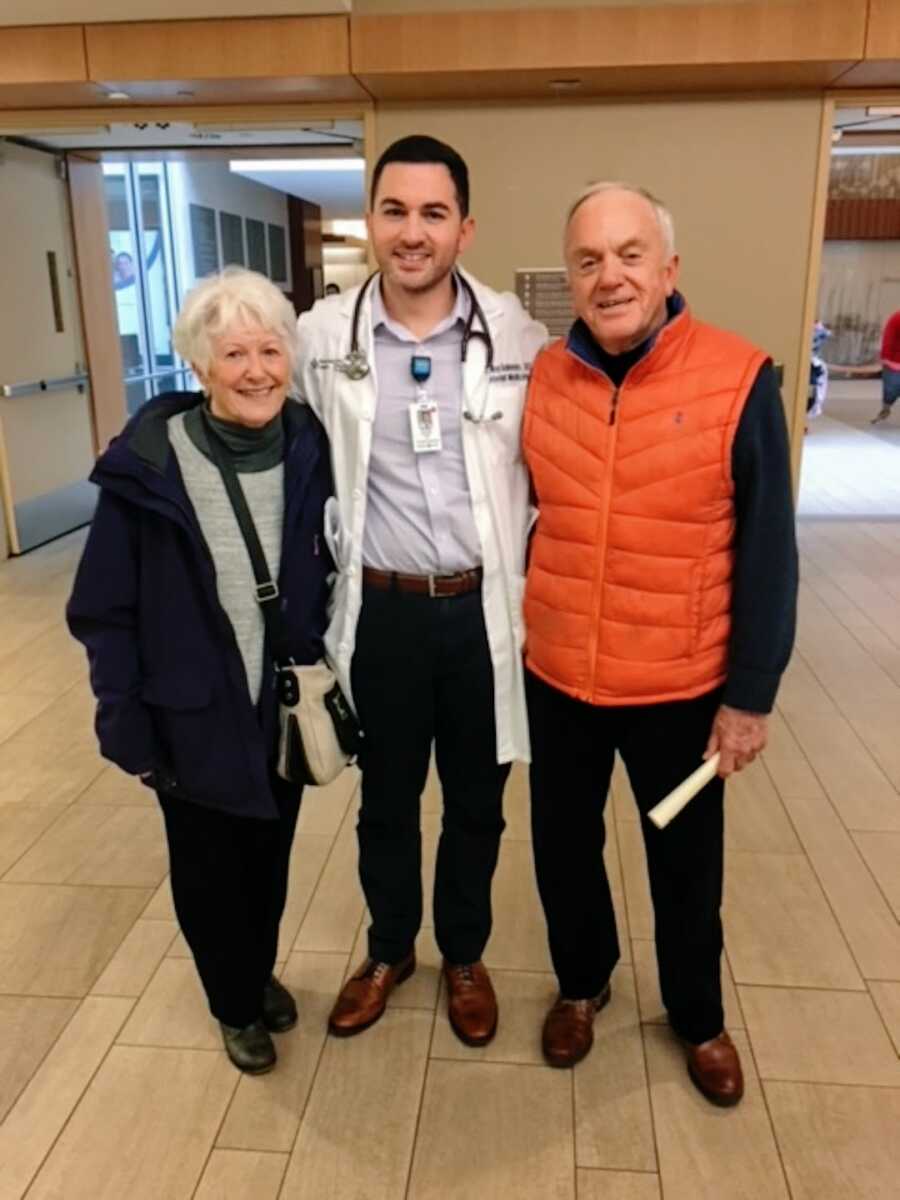
Years later, Dr. Colby Salerno became a cardiologist, able to understand heart patients from an extraordinary perspective: he had lived on both sides of the stethoscope.
The First Warning Appeared on the Soccer Field
Salerno’s journey with heart disease began long before the transplant.
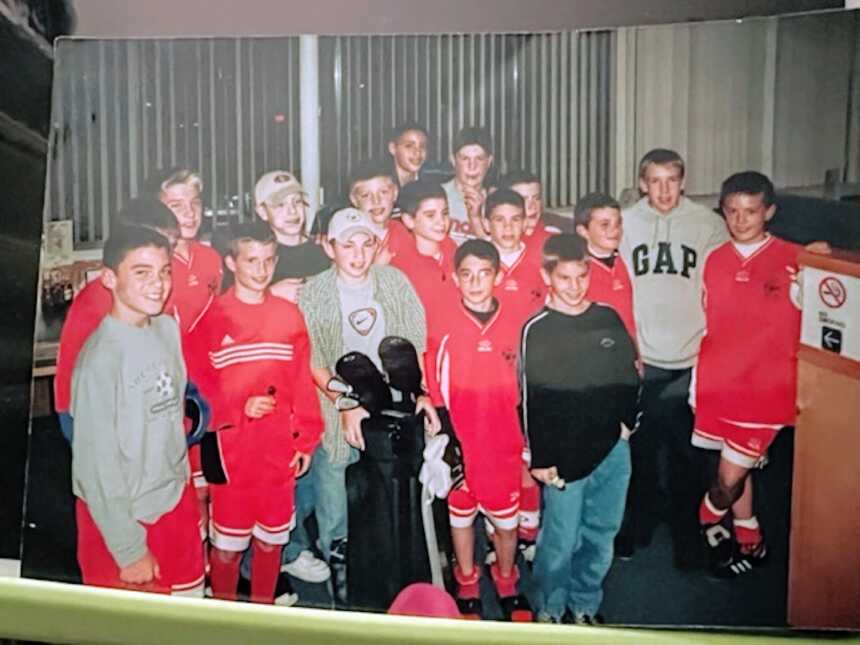
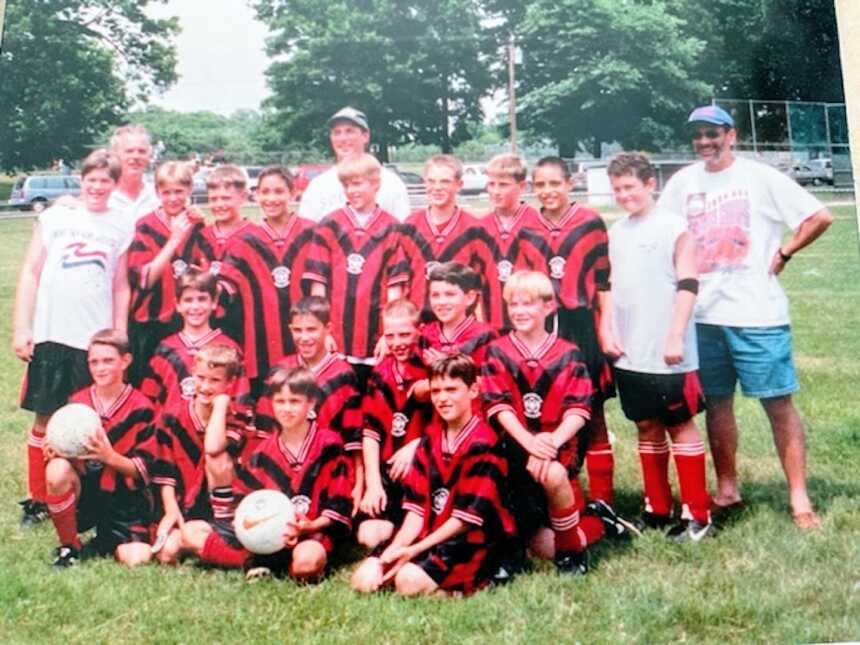
At 11, he was deeply involved in competitive soccer and played on three teams. Like many talented children, he imagined that one day he might become a professional player.
Then his breathing began to betray him.
Whenever he exerted himself, Salerno struggled to catch his breath. Doctors initially believed exercise-induced asthma was responsible and prescribed three inhalers.
They did not solve the problem.
By seventh grade, his endurance difficulties were becoming increasingly noticeable. During a routine physical, Salerno and his parents again mentioned his shortness of breath and fatigue.
This time, his doctor listened carefully to his heart and suspected a murmur.
A referral to a pediatric cardiologist and an echocardiogram finally revealed the real problem: Salerno had hypertrophic cardiomyopathy, a condition involving abnormal thickening of the heart muscle.
He was 12 years old.
Competitive sports had to stop. For a boy whose identity revolved around soccer, the diagnosis felt devastating.
At 14, a Defibrillator Was Implanted in His Chest
Salerno tried replacing soccer with golf, but the transition never felt natural.
Meanwhile, his heart disease continued progressing.
At 14, doctors determined that the thickening of his heart had reached a point where he needed an automatic implantable cardioverter-defibrillator, or AICD.
The device was placed in his chest early in his freshman year of high school.
For a teenager, even the visible lump beneath his skin became emotionally difficult. Salerno remembered becoming self-conscious at swimming parties because he did not want people to notice it.
Then came a far more frightening experience.
While playing paintball deep in the woods with friends, his heart rate rose enough to activate the device.
It shocked him nine times.
Salerno recalled screaming from the intense pain while his friends rushed toward him. Because of their remote location, firefighters had to carry him out on a stretcher.
Doctors later adjusted the AICD settings, and he never experienced another episode like it.
Yet something important had already begun happening during those teenage years.
Instead of pushing him away from medicine, his heart condition was drawing him toward it.
Salerno admired his pediatric cardiologist, Dr. Heller, and by high school he had begun imagining a new future for himself.
He wanted to become a cardiologist.
His Childhood Doctor Inspired a New Dream
Salerno enrolled at St. Michael’s College in Vermont, earning a biology degree while completing the courses necessary for medical school.
His heart remained relatively stable during college, but his symptoms gradually worsened.
Eventually, even climbing a single flight of stairs could leave him so breathless that he needed to stop and recover.
After graduation, Salerno planned to train as a paramedic before applying to medical school. He hoped the work would provide practical medical experience.
Instead, another cardiology appointment changed his life.
His pediatric cardiologist referred him to a hypertrophic cardiomyopathy specialist at Tufts Medical Center.
Salerno expected doctors might recommend a procedure to improve blood flow through his heart.
The actual recommendation was far more serious.
His condition had become so advanced that his best chance at a meaningful future was a heart transplant.
He was crushed.
Medical school would have to wait. Paramedic training would have to wait. Much of his ordinary life would have to wait.
And there was no way to know how long.
More Than a Year Passed Without a Donor Heart
Salerno spent more than a year on the transplant waiting list while his health continued deteriorating.
Eventually, even eating a large meal could make him short of breath.
His condition reached the point where doctors decided he needed to remain hospitalized until a suitable donor heart became available.
Salerno chose Hartford Hospital in Connecticut so he could stay relatively close to home.
He would spend the next 166 days inside its cardiac intensive care unit.
Physically, he remained relatively stable.
Emotionally, the confinement was exhausting.
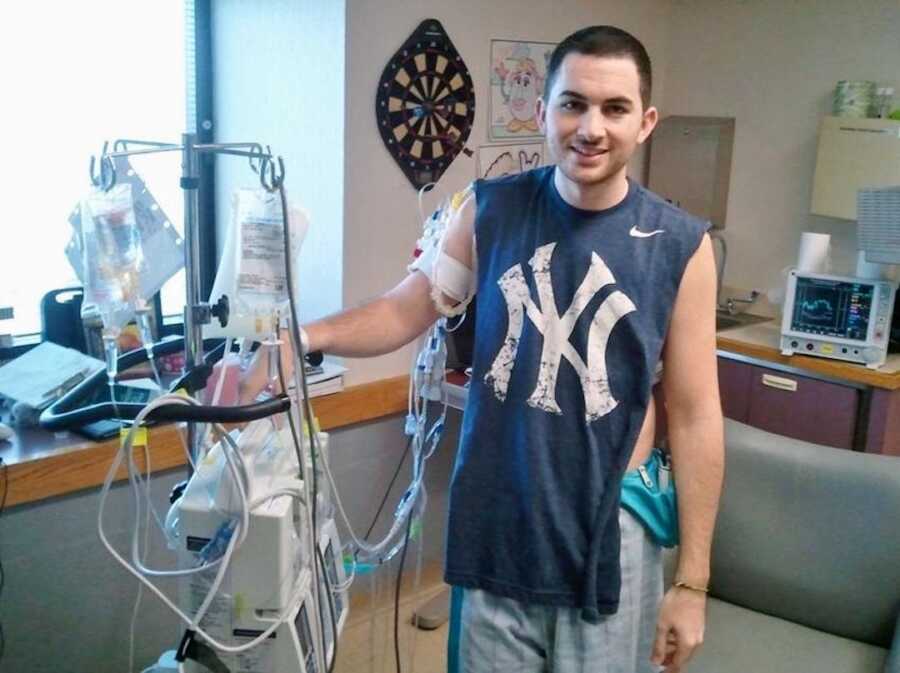
Salerno could not simply walk outside. He could not shower normally. Much of his movement consisted of walking around the nurses’ station accompanied by an IV pole.
To cope with the isolation, he began writing a blog called Tales From The 10th Floor, documenting what it felt like to spend months hospitalized while still in his twenties.
The nurses became an important part of his life. They talked with him, played games and sometimes brought him food better than what he normally received in the hospital.
But some days made his situation especially painful.
His 24th birthday came and went inside the hospital.
So did Christmas.
His family gathered inside his room for Christmas dinner, but Salerno remembered that the celebration felt nothing like the holidays he knew before becoming seriously ill.
Then a Nurse Walked In With the News
After months of waiting, Salerno finally learned that a heart had become available.
The news brought conflicting emotions all at once.
Somewhere, another person had died.
Salerno felt sadness for the donor and the donor’s family. He was frightened by the surgery waiting for him. At the same time, he felt enormous relief that he might finally leave the hospital and resume the life that had been suspended.
His surgery was scheduled for the following morning.
Unable to sleep, Salerno found himself blogging at 2 a.m.
He titled the entry “It’s Time.”
The words referred to the operation.
In retrospect, they described something much larger.
It was time for his life to begin again.
Ten Days Later, He Walked Into the Sun
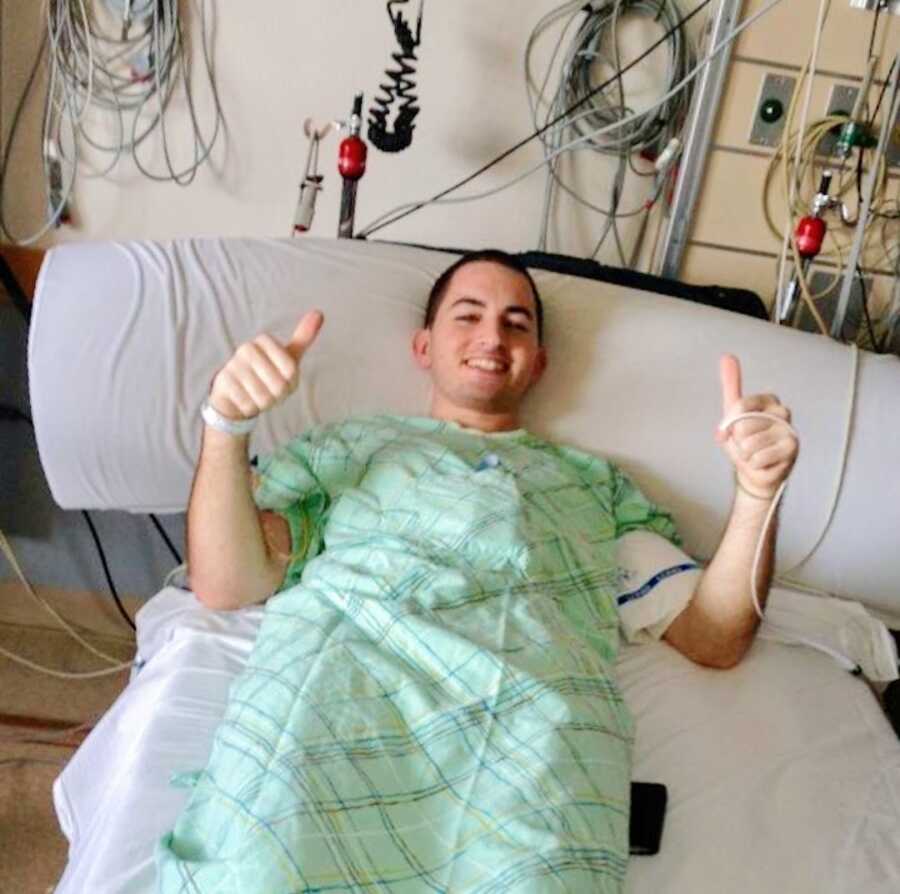
The transplant succeeded.
Only 10 days after surgery, Salerno left the hospital.
One of the moments he remembered most vividly was astonishingly simple: sunlight touching his face.
After spending nearly six months confined inside the hospital, feeling the warmth of the sun again represented freedom.
Recovery and rehabilitation followed, but Salerno was impatient to return to the future he had planned before becoming so sick.
Seven months after receiving his new heart, he entered a one-year graduate program designed to strengthen his medical school application.
Two years after the transplant, he sat in his first medical school class.
He completed four years of medical education in Erie, Pennsylvania, then matched into an internal medicine residency at the University of Massachusetts-Baystate in Springfield.
The boy who had once watched his pediatric cardiologist with admiration was now treating patients himself.
The Patient Became the Cardiologist
Salerno eventually matched into cardiology at UMass-Baystate.
His medical history was no longer simply something he had survived.
It became part of the way he practiced medicine.
He understood what it felt like to undergo frightening procedures.
He knew what long hospital stays could do emotionally.
He understood the uncertainty patients experience when physicians discuss serious heart disease, because he had once been the person sitting on the other side of that conversation.
Salerno did not believe in minimizing those difficulties for his patients. Instead, his own experiences allowed him to speak candidly about how difficult treatment could be while still showing what life afterward might hold.
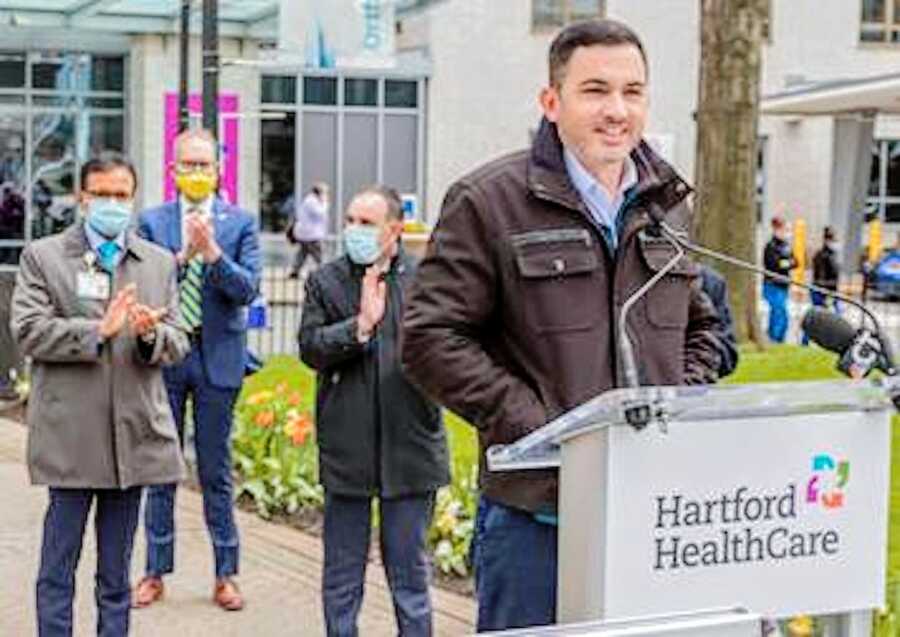
His journey ultimately led him toward Advanced Heart Failure and Transplant Cardiology—the very field that had once given him another chance at life.
For Salerno, that second chance began with a donor he never could have known in the ordinary course of life.
A donated heart allowed him to return to school, become a physician and eventually care for people facing some of the same fears he once carried.
At 12, heart disease ended his dream of becoming an athlete.
At 24, it nearly ended his plans for medical school.
But the doctors and nurses who cared for him—and the donor whose heart made his future possible—gave him another direction.
Now, when Salerno places a stethoscope against a patient’s chest, he understands something most cardiologists never can from medical training alone.
He knows exactly what it feels like when the stethoscope is on the other side.