37 years later, new DNA hope emerges in the murder of 10-year-old Amy Mihaljevic
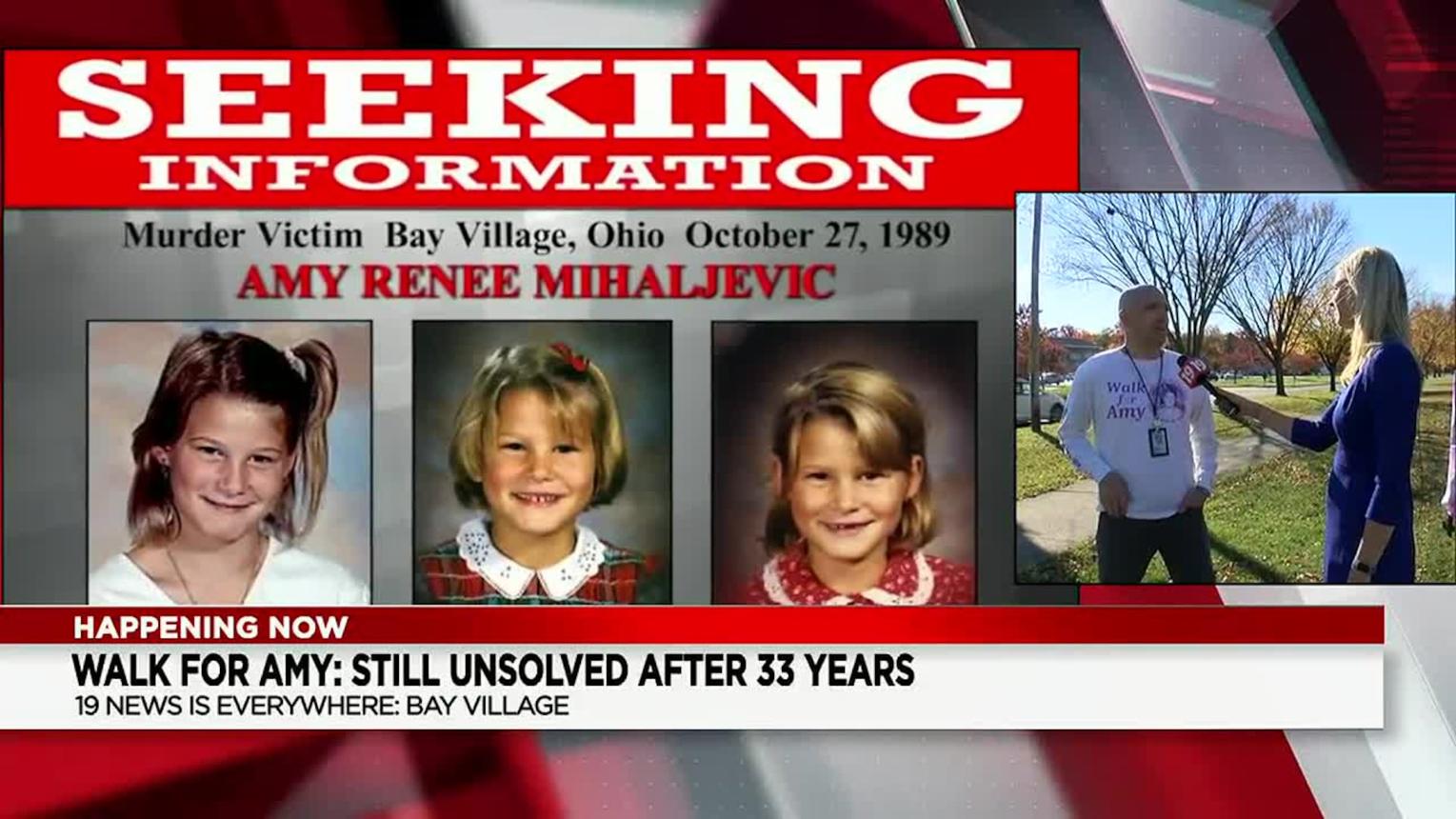
For 37 years, one question has haunted Bay Village, Ohio:
Who killed 10-year-old Amy Mihaljevic?
Amy disappeared on November 27, 1989, after leaving Bay Village Middle School. Her body was discovered months later, in February 1990, in a remote area of Ashland County.
More than three decades later, her killer has never been identified.

Now, investigators and Amy’s family are once again hoping that modern DNA technology could finally provide the answer.
The disappearance that shocked a community
Amy was only 10 when she vanished.
Investigators learned that she had apparently agreed to meet someone after school. The person had reportedly contacted her by telephone and told her that her mother was going to receive a gift.
Amy left school that afternoon.
She never came home.
Her disappearance immediately triggered a massive search involving police, volunteers and members of the local community.
For months, investigators searched for clues.
Then, on February 8, 1990, a heartbreaking discovery was made.
Amy’s body was found in a field in Ashland County, roughly 40 miles from her home.
The case had become a murder investigation.
But the person responsible was gone.
Decades of unanswered questions
Over the years, investigators received thousands of tips.
Suspects were investigated. Evidence was examined and re-examined. The case became one of northeastern Ohio’s most notorious unsolved child murder cases.
Yet no arrest ever solved the mystery.
The identity of the person who lured Amy away from school remained unknown.
And her family was left waiting for an answer that never came.

Then a strange piece of evidence came back into focus
In 2026, Amy’s family revealed a previously untold detail involving their family dog.
According to recent reporting, the dog had participated in searches for Amy after she disappeared. Years later, its fur became part of the evidence connected to the case.
The revelation has given renewed attention to physical evidence that has existed for decades — and to the possibility that modern forensic technology could extract information investigators could not obtain in 1989.
The family has also been raising money to support additional DNA testing as investigators continue working on the case.
Could DNA finally identify the killer?
That is the hope.
Advances in forensic DNA technology have transformed many cold cases in recent years. Evidence that once produced no usable result can sometimes be tested again using newer techniques.
In Amy’s case, investigators are still looking for a breakthrough.
Recent reports have highlighted a hair found on Amy’s clothing that could potentially provide a new avenue for DNA testing. The evidence has renewed hope that technology may eventually reveal who was responsible.
But there is still no confirmed DNA match and no identified killer.
A family still waiting after 37 years
Amy’s father and brother recently opened up about the case again, bringing new attention to a tragedy that devastated their family nearly four decades ago.
The passage of time has changed almost everything around the case.
The little girl who disappeared in 1989 would now be a woman in her late 40s.
But the central question remains exactly the same.
Who took Amy?
Who killed her?
And why has the truth remained hidden for 37 years?
Investigators have never closed the case.
And now, with new attention on old evidence and advances in DNA testing, Amy’s family is hoping that something overlooked for decades could finally speak.
After 37 years, a single piece of evidence may be all it takes to turn one of America’s most haunting child murder mysteries into an answer.