Doctors Gave Him Eight Months to Live at 14 — Four Years Later, His ‘Second Mom’ Kept the Promise That Helped Him Fight
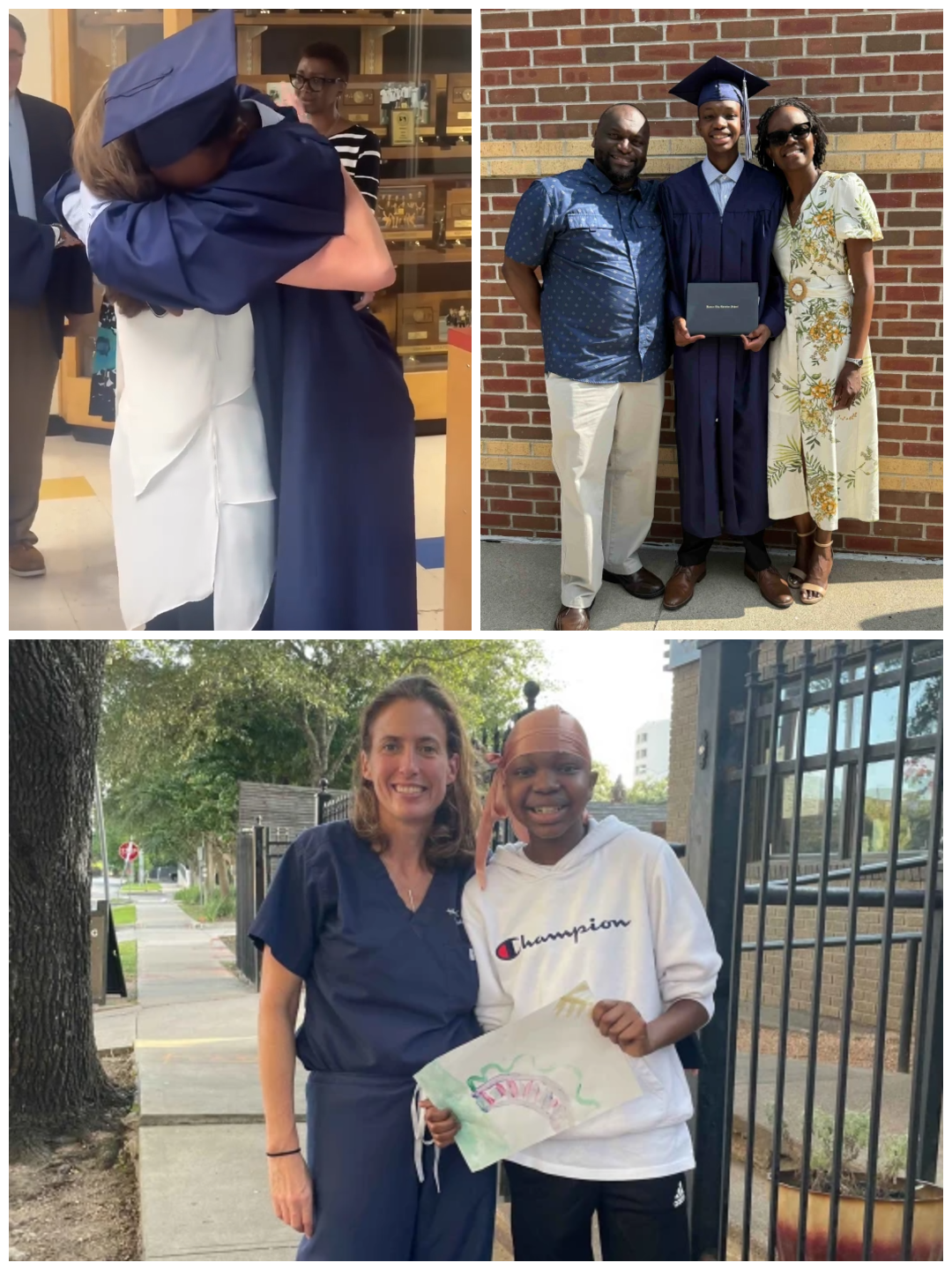
When Dylan Mwaniki was 14, his future suddenly became measured in months.
In 2022, the Kansas City, Missouri, teenager was diagnosed with Stage 4 kidney cancer. Doctors gave him just eight months to live.
Graduating from high school felt almost impossibly far away.
But through 52 weeks of chemotherapy, one person kept reminding Dylan that there was still something waiting for him beyond treatment.
Dr. Mary Austin, the physician caring for him, made him a promise.
If he kept fighting and lived to graduate, she would be there.
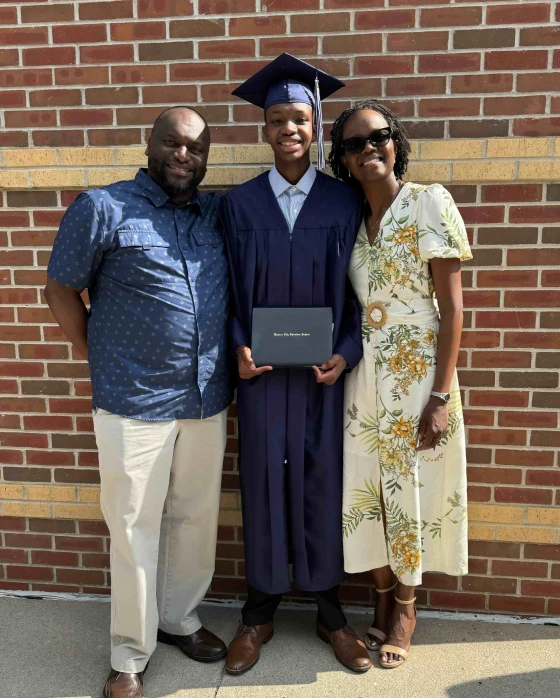
Four years later, Dylan walked into his high school graduation cancer-free.
And Austin kept her word.
A Diagnosis That Changed Everything
Dylan had been an ordinary 14-year-old when Stage 4 kidney cancer abruptly changed the direction of his life.
The prognosis was devastating.
His parents, Paul and Lucy Mwaniki, were told their son might have only eight months left.
Instead of thinking about college, adulthood or even finishing high school, the family was suddenly confronting the possibility that Dylan might not have much time at all.
Treatment began.
For the next 52 weeks, chemotherapy became part of his life.
There were difficult days when survival itself seemed uncertain.
That was when Austin became far more than a doctor overseeing a treatment plan.
She began checking on Dylan in a way his parents compared to a mother.
Paul said she made a choice to look after him beyond what was medically required.
Lucy described Austin as being there “every step of the way.”
And Dylan came to think of her in deeply personal terms.
He called her his “second mom.”
Their Relationship Grew Beyond the Hospital
The bond did not stay confined to appointments and treatment rooms.
Austin and Dylan began spending time together outside the medical setting.
They arranged lunches.
Dylan met Austin’s children.
What began as a doctor-patient relationship gradually became a genuine friendship.
Austin later said the connection evolved naturally.
Dylan had his own description for it.
He called her his “partner in crime.”
That relationship mattered most when his spirits were lowest.
During treatment, there were moments when Dylan’s family did not know whether he would survive long enough to reach the milestones most teenagers assume will come automatically.
Graduation was one of them.
Austin turned that distant possibility into something concrete.
She promised to attend.
‘I Will Come to Your Graduation’
Lucy remembered Austin encouraging Dylan through some of his hardest moments.
Her message was essentially simple: keep going, stay with the treatment, and if you make it through, she would be there when he graduated.
For Dylan, the promise became something to hold onto.
He later said hearing Austin talk about his future gave him hope and lifted his mood.
His father believes it did even more than that.
Paul said the idea of Austin attending graduation changed something in Dylan.
Suddenly, there was a future event worth fighting toward.
Graduation was no longer an abstract possibility.
It became a goal.
A date beyond chemotherapy.
A place where someone he trusted expected to see him.
For a teenager who had been told he might have only eight months to live, that mattered.
He Beat the Prognosis
The eight-month timeline passed.
Dylan was still there.
Treatment continued.
Eventually, the teenager who had once been confronting Stage 4 cancer reached a milestone that once seemed uncertain.
He became cancer-free.
Then came another milestone.
He became a high school senior.
By 2026, Dylan was not preparing for an early goodbye.
He was preparing to graduate.
Even the ordinary parts of teenage life had returned.
He was playing soccer again, showing the kind of footwork that would have been difficult to imagine during the darkest parts of treatment.
But as graduation approached, there was one complication.
Austin no longer worked nearby.
She had moved to Seattle Children’s Hospital, about 1,500 miles from Kansas City.
Getting back for the May ceremony would not be simple.
Dylan knew Austin had once promised to attend.
He did not know whether she actually could.
His parents did.
His Parents Kept the Surprise Secret
Paul and Lucy decided not to tell Dylan that Austin was coming.
They kept the plan quiet until graduation day.
For them, there was never much doubt about whether Austin would try.
Lucy said the doctor had never made a promise to Dylan that she failed to keep.
Paul said the family would always be grateful for that.
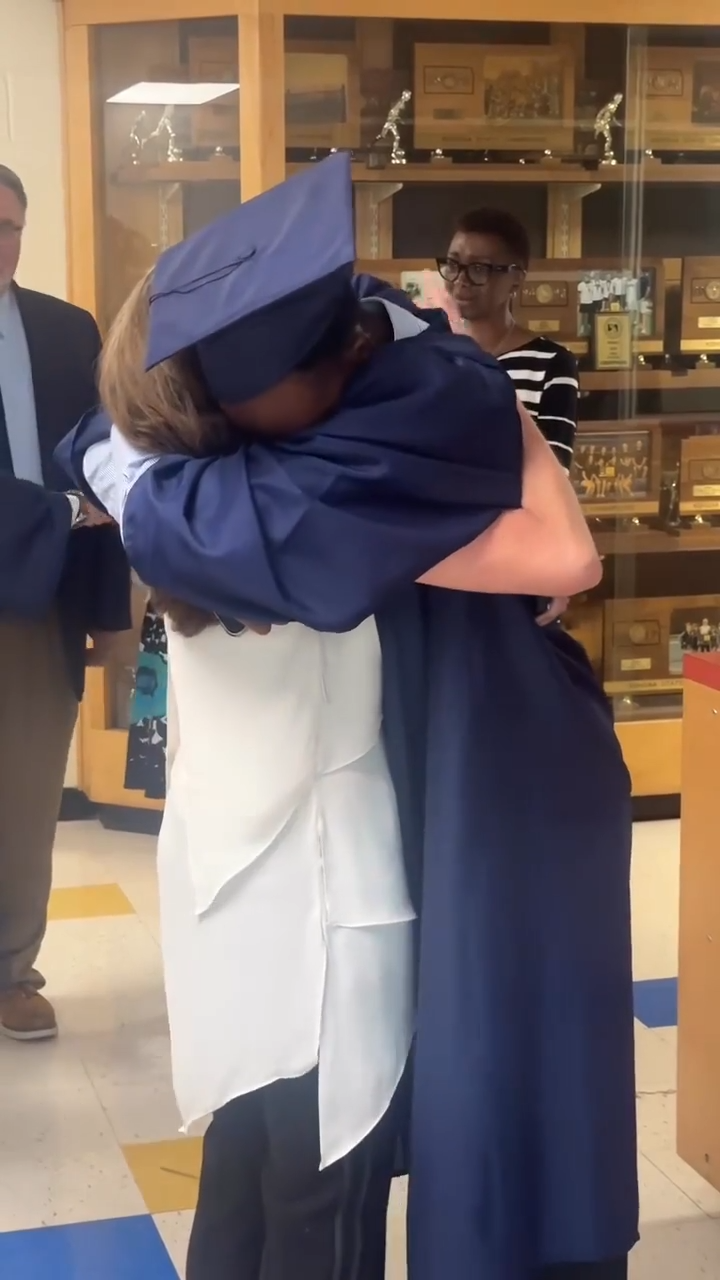
Then Dylan saw her.
The reunion did not require a long speech.
Austin and Dylan embraced.
They held onto each other.
The hug lasted long enough to communicate what words could not.
Years earlier, graduation had been something Austin used to help Dylan imagine a future.
Now the future had arrived.
The teenager who once faced an eight-month prognosis was standing there in graduation clothes, and the doctor who had helped him picture that moment had traveled across the country to witness it.
Why the Promise Mattered So Much
Cancer treatment is usually discussed in medical terms.
Chemotherapy.
Scans.
Doctors.
Medications.
Test results.
Those things were obviously central to Dylan’s survival.
But his parents believe another element mattered too.
Connection.
Austin did not only treat Dylan’s disease.
She gave him something emotionally powerful during the moments when the future seemed uncertain: a reason to believe someone expected him to have one.
Paul and Lucy believe that relationship helped their son keep fighting.
The promise of graduation may have sounded small compared with the seriousness of Stage 4 cancer.
But for Dylan, it transformed a distant milestone into something personal.
Someone he trusted was planning to be there.
That meant he had to try to get there too.
A Doctor Who Became Family
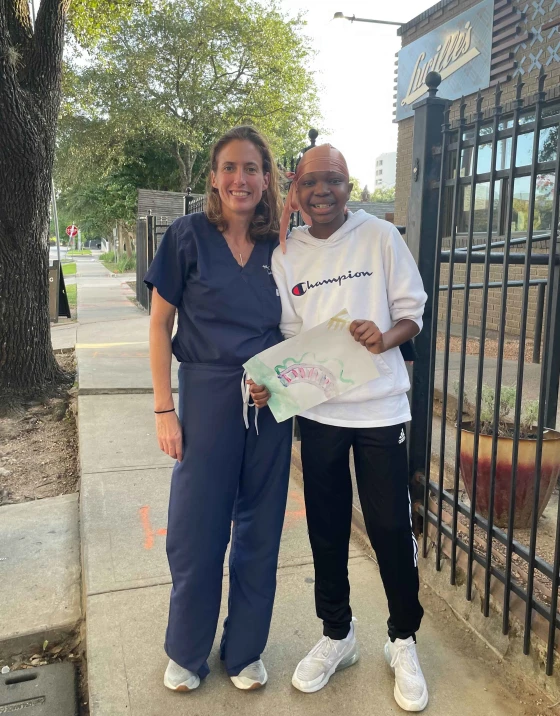
By the time Dylan graduated, the relationship between him and Austin no longer fit neatly into the category of physician and former patient.
She had met his family.
He had met hers.
They ate together.
They checked on each other.
Dylan called her his second mother.
That is what made her appearance at graduation so emotional.
She was not simply a doctor returning to see a successful former patient.
She was someone who had witnessed Dylan during a period when there was real doubt he would reach adulthood.
And now she was watching him cross one of the milestones they had talked about when survival was still uncertain.
From Eight Months to a Future Again
At 14, Dylan’s life had been reduced to a frightening estimate.
Eight months.
At 18, he had something entirely different.
A diploma.
A cancer-free diagnosis.
A future that was no longer defined by the deadline once placed in front of him.
For his parents, the experience reinforced a lesson they now want other people to remember.
Lucy put it simply: “Be kind.”
Her words reflected what Austin had done for their son.
The doctor’s skill mattered.
The treatment mattered.
But so did checking in.
So did friendship.
So did telling a sick teenager that she expected to see him at graduation.
Four years after Dylan Mwaniki was given eight months to live, that promise ended with a long embrace.
He had made it.
And so had she.