The True Story Behind Lady in the Lake: What Really Happened in Baltimore
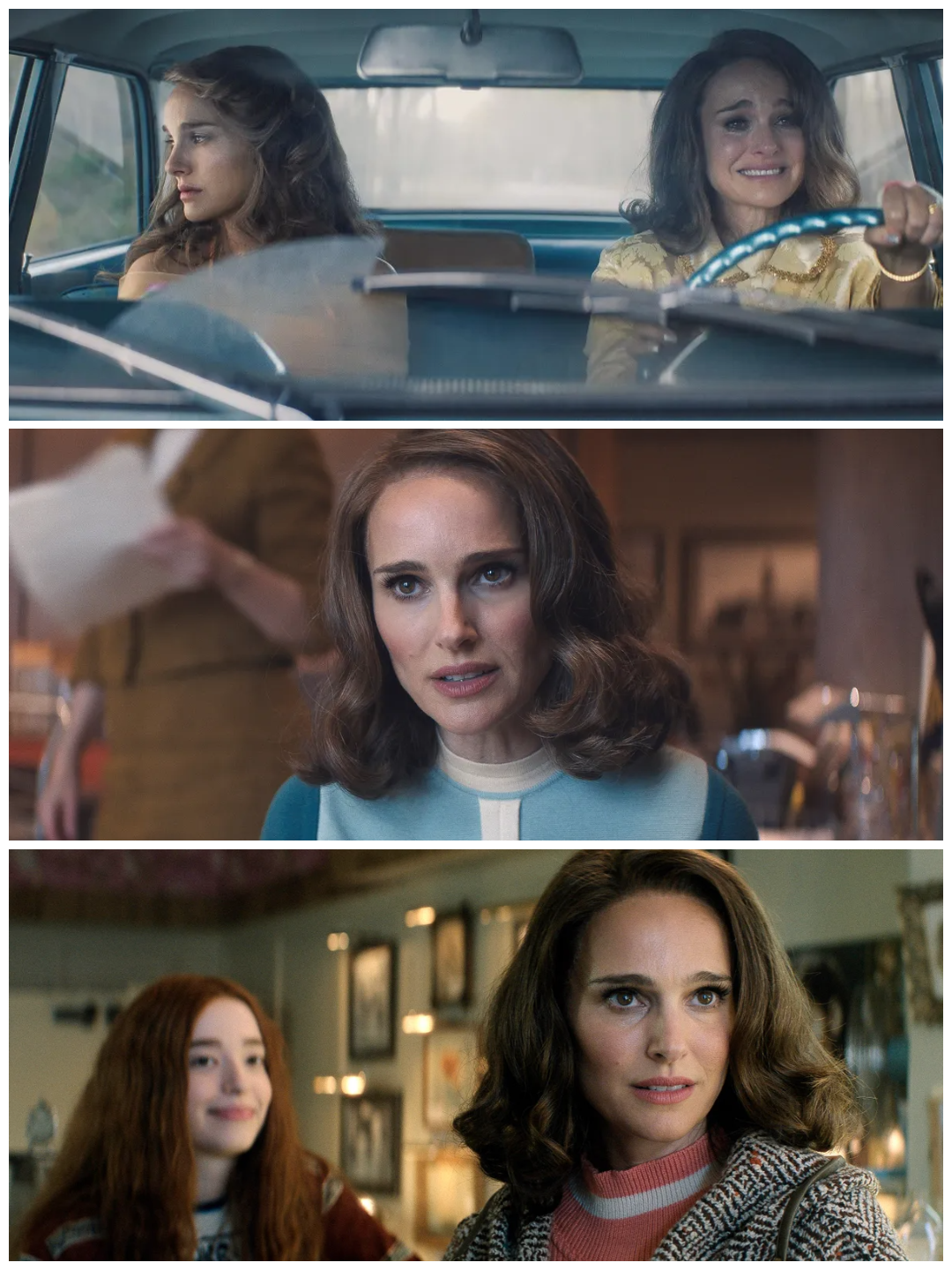
Apple TV+’s Lady in the Lake feels like the kind of crime drama that must have been pulled directly from an old newspaper archive.
Set against the racial and social tensions of 1960s Baltimore, the series follows Maddie Schwartz, played by Natalie Portman, as she leaves behind her comfortable life as a wife and mother and attempts to reinvent herself as a journalist.
Her path eventually becomes connected to two deaths: that of a young Jewish girl and a Black woman whose body is discovered in a lake.
Those basic elements have roots in real history.
But viewers looking for the exact true story behind Maddie’s investigation may be surprised by how much of Lady in the Lake was invented.
The series is adapted from Laura Lippman’s 2019 novel, and Lippman used two unrelated Baltimore deaths from 1969 as inspiration. From there, however, she created a largely fictional mystery involving new characters, imagined relationships and a storyline designed to explore race, ambition and whose stories society chooses to remember.
Is Lady in the Lake Based on a True Story?
Not exactly.
The Apple TV+ series is based on Laura Lippman’s novel Lady in the Lake, rather than being a direct dramatization of a true-crime case.
Lippman’s story was inspired by two deaths that occurred in Baltimore in 1969.
One involved 11-year-old Esther Lebowitz, a Jewish girl whose disappearance and murder received significant media attention.
The other involved Shirley Parker, a Black woman and mother whose disappearance received far less attention before her body was eventually discovered in a fountain at Druid Hill Park.
The contrast between how those two women were remembered became one of the ideas behind Lippman’s novel.
In the fictional version, Parker is transformed into Cleo Sherwood, played by Moses Ingram, while the story of the murdered girl becomes the basis for Tessie Durst.
The television series then expands those ideas even further.
So while real tragedies sit beneath the story, Lady in the Lake should be viewed as historical fiction rather than a recreation of actual events.
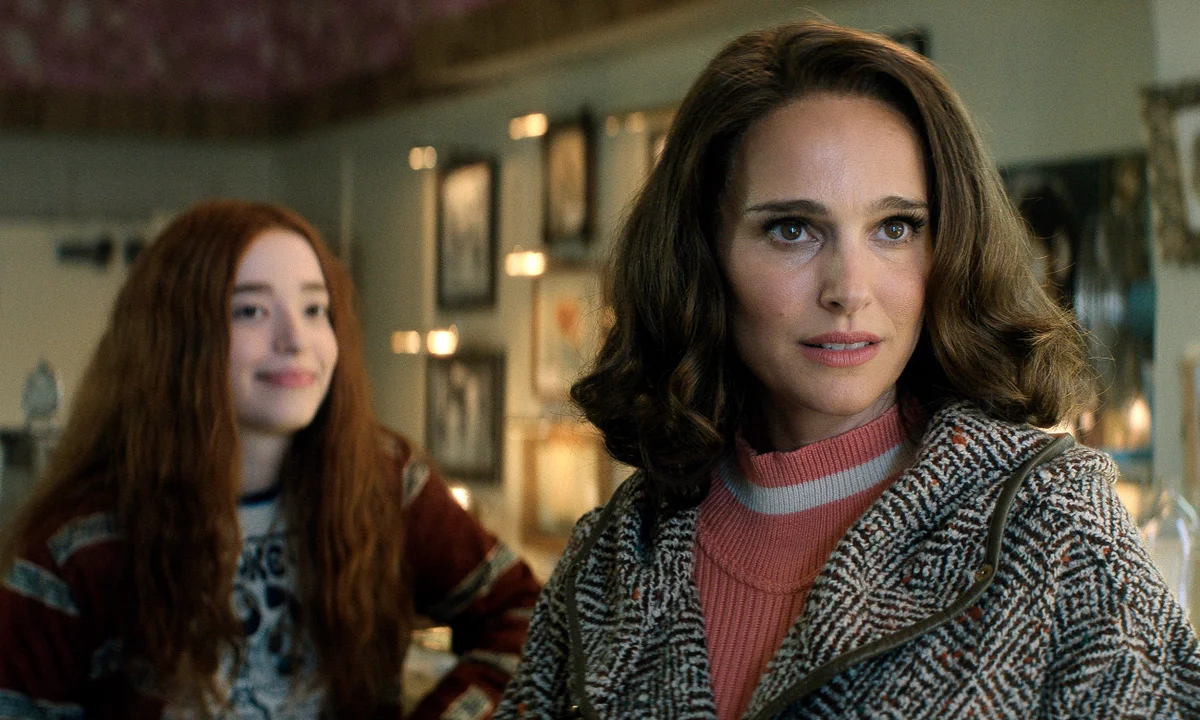
Was Natalie Portman’s Maddie Schwartz a Real Journalist?
No.
Madeline “Maddie” Schwartz is entirely fictional.
In the series, Maddie has spent nearly two decades living the life expected of a middle-class wife and mother before becoming increasingly dissatisfied with it.
She leaves her husband and begins pursuing journalism, eventually becoming involved in the investigation surrounding Cleo Sherwood’s disappearance.
There was no real Baltimore reporter named Maddie Schwartz who connected the two cases.
Instead, Lippman created Maddie to explore a different kind of story: a woman in the 1960s realizing that the life she has been given may not be enough for her.
Maddie’s ambition drives much of the plot.
She wants independence, recognition and a career at a time when women entering traditionally male newsrooms could expect resistance.
But the story also questions what that ambition costs.
Her determination to uncover Cleo’s story gradually becomes tangled with her own desire to prove herself.
That entire journey belongs to fiction, not to the historical record.
Did the Real Crimes Happen in 1966?
No.
The show is set primarily in 1966, but both real cases that inspired it occurred in 1969.
That change was deliberate.
Lippman has explained that she was interested in 1966 partly because it is less frequently dramatized than some of the more famous years surrounding it.
It places the story during an important period of change in American life without placing it directly amid some of the decade’s most commonly portrayed events.
The shift also gave Lippman more freedom to create her own Baltimore rather than being tied closely to the exact chronology of the real crimes.
So the setting may feel historically authentic, but the dates should not be treated as factual.
Were Esther Lebowitz and Shirley Parker’s Deaths Connected?
No.
This may be the most important difference between history and the fictional story.
In real life, there is no evidence that the deaths of Esther Lebowitz and Shirley Parker had anything to do with one another.
They happened in the same city during the same year, but they were separate cases involving completely different circumstances.
The novel brings them together thematically.
Maddie becomes the link between the two stories, allowing Lippman to contrast the attention given to a murdered Jewish child with the relative lack of attention surrounding the disappearance and death of a Black woman.
That connection becomes central to Lady in the Lake.
But it was created for the novel.
The real women never formed part of one connected mystery.

Who Was the Real Woman Behind Cleo Sherwood?
Cleo Sherwood is fictional, but her story was inspired by Shirley Lee Wigeon Parker.
Parker was 35 years old and the mother of two sons.
She had worked as a bookkeeper, waitress and barmaid, including at Baltimore’s Sphinx Club.
She disappeared in the spring of 1969.
According to accounts of the case, Parker was last known to have been out on the night of April 23.
That evening reportedly became tense after she learned that a man she had been dating, Arno West, had cashed her paycheck and purchased clothing for another woman.
Witnesses later recalled an argument between Parker and West.
West told investigators that he eventually drove Parker near Druid Hill Park, where she wanted to get out near the lake. He claimed he persuaded her not to go into the water and later drove her home.
Then Parker vanished.
Weeks passed without answers.
How Was Shirley Parker’s Body Found?
The discovery came on June 2, 1969.
An electrical crew went to repair lights in a fountain located in Druid Park Lake.
When one of the workers climbed up to the fountain, he discovered a badly decomposed body lying inside a shallow area of water.
The woman was identified as Shirley Parker.
The unusual location immediately created questions.
How had she ended up there?
Had she died in the fountain?
Had someone placed her body there afterward?
Unfortunately, the condition of Parker’s remains made those questions extremely difficult to answer.
Investigators were unable to establish a definitive cause of death.
Certain possibilities could reportedly be ruled out. There was no evidence that she had been shot, stabbed or strangled, and authorities did not conclude that she had died from an overdose.
The medical evidence also left open the possibility that she could have drowned elsewhere before being placed in the fountain.
Her death was never conclusively explained.

Was Shirley Parker Murdered?
There has never been a definitive legal answer.
Because Parker’s body had been exposed for weeks before it was discovered, investigators could not determine exactly how she died.
Arno West naturally attracted suspicion because he had reportedly been among the last people to see her alive and had argued with her shortly before she disappeared.
But suspicion is not the same as proof.
No conclusive evidence established that West killed Parker, and the case remained unresolved.
That uncertainty is one reason the story lent itself so naturally to fiction.
A real-life death with unanswered questions gave Lippman room to build an entirely new mystery around it.
The television series goes much further than the known history, giving Cleo Sherwood a detailed life, relationships and storyline that should not be mistaken for Shirley Parker’s actual biography.
What Happened to Esther Lebowitz?
The other real case behind Lady in the Lake had a very different ending.
Esther Lebowitz was an 11-year-old Jewish girl who disappeared in Baltimore in 1969.
Unlike Parker’s case, Esther’s disappearance received considerable attention.
Her body was eventually discovered, and authorities arrested Wayne S. Young.
Young confessed to killing her and was sentenced to life in prison.
The difference in public attention between the two cases stayed with Laura Lippman.
One victim became the center of an intense search and highly publicized investigation.
The other seemed to fade much more quickly from Baltimore’s collective memory.
That imbalance — and what it suggested about race, class and whose deaths are considered newsworthy — helped form the thematic foundation of Lady in the Lake.
How Accurate Is Lady in the Lake Overall?
If viewers are expecting a traditional true-crime adaptation, the answer is: not very.
The real deaths of Shirley Parker and Esther Lebowitz provide the initial inspiration, but most of the characters and events surrounding them are fictional.
Maddie Schwartz did not exist.
The two cases were not connected.
Cleo Sherwood is not a literal portrayal of Shirley Parker.
And the intricate investigation shown in the series did not unfold in real life.
Lippman has been open about her approach.
Rather than attempting to reconstruct the crimes in documentary detail, she used them as a starting point for a fictional story. Her interest was less about solving the historical cases than about exploring what they revealed about Baltimore, journalism, race and women’s lives during the 1960s.
That distinction matters.
Lady in the Lake is not really asking audiences to believe that Maddie Schwartz uncovered a forgotten Baltimore conspiracy.
Its connection to reality lies somewhere deeper.
Two women died in the same city.
Their stories were not treated equally.
Decades later, that difference became the seed for a novel — and eventually a television series — about ambition, invisibility and the uncomfortable question of why some victims become unforgettable while others nearly disappear from history.