She Was Found Abandoned With Her Umbilical Cord Still Attached — Two Years Later, Baby Melanie Returned With the Family Who Chose Her
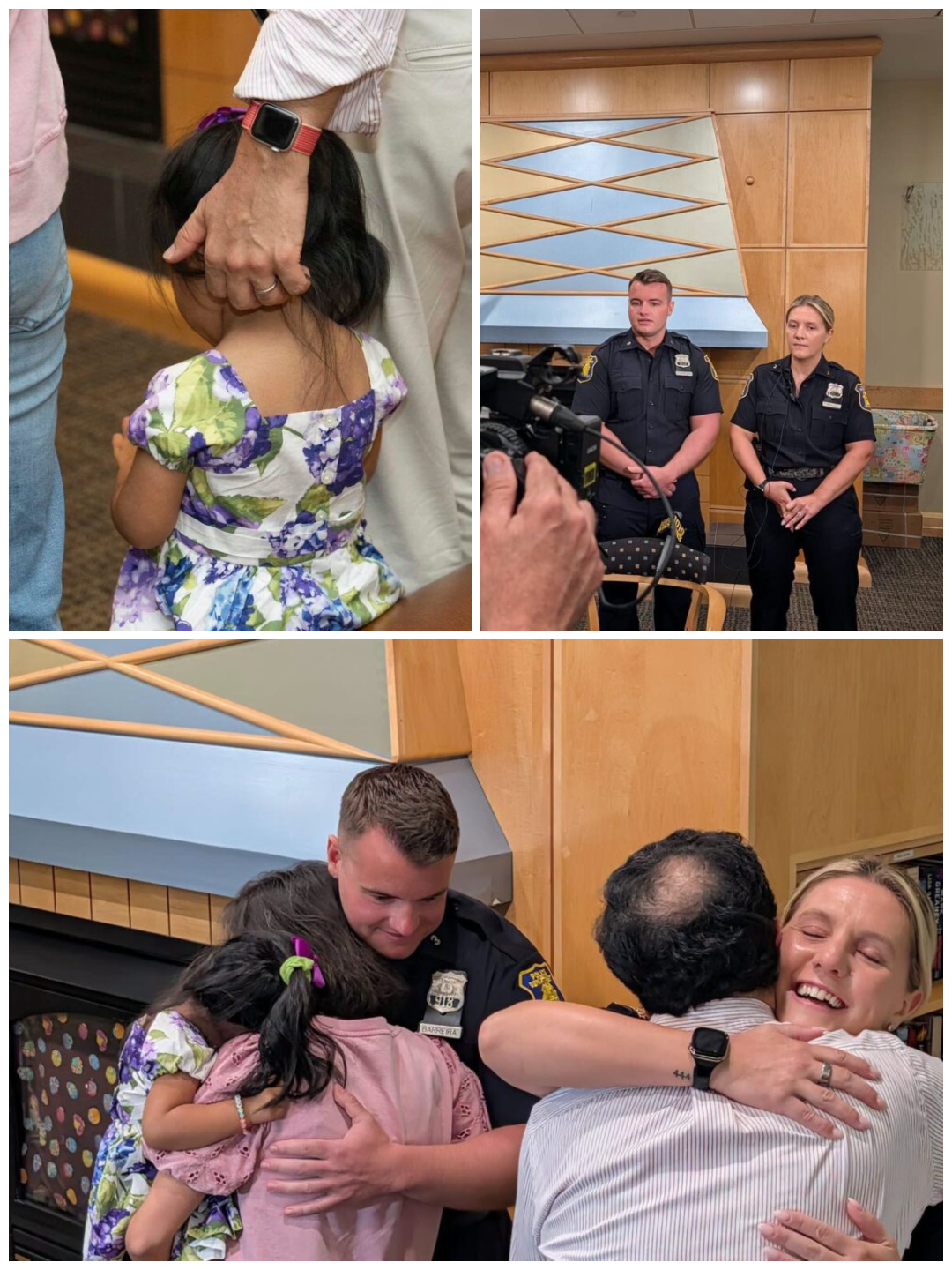
When Yonkers police officers Katie McEvoy and Tyler Barreira responded to an apartment building on Feb. 6, 2024, they had no way of knowing that the call would stay with them for years.
Inside the building, on the floor of a hallway, they found a newborn baby girl wrapped in fabric.
Her umbilical cord was still attached.
She had been left there alone.
The officers immediately shifted into rescue mode, making sure the infant received emergency medical attention and helping get her to Maria Fareri Children’s Hospital in Westchester County, New York.
At the time, no one could know what would happen next to the tiny baby who had entered the world under such frightening circumstances.
But two and a half years later, the story came full circle.
In August 2026, the little girl — now known as Melanie — returned to the hospital as a healthy toddler. This time, she was not arriving in an emergency.
She came holding the hands of the family who had cared for her, loved her and had just officially adopted her.
And waiting to see her were many of the police officers, detectives, doctors and nurses who had helped save her life.
A Newborn Found Alone in a Hallway
The discovery in February 2024 immediately drew attention in Yonkers.
McEvoy and Barreira had responded to an apartment complex when they came across the newborn lying on a hallway floor. She was wrapped in cloth, but the fact that her umbilical cord was still attached made it clear how recently she had been born.
The officers knew there was no time to waste.
A newborn can become medically unstable quickly, especially when the circumstances of birth are unknown. Melanie was taken to Maria Fareri Children’s Hospital, where medical professionals could assess her condition and provide the care she needed.
For the people who first encountered her that day, the scene was difficult to forget.
They had met Melanie at perhaps the most vulnerable moment imaginable — before she had parents beside her, before anyone knew where she would live and before anyone could say with certainty what her future would look like.
All they could do was make sure she had the chance to have one.
From Emergency Care to a Foster Home
After receiving medical treatment, Melanie entered foster care.
A family opened its home to her and began taking care of the infant whose first days had already involved police officers, detectives and hospital staff.
What began as foster care gradually became something permanent.
Melanie grew.
She learned to smile, crawl and walk.
She became part of the rhythms of family life — meals, bedtime routines, playtime and all the ordinary moments that can mean everything to a child.
Eventually, the foster family decided to make the relationship official.
They adopted her.
By August 2026, the child once found alone on a hallway floor had parents she could call her own.
For the people who had been there at the beginning, that development offered the ending they had hoped for but could never have guaranteed.
A Return That Felt Completely Different
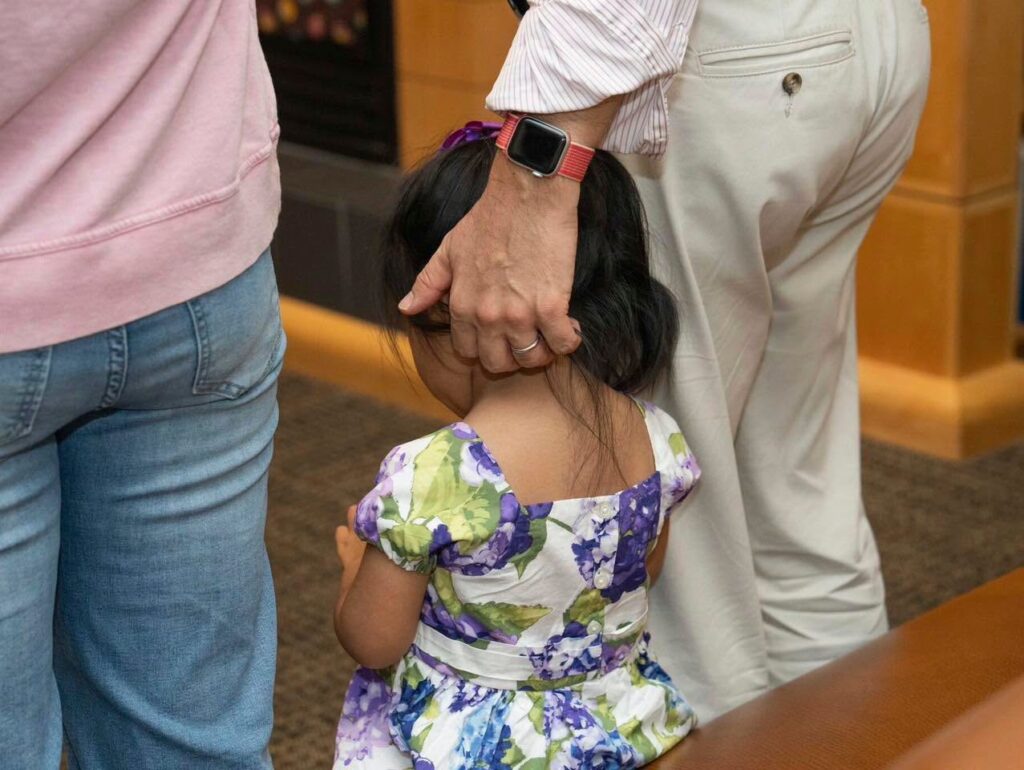
Soon after the adoption was finalized, Melanie’s parents brought her back to Maria Fareri Children’s Hospital.
The setting was familiar.
The circumstances could not have been more different.
Two years earlier, she had arrived as a newborn in urgent need of care.
Now she returned as a healthy toddler surrounded by family.
Members of the Yonkers Police Department were there, including people who had been involved in the original response and investigation. Doctors and nurses who had cared for her also joined the reunion.
For them, the meeting provided something first responders and medical professionals do not always get to experience.
They got to see what happened after the emergency.
Police officers often meet people during the worst minutes of their lives and then move on to the next call without ever knowing how the story ended. Emergency doctors and nurses stabilize critically vulnerable patients, but many never see them years later.
Melanie gave them that rare opportunity.
The baby they remembered was now walking, interacting with the people around her and growing up in a permanent family.
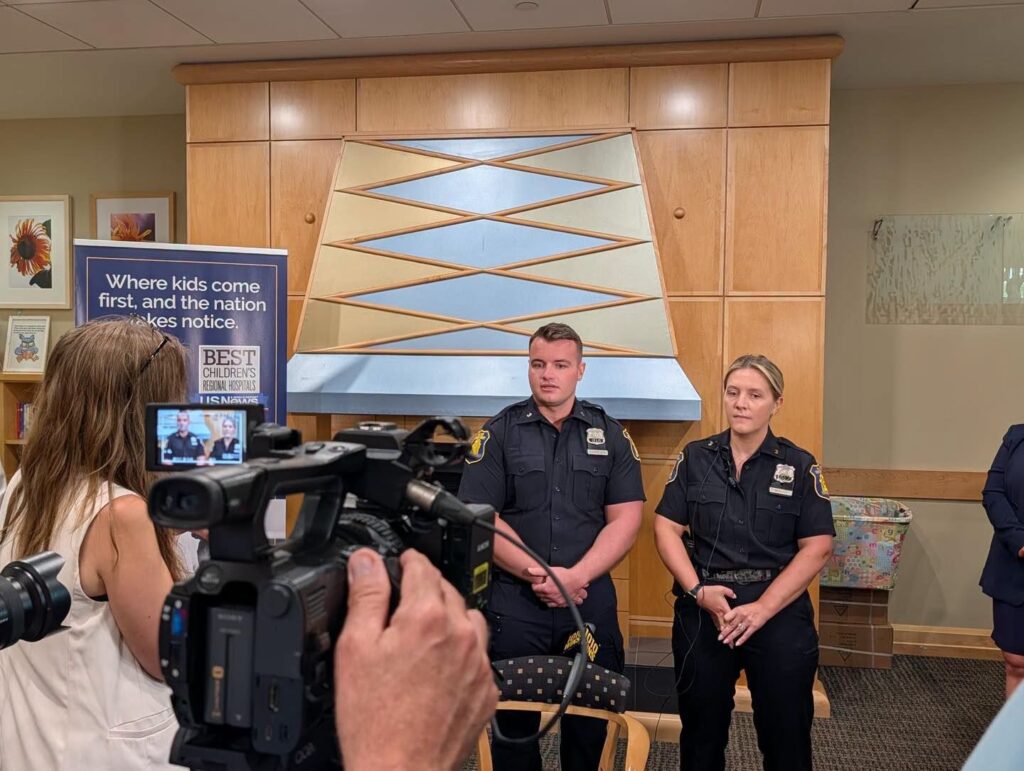
The Officers Who First Helped Her Got to See the Outcome
For McEvoy and Barreira, the reunion carried particular meaning.
On Feb. 6, 2024, they had found Melanie before she had even been given the chance to begin an ordinary childhood.
Their responsibility in that moment was simple and urgent: protect her.
They could not solve every question surrounding her future.
They could not know who would raise her.
They could not know whether she would eventually be adopted.
They could only act on what was immediately in front of them — a newborn who needed help.
More than two years later, they were able to see how much had grown out of those first actions.
Melanie was no longer simply “the abandoned baby” from a police call.
She had a name.
She had parents.
She had a home.
And she had people who had chosen to make her part of their family permanently.
A Story That Once Began With Uncertainty
CBS New York, which had reported on Melanie’s case when she was first found, described the reunion as the “happy ending” to a story the station had covered two years earlier.
That description captures why Melanie’s return resonated so strongly.
The original story began with almost nothing but questions.
Who left her there?
How long had she been alone?
Would she be healthy?
Where would she go after leaving the hospital?
Who would raise her?
Some of those questions belonged to investigators. Others could only be answered with time.
By August 2026, one of the most important answers had become clear.
Melanie had found a family.
The adoption transformed what had once been a temporary foster placement into a permanent home, giving the toddler a sense of stability far removed from the uncertainty surrounding the day she was discovered.
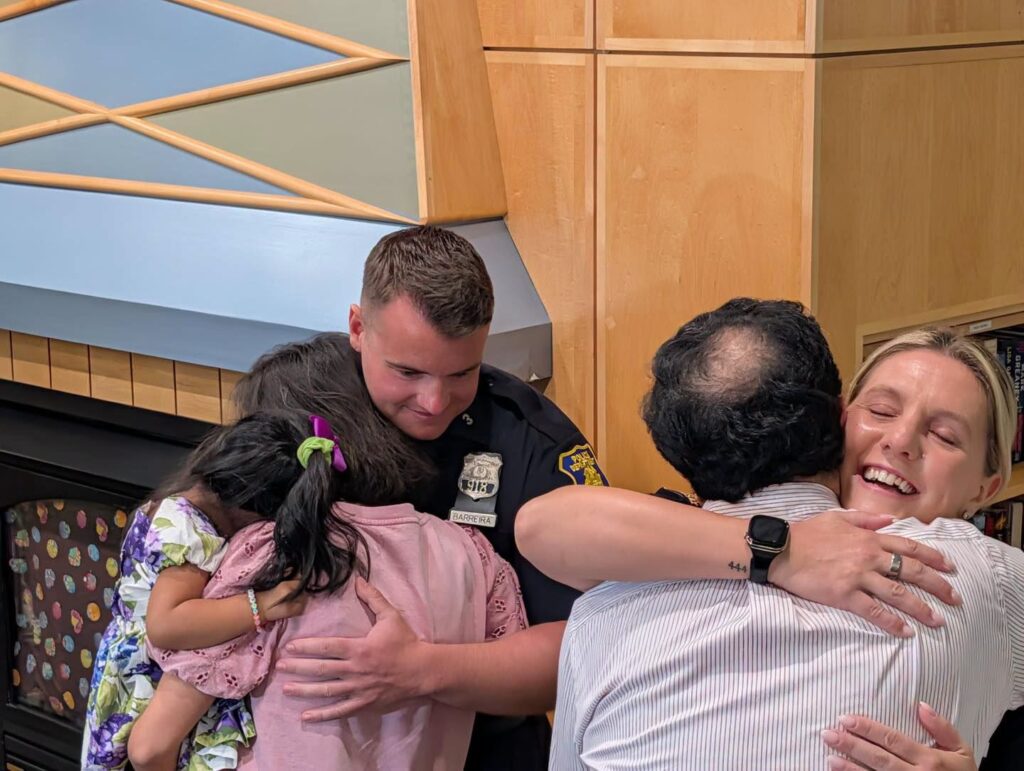
The People Who Saved Her Became Part of Her Story
The reunion also offered Melanie something she may appreciate even more as she grows older.
She now has a visible connection to the people who helped protect her before she was old enough to remember them.
The officers, detectives, doctors and nurses who gathered around her are part of the first chapter of her life.
They were there before the adoption.
Before the milestones.
Before she could speak or understand what had happened.
Years from now, Melanie may hear the story of how two police officers found her in a Yonkers apartment building and rushed to help.
She may learn about the hospital staff who cared for her.
And she may see photographs from the day she returned, this time surrounded not by uncertainty, but by people celebrating the life she had built.
There is an enormous difference between being found and being home.
Melanie experienced both.
Her story began on a hallway floor, wrapped in fabric with her umbilical cord still attached.
More than two years later, she walked back into the hospital with parents beside her.
For the people who had once wondered what would become of the newborn they worked so hard to protect, the answer was standing right in front of them.
Melanie was safe.
She was growing.
And now, she was officially home.