National Treasure: The Strange Story Behind Disney’s Treasure-Hunting Franchise
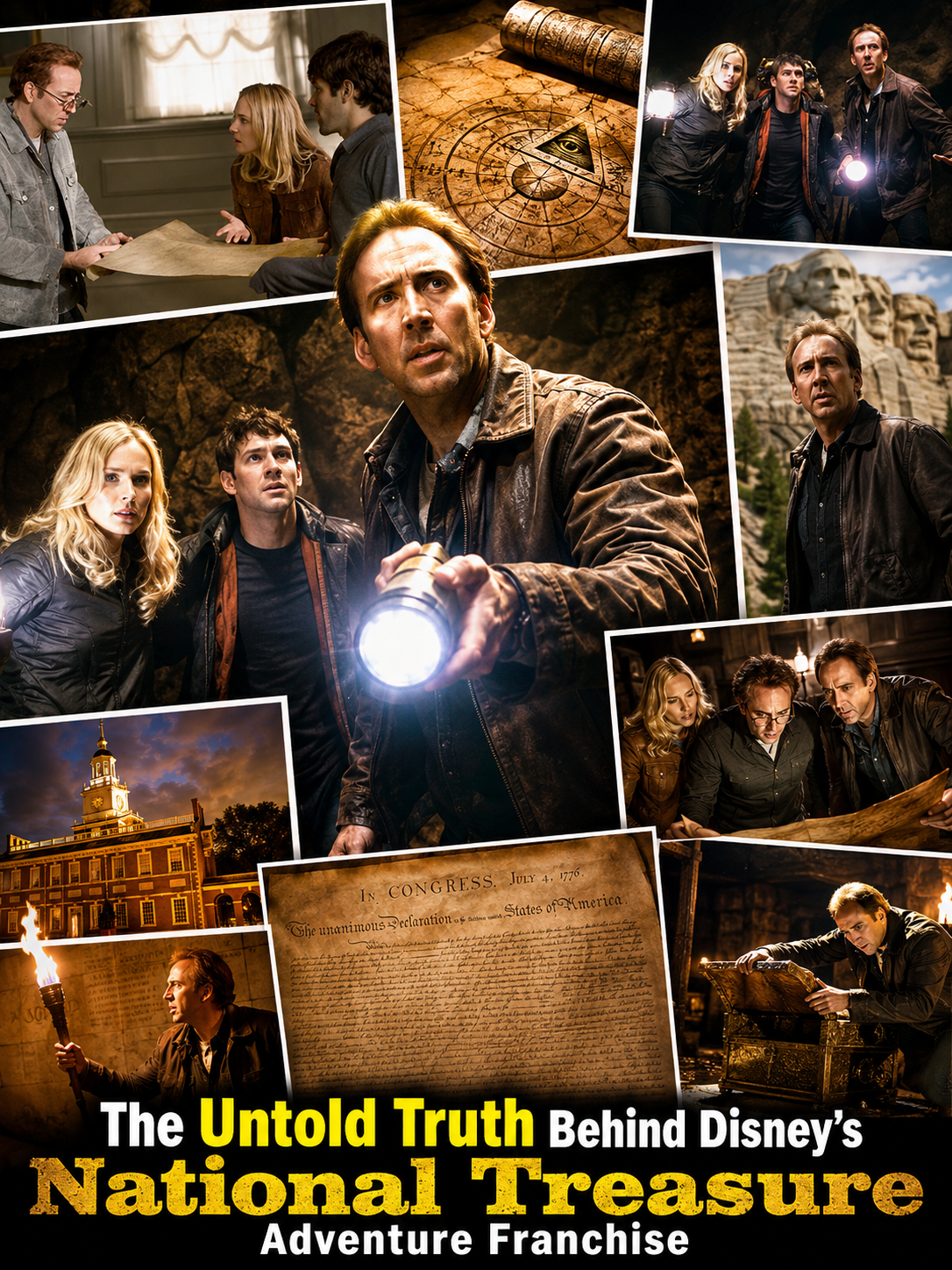
There are plenty of adventure movies about hidden gold, ancient mysteries and secret societies.
Very few begin with a hero calmly announcing that the only reasonable solution to his problem is to steal the Declaration of Independence.
That ridiculous-but-irresistible idea became the foundation of National Treasure, Disney’s 2004 adventure starring Nicolas Cage as historian and treasure hunter Benjamin Franklin Gates.
Ben spends his life pursuing a legendary treasure supposedly hidden by America’s Founding Fathers. His search takes him through historic landmarks, secret codes and eventually one of the most famous documents in the United States.
Three years later, National Treasure: Book of Secrets made everything even bigger. This time, Ben kidnapped the President, searched beneath Mount Rushmore and gained access to a mysterious presidential book containing secrets the public was never meant to see.
The movies were never trying to be history lessons.
But they were enthusiastic enough about history that generations of younger viewers suddenly found themselves wondering about the Declaration of Independence, Freemasons and secret rooms beneath American landmarks.
Behind the franchise is an equally interesting story involving years of development, Nicolas Cage karaoke sessions, Disney’s uncertainty about its own brand, a sequel Cage initially didn’t want to make — and a third movie that spent almost two decades refusing to become real.
Until now.
National Treasure Was Supposed to Arrive Years Earlier
The origins of National Treasure stretch back to the late 1990s.
Disney publicly moved forward with the project in 1999, with Jon Turteltaub already attached to direct.
At that stage, the studio was thinking big.
The initial goal was reportedly to release the movie around Independence Day 2000 — an almost perfect date for a story built around American history, buried treasure and the Declaration of Independence.
Disney was even considering the sort of promotional partnerships normally associated with a major summer blockbuster.
But the version being developed then was still far from the movie audiences eventually saw.
Jerry Bruckheimer wasn’t yet attached as producer.
Nicolas Cage wasn’t Ben Gates.
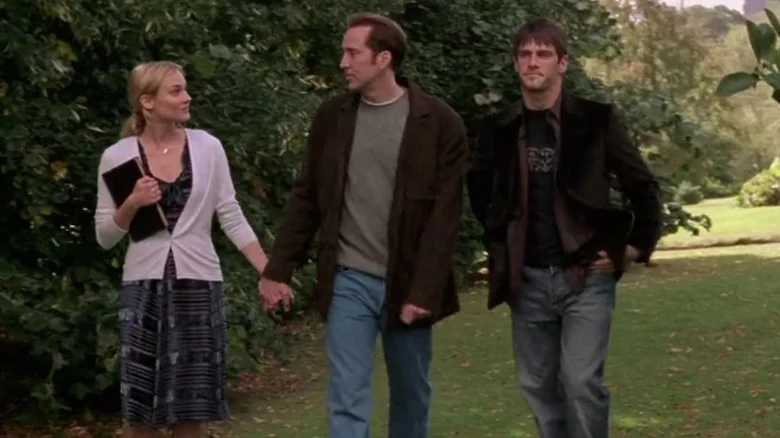
Diane Kruger and Justin Bartha weren’t part of the team.
The screenplay continued evolving, and the planned 2000 release disappeared.
Ultimately, audiences wouldn’t meet Benjamin Gates until November 2004 — roughly five years after Disney first announced the project.
Disney Wasn’t Even Sure It Wanted National Treasure to Be a “Disney” Movie
Today, audiences barely blink at seeing a PG-13 Marvel or Star Wars movie carrying Disney branding.
The situation was different in the early 2000s.
Disney still frequently used labels such as Touchstone Pictures and Hollywood Pictures for live-action projects that didn’t seem to fit the traditional Walt Disney Pictures image.
National Treasure briefly became caught in that uncertainty.
Although it began development as a Disney movie, it was later associated with Touchstone.
Then something changed.
By the time the movie actually reached theaters, the familiar Walt Disney Pictures logo was sitting right at the beginning.
Its PG rating undoubtedly made that easier, while the enormous success of Pirates of the Caribbean: The Curse of the Black Pearl had already demonstrated that Disney audiences would embrace live-action adventure that didn’t involve animated princesses or talking animals.
In hindsight, National Treasure arrived during an important transition.
Disney was beginning to discover how broad the definition of a “Disney movie” could become.
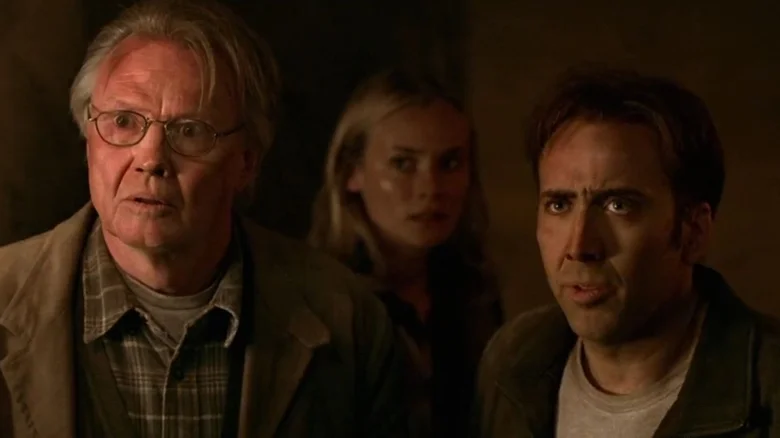
Nicolas Cage Said Yes Because the Central Idea Sounded Almost Impossible
Why would Nicolas Cage want to play a historian obsessed with Freemason treasure?
The answer begins with the Declaration of Independence.
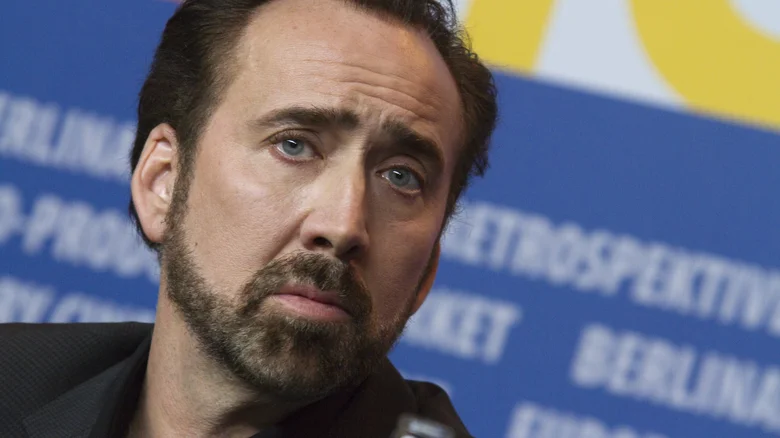
Cage later explained that the same element that made him uncertain about the movie also made him want to do it.
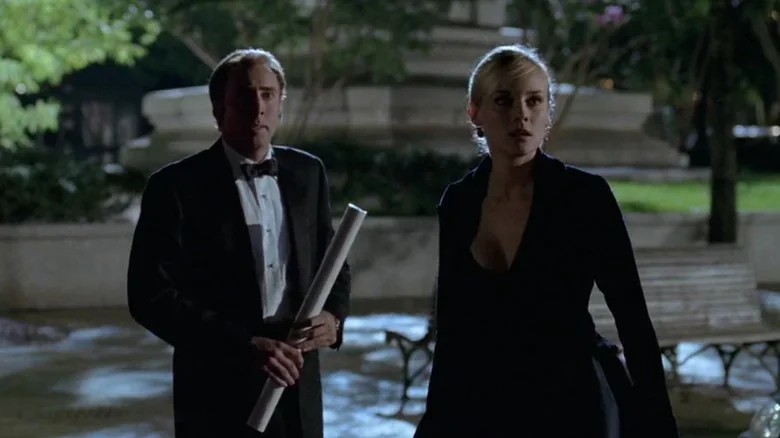
Ben Gates plans to steal one of the most protected and culturally important documents in America.
Cage’s reaction was essentially: How could a movie possibly make that believable?
That challenge interested him.
Director Jon Turteltaub convinced Cage that the audacity was exactly what made the concept entertaining.
Producer Jerry Bruckheimer also mattered. Cage had already worked with Bruckheimer on action movies including The Rock and Con Air, so he trusted that the seemingly impossible premise would be supported by substantial research, technical expertise and blockbuster production values.
There was one additional benefit.
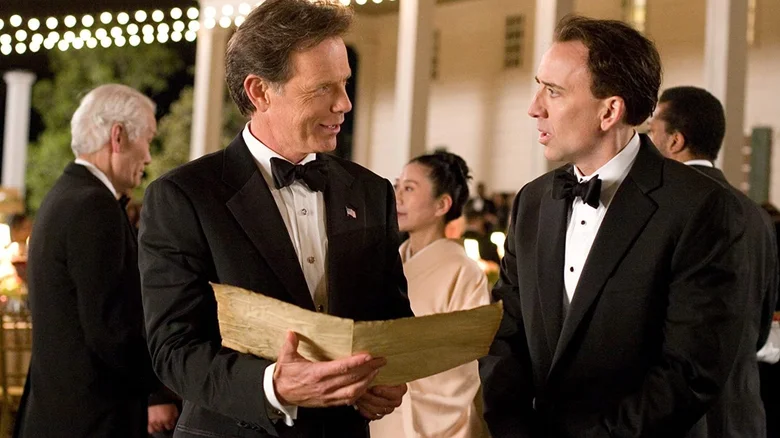
Cage got to steal the Declaration of Independence while wearing a tuxedo.
Apparently that didn’t hurt.
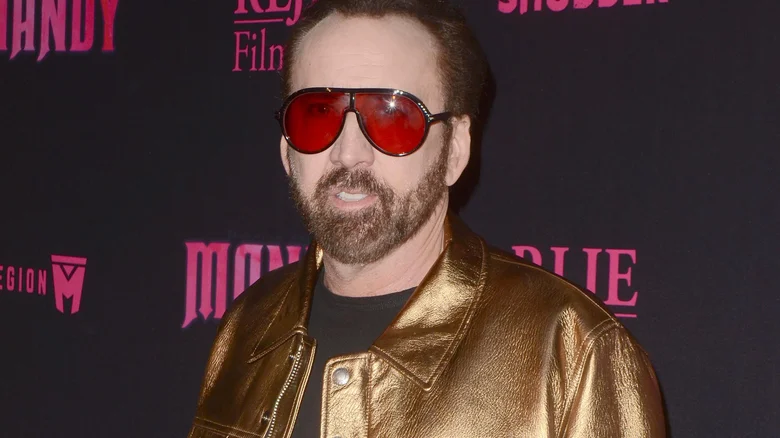
Nicolas Cage, Diane Kruger and Justin Bartha Bonded Through Karaoke
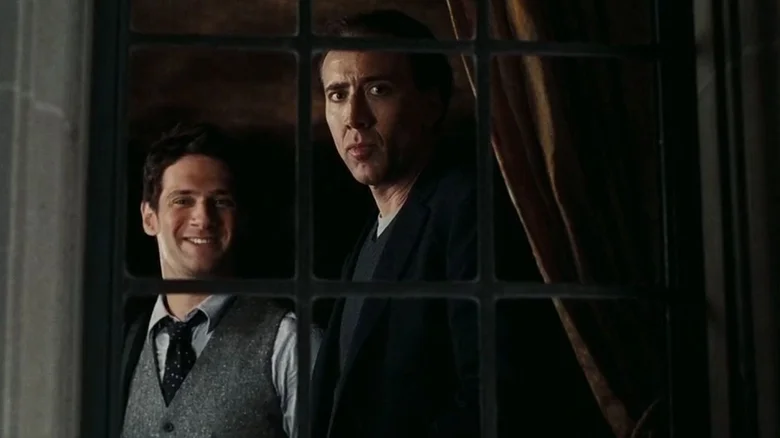
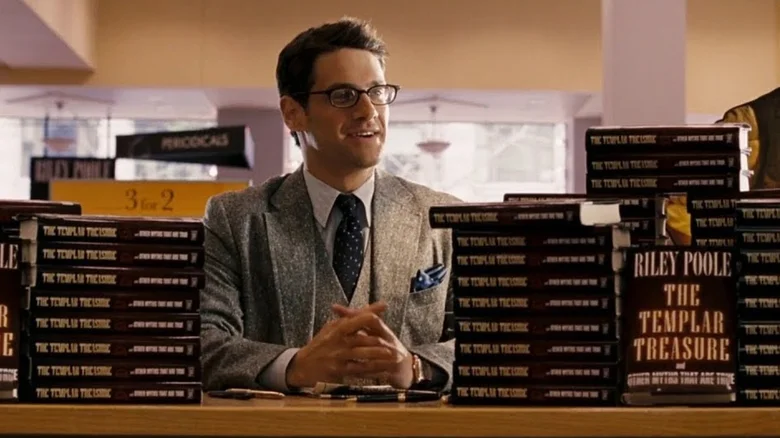
Ben Gates, Abigail Chase and Riley Poole work because the three characters approach adventure very differently.
Ben is intensely committed to history.
Abigail begins as the responsible person trying to stop him from committing a federal crime.
Riley is frequently the only person willing to point out how absurd everything has become.
That chemistry apparently wasn’t limited to the script.
Cage recalled getting along extremely well with Diane Kruger and Justin Bartha during production.
All three shared what he described as mischievous, unconventional senses of humor.
Their off-camera bonding included karaoke.
And this wasn’t particularly restrained karaoke.
Cage remembered the group tackling music from bands such as AC/DC and Rage Against the Machine.
He believed those seemingly silly nights together actually helped the performances.
Because the actors were comfortable experimenting with one another, they could bring a looser and more spontaneous energy to the scenes.
For a movie asking audiences to accept invisible treasure maps and elaborate historical conspiracies, that sense of playfulness became surprisingly important.
The First Movie Wasn’t Expected to Dominate November 2004
National Treasure arrived in theaters during an intimidating month.
Disney had released Pixar’s The Incredibles only two weeks earlier.
Robert Zemeckis’ The Polar Express was already playing.
And National Treasure opened directly against The SpongeBob SquarePants Movie.
Unlike those films, National Treasure had no famous existing characters or established franchise behind it.
It was simply a new adventure movie asking people to believe Nicolas Cage could steal the Declaration of Independence and use it to find treasure.
Audiences accepted the invitation.
The film opened at No. 1 in North America with roughly $35 million and eventually earned more than $330 million worldwide.
For Cage, it also produced what was then the biggest opening weekend of his career.
The movie that could easily have disappeared between major family releases instead created another Disney franchise.
Book of Secrets Made Nicolas Cage Break One of His Career Rules
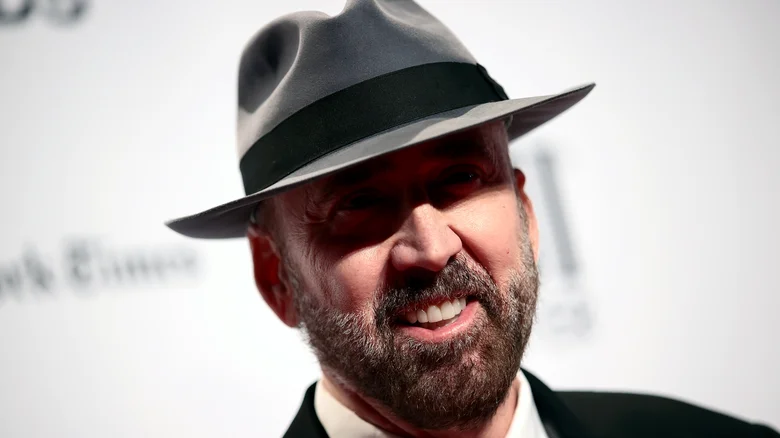
Before National Treasure: Book of Secrets, Nicolas Cage wasn’t exactly known for returning to the same role.
He had deliberately avoided sequels for much of his career because repeating himself didn’t particularly interest him.
Ben Gates changed that.
Cage believed National Treasure was naturally suited to multiple adventures.
He compared Gates’ potential to a character such as Sherlock Holmes: solving one mystery shouldn’t mean the character suddenly has nothing else to do.
Then Cage learned what the sequel wanted Ben to do.
Kidnap the President of the United States.
That was exactly the kind of escalation he wanted.
Book of Secrets also gave Cage another reason to return: he liked the idea that the franchise could encourage younger audiences to become curious about actual history even while watching a completely fictional adventure.
The sequel therefore allowed him to revisit Ben Gates without simply repeating the first movie.
Instead of stealing the Declaration, Ben would need to commit an entirely different absurd federal offense.
One Book of Secrets Scene Became a Nightmare of Physics
The most difficult scene in the sequel wasn’t necessarily the presidential kidnapping.
For Cage, the real headache arrived near the end.
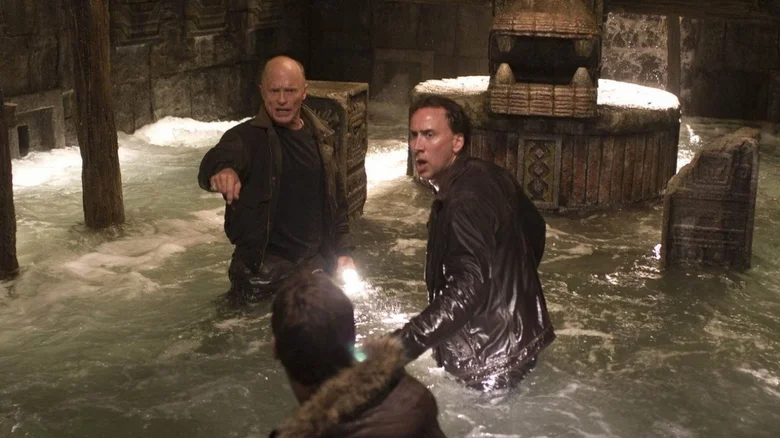
Ben and the others discover the legendary city of gold beneath Mount Rushmore and eventually become trapped on a giant balancing platform.
Everyone’s position affects everyone else.
Move one person to one side and another part rises.
Shift someone’s weight and something else drops.
It looks like a straightforward action-movie puzzle.
Performing it was another matter.
Cage described the sequence as both a mathematical and physical challenge because the actors constantly had to remember how every movement was supposed to change the platform.
The logic became complicated enough that parts of the sequence reportedly required reshooting before everything visually made sense.
It is a perfect example of a problem audiences rarely consider.
Sometimes pretending to stand on a deadly ancient mechanism is harder than performing the stunt itself.
Helen Mirren and Ed Harris Didn’t Need Much Convincing
The second National Treasure movie expanded more than the mythology.
It expanded the cast.
Helen Mirren joined as Emily Appleton-Gates, Ben’s mother and an expert in ancient languages.
Ed Harris played Mitch Wilkinson, the treasure hunter who attempts to prove that Ben’s ancestor helped plan Abraham Lincoln’s assassination.
Both actors brought serious dramatic credentials to a franchise where Nicolas Cage had already stolen the Declaration of Independence.
According to Turteltaub, that wasn’t a problem.
Mirren and Harris liked the screenplay and their characters.
The people already involved also helped.
Bruckheimer had worked with Harris before, while the opportunity to join Nicolas Cage and the established cast made the project attractive.
And, as Turteltaub jokingly acknowledged, the money probably wasn’t irrelevant either.
The result gave Book of Secrets an unusually distinguished cast for a movie whose plot eventually requires everyone to stand on a giant collapsing platform under Mount Rushmore.

Jon Turteltaub Hated Hearing That National Treasure Copied The Da Vinci Code
To casual audiences, the comparison seems understandable.
Both stories involve history.
Both revolve around secret organizations and hidden clues.
Both turn famous cultural objects into parts of elaborate conspiracies.
But Turteltaub has long been frustrated by claims that National Treasure simply copied The Da Vinci Code.
There is an obvious timeline problem with that theory.
Disney announced National Treasure years before Dan Brown’s novel The Da Vinci Code became a phenomenon in 2003.
For Turteltaub, that made accusations of imitation particularly irritating.
He was proud that National Treasure was not adapted from a novel, comic book or earlier movie.
It was an original Hollywood adventure.
Unfortunately, by the time the movie reached theaters in late 2004, The Da Vinci Code had become an enormous cultural event.
So National Treasure found itself looking like part of a trend that it had actually begun developing before.
Disney Started Thinking About National Treasure 3 Almost Immediately
Book of Secrets arrived in December 2007 and became even more successful globally than the first movie.
Naturally, Disney began considering another sequel.
Evidence of that enthusiasm appeared remarkably quickly.
By early 2008, Disney had registered internet domains associated not only with National Treasure 3 but even a potential fourth installment.
Turteltaub was interested in returning.
At the time, he suggested a third movie might arrive within roughly three years.
There was no obvious reason to expect otherwise.
The first two films had made money.
Cage had embraced the character.
The second movie deliberately ended with a dangling mystery involving Page 47 of the President’s secret book.
Everything seemed ready for another adventure.
Then National Treasure 3 entered one of the longest development cycles imaginable.
Fans Became So Desperate That National Treasure 3 Reached a Disney Shareholder Meeting
Years passed.
No third movie.
Then more years passed.
Still nothing.
By 2017, the wait had lasted an entire decade.
At Disney’s annual shareholder meeting that year, someone finally asked then-CEO Bob Iger the question fans actually wanted answered:
What was happening with National Treasure 3?
Iger acknowledged that Disney remained interested in the property.
The problem was familiar.
There still wasn’t an approved movie ready to begin production.
The moment became funny largely because shareholder meetings usually focus on corporate strategy, financial performance and business questions.
Instead, someone used the opportunity to demand information about Benjamin Gates.
It also demonstrated something Disney couldn’t ignore.
People had not forgotten these movies.
The Script Became National Treasure 3’s Biggest Curse
For years, almost every update on the third movie returned to the same problem.
The screenplay.
Cage explained that a National Treasure story contains an unusual number of moving pieces.
The historical clue has to be entertaining.
The conspiracy has to make enough sense for audiences to follow it.
The treasure must feel worth finding.
Real locations have to fit into the fictional mythology.
And everything needs to escalate beyond whatever Ben did last time.
That is difficult when the previous movie already involved kidnapping the President and finding an ancient city underneath Mount Rushmore.
Cage’s own enthusiasm also changed over time.
At several points he seemed interested in returning.
Later, he became far more skeptical that Disney would ever make the movie.
Meanwhile, Disney tried expanding the universe through National Treasure: Edge of History, the Disney+ series that premiered in 2022.
Justin Bartha and Harvey Keitel returned in guest appearances, but Nicolas Cage did not.
The series was canceled after one season.
After Nearly 20 Years, National Treasure 3 May Finally Be Real
For years, this section of the franchise’s story always ended the same way.
Another writer was working on the screenplay.
Jerry Bruckheimer remained hopeful.
Someone from the original cast said they would consider returning.
Then nothing happened.
As recently as March 2026, Bruckheimer was saying that work on the screenplay was progressing well.
But on August 22, 2026, director Jon Turteltaub gave fans the strongest confirmation yet.
Speaking at a National Treasure Hunt podcast event in Philadelphia, Turteltaub publicly said the third movie was finally happening.
More importantly, he said that a screenplay had now been written and approved by both Disney and himself.
He also indicated that Nicolas Cage is expected to return as Ben Gates and that the goal is to reunite as much of the original cast as possible.
Turteltaub was careful not to pretend the movie was already safely in theaters.
Hollywood projects can still collapse between an approved screenplay and actual production.
But this is dramatically further than the sequel appeared to be for most of the last 19 years.
It also raises the question fans have been asking since 2007.
What exactly was on Page 47?
At the end of Book of Secrets, the President directs Ben toward that mysterious page.
Later, Ben describes what he discovered there as something potentially life-changing.
The movie never explains it.
The Disney+ series even suggested that Ben and Riley had continued investigating the Page 47 mystery.
Now, after almost two decades, that dangling clue may finally have somewhere to go.
National Treasure Became Bigger Than Its Ridiculous Premise
On paper, the first National Treasure should probably have been difficult to take seriously.
A historian discovers a treasure map on the back of the Declaration of Independence.
He steals the document before the villains can steal it first.
Invisible clues eventually send everyone racing through American landmarks toward an enormous hidden fortune.
Then the sequel decides that the obvious way to go bigger is to kidnap the President.
The reason the movies work is that they never seem embarrassed by any of this.
Nicolas Cage plays Ben Gates with absolute conviction.
Justin Bartha makes Riley’s disbelief part of the joke.
Diane Kruger gives Abigail enough intelligence to keep the historical puzzles moving.
And Jon Turteltaub treats American landmarks the way an Indiana Jones movie might treat an ancient temple.
The history is exaggerated.
The conspiracies are fictional.
The treasure hunts are absurd.
But the enthusiasm is genuine.
That may explain why fans have spent nearly 20 years waiting for another one.
Plenty of forgotten franchises have received sequels nobody requested.
National Treasure somehow experienced the opposite problem.
Audiences kept asking.
Disney kept developing.
And Ben Gates remained stuck somewhere between Page 47 and another impossible historical mystery.
Now, for the first time in years, the biggest hidden treasure in the franchise may finally be within reach:
National Treasure 3 itself.