Black Bird: The Chilling True Story of Jimmy Keene, Larry Hall and the Prison Mission Behind the Series
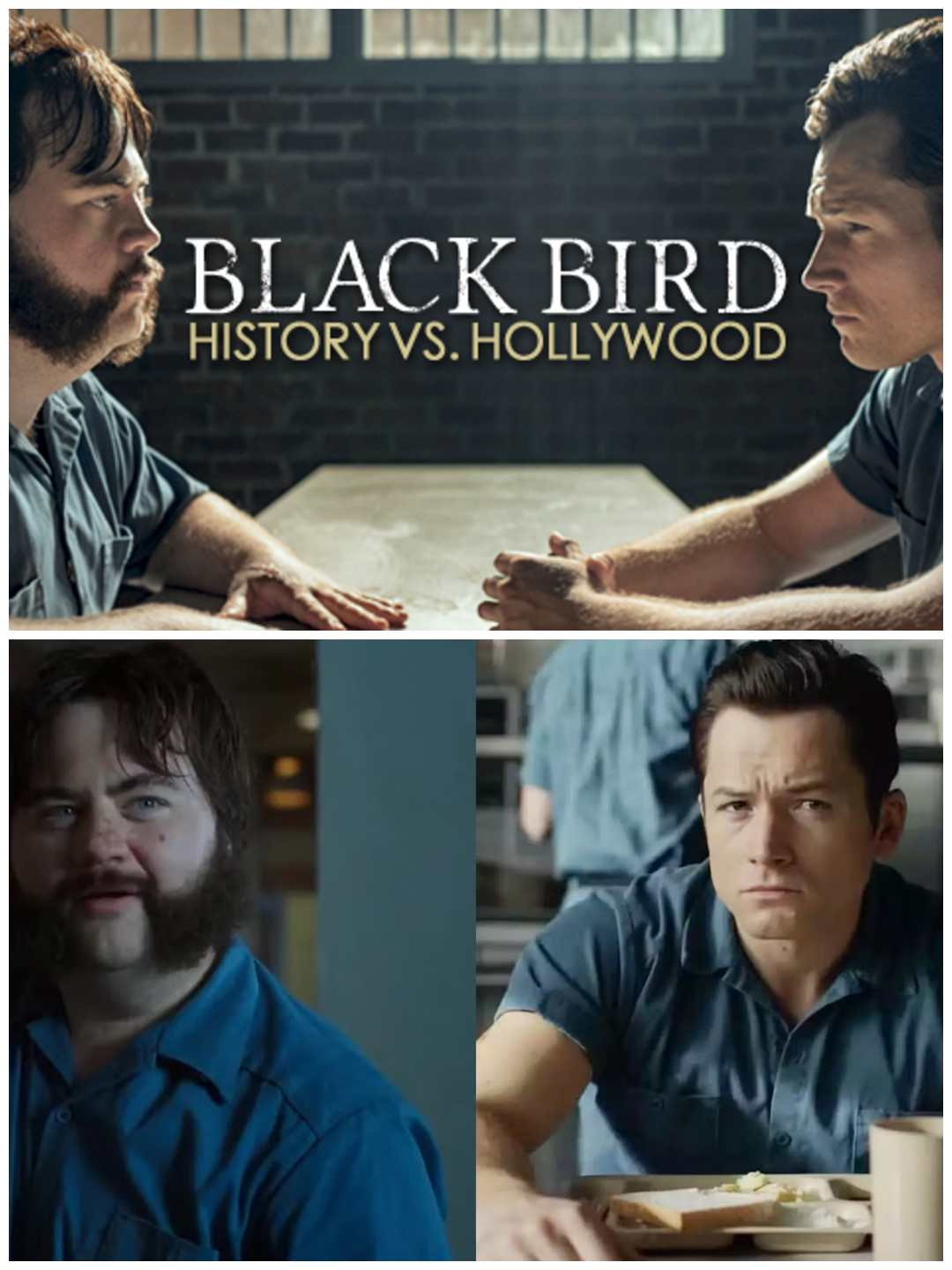
Apple TV+’s Black Bird has the kind of premise that sounds invented specifically for a crime thriller.
Jimmy Keene, a former high school football star who becomes a successful drug dealer, is sentenced to a decade in federal prison. Then prosecutors offer him an extraordinary way out.
He can remain in a relatively low-security prison and serve his sentence.
Or he can voluntarily enter a maximum-security medical prison filled with some of the country’s most dangerous offenders, become friends with suspected serial killer Larry Hall and somehow persuade him to reveal details about missing young women.
If Keene succeeds, he can go home.
If Hall discovers what he is doing, Keene could be trapped inside the institution with a man he believes has killed repeatedly.
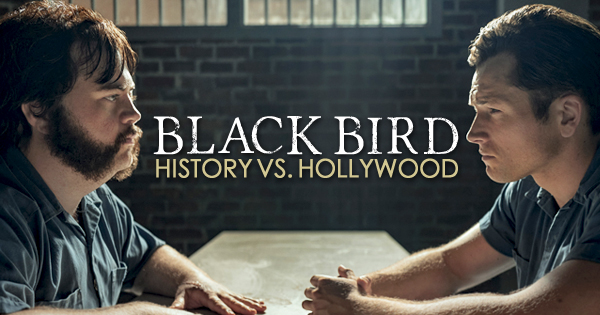
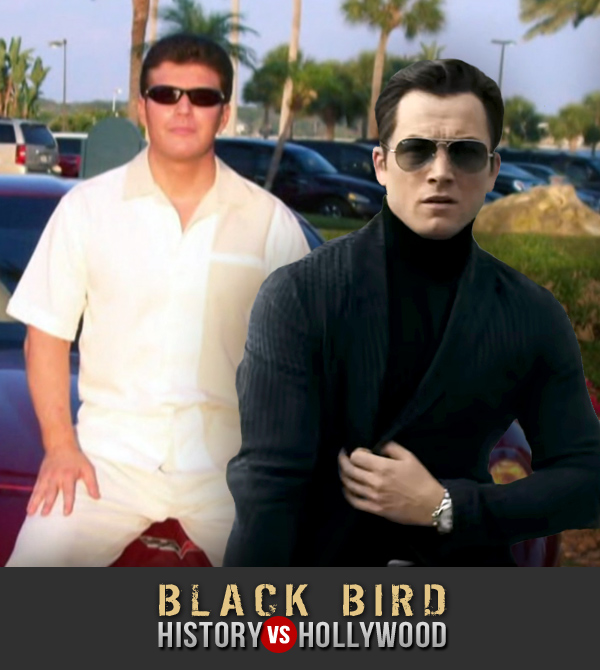
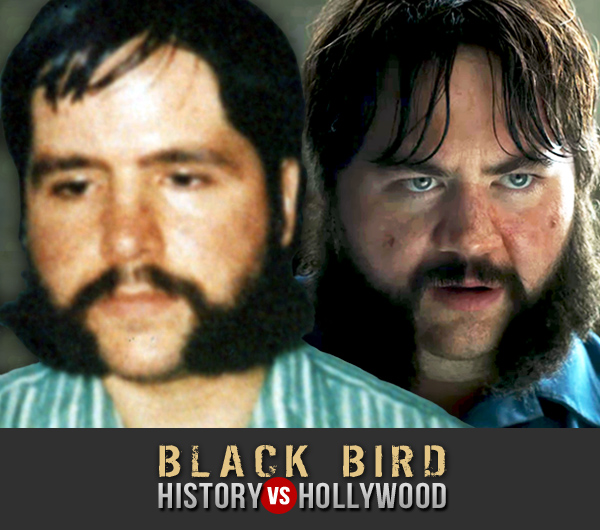
Taron Egerton plays Keene, while Paul Walter Hauser portrays Hall. Ray Liotta appears as Jimmy’s father, Big Jim Keene, in one of the actor’s final television performances.
As improbable as the setup sounds, the central mission really happened. Black Bird was adapted from Keene and Hillel Levin’s memoir In with the Devil: A Fallen Hero, a Serial Killer, and a Dangerous Bargain for Redemption.
But the series also changes names, combines events and invents some characters.
So where does television end and the true story begin?
Was Jimmy Keene Really a Star Athlete Before He Became a Criminal?
Yes.
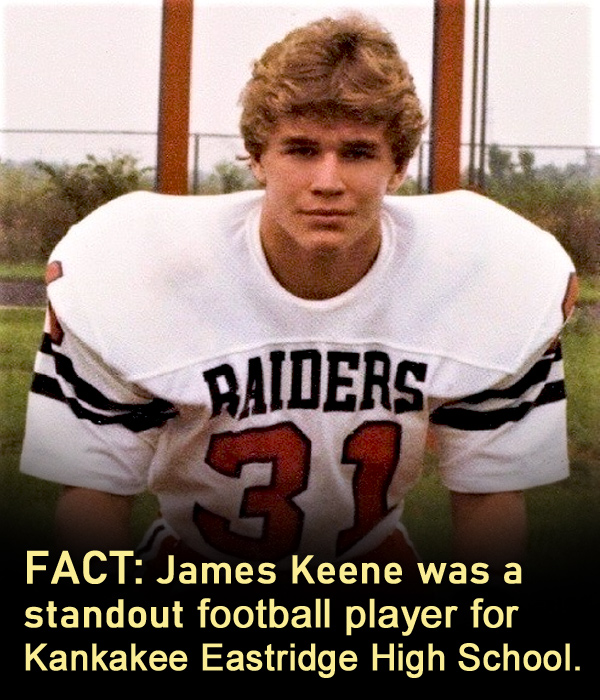
Long before federal agents knew his name, James “Jimmy” Keene appeared to have a completely different future waiting for him.
Growing up in Illinois, Keene became an accomplished high school athlete, particularly in football. He played running back and attracted attention from college programs.
Football was not his only sport. He also competed in wrestling and track.
Keene had opportunities to continue pursuing athletics after high school, but another part of his life was already becoming increasingly profitable.
He was selling marijuana.
Keene remained in the Chicago area rather than leaving for one of the larger college opportunities available to him and continued building his illegal business while playing community-college football.
Was His Father Really a Police Officer?
Yes.
One of the most emotionally important relationships in Black Bird is based on reality.
Jimmy’s father, James “Big Jim” Keene, had worked in law enforcement and as a firefighter.
That background created an uncomfortable contradiction once Jimmy became deeply involved in the drug trade.
The younger Keene wasn’t simply breaking the law.
He was doing it while being extremely close to a father whose career had revolved around enforcing it.
After Big Jim retired, father and son also attempted several legitimate business ventures together. Their relationship remained extremely important to Jimmy even after his criminal life sent him to prison.
Ray Liotta portrays Big Jim in the Apple series.
Why Was Jimmy Keene Sentenced to 10 Years?
Keene’s drug operation eventually attracted federal attention.
By the mid-1990s, he had developed a highly profitable illegal business in the Chicago area. Federal authorities arrested him in 1996 on a conspiracy charge.
Keene ultimately accepted a plea deal.
He expected that pleading guilty would reduce his punishment.
Instead, the judge gave him a 10-year federal prison sentence without the possibility of parole.
That decision destroyed Keene’s assumption that he would quickly return to his former life.
It also created the circumstances that would eventually bring Larry Hall into it.
Who Was Larry Hall?
Larry DeWayne Hall was an Indiana man who attracted investigators’ attention during inquiries into disappearances and murders of young women across the Midwest.
Hall had an identical twin brother named Gary and participated extensively in Civil War reenactments, traveling throughout areas where several young women had disappeared.
He also had a troubling habit that made investigations unusually difficult.
Hall confessed.
Then he took his confessions back.
He sometimes claimed that the crimes he had described were actually dreams or fantasies rather than real events.
Investigators therefore faced a disturbing question: Was Hall a serial killer repeatedly revealing the truth and then retreating from it, or was he a compulsive confessor taking credit for crimes he hadn’t committed?
The uncertainty is central to Black Bird. Even Apple’s description of the series frames Hall as a suspected killer whose stories could either be admissions or lies.
What Happened to Jessica Roach?
Jessica “Jessi” Roach was 15 when she disappeared in 1993 after being seen riding her bicycle near Georgetown, Illinois.
Her remains were later discovered in Indiana.
Hall eventually signed a confession describing abducting and sexually assaulting Jessica and strangling her.
He later recanted.
Although prosecutors did not convict Hall of Jessica’s murder, he was convicted federally of kidnapping her and received a life sentence.
Investigators considered portions of his confession particularly troubling because he appeared to know details about Jessica’s movements that had not been widely publicized.
How Many Murders Was Larry Hall Suspected Of?
The precise number has always been uncertain.
Authorities investigated Hall in connection with numerous disappearances and killings across several Midwestern states.
Federal prosecutor Lawrence Beaumont reportedly believed Hall could have been responsible for more than 20 deaths.
Other accounts use different numbers.
That uncertainty is important.
Hall has never been legally established as the killer of 20 women, and he was never convicted of murder.
The series therefore dramatizes a theory investigators strongly believed rather than a string of murder convictions established in court.
Why Was Jimmy Keene Chosen to Get Close to Him?
Keene possessed exactly the qualities investigators believed might work on Hall.
He was socially confident.
He could talk comfortably with very different kinds of people.
He had experience navigating criminal environments.
And unlike an obvious law-enforcement officer, he could enter prison as another inmate.
Seven months into Keene’s sentence, federal prosecutor Lawrence Beaumont offered him the extraordinary assignment.
Keene would transfer into the United States Medical Center for Federal Prisoners in Springfield, Missouri, where Hall was being held.
His job was to become Hall’s friend and obtain information that could help keep Hall imprisoned, ideally including the location of missing victims.
If he succeeded, Keene could earn his freedom.
Was Hall Really in Danger of Being Released?
There was serious concern about his appeal.
Hall’s earlier conviction had already faced legal challenges, and his defense maintained that investigators had coerced his confession.
Federal authorities wanted more independent evidence before an appellate court potentially overturned the case against him.
Keene’s mission therefore had an urgent deadline.
He couldn’t simply become Hall’s friend over several years.
He needed Hall to say something useful before the legal process potentially opened the prison door.
Did Jimmy Initially Refuse the Mission?
Yes.
For obvious reasons, Keene was not immediately enthusiastic about entering a maximum-security institution containing dangerous and mentally ill offenders.
He had been serving his time in a substantially safer environment.
Taking the deal meant voluntarily making prison much more dangerous.
Keene later recalled becoming frightened again as he actually approached the Springfield facility and realizing how different it was from the prison he was leaving.
One factor helped convince him to continue.
His father was seriously ill.
Big Jim had suffered a stroke, and Jimmy feared he might spend years behind bars while his father’s health continued to deteriorate.
Freedom suddenly wasn’t just about Jimmy.
It meant having another chance to be with his dad.

What Cover Story Did Jimmy Use?
Keene could not enter the prison under circumstances that made his cooperation with prosecutors obvious.
Authorities therefore constructed a cover identity around his incarceration.
Keene was presented as a weapons trafficker facing an extremely long sentence and struggling psychologically with the consequences.
The idea was to make him appear like another serious criminal rather than someone planted inside the institution by the government.
His real assignment remained secret.
Even many people running the prison were not supposed to know exactly why he was there.
Is FBI Agent Lauren McCauley a Real Person?
Not exactly.
Sepideh Moafi’s Lauren McCauley is based loosely on real FBI Special Agent Janet Butkus.
The series expands and fictionalizes her role.
Unlike McCauley, Butkus was not present for several of the early events shown in the series, including Keene’s original arrest and the first presentation of the undercover deal.
She did, however, become one of Keene’s FBI contacts during the operation.
Keene has said Butkus even visited him while posing as his girlfriend, helping protect his cover inside the prison.
Was the Corrupt Guard Carter Real?
No.
This is one of Black Bird’s clearer inventions.
Joe Williamson plays correctional officer Carter, who realizes there is something unusual about Jimmy and begins trying to extort him.
The subplot adds another danger: Jimmy not only has to keep Larry from discovering the truth, he must prevent a prison guard from exposing him.
According to the fact-check behind the real story, there was no actual guard who blackmailed Keene in this way.
Carter was created for the series.
Did Jimmy Really Become Friendly With Mob Boss Vincent “The Chin” Gigante?
Surprisingly, yes.
Vincent “The Chin” Gigante was a powerful figure in New York’s Genovese crime family.
He was also incarcerated at Springfield.
According to Keene, Gigante took a liking to him.
That sounds useful for someone trying to survive prison, but it created an unexpected complication.
Gigante strongly disapproved of inmates who harmed children and reportedly warned Keene to stay away from Larry Hall.
Because Gigante spent time around Jimmy during the day, Keene had to find other opportunities to approach the exact prisoner he had been sent there to befriend.
The real Gigante therefore became both a source of protection and an obstacle to Jimmy’s mission.
Did Jimmy Really Beat Up Another Prisoner to Impress Larry?
According to Keene, yes.
The confrontation began while Keene and Hall were watching television.
Another inmate turned the television off.
Keene challenged him, eventually leading to a fight.
Keene said he badly beat the much larger prisoner before guards intervened.
The confrontation had an important side effect.
Hall viewed Keene differently afterward.
Jimmy had demonstrated that he could handle himself in the dangerous environment, and the incident helped create trust between them.
That trust was exactly what Keene needed.
Did Larry Hall Actually Confess to Jimmy?
According to Keene, Hall revealed disturbing details during months of conversations.
Keene says Hall discussed numerous young women and admitted involvement in killings that investigators had already connected to him.
One of the most important names was Tricia Reitler, a 19-year-old college student who disappeared in Indiana in 1993.
Keene said Hall described killing and burying her in a remote area but would not provide the precise location of her remains.
That was a serious problem.
A confession inside a prison was valuable.
Finding a missing woman’s body would have been far more powerful.
Hall later withdrew what he had said to Keene, just as he had recanted other confessions.
Was the Map Covered With Red Dots Real?
According to Keene’s account, yes — and this may be the most haunting part of the entire story.
Keene said he entered the prison workshop and saw Hall with a map covering parts of the Midwest.
Across it were numerous red marks.
Nearby were small wooden falcons Hall had carved.
When Keene asked what the birds represented, Hall gave the chilling explanation that they “watch over the dead.”
Keene immediately suspected that the marks on the map represented burial locations.
He believed he had finally found something capable of revealing where multiple missing women might be located.
Why Didn’t the FBI Simply Take the Map?
Because Jimmy made one devastating mistake.
After seeing the map, he tried to contact his FBI handler.
He believed his mission was essentially complete and expected authorities to remove him from the prison quickly.
Months of pretending to enjoy Larry’s company had also taken a psychological toll.
Keene finally confronted Hall and told him what he really thought of him.
Hall immediately became suspicious.
Jimmy had effectively exposed himself.
Prison personnel then placed Keene in solitary confinement, cutting him off from the people running the operation. By the time authorities understood what had happened, the map and the wooden birds were gone.
How Long Was Jimmy Stuck in Solitary?
Approximately two weeks.
That period became particularly terrifying because Keene could not prove to ordinary prison staff that he was secretly working for federal authorities.
His primary internal contact was unavailable, while his message to his FBI contact had not triggered the response he expected.
From Jimmy’s perspective, the operation had suddenly vanished around him.
He was trapped in a maximum-security institution, his cover had been compromised and the evidence he believed could identify burial locations was disappearing.
Authorities eventually located him and removed him from isolation.
But by then, the opportunity to secure Hall’s map had been lost.
Did Jimmy Fail Because He Never Found Tricia Reitler?
Not ultimately.
Keene had not accomplished the most ambitious part of the assignment: finding Tricia’s remains.
But prosecutors believed he had obtained enough useful information from Hall to justify honoring the deal.
Keene also passed a polygraph concerning what Hall had told him.
The intelligence gathered during the operation strengthened the effort to keep Hall incarcerated while giving investigators information relevant to other unsolved cases.
Keene was released in 1999, after serving roughly 17 months rather than the full 10-year sentence.
Did He Get to See His Father Again?
Yes.
For Jimmy, this was one of the most important outcomes.
Big Jim was still alive when his son came home.
Jimmy received approximately five additional years with his father before Big Jim died in November 2004.
That makes Ray Liotta’s storyline in Black Bird particularly significant.
The relationship between Jimmy and his father isn’t merely emotional material added to make the prison story more sympathetic.
Keene has described getting back to Big Jim as one of his most powerful motivations for surviving the operation.
Was Larry Hall Ever Convicted of Murder?
No.
This is probably the most important distinction when discussing the real case.
Larry Hall has been suspected in numerous murders and disappearances.
He confessed to multiple crimes at different times.
Investigators believed that some of his knowledge could only have come from the offender.
Jimmy Keene says Hall confessed to him as well.
But Hall repeatedly recanted.
And prosecutors never convicted him of murder.
His life sentence came from the federal kidnapping conviction involving Jessica Roach.
Hall has remained incarcerated, but describing every missing woman associated with him as a legally proven murder victim would go beyond what courts established.
Where Is Larry Hall Today?
Hall remains imprisoned under a life sentence.
Despite the absence of murder convictions, the kidnapping case was enough to keep him behind bars, and the information gathered during the broader investigation prevented the outcome federal authorities feared most when they recruited Keene: Hall returning to society.
The larger mystery remains unresolved.
Numerous disappearances associated with Hall still lack definitive answers, and the burial map Keene remembers seeing was never recovered.
What Happened to Jimmy Keene After Prison?
Keene rebuilt his life outside prison and eventually turned his extraordinary experience into a book.
In 2010, he and Hillel Levin published In with the Devil, recounting his criminal rise, imprisonment and undercover operation.
That memoir ultimately became the foundation for Black Bird.
Keene also served as an executive producer on the Apple TV+ adaptation, meaning the man portrayed by Taron Egerton was directly involved behind the scenes.
Does the Real Jimmy Keene Appear in Black Bird?
Yes.
Viewers who know what to look for can actually see him.
Keene appears briefly as a prison guard in the series finale.
The cameo created a strange reversal.
Decades earlier, Keene had entered a prison under a false identity to secretly gather evidence.
Years later, he returned to a fictionalized version of the same story — this time standing in front of the camera while another actor played him.
How Accurate Is Black Bird Overall?
The central story is very real.
Jimmy Keene was a promising athlete who became a drug dealer.
His father had worked in law enforcement.
Keene received a 10-year federal sentence.
Prosecutors really offered him freedom in exchange for entering a much more dangerous prison and gaining Larry Hall’s confidence.
Keene says Hall discussed suspected victims with him.
The map and wooden falcons came from Keene’s real account.
And Keene really ended up in solitary confinement after allowing his disgust toward Hall to destroy the friendship he had spent months carefully building.
But Black Bird is still a television drama.
Lauren McCauley is a fictionalized version of FBI agent Janet Butkus.
Officer Carter is invented.
Other events are compressed, altered or repositioned for dramatic effect.
Most importantly, the series necessarily presents Hall through the belief that investigators and Keene had about him.
The legal record is narrower.
Larry Hall is a convicted kidnapper serving life in prison.
He is also a suspected serial killer linked by investigators to numerous missing or murdered young women.
Those two statements are not exactly the same thing.
The Most Frightening Part of Black Bird Is What Was Never Found
Black Bird appears at first to be the story of Jimmy Keene earning his freedom.
And in one sense, it is.
Jimmy enters prison as a man serving 10 years for crimes motivated largely by money and status.
He comes out after doing something that federal investigators believed helped keep a dangerous man incarcerated.
But the darker story belongs to the women whose names hover over the series.
Jessica Roach.
Tricia Reitler.
And many others investigators wondered whether Larry Hall had encountered during his travels across the Midwest.
Keene believed he came extraordinarily close to finding answers.
A map sat in front of Hall.
Red marks appeared across several states.
Wooden birds stood beside it.
Jimmy thought he had finally reached the moment the entire mission had been designed to produce.
Then he lost his temper.
His cover collapsed.
The map disappeared.
Keene still earned his freedom, and Hall remained behind bars.
But for families hoping to learn where their missing daughters were, the most important question was left unanswered.
The real Black Bird story therefore does not end with a perfect victory.
Jimmy Keene got out.
Larry Hall stayed in.
And somewhere between those two outcomes, a map that might have contained answers was lost forever.