Steven Spielberg Confirms Harrison Ford Turned Down Role of Dr. Adam Grant in Jurassic Park
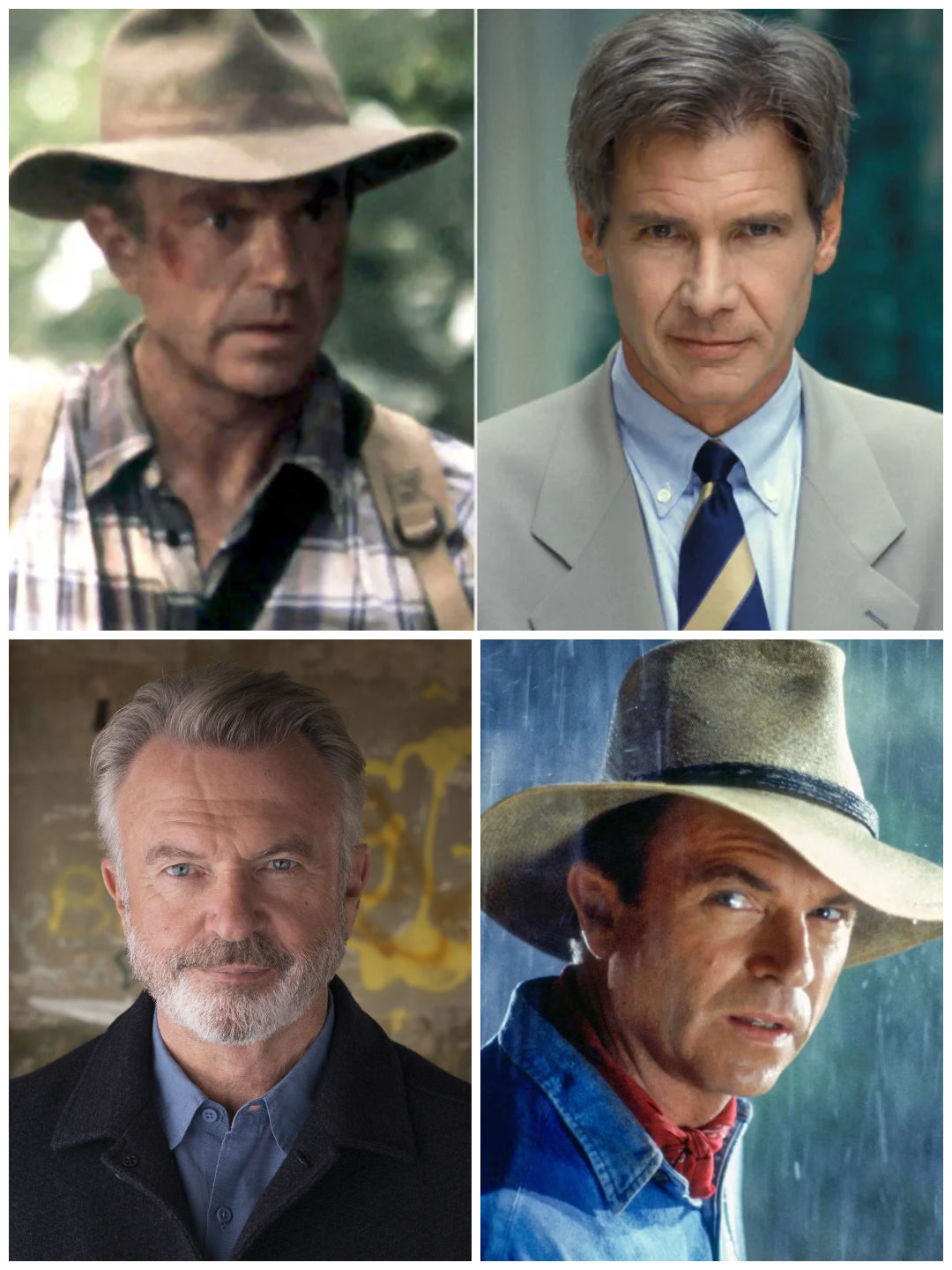
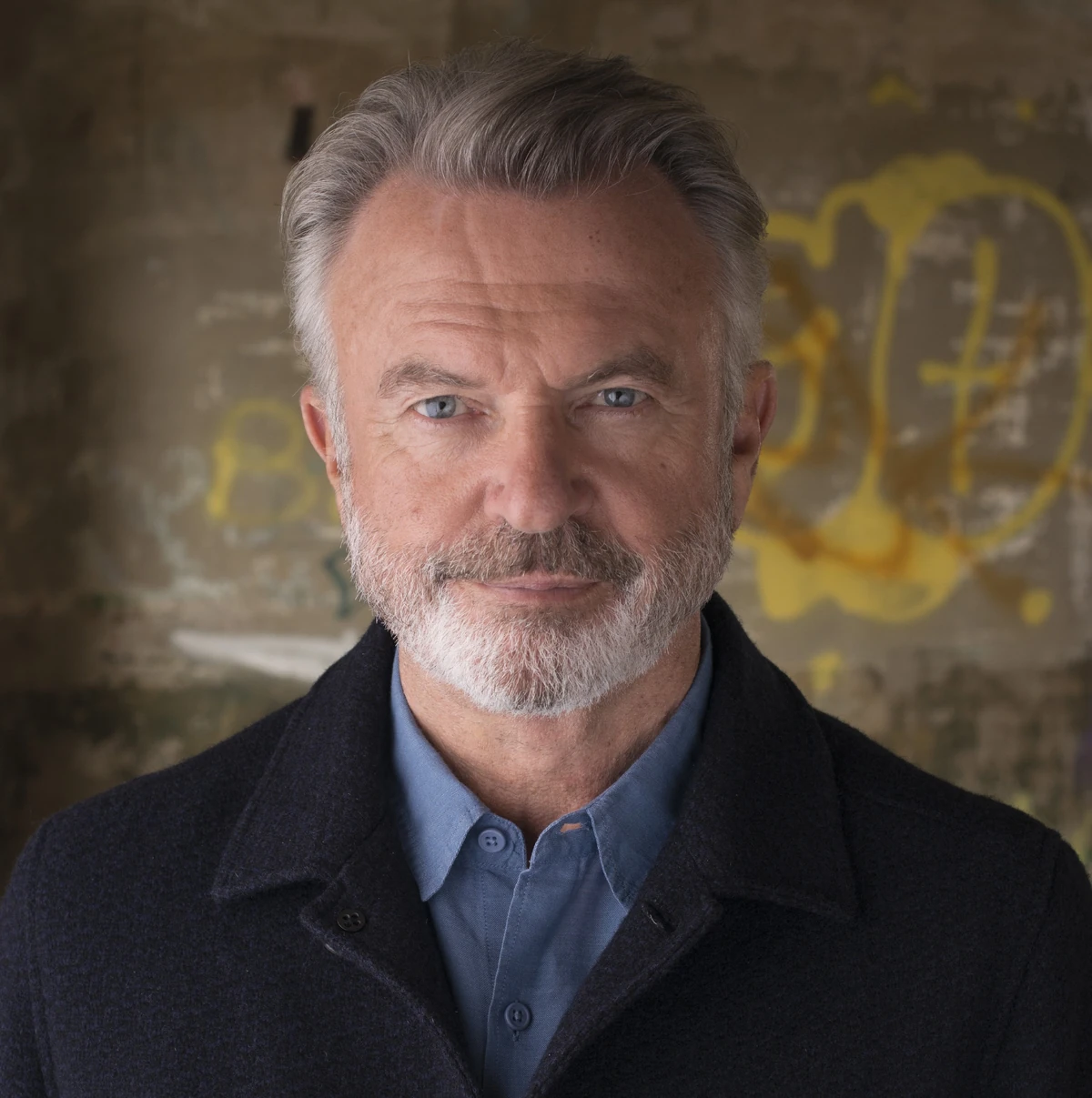
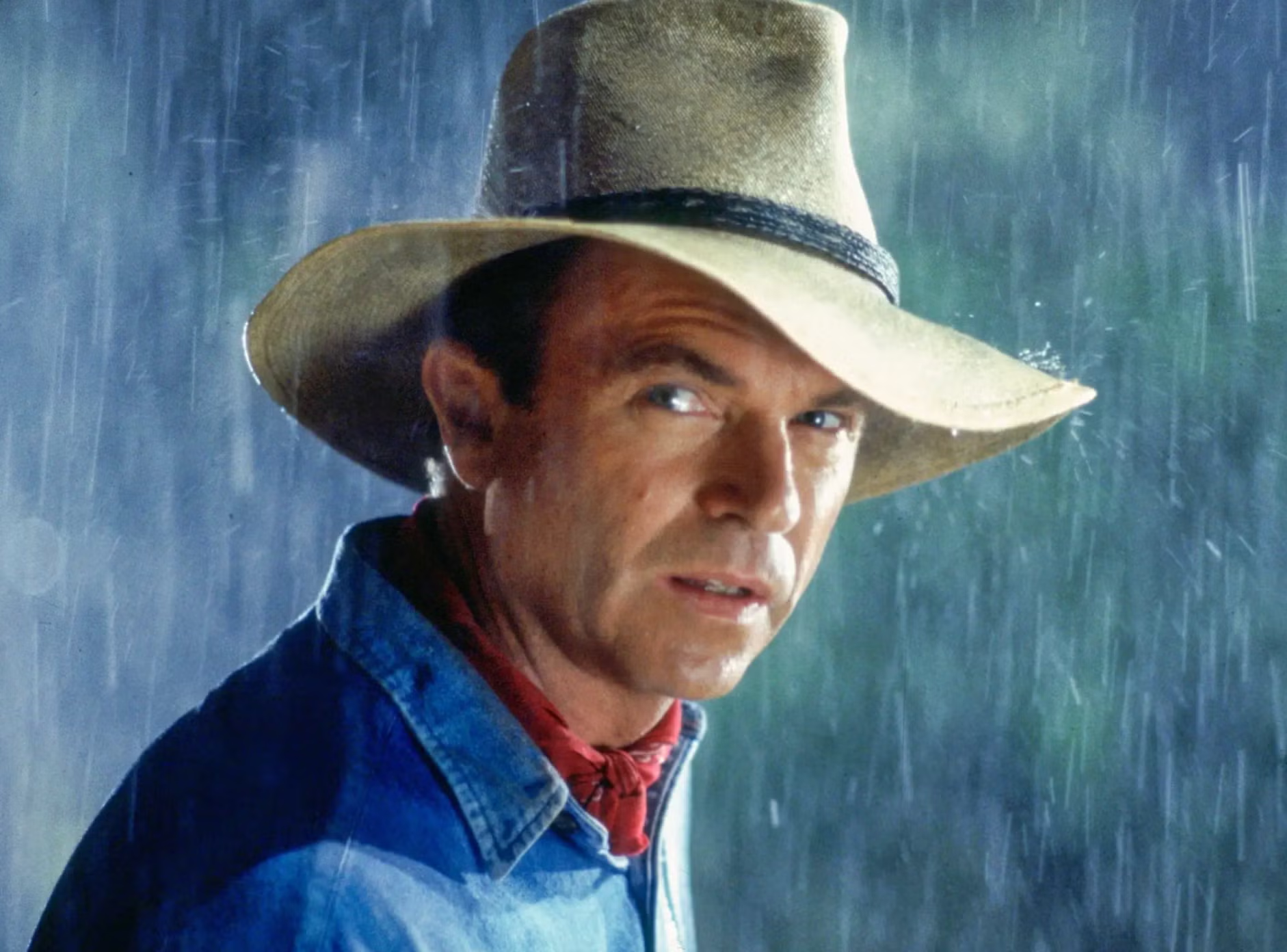
For more than 30 years, Sam Neill has been almost impossible to separate from Dr. Alan Grant.
The paleontologist at the center of Jurassic Park became one of the most recognizable characters in Steven Spielberg’s 1993 blockbuster, with Neill’s performance helping define the movie’s mix of wonder, fear and scientific skepticism.
But Spielberg has now confirmed that Grant could have looked very different.
Before Neill got the role, Harrison Ford was offered the part.
And Ford turned it down.
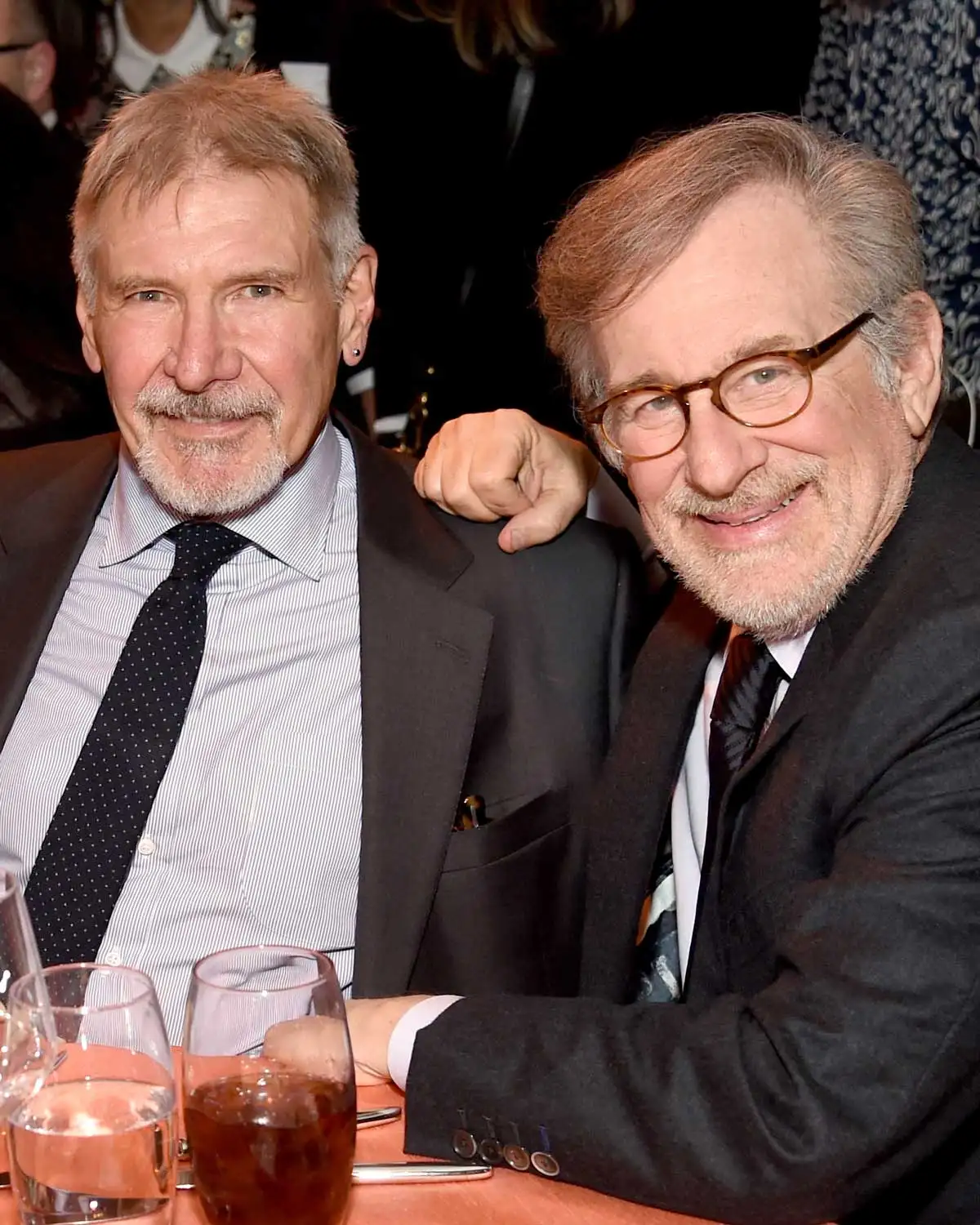
During a recent appearance on the Happy Sad Confused podcast, Spielberg confirmed the long-rumored piece of casting history and admitted that Ford’s decision disappointed him far more than fans might expect.
When asked directly whether Ford had passed on the role of Dr. Alan Grant, Spielberg’s answer was simple.
“Yes, he did.”
Then he added something even more revealing.
Ford, Spielberg joked, might not even remember receiving the offer.
Spielberg certainly does.
Spielberg Says He Was “Crushed”
The subject came up while Spielberg appeared on the podcast alongside Emily Blunt, who stars in his newer project Disclosure Day.
Host Josh Horowitz asked the director about Ford and Jurassic Park, giving Spielberg the opportunity to finally settle a casting question that has circulated among movie fans for years.
Spielberg confirmed that Ford had indeed been approached.
Blunt then jokingly asked whether the director had been angry when Ford said no.
Spielberg explained that anger was not really the emotion he remembered.
“I wasn’t cross,” he said. “I was crushed.”
That reaction makes sense when considering the history between the two men.
By the early 1990s, Spielberg and Ford had already created one of cinema’s most famous heroes together.
Ford had played Indiana Jones in Raiders of the Lost Ark, Indiana Jones and the Temple of Doom and Indiana Jones and the Last Crusade.
Spielberg already knew exactly what Ford could bring to an adventure movie.
So when he began assembling the cast for Jurassic Park, the idea of putting Ford at the center of another enormous Spielberg adventure must have seemed natural.
Ford had other ideas.
Try Imagining Indiana Jones Standing Beside a T. Rex
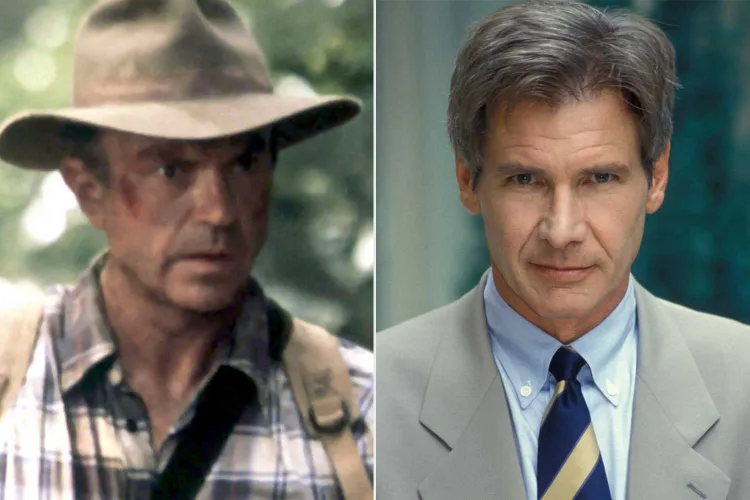
The casting possibility becomes fascinating in retrospect because Ford and Neill project very different energies onscreen.
Ford was already associated with characters such as Indiana Jones and Han Solo — confident, sarcastic heroes who often seem capable of surviving almost anything.
Alan Grant is different.
When audiences first meet Grant in Jurassic Park, he is an expert in dinosaurs but deeply uncomfortable with much of the modern world around him.
He dislikes computers.
He has little interest in children.
And when John Hammond invites him to visit a dinosaur theme park on Isla Nublar, Grant enters a world in which much of his academic knowledge suddenly becomes terrifyingly real.
Neill plays him with a mixture of intelligence, irritation and vulnerability.
He does not feel like an invincible action hero.
When the dinosaurs escape, Grant survives because he adapts.
It is difficult to know how Ford would have approached the character, but the entire tone of the movie might have shifted simply because audiences already brought so many expectations to a Harrison Ford performance.
Then Sam Neill Became Available
Spielberg says the disappointment did not last forever.
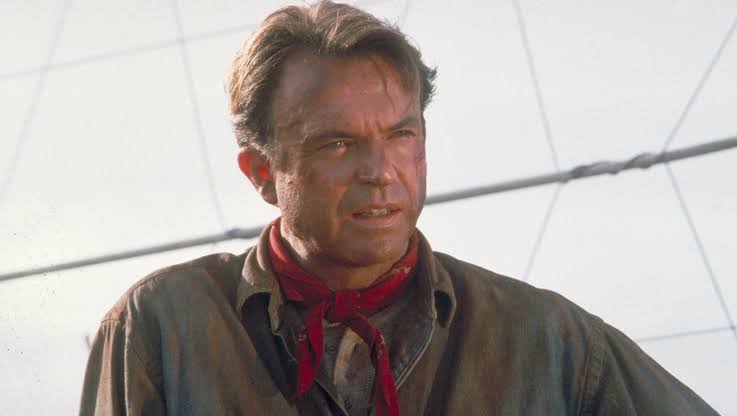
After Ford passed, Sam Neill became available.
And today, Spielberg believes the role ended up with the right actor.
“But then Sam Neill came available,” Spielberg recalled, before making his current feelings very clear.
“He’s Alan Grant, and it now belongs to him.”
It is difficult to argue with that conclusion.
Neill starred alongside Laura Dern as paleobotanist Dr. Ellie Sattler, Jeff Goldblum as mathematician Dr. Ian Malcolm and Richard Attenborough as billionaire park creator John Hammond.
The ensemble became inseparable from Jurassic Park.
The movie follows Hammond’s attempt to convince a small group of experts that his revolutionary theme park — populated by genetically engineered dinosaurs — is safe to open to the public.
Almost immediately, the experts begin questioning whether creating dinosaurs simply because the technology exists is a good idea.
Then the park’s security systems fail.
What begins as an astonishing scientific tour turns into a fight for survival.
Jurassic Park Became a Cultural Phenomenon
Released in 1993 and adapted from Michael Crichton’s bestselling novel, Jurassic Park became much more than another successful summer movie.
It became a global phenomenon.
The visual effects changed audience expectations for what computer-generated creatures could look like onscreen, while Spielberg carefully combined those effects with practical dinosaurs created by Stan Winston’s team.
The result made the animals feel startlingly real.
Scenes such as the first appearance of the brachiosaurus, the Tyrannosaurus rex attack and the velociraptors stalking children through a kitchen became some of the most recognizable sequences of the decade.
The film also became one of the highest-grossing movies ever released at the time.
And Neill’s Alan Grant became one of its central faces.
He would later return to the franchise, appearing in Jurassic Park III and eventually reuniting with Dern and Goldblum in Jurassic World Dominion.
For generations of viewers, Grant simply looks like Sam Neill.
That is why Spielberg’s confirmation about Ford is so strange to imagine.
Ford Himself Was Once Someone Else’s Replacement
There is an amusing twist to the story.
Harrison Ford may have turned down Alan Grant, but one of his own most famous roles nearly went to someone else.
Spielberg recently revisited that story as well.
When he and George Lucas were preparing Raiders of the Lost Ark, they initially wanted Tom Selleck to play Indiana Jones.
Spielberg said he and Lucas had “both discovered and decided” that Selleck should be the character.
But Selleck had contractual obligations connected to Magnum, P.I., preventing the casting from moving forward.
Spielberg then saw Ford in The Empire Strikes Back and changed direction.
Ford got the role.
Indiana Jones became one of the defining characters of his career.
It is a reminder of how much movie history can depend on timing.
A contract keeps one actor from accepting a role.
Another actor becomes iconic.
Years later, that same actor rejects another major part.
Someone else becomes iconic instead.
Would Ford Have Changed the Movie?
There is no way to know whether Jurassic Park would have been better or worse with Ford.
It simply would have been different.
Ford would have arrived carrying the enormous cultural weight of Han Solo and Indiana Jones.
Neill arrived with far fewer preconceived expectations from mainstream American audiences.
That may have helped viewers believe in Grant as a scientist first and an adventure hero second.
Grant does not begin the movie wanting an adventure.
He wants to study fossils.
By the end, he is protecting Hammond’s grandchildren from creatures he previously knew only as bones.
Neill makes that evolution believable.
Spielberg’s recent comments suggest he now sees the casting outcome the same way.
He may have been “crushed” when Ford said no.
But once Neill stepped into the role, the disappointment disappeared.
One Rejection Changed Two Careers Very Differently
Harrison Ford did not exactly need Jurassic Park.
By 1993, he was already one of the biggest movie stars in the world.
Sam Neill, meanwhile, became permanently linked to one of the most successful films in Hollywood history.
And audiences received the Dr. Alan Grant they have now known for more than three decades.
That is what makes Spielberg’s revelation so satisfying.
The story is not really about a terrible missed opportunity.
It is about a rejection that initially hurt — and then produced something the director ultimately believes was better for the movie.
Spielberg wanted Harrison Ford.
Ford said no.
Spielberg was crushed.
Then Sam Neill arrived.
And, as Spielberg now puts it, Alan Grant became his.