Florida Driver Charged With DUI and Vehicular Manslaughter After Pedestrian Is Killed in Nighttime Crash
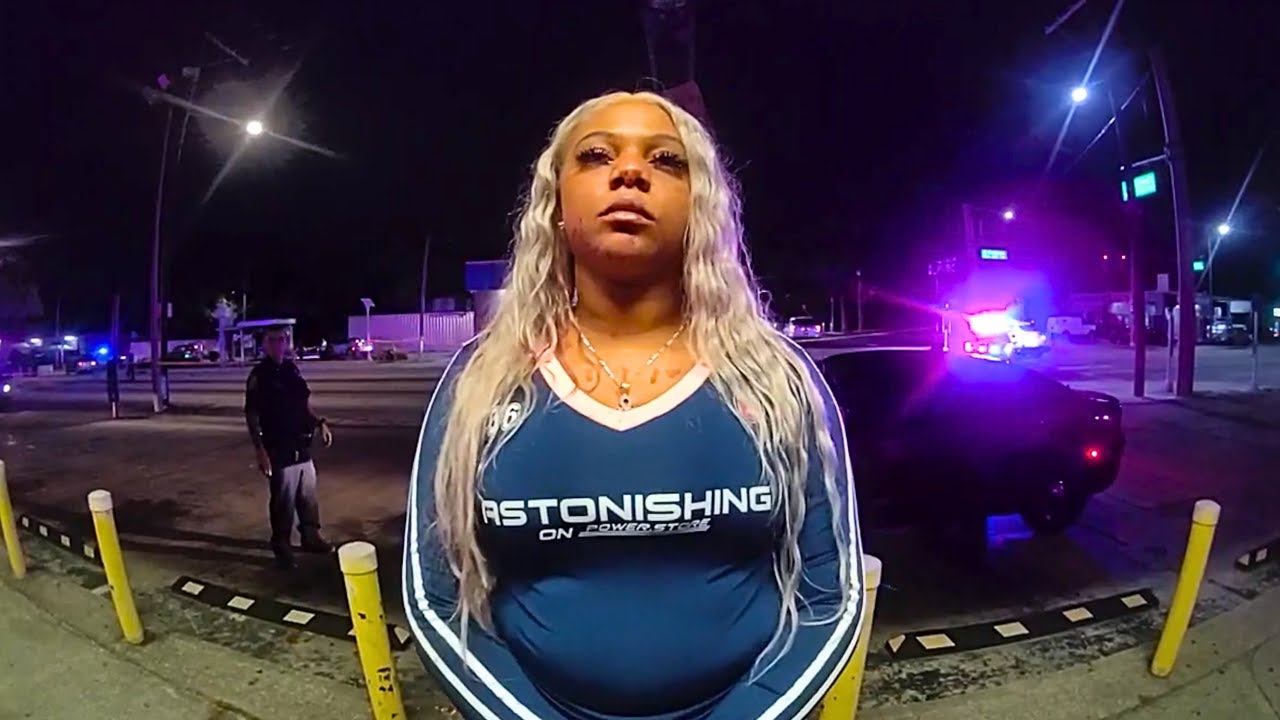
A nighttime crash in Florida turned into a complicated criminal investigation after a pedestrian was struck and killed, witnesses gave conflicting accounts of how he entered the roadway, and officers began questioning whether the driver had been impaired.
Body-camera footage from the scene shows police trying to reconstruct the moments before impact while several people gave differing descriptions of what they saw.
Some witnesses said the man suddenly ran or stepped into the road.
The driver, however, told investigators she did not see him until he was directly in front of her vehicle.
As officers continued sorting through those accounts, they also noticed signs that led them to conduct field-sobriety testing.
By the end of the investigation, the driver was charged with DUI, driving without a license and vehicular manslaughter.
A Normal Night Turns Fatal
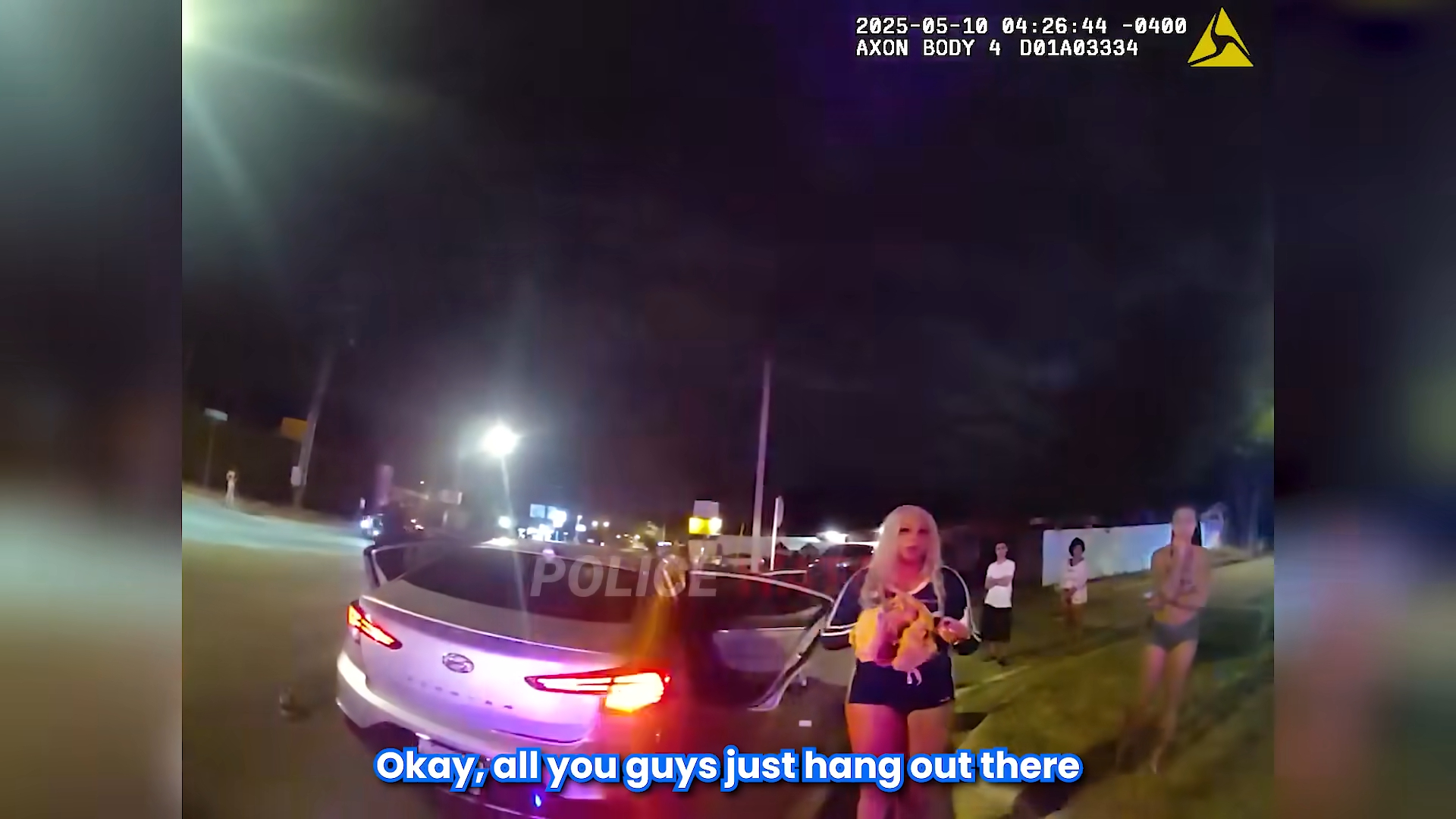
Police arrived to a chaotic scene.
Several women who had been inside the vehicle were standing nearby, some with minor injuries caused by broken glass.
One woman told officers that the pedestrian had suddenly run into the middle of the street and that the car struck him before the driver had time to react.
“I don’t know if he was drunk or what,” she said.
Another witness said she had not seen the initial impact itself but saw the man “flying” immediately afterward.
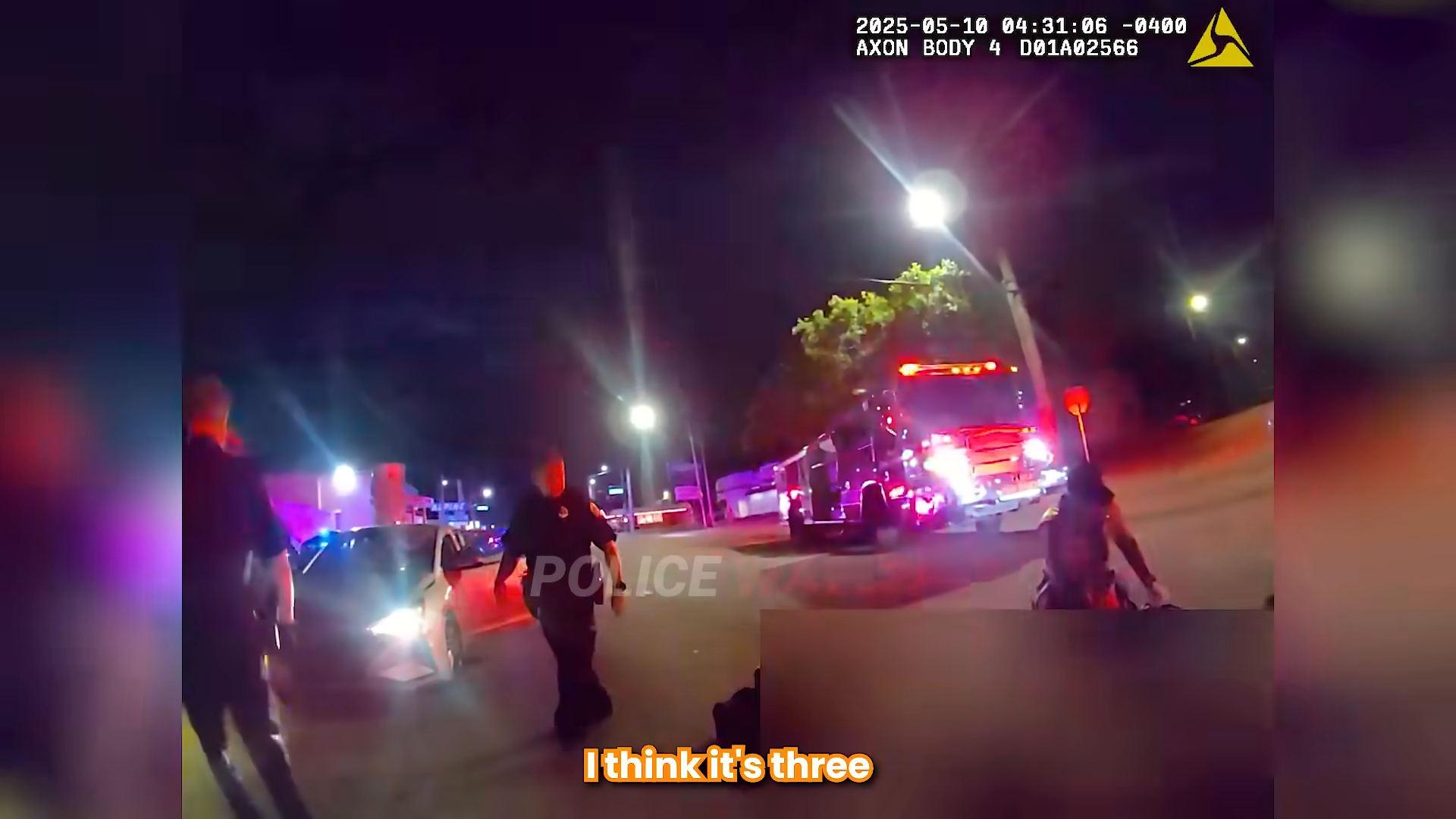
Emergency crews were called, but officers soon realized the man’s condition was critical.
At one point, someone at the scene told police that the man had initially shown some signs of movement but was no longer responding.
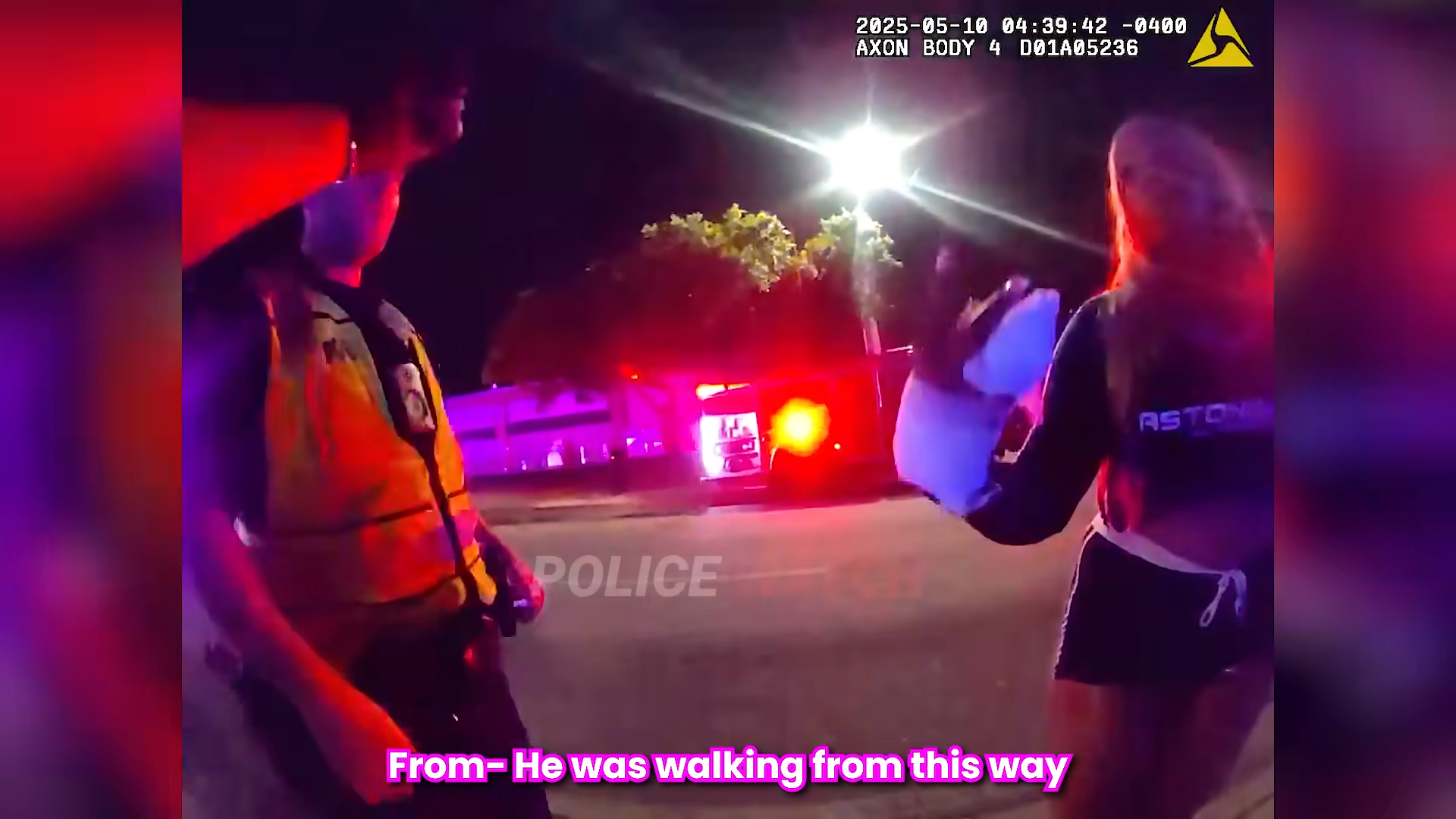
As the night unfolded, officers began separating witnesses and asking each person to describe exactly where the pedestrian had come from, which direction he was moving and how fast the vehicle had been traveling.
The answers did not completely match.
Witness Accounts Begin to Conflict
One of the central problems for investigators was determining how the pedestrian entered the roadway.
Some women in the car described him as appearing suddenly near a trash can or bushes and stepping into their lane.
Another person said the man crossed from one side of the street to the other.
Officers openly discussed those inconsistencies.
One officer noted that the driver’s account differed from what three other women had described.
The women said the pedestrian had taken only a few steps into the roadway near the trash-can area, while another witness placed his path farther across the street.
The estimated speed of the car also varied slightly.
One passenger estimated the vehicle was traveling around 25 to 30 mph.
Another estimate suggested perhaps 30 to 40 mph.
The driver would later tell investigators she believed she was traveling between 28 and 30 mph in an area where her GPS showed a 35-mph speed limit.
A Claim About the Pedestrian Raises More Questions
The investigation became even more complicated when several women told officers that another woman at the scene had made statements about the victim before police arrived.
According to their account, that woman said she knew the man, described him as someone who drank alcohol and claimed he had recently lost his animals.
The women also said she suggested he may have talked about harming himself.
But when police confronted the woman, she distanced herself from those claims.
She said she barely knew him and had only met him weeks earlier.
She denied knowing what had happened before the collision and repeatedly said she had simply seen the crash.
Officers noticed the contradiction.
One investigator specifically described her as “recanting” what she had allegedly told the women immediately after the impact.
That uncertainty meant police could not simply accept the idea that the pedestrian had intentionally entered traffic.
The scene had to be treated as a fatal crash until investigators could reconstruct what actually happened.
The Driver Says She Never Saw Him Coming
After being advised of her rights, the driver gave investigators her account.
She said she had been using GPS while driving and was monitoring both the posted speed information and her speedometer.
As she approached the area near the bus stop, she said she suddenly saw the pedestrian directly in front of her vehicle.
“Honestly, truthfully, I did not see him until he was directly in front of my car,” she told the officer.
She said she could not tell whether he had been running, walking or standing still before impact.
Her headlights, she added, were dim, limiting how far ahead she could see.
The only things she clearly remembered seeing were the man’s shirt and shorts immediately before the collision.
She told police she hit the brakes immediately but said the brakes were not working perfectly and sometimes “skipped.”
After the impact, she said she went into shock.
Her younger sister exited first.
The driver then got out and went toward the pedestrian, saying she checked whether he was responsive and saw that he was still breathing at that point.
Officers Begin a DUI Investigation
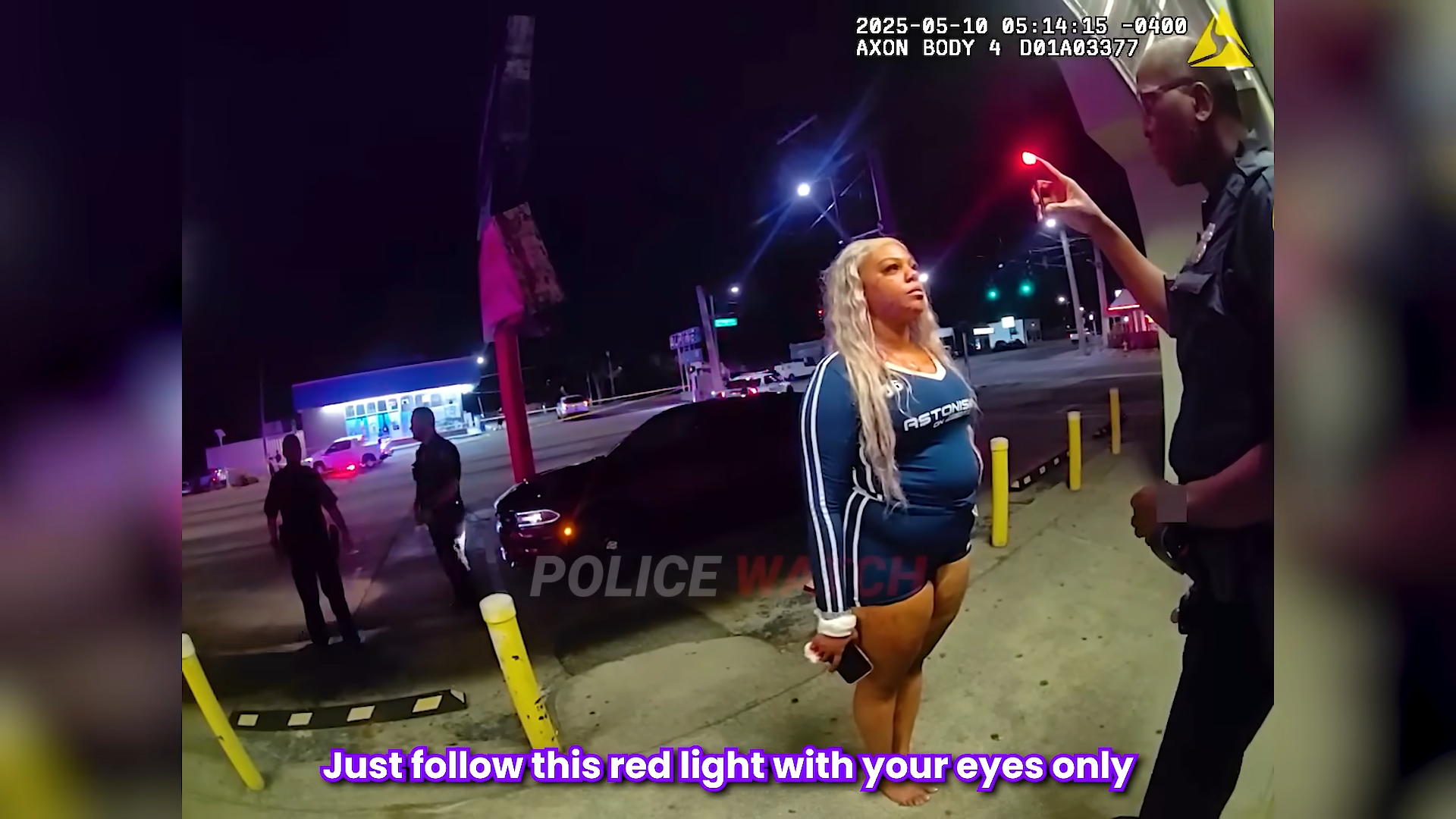
As police continued interviewing the people at the scene, one officer told the driver that he observed indicators that caused concern despite her denial that she had consumed alcohol.
He began field-sobriety testing.
The driver warned officers that she had an old ankle injury that could affect her balance, but she agreed to participate.
She performed walking and balance exercises while officers observed her movements.
After the tests, police told her she would need to remain detained until a detective arrived.
That decision signaled that investigators were no longer treating her simply as a witness to a tragic accident.
They were now examining whether her condition while driving may have contributed to the fatal collision.
The Victim Is Pronounced Dead
Later in the footage, an officer speaks with the driver’s mother and explains the seriousness of the investigation.
“The person’s dead,” he tells her.
He says investigators are trying to determine exactly what the driver saw and compare it with the accounts given by the other people present.
The officer emphasizes that the driver said the pedestrian appeared suddenly and that she could not determine whether he had been running or walking.
The scene remained secured as police worked to reconstruct the collision and identify the victim.
For investigators, the challenge was not simply determining that the car had struck the man.
That fact was obvious.
The more difficult questions were whether the driver was impaired, how the pedestrian entered the road and whether the collision could have been prevented.
The Case Ends in Serious Criminal Charges
The footage concludes with a brief summary of the legal outcome from the initial investigation.
The driver was charged with DUI, driving without a license and vehicular manslaughter.
Those charges transformed the case from a tragic pedestrian collision into a criminal prosecution.
The body-camera footage itself does not resolve every disputed detail.
Witnesses differed on where the pedestrian came from and how quickly he entered the roadway.
One person reportedly made statements suggesting he may have been distressed before the crash, then later denied knowing him well.
The driver maintained that she did not see him until the instant before impact.
But officers also developed concerns about possible impairment and began treating the crash as more than an unavoidable accident.
What started as a confusing nighttime collision ultimately became a fatal-crash investigation involving contradictory testimony, suspected DUI and a driver facing some of the most serious charges that can follow a traffic incident.