School Counselor Found in Woods With 15-Year-Old Later Pleads Guilty to Child Rape
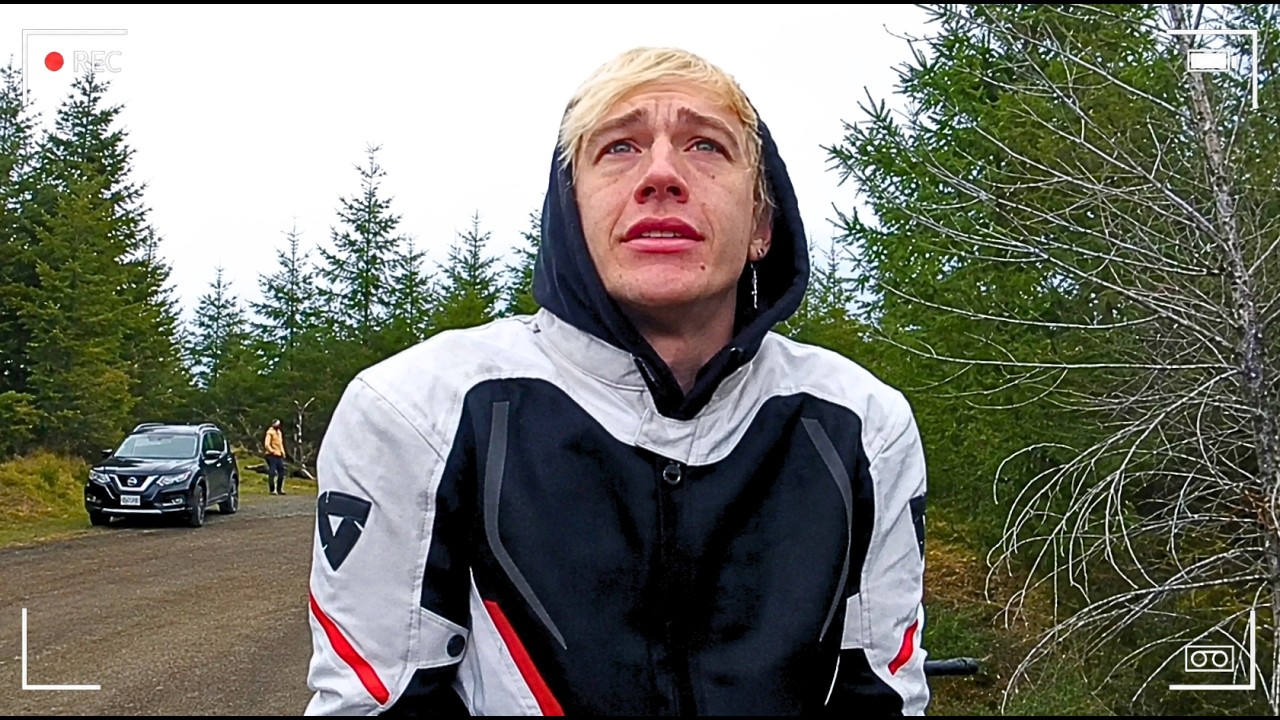
What began as a welfare concern involving a 15-year-old girl in Washington state eventually developed into a criminal investigation that exposed serious misconduct by a school counselor and led to a prison sentence.
Body-camera footage captures the moment law enforcement officers encountered a 29-year-old school counselor in a wooded area with the teenager after her parents became worried about her safety and tracked her phone to the location.
At first, officers could not establish that a crime had taken place in the woods that day.
But investigators preserved electronic evidence, continued examining the relationship and, nearly two months later, arrested the counselor.
The case ultimately ended with Samuel Caffey pleading guilty to third-degree rape of a child and receiving a 41-month prison sentence followed by 19 months of probation. According to the case summary in the footage, he will also be required to register as a sex offender for life.
Parents Track Their Daughter to a Remote Area
The encounter began after the teenager told her family she was going out for a run.
When she failed to return and stopped answering her phone, her mother checked a location-tracking app and saw that the phone was in an area along Covie Road.
Concerned that something might be wrong, the mother drove to the location.
There she found her daughter’s phone resting on a street motorcycle, but the teenager herself was nowhere to be seen.
Shortly afterward, the girl emerged from the wooded area.
When her mother asked who she had been with, the teenager reportedly said she had met an 18-year-old boy named “Ray” on Snapchat.
But the person eventually emerging from the woods was not an 18-year-old stranger.
He was her 29-year-old school counselor from Shelton High School.
That immediately changed the nature of the situation.

Officer Questions Why a Counselor Is With a Student in the Woods
The body-camera footage shows an officer confronting the man directly.
“Is there any reason that a school counselor is meeting with a 15-year-old girl outside of school up in the middle of the woods?” the officer asks.
The counselor responds that there is an explanation and says the situation is not what officers suspect.
But he does acknowledge one important point.
“I would say that I crossed the line professionally,” he says, while denying the more serious implication officers were considering.
The officer remains skeptical.
He points out that the man had apparently been hiding in the woods and tells him that detectives are being called because of the circumstances.
Police also learn that the teenager had repeatedly threatened to kill herself if her parents continued questioning her about who she had been with.
Her family explains that those threats were one of the main reasons they called for help.
According to the mother’s account, the girl had resisted identifying the person in the woods and became increasingly distressed when her parents insisted that he come out and introduce himself.
Police Detain the Counselor
As detectives make their way to the scene, officers tell the counselor that he is not free to leave.
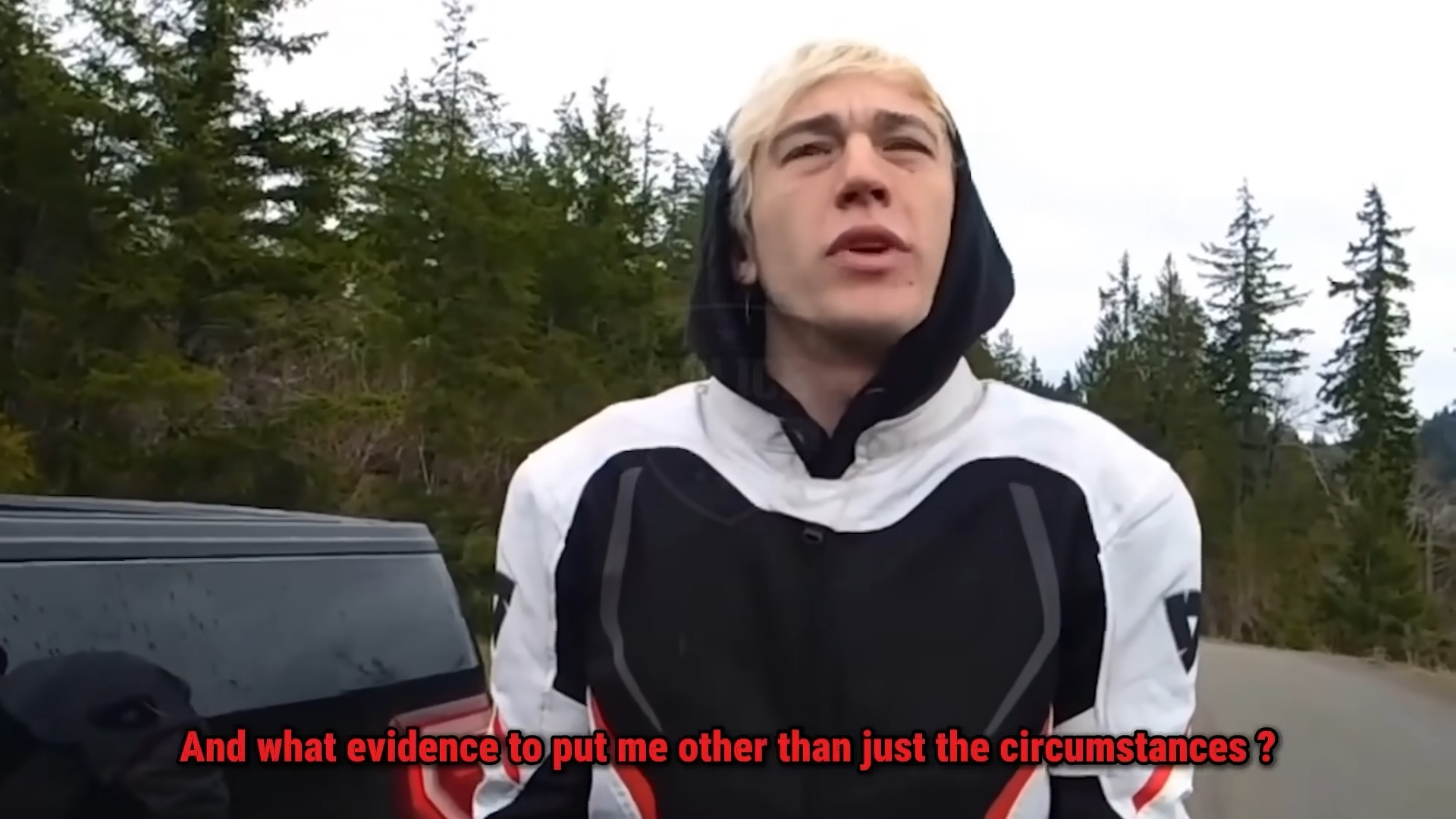
The man asks what crime he is suspected of committing.
The officer answers that investigators are looking into a potential sex offense.
The counselor then begins questioning the legal basis for his detention.
The officer explains that, based on the totality of the circumstances, he has reasonable suspicion to detain him temporarily.
He lists the facts raising concern: the counselor is 29, the girl is 15, she had been hiding the encounter from her parents, her phone was on his motorcycle, and he had remained concealed in the woods for an extended period.
The officer also temporarily takes possession of the counselor’s phone, citing concern that potential evidence could be destroyed.
Still, the scene does not end in an immediate arrest.
That would come later.

Officers Initially Do Not Have Enough to Charge Him
The footage explains that investigators could not definitively prove a crime had occurred in the woods that day.
As a result, officers were ultimately required to let Caffey leave.
But investigators retained evidence connected to the encounter and continued working the case.
According to the narration, detectives spent the following weeks examining the seized phone and uncovered evidence that significantly expanded the investigation.
The footage says that the digital evidence revealed a broader pattern of inappropriate conduct and that multiple additional victims eventually came forward.
Nearly two months after the wooded-area encounter, officers arrested Caffey.
The later footage shows him being placed in handcuffs and advised of his Miranda rights.
When asked whether he wanted to speak with investigators, he declined.
Police also arrived with a search warrant for a residence connected to the investigation.
Investigators Say Digital Evidence Revealed a Larger Pattern
The criminal case grew beyond the original encounter involving the 15-year-old.
According to the transcript’s case summary, investigators reviewing preserved digital evidence determined that Caffey had provided the teenager with marijuana and unidentified pills as part of a pattern of misconduct.
As the investigation widened, other alleged victims came forward.
The case also produced civil litigation against the Shelton School District, with families alleging that the administration had failed to respond adequately to warning signs.
Those civil allegations are separate from Caffey’s criminal conviction, but they reflected broader concerns about how a school employee who occupied a trusted position around vulnerable students was able to engage in misconduct.
A school counselor is expected to serve as a confidential and supportive adult for students facing emotional or personal problems.
In this case, that position of trust became central to the seriousness of the investigation.

Guilty Plea and Prison Sentence
The criminal proceedings eventually reached a conclusion in early 2024.
According to the case summary, Caffey pleaded guilty to third-degree rape of a child.
He was sentenced to 41 months in prison, followed by 19 months of probation.
He will also be required to register as a sex offender for life.
The outcome stands in sharp contrast to the uncertainty officers faced during the original encounter.
On that day in the woods, they had suspicious circumstances but not enough evidence to make an immediate arrest.
They had a frightened family, a teenager threatening self-harm, a school counselor acknowledging that he had crossed a professional boundary, and two phones that might contain answers.
The decisive evidence came later.
By preserving the devices and continuing the investigation, detectives were able to build a criminal case that went far beyond what officers could prove at the roadside.
What initially appeared to be an unusual and troubling meeting between a counselor and a student ultimately exposed misconduct serious enough to result in a felony conviction, years of incarceration and lifetime sex-offender registration.