Florida Woman Removed From Car After Parking-Lot Standoff With Deputies Following Repeated Complaints
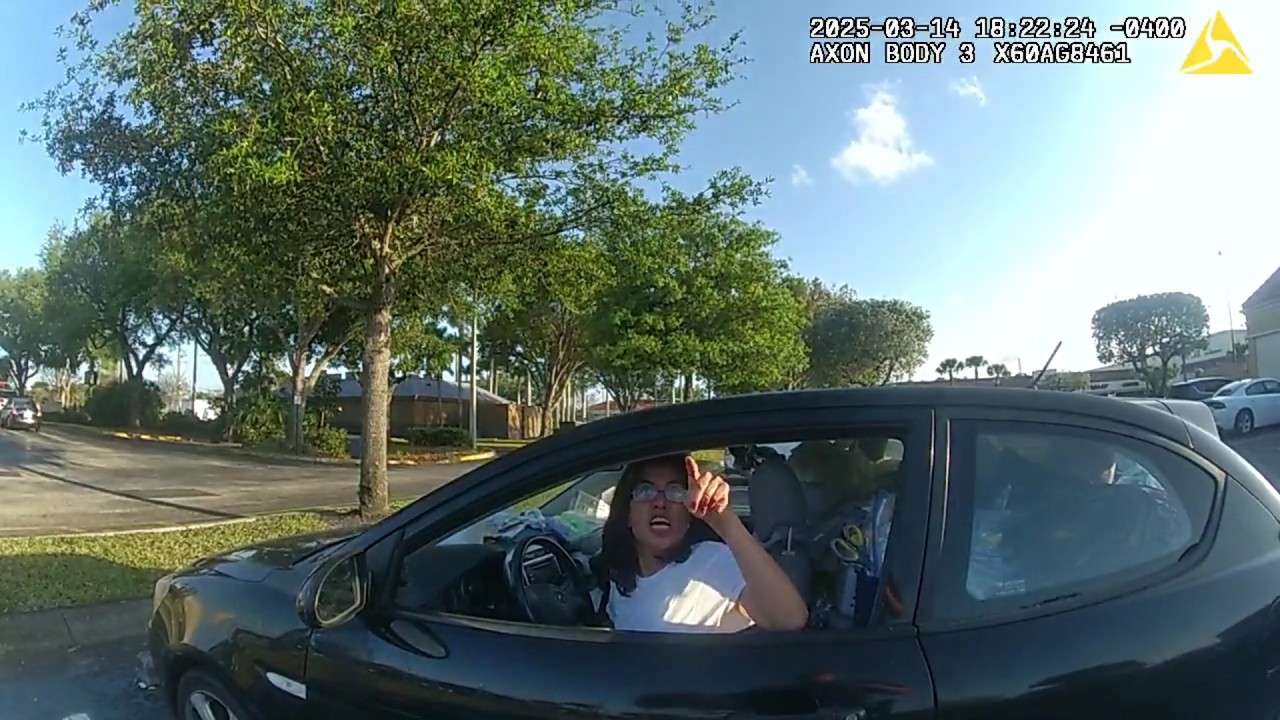
What began as a complaint about public urination, defecation and littering in a South Florida parking lot escalated into a prolonged standoff between a woman living out of her car and Palm Beach County sheriff’s deputies.
Body-camera footage shows officers initially attempting to resolve the situation without making an arrest. They repeatedly told the woman, identified in the footage as Amy, that the property owners wanted her to leave and asked her to clean up trash and waste around the parking lot.
Instead, the encounter became increasingly tense.
Amy argued with deputies about complaints made against her, alleged that someone connected to law enforcement had been using her debit card, said she had been sick for days and described a series of personal difficulties.
Eventually, after she refused repeated requests to leave the property and locked herself inside her vehicle, deputies prepared to force her out.
A Complaint Brings Deputies to the Parking Lot
The initial conversation is relatively calm.
Amy tells an officer that she feels sick and needs to use the bathroom. She admits that she had relieved herself outside earlier and complains that other people in the area are constantly reporting her behavior.
The deputy tells her that people have complained about her using the parking lot as a bathroom.
“You can’t be using the bathroom out here in the middle of the parking lot,” he explains.
Amy responds that she believes the complaints go far beyond that.
She says people criticize her smell, her car, her music and nearly everything else she does.
Her frustration quickly expands into other issues.
She alleges that someone has been using her debit card and claims hundreds of dollars have been taken.
She also says she has not spoken with her father in months and has not seen a psychiatrist since December.
When the officer offers to take her to a hospital or connect her with services, her response is inconsistent.
At one moment, she agrees.
Moments later, she rejects the idea and asks why she would go to a hospital at all.
The deputy repeatedly emphasizes that he is trying to help rather than arrest her.
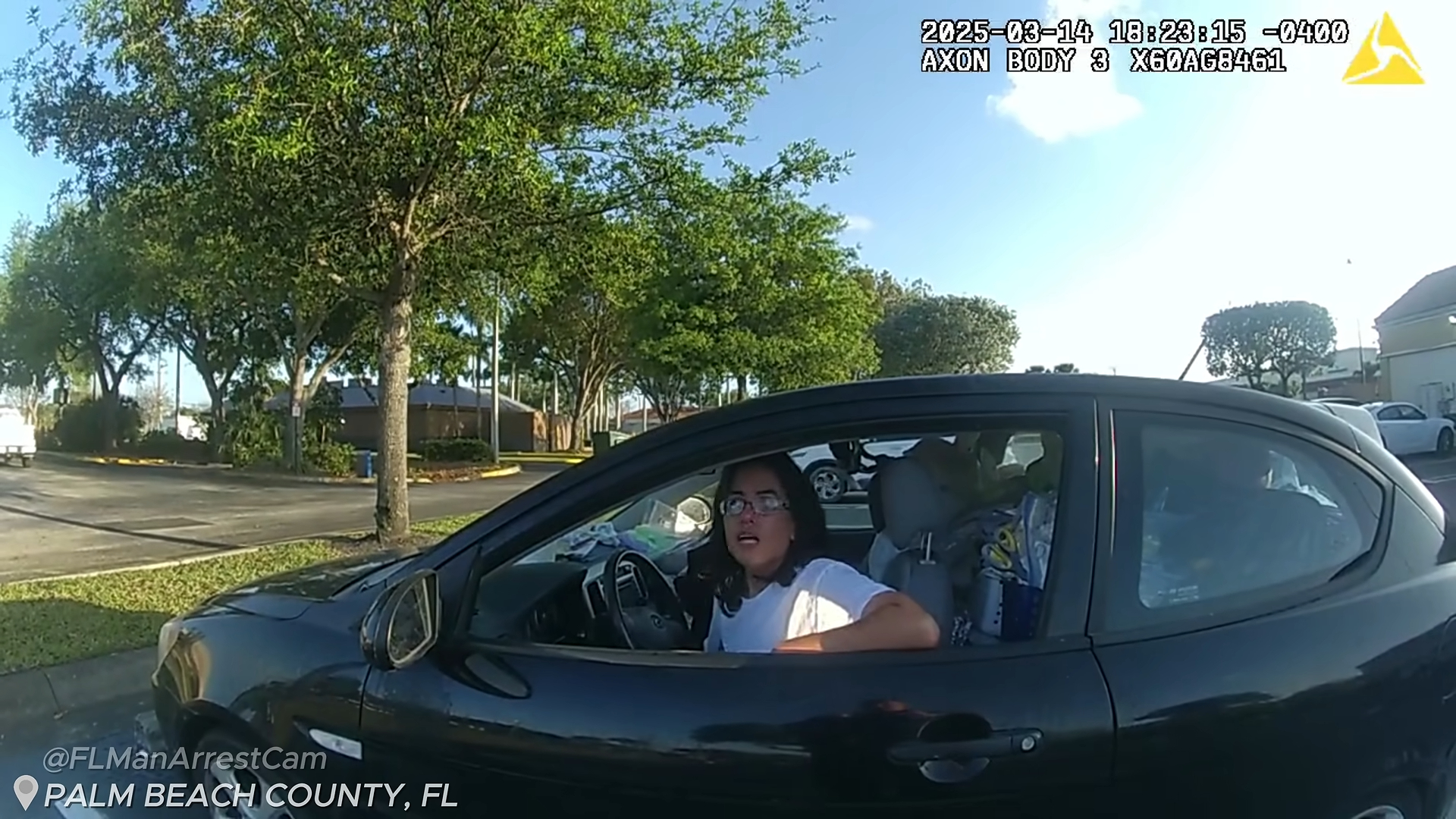
Deputies Try to Resolve the Situation Without an Arrest
The conversation soon returns to the original issue.
Amy questions why relieving herself outdoors is such a serious problem.
The officer explains that public indecency and exposing oneself can create legal problems, while also clarifying that ordinary activities such as brushing teeth or cleaning oneself are not automatically illegal.
He then raises another concern: litter scattered around the parking lot.
Amy admits that she has been angry but says she usually cleans up after herself.
The deputy disagrees, pointing to trash in multiple areas.
Eventually, the officer gives her a simple instruction.
Clean up the mess and leave.
The property is private, he tells her, and the owners no longer want her there.
Amy repeatedly asks where she is supposed to go.
The deputy says he cannot tell her where to live or which parking lot to use, only that she cannot remain on that property.
“You’re a grown adult,” he tells her. “I can’t tell you where to go, but just not here.”
The exchange reflects a difficult situation for both sides.
The officers are trying to enforce the property owner’s request and address sanitation complaints.
Amy, meanwhile, repeatedly says she has nowhere else to go.
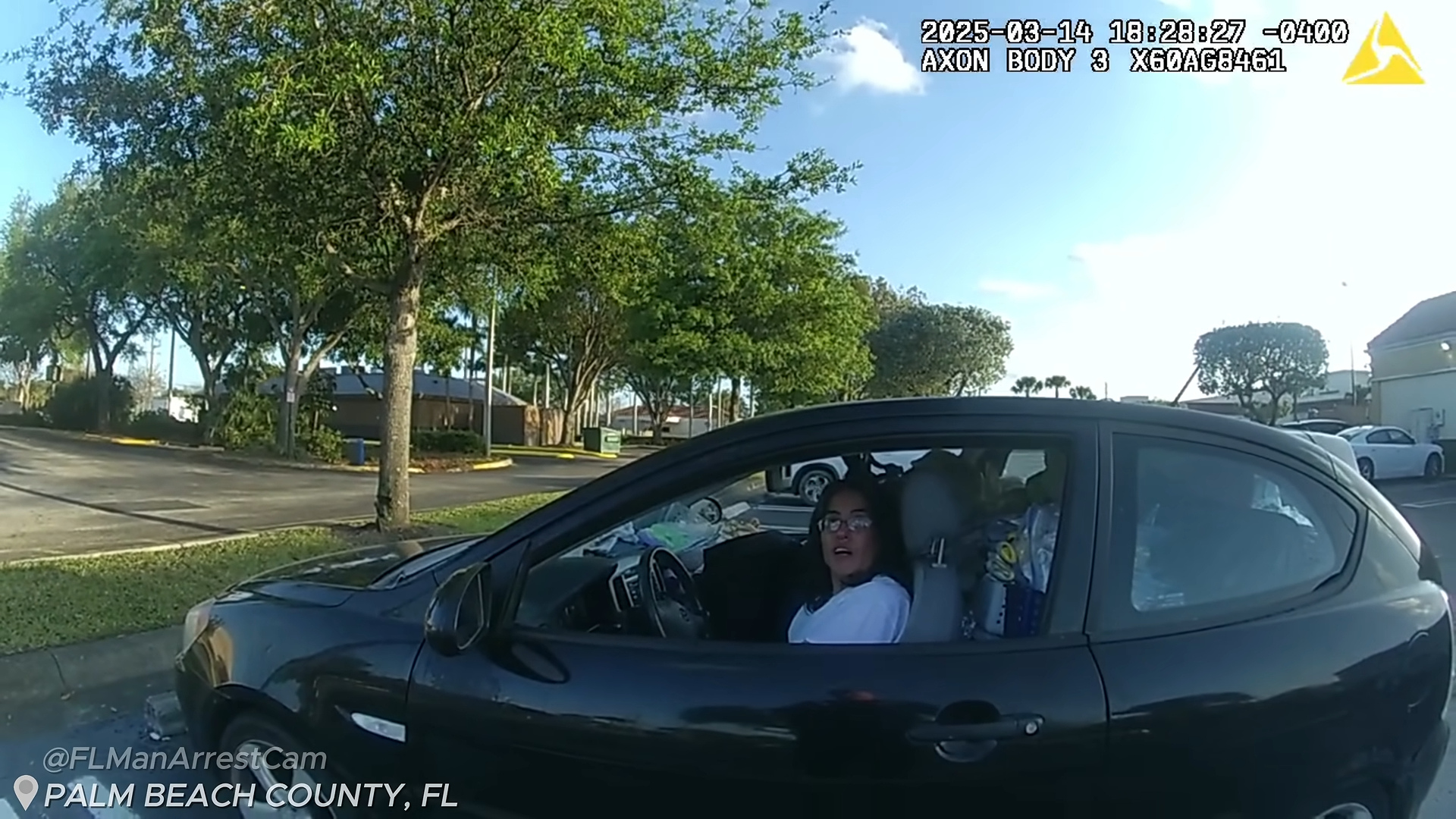
The Legal Picture Becomes Less Clear
As additional deputies arrive, officers discuss what laws may actually apply.
One deputy points out that simply defecating in public is not necessarily enough for an indecent-exposure charge unless someone actually sees exposed genitals.
No witness had reported that.
Instead, deputies discuss whether littering or another ordinance may be the more appropriate violation.
They also point to diapers, toilet paper and other waste around the parking area, as well as bleach Amy had allegedly used in an attempt to clean the area.
At the same time, officers become increasingly concerned about Amy’s behavior inside the vehicle.
One deputy says she had been yelling, repeatedly sounding the horn and refusing to cooperate after previously being told to clean up and leave.
They also notice a pair of scissors near her head inside the car.
That discovery adds a safety concern to what had initially been a property and sanitation dispute.
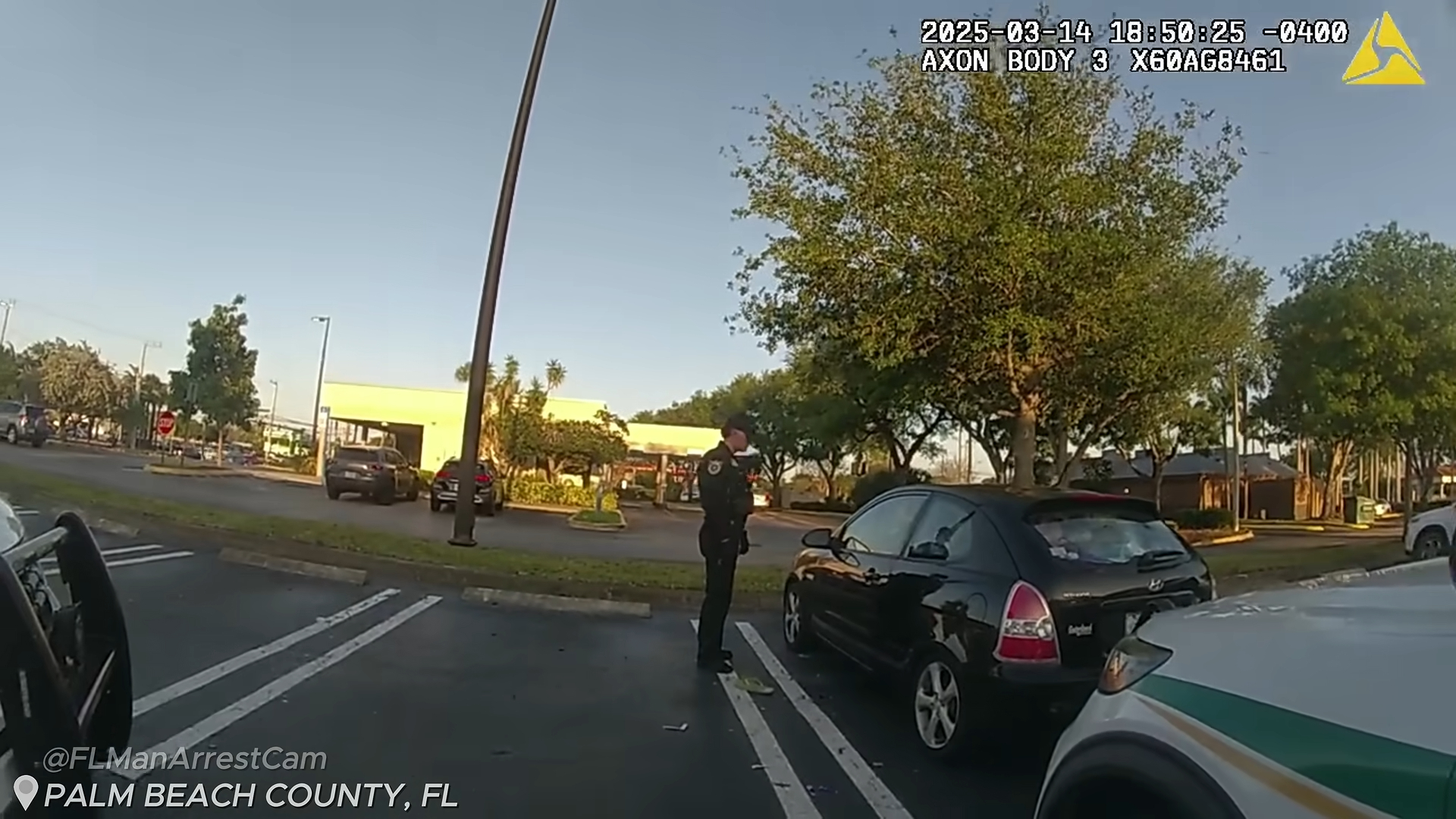
Amy Locks Herself Inside the Car
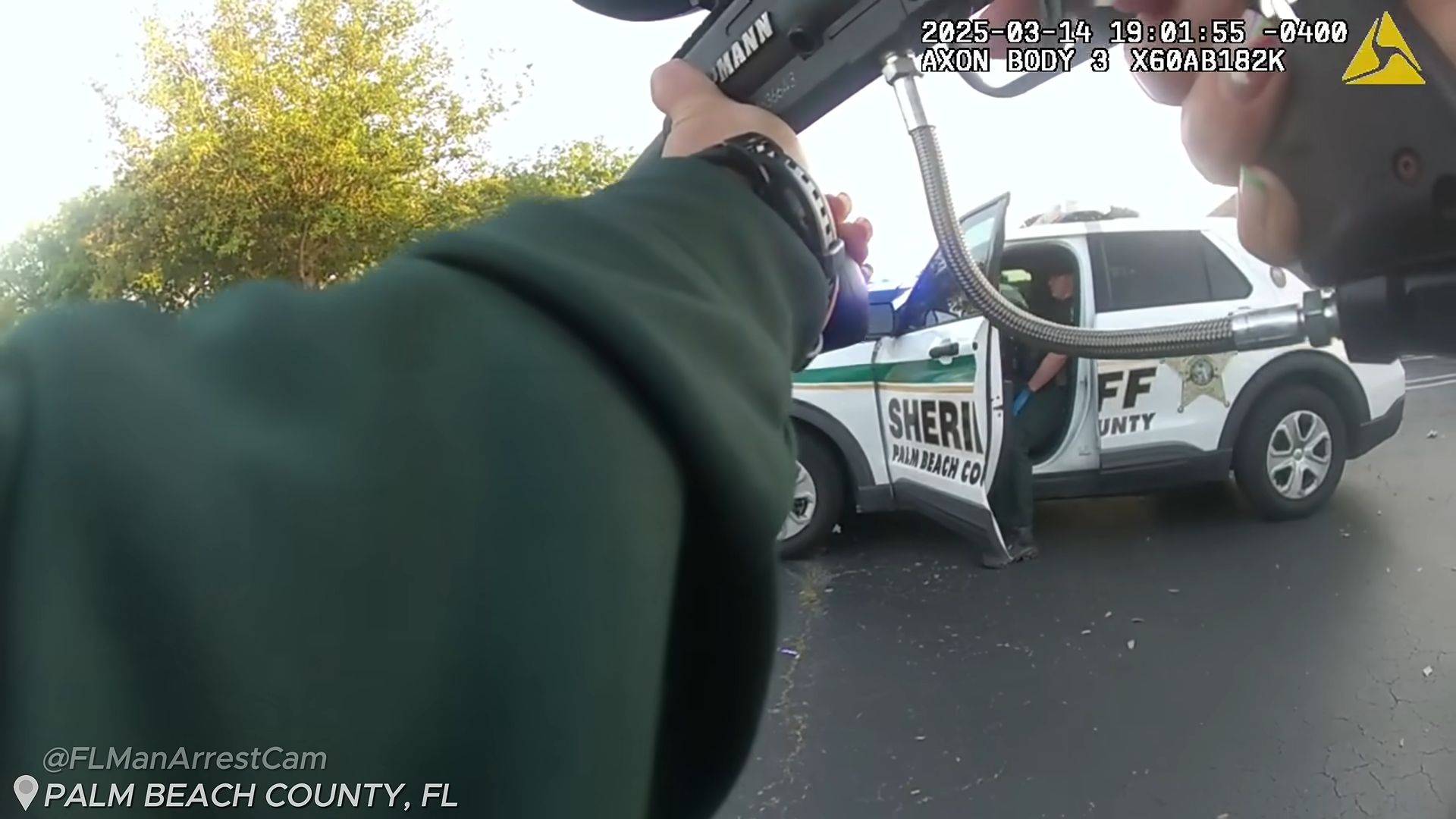
After several attempts to communicate with her, deputies begin discussing how to remove Amy safely from the vehicle.
They consider breaking a window and debate which less-lethal equipment should be used if she continues refusing to exit.
The officers are conscious of the fact that she is sitting in the driver’s seat and could potentially move the vehicle.
They also know the scissors remain inside.
Before taking action, deputies make repeated loudspeaker announcements.
“Amy, this is the Palm Beach County Sheriff’s Office. Step out of your car with your hands up.”
They tell her that her safety is their priority.
They warn that if she does not come out voluntarily, they will force her out.
“Come out now before something gets hurt,” one officer says.
The commands continue for several minutes.
Amy does not comply.
Deputies Force the Vehicle Open
Eventually, officers move in.
The body-camera footage becomes more chaotic as deputies surround the vehicle and force access.
Amy is ordered repeatedly to get out and get on the ground.
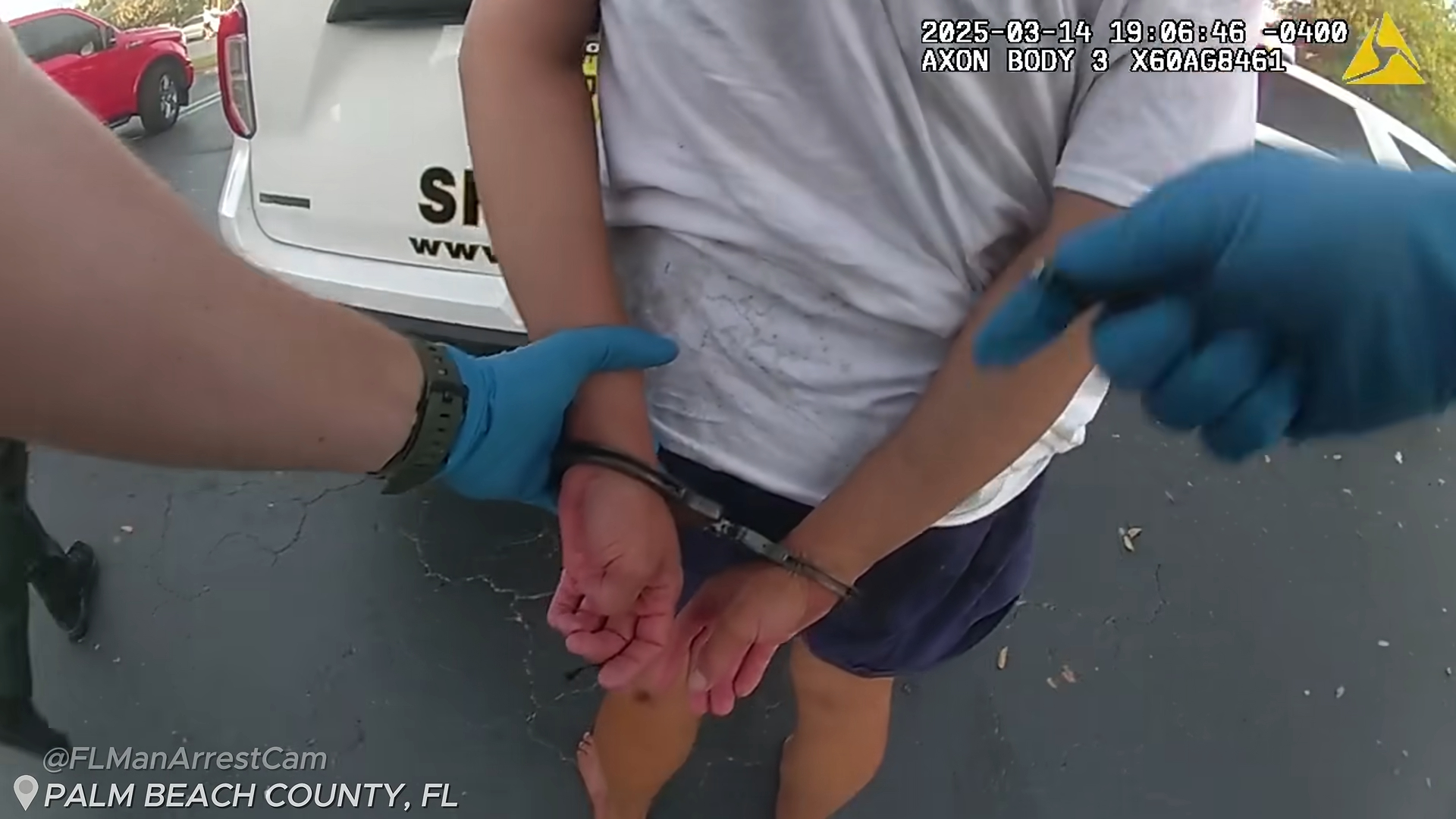
Once she is outside, officers secure her and continue giving instructions.
She asks why they had to act so aggressively.
One deputy replies that she had been given numerous opportunities to come out voluntarily.
“We gave you plenty of options not to do that to you,” he says.
“We did not want to do that to you.”
“You forced us to do that to you.”
Amy continues complaining about the way she was treated and asks officers to turn off her vehicle and retrieve her shoes.
By that point, the standoff itself is over.
A Difficult Call With No Simple Resolution
The footage does not provide a final charging summary or court outcome, so it is not possible to say from the transcript alone whether Amy was ultimately booked, cited, taken for medical evaluation or released.
What the video does show clearly is how a relatively low-level complaint escalated because of a combination of repeated property complaints, refusal to leave, sanitation concerns and increasingly erratic interactions with officers.
At several points, deputies attempt to avoid arrest.
They offer hospital assistance.
They tell Amy to clean up and leave.
They explain what behavior is creating complaints.
They repeatedly ask her to exit the property.
But once she locks herself in the car, refuses commands and remains near a pair of scissors, the situation changes from a simple trespassing-style dispute into a safety operation.
The encounter underscores how quickly calls involving homelessness, private property, public sanitation and personal crisis can become difficult for law enforcement to resolve.
For much of the footage, the officers appear to be trying to find a way to end the call without using force.
In the end, however, repeated warnings failed.
And the confrontation concluded with deputies forcing Amy out of the car and taking control of the scene.