Parking Lot Complaint Escalates Into Police Standoff With Woman Living in Her Car
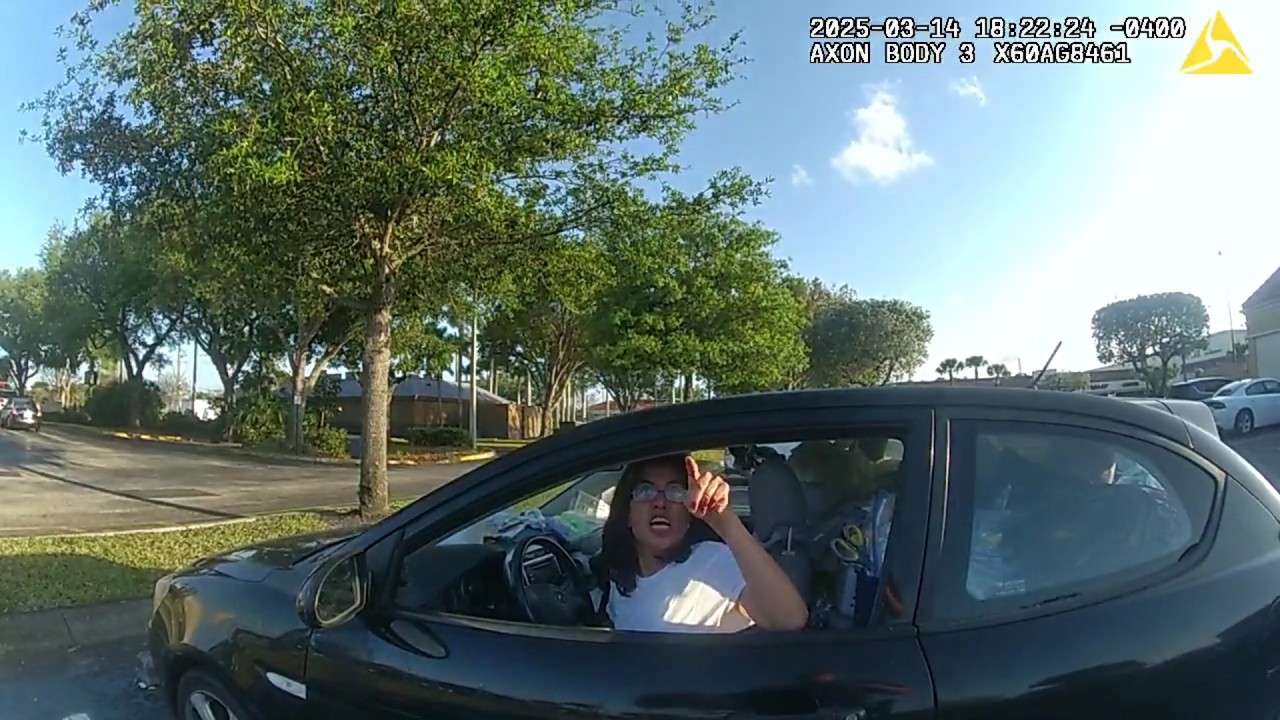
What began as a complaint about a woman using a private parking lot as a bathroom escalated into a prolonged police standoff after she refused to leave her vehicle, became increasingly agitated and ultimately had to be forcibly removed by deputies.
The encounter, captured in body-camera footage, shows Palm Beach County sheriff’s deputies initially trying to resolve the situation without making an arrest.
The woman, identified in the footage as Amy, appears to be living out of her car and repeatedly tells officers that she is sick, exhausted, under extreme stress and struggling with multiple personal problems.
But as the conversation continues, her refusal to leave private property and later refusal to exit her vehicle create a much more complicated situation.
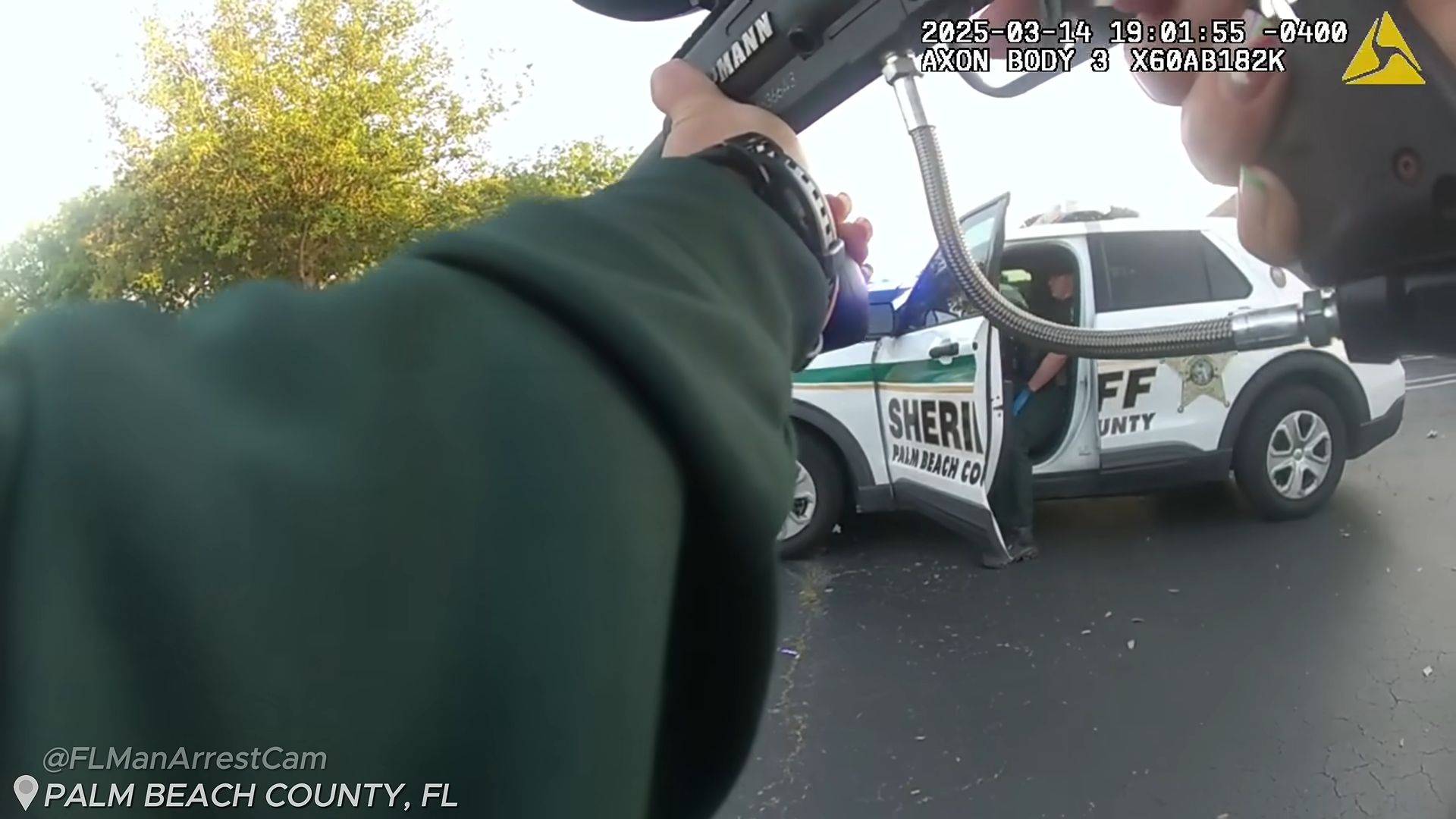
By the end of the encounter, deputies are surrounding her car, issuing repeated commands over a loudspeaker and preparing less-lethal tools before forcing her out.
The Call Begins With Complaints From the Parking Lot
The first officer approaches Amy while she is sitting in her vehicle.
She immediately tells him she feels sick and needs to use the bathroom.
When the deputy asks whether she has been relieving herself in the parking lot, she acknowledges that she had done so earlier.
She complains that people around the area are constantly bothering her, making noise and reporting her for what she describes as minor issues.
The officer explains that the problem is not personal.
People have complained because she has been urinating or defecating in the parking lot and leaving behind waste.
“You can’t be using the bathroom out here in the middle of the parking lot,” he tells her.
Amy responds that people complain about everything she does — her smell, her vehicle, her music and her presence.
Her frustration quickly expands into other issues.
She claims someone associated with law enforcement has been using her debit card and says hundreds of dollars have been taken.
She also says she has not spoken with her father for months and has not seen a psychiatrist since December.
When the deputy offers to take her to a hospital or connect her with help, she initially appears open to the idea, then immediately rejects it.
The officer repeatedly tries to steer the conversation back to the reason he was called.
“I’m Just Trying to Help You”
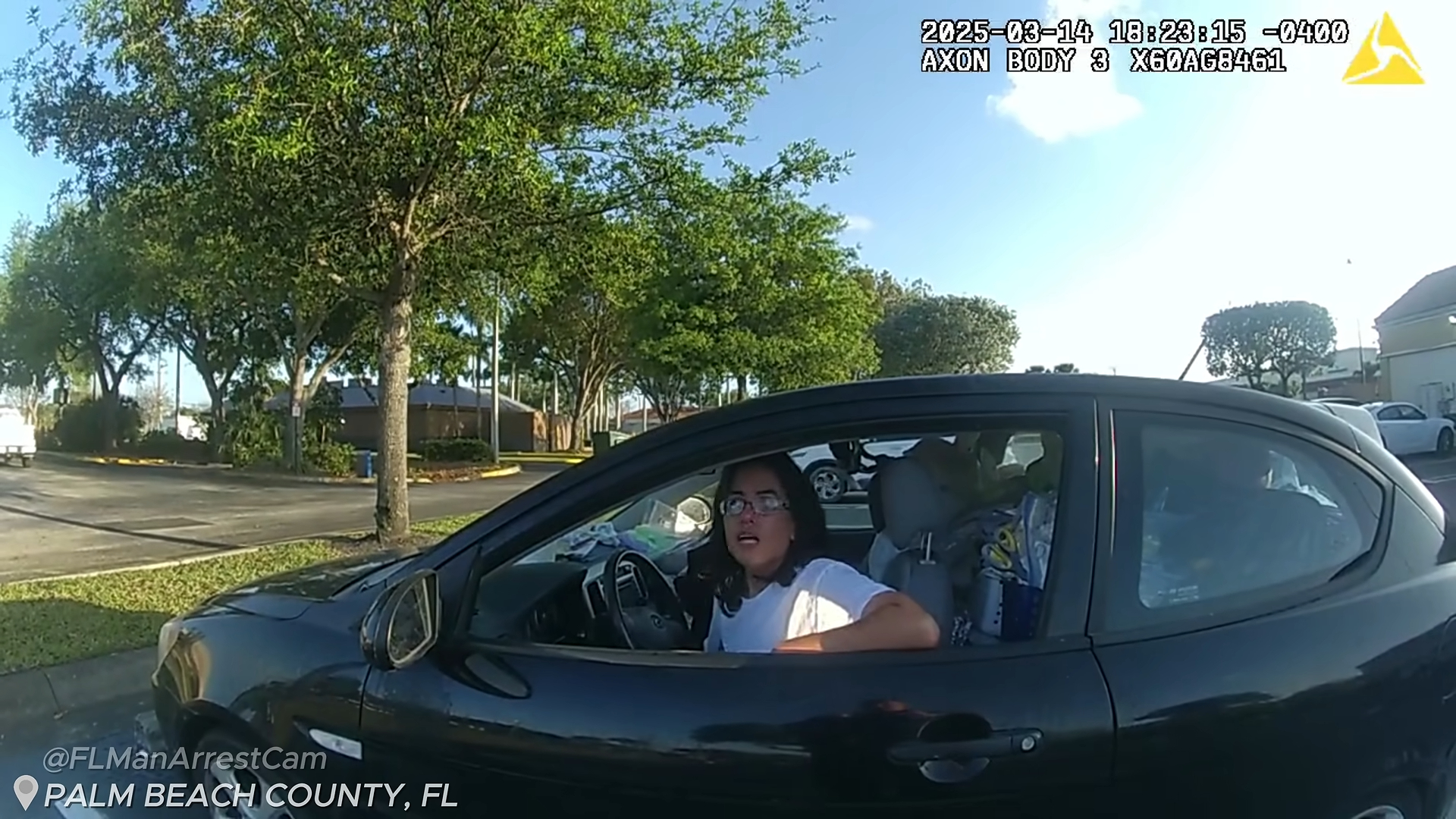
As Amy becomes louder and more agitated, the deputy remains largely focused on resolving the complaint.
He tells her that he is not there to arrest her and repeatedly offers resources.
She says she is diabetic, has been ill, has not eaten and has been vomiting at night.
She also describes herself as having nowhere else to go.
At one point, the officer asks for identification.
Amy refuses, saying she is afraid that if she gives him her ID, he will “take her in.”
The deputy tells her that is not his intention.
He later makes the situation clear: the property owners do not want her there.
He tells her to clean up the mess around her vehicle and leave.
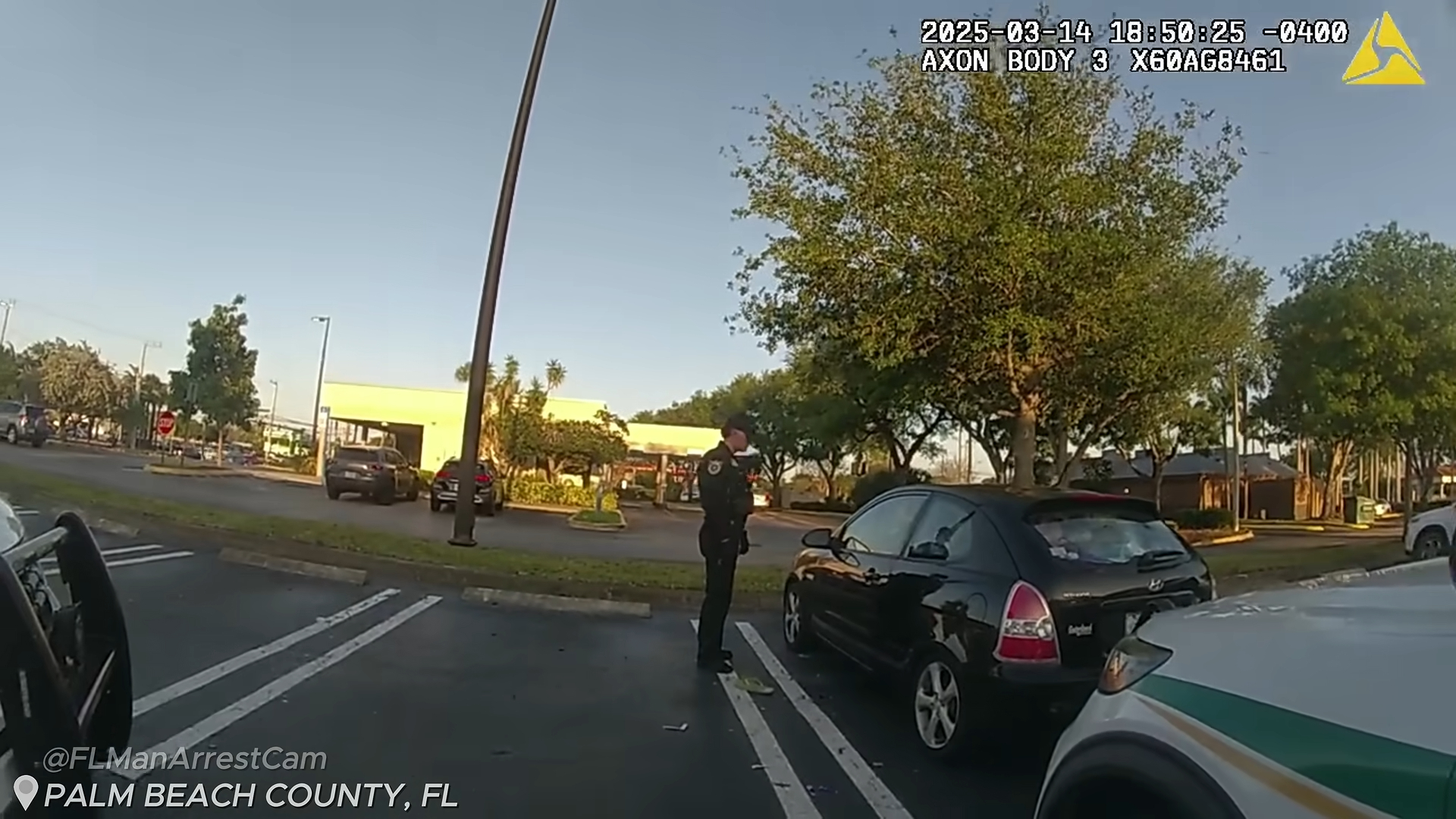
The footage shows debris scattered around the parking area, including diapers and toilet paper. Amy says she had tried to dilute or wash some of the waste away with bleach.
The officer explains that businesses do not want customers arriving to find human waste and trash in the lot.
Amy repeatedly asks where she is supposed to go.
The deputy tells her he cannot decide where she should live or park, only that the owners of the current property have asked her to leave.
Officers Debate What They Can Legally Do
After the initial conversation ends, deputies begin discussing the incident among themselves.
Their own conversation reveals uncertainty about which offense, if any, directly applies to the public-bathroom complaints.
One deputy notes that public defecation by itself may not constitute the crime of indecent exposure unless someone actually sees exposed genitals.
They discuss possible littering or trespassing issues instead.
They also express concern about Amy’s condition.
One deputy says she appears unable to care for herself and notes that she has reportedly not seen a doctor in months.
Another officer describes her as highly erratic, saying she became increasingly emotional during even a calm attempt to speak with her.
Then the situation changes again.
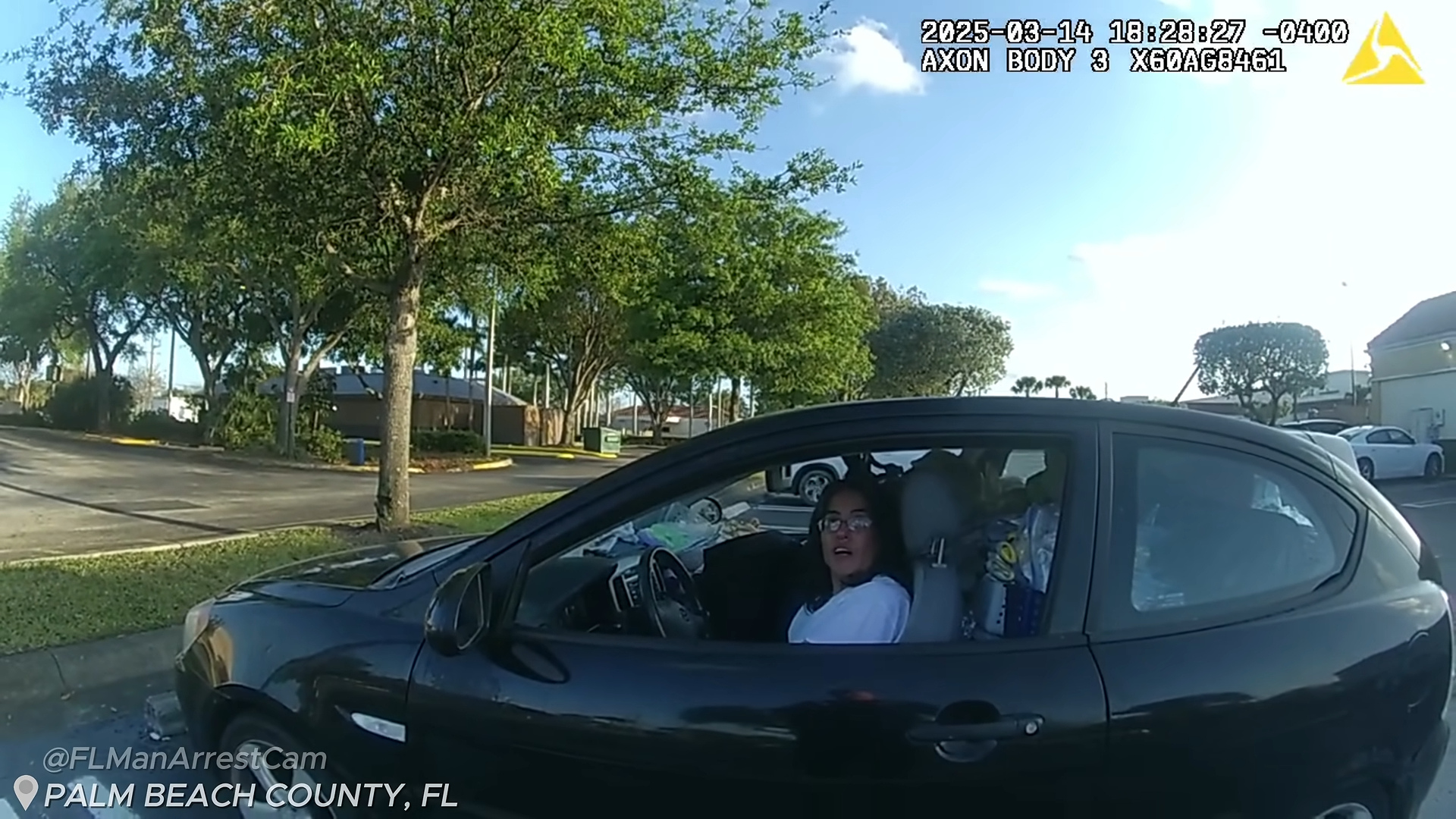
Amy remains inside the car and stops cooperating.
Officers notice a pair of scissors near her head.
That discovery significantly raises the level of caution.
A Simple Trespass Call Becomes a Standoff
Deputies begin forming a plan for how to remove Amy safely.
They discuss breaking a window if necessary and consider less-lethal options, including foam or bean-bag rounds.
The concern is no longer simply whether she will leave the parking lot.
They are now dealing with a person locked inside a vehicle, behaving unpredictably and with a potentially dangerous object within reach.
At approximately 16 minutes into the footage, officers begin issuing formal commands.
“Amy, this is the Palm Beach County Sheriff’s Office. Step out of your car with your hands up.”
They emphasize that her safety is their priority.
She does not comply.
The commands continue.
“Come out of the car.”
“Put your hands up and come out.”
“Amy, come out of the car or we will force you out of the car.”
Officers repeatedly warn that they do not want anyone to get hurt.
Still, Amy remains inside.
As the standoff continues, deputies prepare to intervene.
Deputies Eventually Force Her Out
After numerous warnings, officers move in.
Body-camera audio captures repeated commands for Amy to get out of the car and then get onto the ground.
“GET OUT OF THE CAR.”
“GET ON THE GROUND.”
The extraction is forceful, reflecting the fact that deputies had already spent several minutes attempting to persuade her to come out voluntarily.
Once Amy is outside, officers restrain her.
She complains about how they handled the situation and asks why they had to act that way.
One officer responds that they had given her multiple opportunities to avoid a forced removal.
“We gave you plenty of options not to do that to you,” he says.
“We did not want to do that to you.”
Amy continues criticizing the deputies and asks them to turn off her car and retrieve her shoes.
The transcript ends shortly afterward.
A Complicated Encounter Without a Simple Ending
The footage does not provide a clear final criminal disposition, and it would be misleading to suggest that Amy was convicted of any specific offense based on this transcript alone.
What it does show is how quickly a quality-of-life complaint can become a complex policing problem.
The first deputy appears to begin with a relatively limited objective: stop the public urination and defecation, ask Amy to clean the area and have her leave private property.
But the encounter is complicated by her apparent medical problems, emotional distress, lack of housing stability, refusal to identify herself and increasing distrust of police.
When she later refuses to leave the car and deputies see scissors within reach, the situation shifts from nuisance enforcement to officer-safety concerns.
The result is a dramatic ending that looks very different from the opening conversation.
What began with complaints about trash and bathroom use ends with multiple deputies surrounding a car and forcibly removing a woman who had repeatedly insisted that she had nowhere else to go.
The footage illustrates not only a law-enforcement confrontation, but also the difficult intersection of homelessness, mental-health concerns, private-property rights and public safety — all unfolding in a parking lot over the course of a single encounter.