HYROX Champion Joanna Wietrzyk Won After a Mid-Race Bowel Accident — and Her ‘A Win Is a Win’ Response Divided the Fitness World
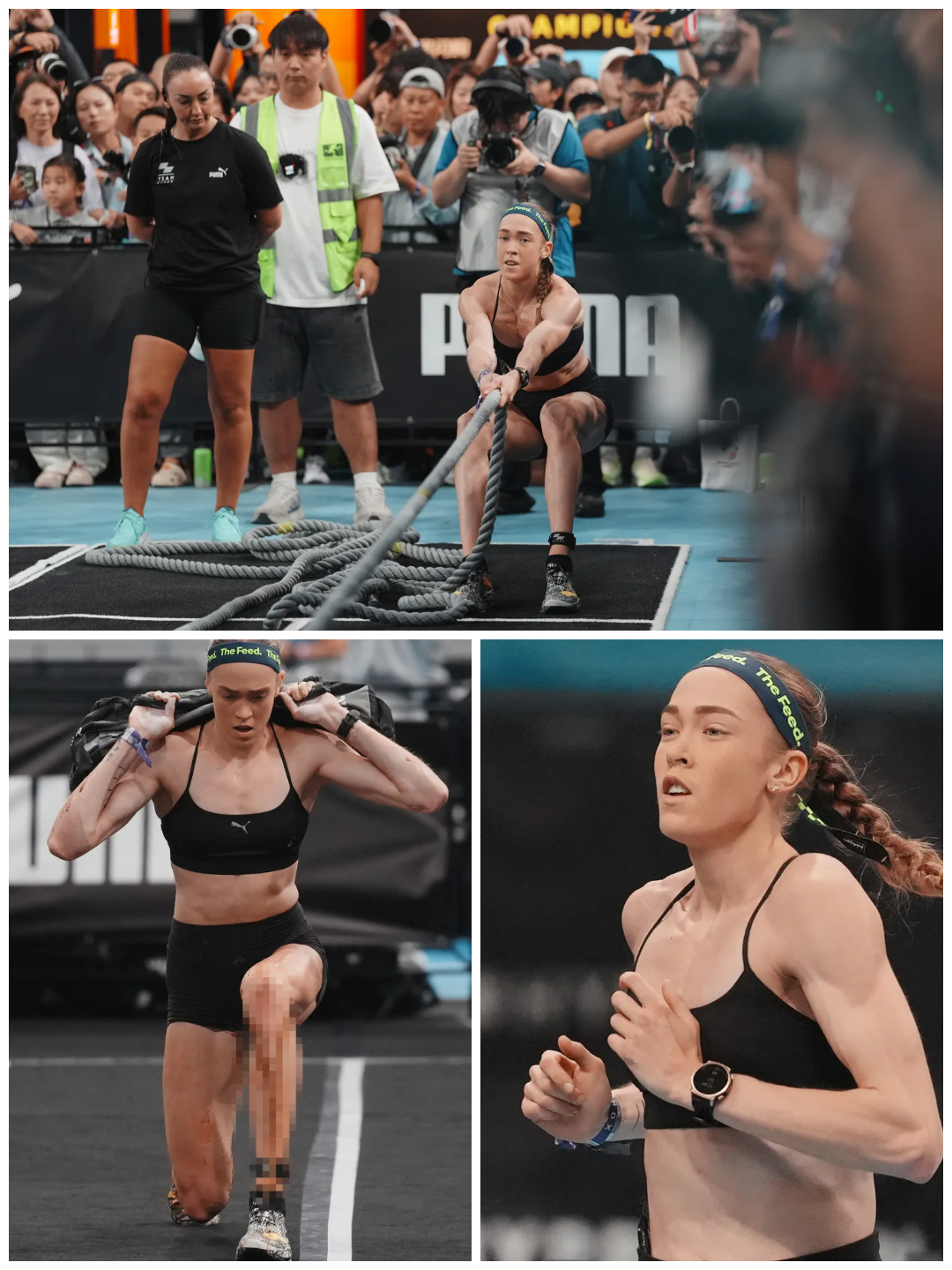
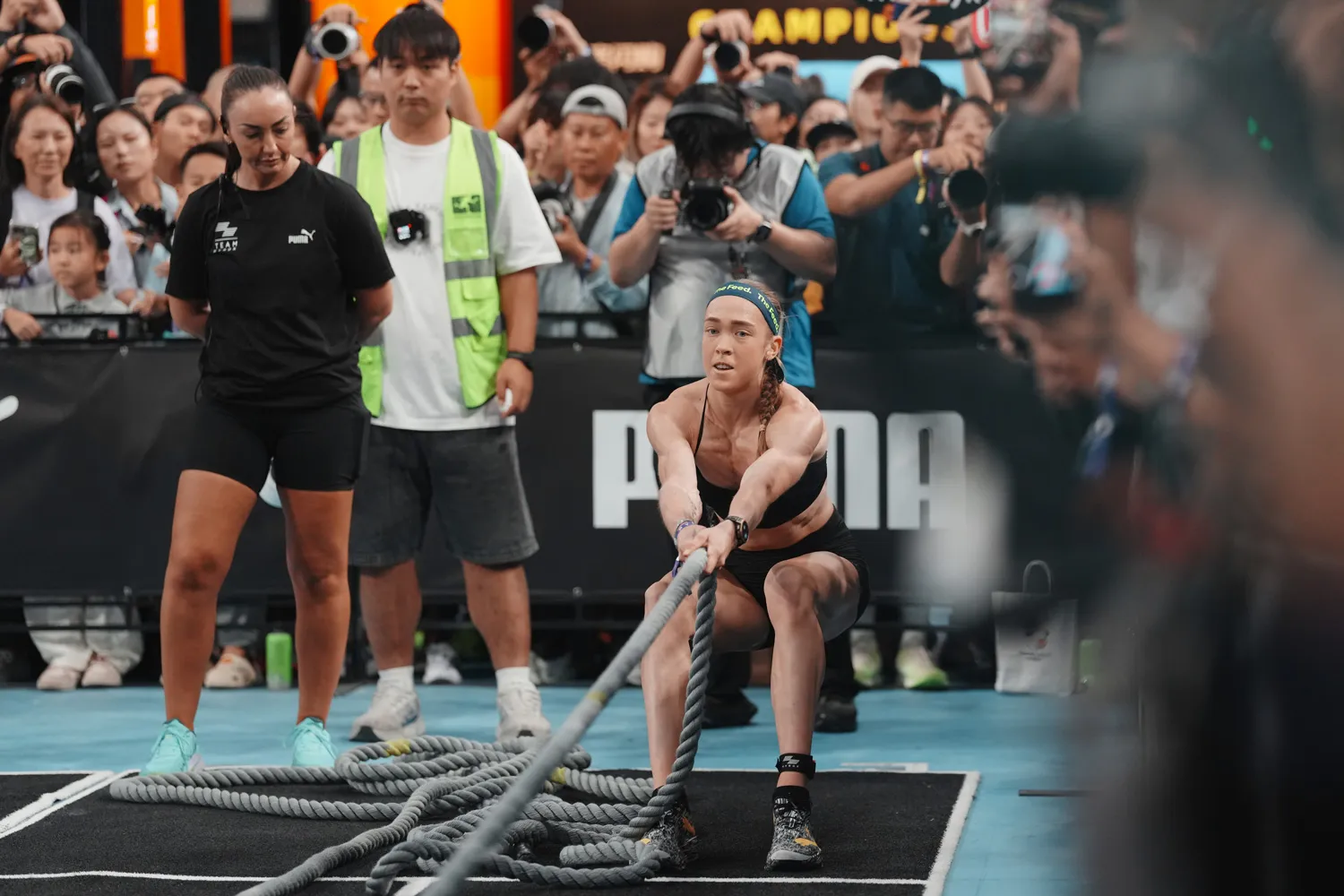
Joanna Wietrzyk came to Beijing to win.
She did.
But almost immediately, the 22-year-old Australian HYROX champion found herself at the center of a very different kind of competition — one over where athletic toughness should end and responsibility to everyone else should begin.
On Sept. 12, 2026, Wietrzyk was competing in a HYROX event at Beijing’s National Speed Skating Oval when she suffered bowel incontinence during the race.
She did not stop.
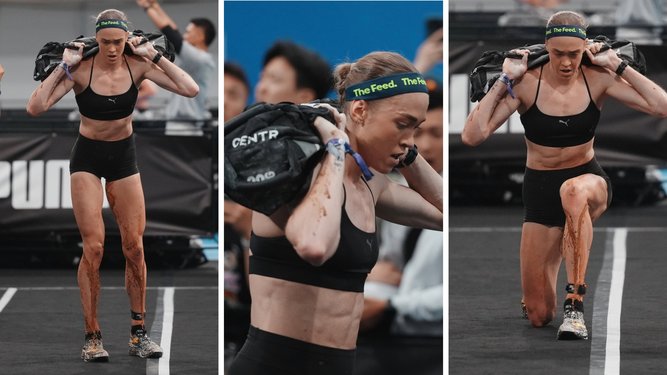
Instead, she continued through the course and ultimately won in a time of 1 hour, 1 minute and 23 seconds. Images and video of the incident quickly spread online, showing Wietrzyk continuing through multiple stations despite visible contamination.
Afterward, she posted a photo from what appeared to be a hospital bed with a caption that included the words:
“a win is a win.”
The post was later deleted.
That short phrase transformed an already unusual endurance-sports moment into a full-scale controversy.
Some people saw an elite athlete refusing to quit under brutal physical stress.
Others saw something far more serious: an athlete continuing through an indoor competition while potentially contaminating shared equipment, flooring and spaces that other competitors would have to use.
And HYROX itself has now acknowledged that officials should have intervened.
The organization said it “made a mistake by not reacting immediately during the race” and announced that it would review and update its procedures. Co-founder Moritz Fuerste said that protocols had become blurred between elite competition and mass-participation racing, contributing to the failure to stop the situation sooner.
That admission shifted much of the debate away from Wietrzyk alone.
Because while her decision to continue attracted criticism, a second question became just as important:
Why was she allowed to?
HYROX is a demanding hybrid fitness competition built around alternating runs and functional workout stations.
A standard race requires athletes to complete eight 1-kilometer runs, with exercises such as sled pushes, rowing, burpee broad jumps and wall balls in between.
That format is part of what made the Beijing incident so controversial.
Unlike a road race, where competitors may be spread over miles of open streets, HYROX takes place largely in a shared indoor environment.
Athletes repeatedly move across the same lanes.
They touch the same or similar equipment.
They perform exercises close to the floor.
That makes bodily-fluid contamination potentially more than an embarrassing individual problem. It can become a hygiene and safety issue for everyone participating afterward.
Critics argued that this was the real problem.
The issue was not that Wietrzyk had an accident.
Endurance athletes sometimes lose bowel control under extreme physical stress, and similar incidents have occurred in marathon running for decades.
What upset many competitors and fans was the decision to continue through shared workout areas after the accident happened.
That distinction appeared repeatedly in the public reaction.
Many commenters stressed that they did not want Wietrzyk shamed for becoming ill.

Instead, they questioned why race officials did not immediately remove her from the course, pause the affected lane or create a clear process for dealing with a possible biohazard.
HYROX ultimately agreed that its response was insufficient.
The organization later said affected areas were isolated and disinfected and announced a review of its rules and protocols.
It also emphasized athlete welfare while urging people not to direct threats or abusive messages toward Wietrzyk.
That is an important part of the story.
Public criticism of a competitive decision is one thing.
Personal harassment is another.
Wietrzyk remains an elite athlete whose physical distress happened publicly during a highly demanding race.
The debate is therefore less useful when reduced to humiliation and far more meaningful when focused on competition rules, athlete judgment and organizer responsibility.
Still, her now-deleted social media response did little to calm the situation.
“Go hard or go home … a win is a win,” she reportedly wrote alongside the hospital photo.
To supporters, the line sounded like the mindset of an athlete who had pushed through severe discomfort and refused to surrender.
To critics, it sounded dismissive of other competitors who may have been exposed to contaminated surfaces and equipment.
That difference in interpretation explains why the incident became so divisive.
Elite sport often celebrates suffering.
Athletes are praised for competing through pain, exhaustion, injury and illness.
Stories of runners collapsing near finish lines or competitors refusing to stop despite physical distress are frequently framed as evidence of extraordinary determination.
But there are limits to that mythology.
An athlete’s willingness to accept risk for herself does not necessarily give her the right to impose that risk on other people.
That is where the Beijing race became more complicated than a simple story about toughness.
Wietrzyk was not just deciding whether she could keep going.
Race officials were also responsible for deciding whether she should.
HYROX has since acknowledged that this distinction was not handled properly.
The organization said its procedures had not adequately addressed the unusual circumstances and promised changes to prevent a similar situation in the future.
That may prove to be the lasting consequence of the controversy.
Sports rules are often written because someone eventually encounters a scenario nobody anticipated.
Before Beijing, HYROX may not have expected one of its top athletes to experience bowel incontinence, continue racing and win while thousands of competitors shared the same indoor venue.
Now it does.
And organizers will have to decide exactly what should happen if it occurs again.
Should an athlete be automatically stopped?
Who has authority to make that call?
How quickly should contaminated equipment be removed?
Should nearby competition lanes be paused?
What medical assessment should be required before an athlete continues?
Those are far more important questions than whether people found the incident shocking or unpleasant.
They concern fairness, public health and the basic responsibility event organizers have toward everyone on the competition floor.
There is also the question of what happens to Wietrzyk’s victory.
As of the reporting surrounding the controversy, she had completed the race and won.
The criticism was largely focused not on whether she physically crossed the finish line first, but on whether officials should ever have allowed her to reach it.
That makes her 1:01:23 performance one of the strangest victories HYROX has experienced.
A race intended to showcase speed, strength and endurance instead became an international argument about hygiene and competitive ethics.
Perhaps the most revealing part of the controversy is that two things can be true at once.
Wietrzyk showed extraordinary determination.
And continuing the race may still have been the wrong decision.
Likewise, the athlete can be criticized for continuing without turning a medical accident into an excuse for personal abuse.
And the organizers can carry significant responsibility for failing to intervene sooner.
That nuance has sometimes been lost in the viral reaction.
But HYROX itself appears to have recognized it.
The organization has apologized for its response and promised procedural changes.
That means the Beijing incident will likely matter long after the social-media jokes disappear.
Wietrzyk went to Beijing to prove how far she could push her body.
She won.
But the race also exposed a different limit — one that has less to do with physical endurance and more to do with when an athlete, and the people responsible for her safety, need to say enough.
In the end, “a win is a win” may be technically true.
But Beijing forced HYROX to confront a harder question:
At what point does finishing first stop being the only thing that matters?