He Went Into a Polish Forest for Wild Berries—Then a Handful of Metal Fragments Opened a New World War II Mystery
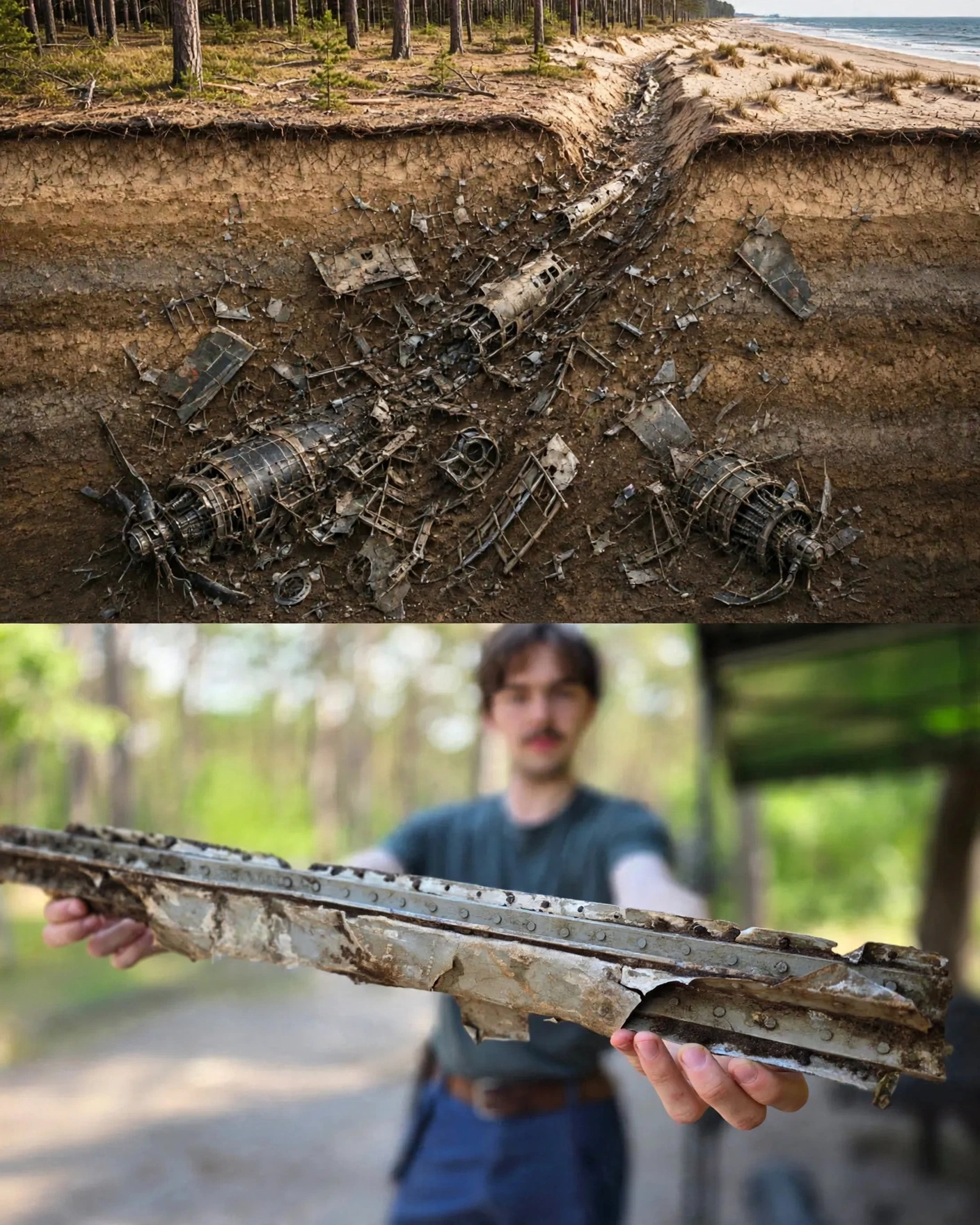
What began as an ordinary summer walk into the woods quickly turned into an unexpected journey into history.
A resident of the Polish city of Świnoujście set out to gather wild berries in a nearby forest, expecting to return home with a basket of fruit. Instead, he stumbled across something far more extraordinary: scattered pieces of twisted metal lying around a strange depression in the ground. At first glance, they looked like old scraps. But a closer inspection suggested they might be the long-forgotten remains of an Allied aircraft that crashed during the final years of World War II.
The discovery has sparked an investigation that could uncover not only the identity of a lost wartime aircraft but possibly the fate of the crew who never made it home.
The unusual find was made in woodland near the Museum of Coastal Defence at Fort Gerhard in Świnoujście, a city on Poland’s Baltic coast near the German border. The man noticed an unnatural hollow in the forest floor surrounded by numerous aluminum fragments and pieces of burned ammunition. Sensing the material was unusual, he collected one fragment and brought it to museum experts.
That single decision launched what historians believe could become one of the region’s most significant wartime investigations.
Museum specialist Wiktor Czeszewski examined the fragment and immediately recognized that it was no ordinary piece of scrap metal. The thin aluminum sheets, distinctive rivets, structural design, and traces of burned ammunition all pointed toward aircraft wreckage rather than discarded industrial material.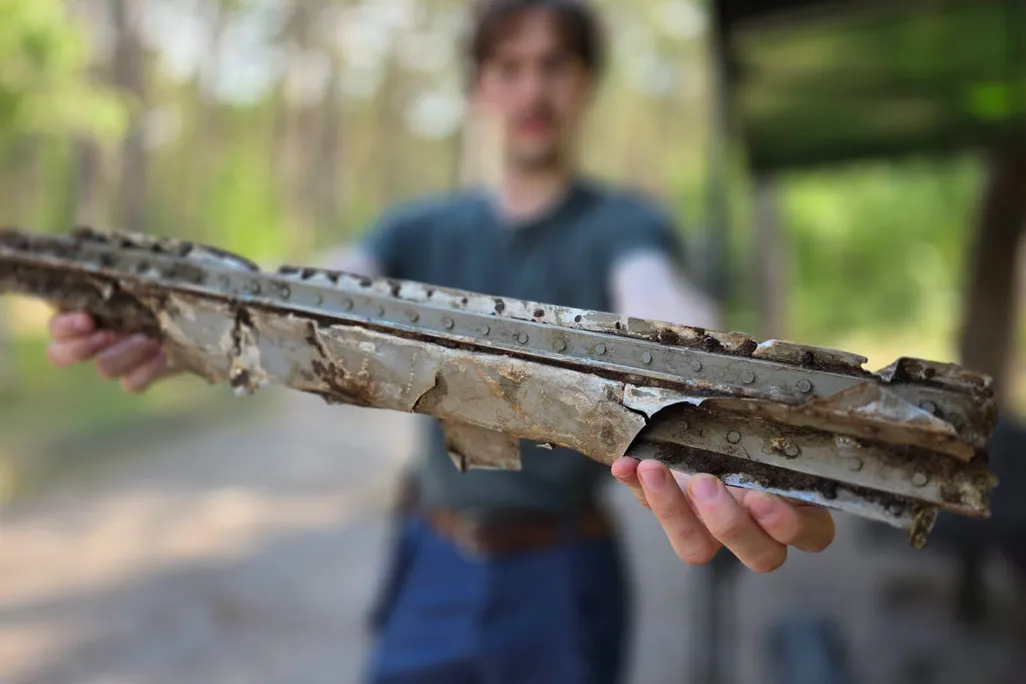
The museum team soon traveled to the site themselves.
Once there, they discovered far more debris than they had expected. Additional metal fragments were scattered throughout the forest, strengthening the theory that the area marked the location of a wartime crash rather than a place where random debris had been dumped.
Among the most important clues were the remains of .303 British ammunition, a caliber widely used in British Browning aircraft machine guns during World War II.
That discovery immediately shifted the investigation in a new direction.
Instead of searching for a German aircraft, experts began considering the possibility that the wreckage belonged to an Allied plane, perhaps one operating with Britain’s Royal Air Force during bombing missions over Nazi-controlled territory.
Even more revealing evidence appeared after several recovered components were carefully cleaned.
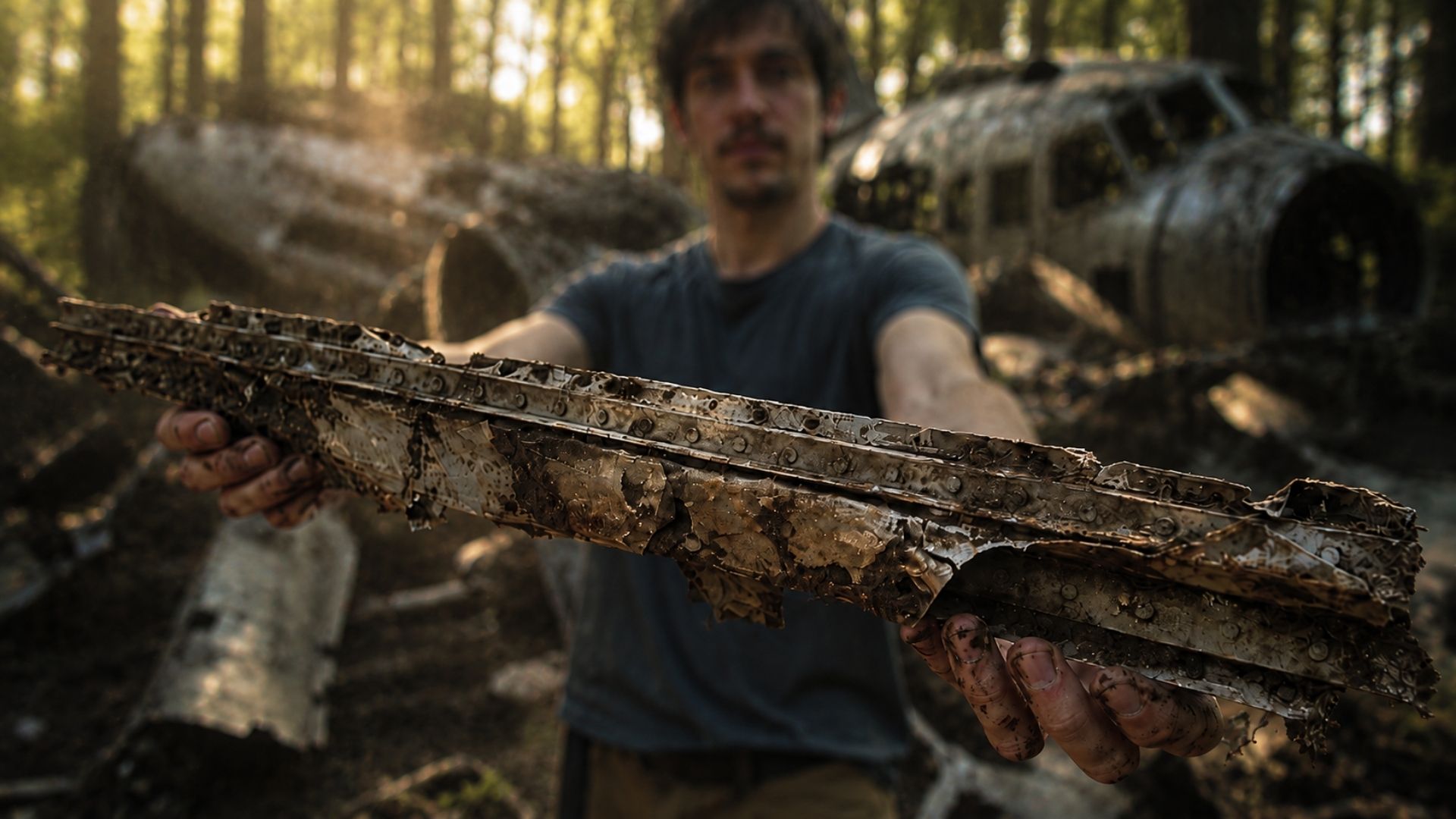
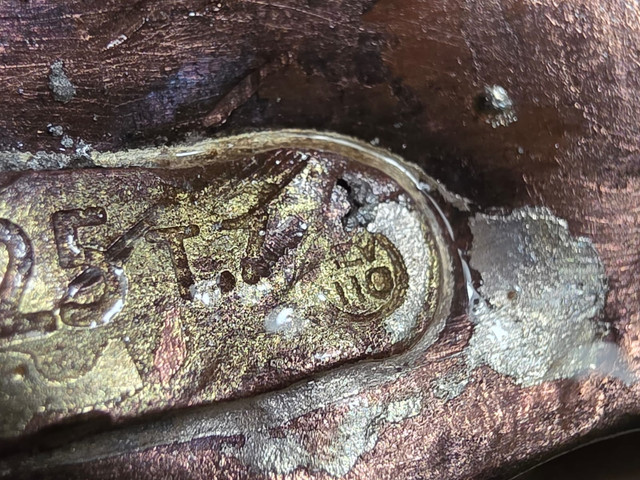
One small copper tube carried an alphanumeric marking that researchers traced to Royal Air Force technical documentation. The marking identified a type of seamless copper tubing commonly installed in aircraft fuel, oil, gas, and other onboard systems.
The tube’s fitting offered another significant breakthrough.
According to museum experts, it appears to be an Avimo-type high-pressure connector, a component associated with aircraft powered by the famous Rolls-Royce Merlin engine.
The Merlin engine became one of the defining technologies of Allied aviation during the war, powering several legendary aircraft. Those included the Avro Lancaster heavy bomber, the Supermarine Spitfire, the Hawker Hurricane, and the de Havilland Mosquito.
At this stage, investigators remain cautious.
Although the recovered parts strongly suggest a British-built aircraft equipped with Merlin technology, they have not yet determined the exact model. The wreckage could belong to a Lancaster bomber, a Mosquito, or another aircraft using similar equipment.
One possibility, however, has captured the imagination of historians.
Back in 2009, fishermen working in the Baltic Sea recovered a large section of a Lancaster bomber wing measuring roughly five meters in length. That wing has remained in the collection of the Museum of Coastal Defence ever since.
What makes the latest discovery especially intriguing is geography.
The newly identified crash site lies only about one kilometer from the location where that Lancaster wing was pulled from the sea years earlier.
Museum director Piotr Piwowarczyk believes there is a real possibility that both discoveries belong to the same aircraft.
If that connection is confirmed, researchers could finally solve a mystery that has remained unsolved for decades.
Previous analysis of the wing recovered from the Baltic had already allowed experts to identify three members of its crew. Those airmen participated in Allied operations targeting German industrial facilities and port infrastructure around Szczecin and Police during the closing stages of World War II.
Whether the forest wreckage represents additional pieces of that same aircraft remains one of the biggest unanswered questions.
The discovery site itself offers further reasons for careful investigation.
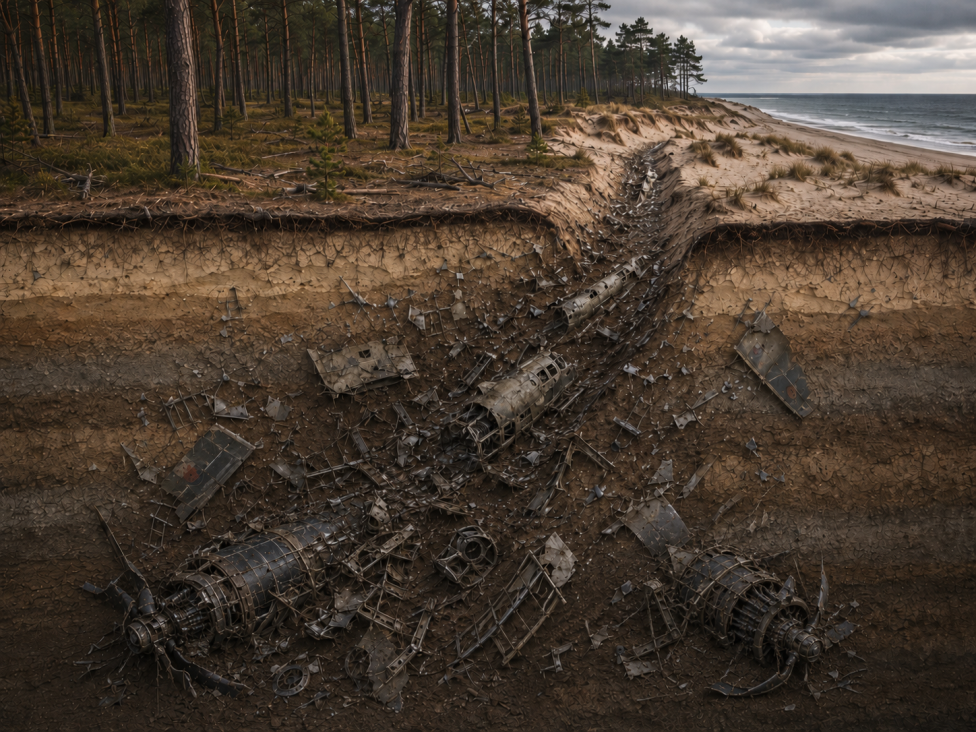
The depression in the forest appears consistent with a violent impact, and researchers believe the main body of the aircraft may still lie buried several meters beneath the surface.
That possibility brings with it a much more sobering concern.
If the plane crashed without its crew escaping, human remains could still be underground. For that reason, museum officials have emphasized that the area must be treated with the highest level of professional care, not only as an archaeological site but also as a potential wartime grave.
Authorities have already notified the Provincial Conservator of Monuments, the Międzyzdroje Forest District, and institutions responsible for military burial sites.
To protect the location, officials have deliberately avoided publicly marking the site. They hope to prevent unauthorized visitors, souvenir hunters, or amateur treasure seekers from disturbing evidence before trained specialists can conduct a full excavation.
For now, many of the forest’s secrets remain hidden beneath the soil.
Archaeologists believe much larger sections of the aircraft could still survive underground, preserved by decades of earth and vegetation. Every new fragment has the potential to reveal additional clues about the aircraft’s identity, its mission, and the final moments before it crashed.
A berry picker may have helped solve an 80-year-old wartime mystery after stumbling across what experts believe is the crash site of a British WWII aircraft.
The local resident was searching woodland near Świnoujście, north-west Poland, when he spotted a deep hole scattered with rusty aluminium fragments.
Thinking the debris looked unusual, he took a piece to experts at the nearby Coastal Defense Museum.
Museum specialist Wiktor Czeszewski said: “The very first inspection indicated that this was no random piece of scrap metal.
“The nature of the sheet metal, riveting, traces of aircraft structure, and spent ammunition indicate these are fragments of an aircraft.”
A museum team later searched the site and recovered more wreckage, including spent .303 calibre ammunition used in RAF aircraft machine guns and a copper tube bearing markings believed to be linked to a Rolls-Royce Merlin engine.
Experts believe the discovery could be connected to part of a Lancaster bomber wing recovered from the Baltic Sea about a kilometre away in 2009.
The area around Świnoujście – then the German port of Swinemünde – saw heavy fighting during the closing months of World War Two, with Allied bombers regularly flying missions over the region.
Investigators believe the aircraft may have been brought down by German anti-aircraft fire.
The site is now being treated as a potential crash location, with officials warning the wreckage – and possibly the remains of crew members – could still lie buried underground.
Museum official Milan Litwinowicz said: “We still have many questions and likely more than one surprise ahead of us.
“An inconspicuous copper pipe may prove to be the first key to solving a mystery from over 80 years ago.”
Featuring: An identification number suggests the plane featured one of the iconic Rolls-Royce Merlin engines
When: 29 Jul 2026
Credit: Cover Images/Muzeum Obrony Wybrzeża w Świnoujściu/Fort Gerharda
**EDITORIAL
Sometimes history announces itself through monumental discoveries.
Other times, it begins with something as ordinary as a quiet afternoon in the woods.
In this case, the investigation started with one man searching for wild berries and noticing a few unusual pieces of metal scattered across the forest floor. Those fragments have now reopened a wartime mystery that has remained buried for more than 80 years.
Whether investigators ultimately identify the aircraft as a Lancaster, a Mosquito, or another Allied plane, the discovery promises to shed new light on the air war fought over northern Europe during World War II.
And if the wreckage does belong to a long-lost crew whose fate has never been fully understood, the forest outside Świnoujście may finally provide answers that history has waited generations to uncover.