Back to the Future Cast Then and Now: How Marty, Doc and Hill Valley’s Most Familiar Faces Changed Across Four Decades
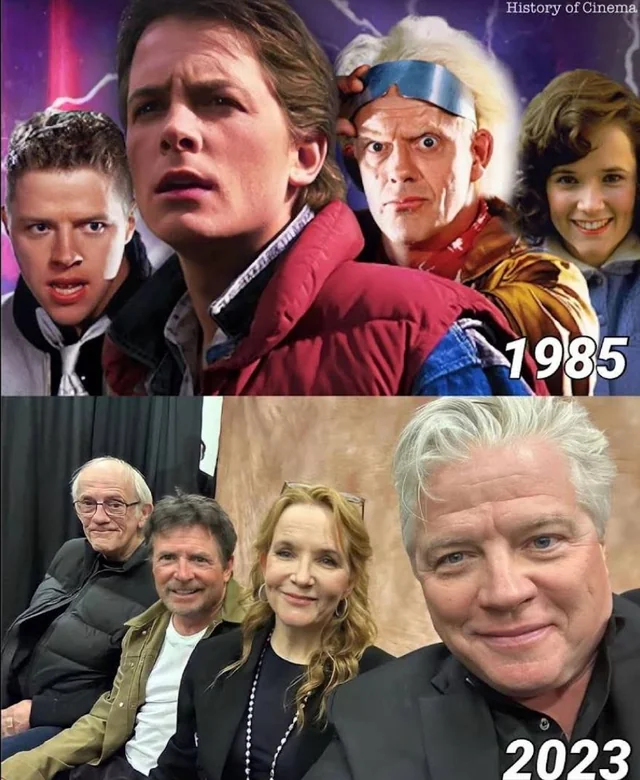
When Michael J. Fox and Christopher Lloyd walked onto a stage together at New York Comic Con in October 2022, the audience did not simply see two veteran actors attending another anniversary event.
They saw Marty McFly and Doc Brown together again.
Fox, living with the increasingly visible effects of Parkinson’s disease, approached his former co-star before the two men embraced. The emotional reunion came 37 years after Back to the Future first sent a teenage skateboarder and an eccentric inventor racing through time in a stainless-steel DeLorean.
For generations of viewers, the moment offered a powerful contrast. The actors had grown older, their careers had taken dramatically different paths, and Fox’s life had been reshaped by illness. Yet the affection between the pair appeared untouched by time.
Released in July 1985, Back to the Future transformed its central cast into permanent figures of popular culture. Four decades later, the faces of Hill Valley remain instantly recognizable—but the people behind them have built lives extending far beyond the clock tower.
Michael J. Fox: From Marty McFly to a Voice for Millions
Michael J. Fox was already known to television audiences as Alex P. Keaton on Family Ties when he became Marty McFly, the quick-thinking teenager accidentally transported from 1985 to 1955.
Fox brought speed, vulnerability and comic confidence to the role. His red vest, skateboard and bewildered reactions to the past helped make Marty one of the defining movie characters of the 1980s.
After the trilogy, Fox continued as a major film and television star. He appeared in movies including The Secret of My Success, Doc Hollywood and the Stuart Little series, while later earning acclaim for his leading role on the sitcom Spin City.
Behind that success, however, he was facing a private medical crisis.
Fox was diagnosed with young-onset Parkinson’s disease in 1991, when he was 29, and publicly disclosed the diagnosis in 1998. In 2000, he established The Michael J. Fox Foundation for Parkinson’s Research, which has since funded more than $2.5 billion in research programs.
As his symptoms progressed, Fox reduced his workload and announced in 2020 that he was stepping away from acting. His departure was not entirely permanent. After several years away, he returned for a guest appearance in the third season of Shrinking, explaining in 2026 that acting again had renewed his sense of purpose.
Still, his most consequential role now exists outside entertainment. Through fundraising, advocacy and public discussion of his condition, Fox has become one of the world’s most prominent voices for people living with Parkinson’s.
Christopher Lloyd: Doc Brown Never Really Left
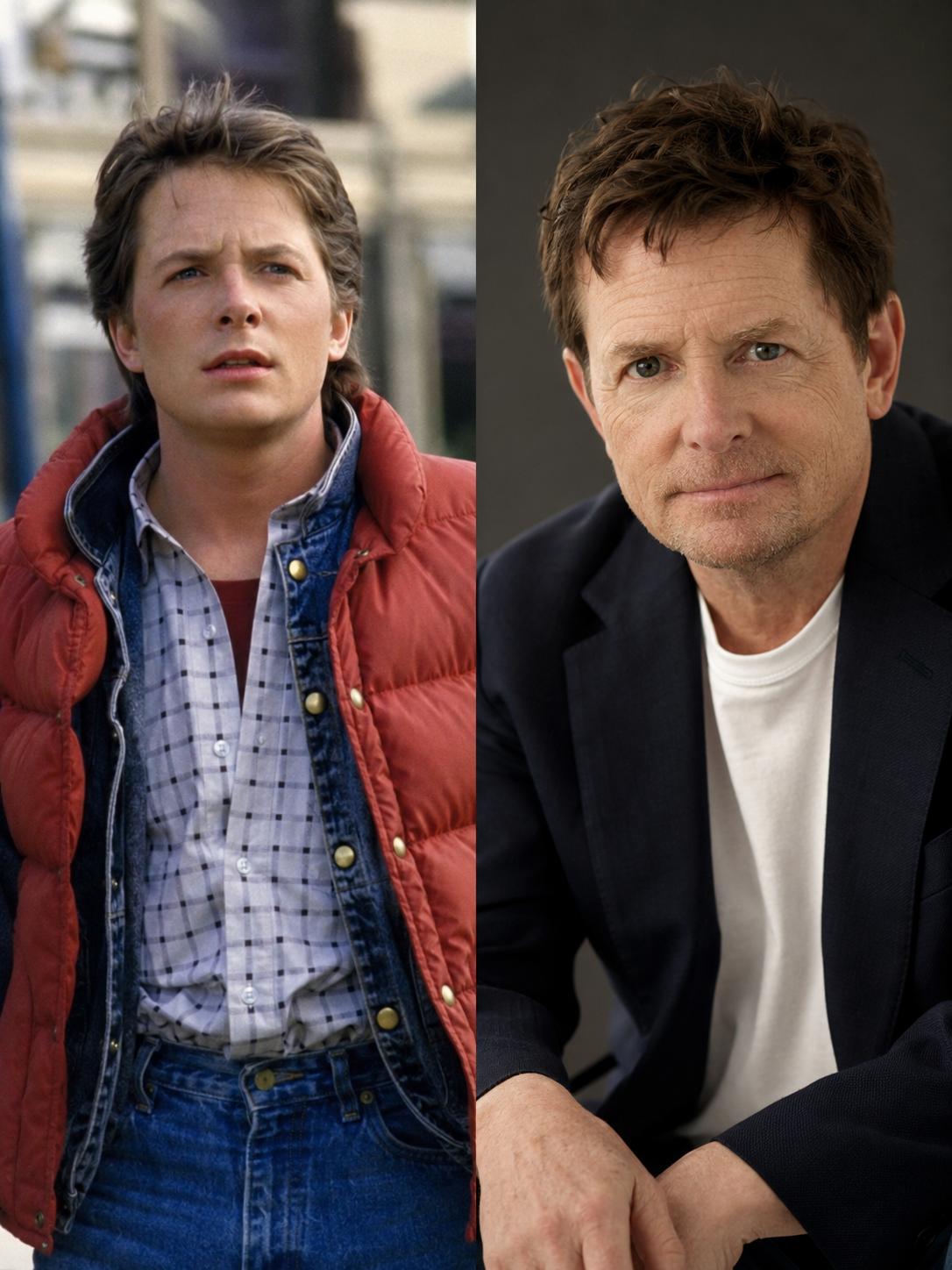
Christopher Lloyd was 46 when audiences first saw him as Emmett “Doc” Brown, the wild-haired scientist whose experiment turned a sports car into a time machine.
Already respected for his work in One Flew Over the Cuckoo’s Nest and the television series Taxi, Lloyd gave Doc an unusual combination of theatrical energy and tenderness. His startled eyes, rapid delivery and cries of “Great Scott!” could have made the character a simple caricature. Instead, Lloyd created someone audiences genuinely cared about.
Now in his late 80s, Lloyd continues to act and appear at fan events. His later career has included projects ranging from The Addams Family films and Who Framed Roger Rabbit to television appearances and action movies such as Nobody.
He has also embraced the character that defined his public image. Rather than distancing himself from Doc Brown, Lloyd has repeatedly returned for commercials, special appearances, games and reunions connected to the franchise.
His bond with Fox has become especially meaningful. During their 2022 New York Comic Con appearance, Lloyd remembered the immediate chemistry that developed after Fox joined the production. Fox, in turn, said working with Lloyd meant he knew it would be a good day. Their embrace became the emotional center of the event.
Their friendship has continued through later reunions. In 2026, Fox affectionately referred to Lloyd as his “bestie” while sharing another meeting ahead of the original film’s 41st anniversary.
Lea Thompson: Lorraine McFly Behind and In Front of the Camera
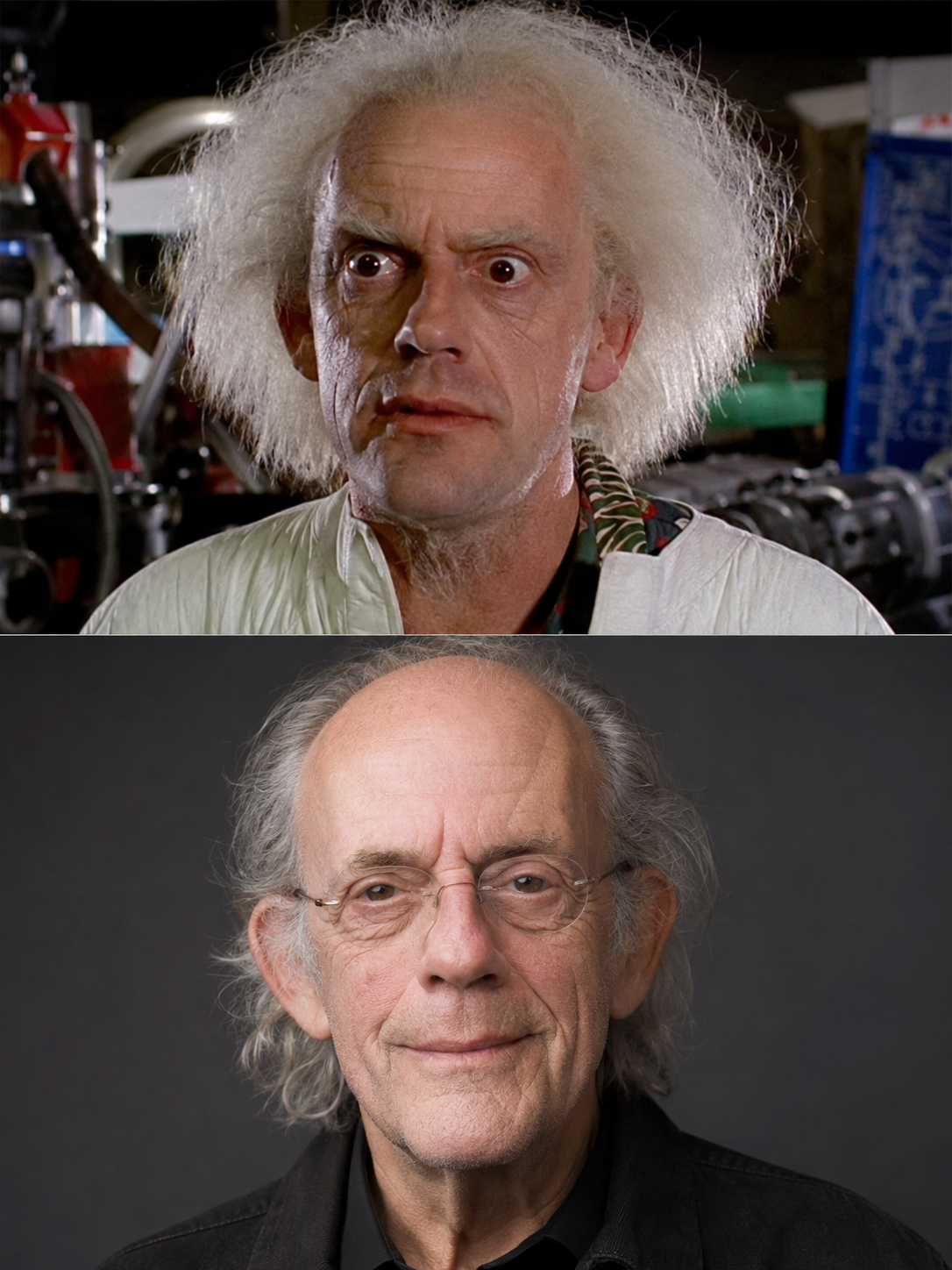
Lea Thompson faced one of the trilogy’s most unusual acting challenges as Lorraine Baines McFly.
In the first film alone, she played Lorraine as a teenager in 1955 and as Marty’s middle-aged mother in 1985. Across the sequels, makeup, alternate timelines and changing family histories required her to portray several versions of the same woman.
After Back to the Future, Thompson remained a familiar presence in film and television. She starred in Some Kind of Wonderful and later led the sitcom Caroline in the City, which ran for four seasons.
As she grew older, however, Thompson recognized that substantial roles for women in her age group were becoming harder to find. She responded by moving behind the camera.
Thompson has directed episodes of series including The Goldbergs, Mom, Schooled and Will Trent. In a 2026 interview, she explained that directing allowed her to remain creatively active rather than competing for an increasingly limited number of acting roles.
At 65, she continues to act and direct while warmly participating in reunions celebrating the film that made Lorraine McFly part of movie history.
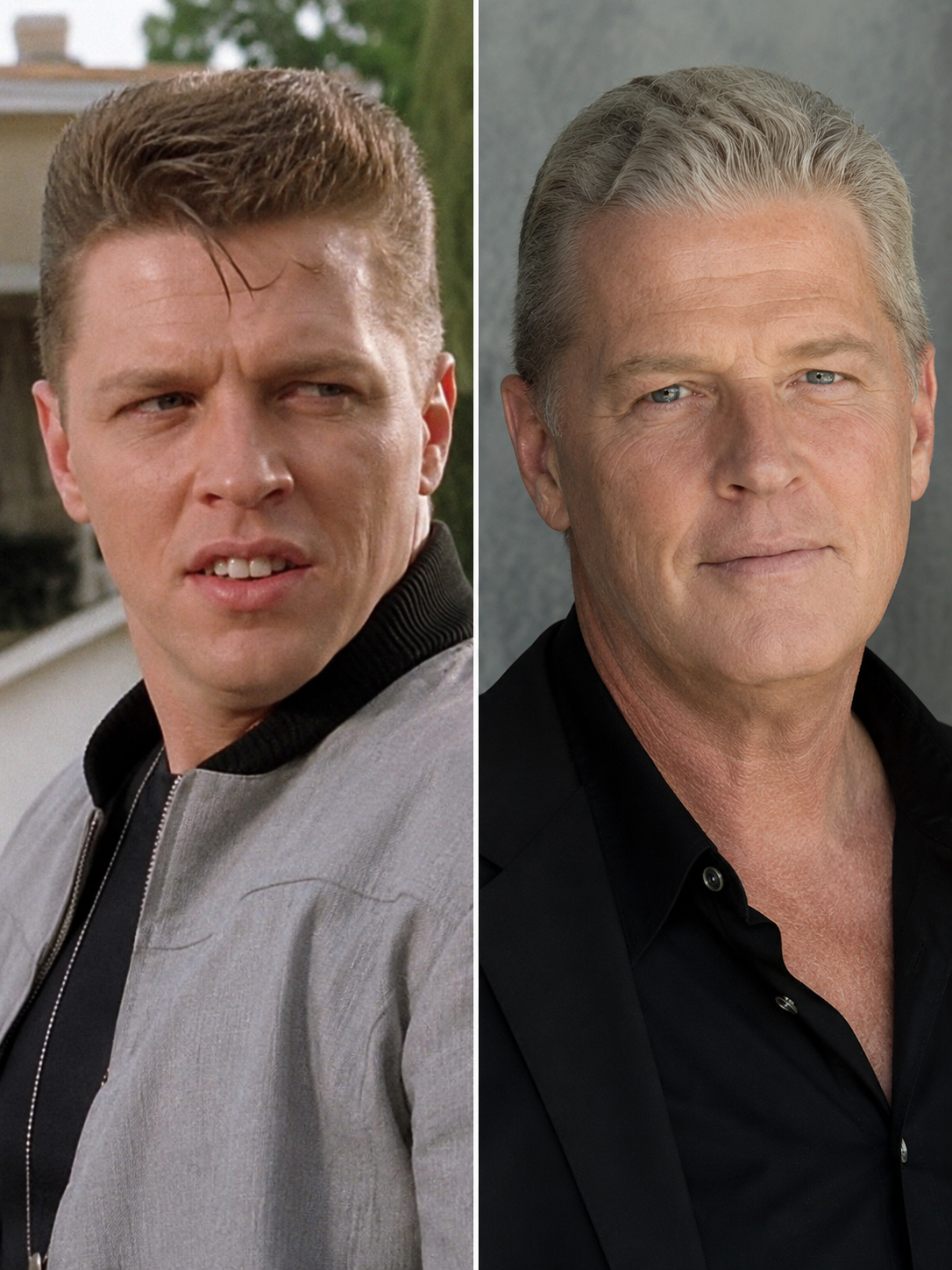
Thomas F. Wilson: The Man Behind Hill Valley’s Bully
Thomas F. Wilson was only in his mid-20s when he became Biff Tannen, the towering bully who tormented George McFly and repeatedly collided with Marty.
Wilson’s performance made Biff threatening, ridiculous and strangely memorable. The trilogy also gave him the opportunity to play multiple members of the Tannen family, including Griff in the future and the gunfighter Buford “Mad Dog” Tannen in the Old West.
Away from Hill Valley, Wilson built a varied career as an actor, stand-up comedian, musician, artist and voice performer. His television work has included Freaks and Geeks, while younger audiences may recognize his voice from animated series including SpongeBob SquarePants.
Wilson has often joked about the endless questions he receives from fans, even turning them into a comedy song. Unlike Biff, whose answer to nearly every problem involved intimidation, Wilson developed a public persona centered on humor, music and storytelling.
Now in his late 60s, he remains active and closely associated with the role that turned the word “butthead” into one of the franchise’s most quoted insults.
Crispin Glover: George McFly’s Unconventional Path
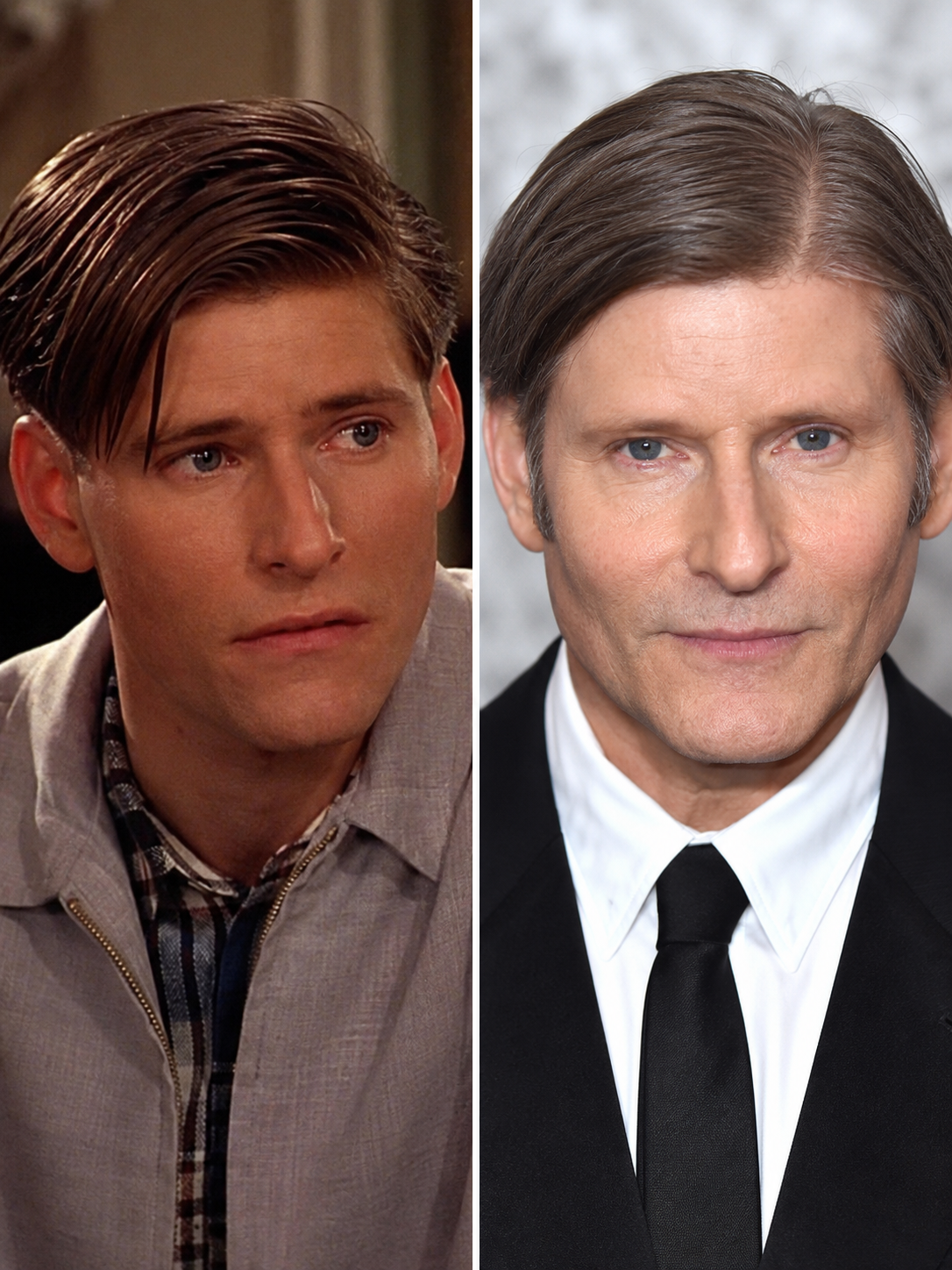
Crispin Glover created one of the first film’s strangest and most vulnerable characters in George McFly.
His nervous laugh, hunched posture and fear of rejection made George appear almost painfully fragile. Yet his transformation—culminating in his decision to stand up to Biff—provided the emotional turning point that repaired the McFly family’s future.
Glover did not return for the sequels. His absence became one of the most discussed casting changes in the franchise, and the filmmakers used another actor with prosthetics and previously recorded footage to depict George in Back to the Future Part II.
Rather than pursuing a conventional Hollywood career, Glover moved toward eccentric character roles and experimental art. He appeared in films including River’s Edge, Charlie’s Angels, Willard and Alice in Wonderland, while also writing books, staging multimedia presentations and directing fiercely independent movies.
His latest directorial project, No! You’re Wrong. or: Spooky Action at a Distance, premiered at New York’s Museum of Modern Art in October 2025 after years of development. The project continued the deeply personal, anti-mainstream filmmaking path that has defined much of his career.
A Cast That Became Part of the Audience’s History
The actors of Back to the Future no longer resemble the young people who filled Hill Valley in 1985. Their hair has changed, their faces carry four more decades of experience, and their lives have moved through triumph, reinvention and hardship.
Yet the film’s central idea has only become more affecting with age: time changes nearly everything, but certain relationships survive it.
That is why the sight of Fox and Lloyd embracing still carries such power. To audiences, they represent characters who crossed centuries together. To each other, they are colleagues whose friendship endured long after the cameras stopped rolling.
The DeLorean may remain inside the movies, but the cast’s journey from 1985 to the present has become its own form of time travel—one measured not in flashing lights or flaming tire tracks, but in resilience, memory and lasting affection.