Kevin Bacon Found Love When His Future Felt Uncertain—Decades Later, He Says the Small Things Matter Most

After nearly four decades of marriage, Kevin Bacon and Kyra Sedgwick do not describe lasting love as a permanent state of romance.
They talk about checking whether the other person is all right. They talk about sharing meals, listening carefully and noticing when something feels different. They talk about communication, caregiving and the daily effort required to remain connected while two people grow older.
There have been famous movies, awards, red carpets and successful television series. But when Bacon and Sedgwick explain why their relationship has lasted, the answer usually returns to ordinary moments.
Their marriage, Bacon has acknowledged, is neither magical nor perfect. It requires work.
Fortunately, he has said, most of that work has also been fun.
A Meeting That Changed Two Lives
Bacon and Sedgwick fell in love while working on Lemon Sky, a television adaptation of Lanford Wilson’s autobiographical play.
Production took place in 1987, when Bacon was 29 and Sedgwick was 22. Although the film was released the following year, the relationship that began during its creation moved more quickly.
Bacon had already achieved enormous visibility through Footloose, the 1984 film that made him a star. Yet the success did not guarantee that every project afterward would work or that his place in Hollywood was secure.
Like many actors who become closely associated with one breakthrough role, he faced uncertainty about what would come next. Fame had arrived, but it had not removed the anxiety built into an unpredictable career.
Sedgwick was establishing herself as a serious young actress. She later admitted that she was not immediately overwhelmed by Bacon when they first worked together. Once her feelings changed, however, she became convinced that he was the person she wanted to marry.
They wed on September 4, 1988.
Their son, Travis, was born in 1989, followed by their daughter, Sosie, in 1992. The family developed alongside two demanding careers, with both parents moving between film sets, television productions and long periods away from home.
From the beginning, their relationship had to exist in the real world—not simply inside the intensity of a movie set.
Two Careers Under One Roof
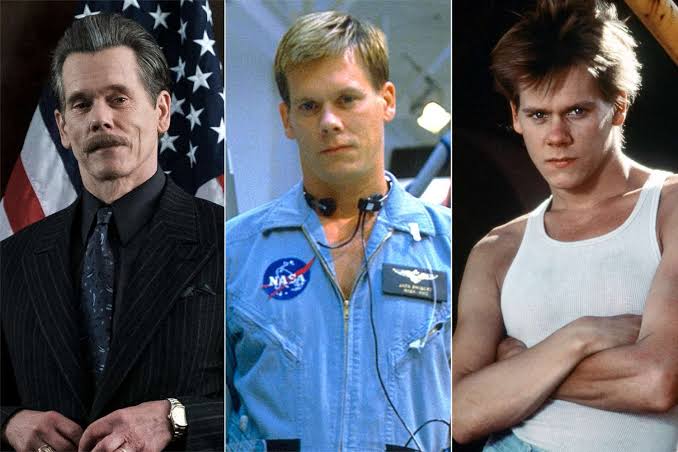
Bacon’s post-Footloose career became remarkably varied.
He appeared in films including Tremors, A Few Good Men, Apollo 13, Mystic River, X-Men: First Class and MaXXXine. His ability to move between heroic, comic and unsettling characters eventually became central to his longevity.
Sedgwick built an equally substantial career. She worked steadily in movies before becoming widely known as Deputy Chief Brenda Leigh Johnson on The Closer. The role earned her an Emmy Award and established her as one of television’s most recognizable leading performers.
Success brought opportunities, but it also created logistical pressure. One spouse might be working across the country while the other remained with the children. Production schedules could disrupt routines, and professional disappointments did not stop at the front door.
They also had to navigate competition without turning the marriage into a contest.
Both knew what it meant to want a role, lose a role or wonder when the next meaningful job would arrive. Their careers did not rise at identical speeds. At different moments, one partner’s work demanded more attention than the other’s.
A long marriage required them to adapt to those changes rather than insist that life remain evenly balanced at all times.
A Financial Loss They Had to Absorb Together
One of the most serious challenges came far from a movie set.
Bacon and Sedgwick were among the investors who lost money through Bernard Madoff’s massive Ponzi scheme, which collapsed in 2008. Bacon has not publicly confirmed the exact amount they lost, but both have acknowledged that the financial damage was significant.
They had to accept that money accumulated over years of work was gone.
Bacon later said the experience forced them to focus on what remained: their children, their health, their home and their ability to continue working. They could not reverse the fraud, but they could decide how much power it would have over their family.
The episode did not become a glamorous story of instant recovery. It was an unwanted disruption that they endured together.
That response reflected the larger pattern of their marriage. Problems were not ignored or transformed into inspirational slogans. They were faced, discussed and gradually absorbed into the life the couple continued building.

The Meaning of Care Changes With Age
By 2025, Bacon and Sedgwick had been married for more than 36 years. They were also speaking more openly about aging and what it means to care for another person over time.
The subject was closely connected to their film The Best You Can, in which they played two strangers who form an unexpected bond. Sedgwick’s character is also caring for an older husband experiencing cognitive decline, bringing questions of responsibility, loneliness and emotional support into the story.
While discussing the film, Bacon and Sedgwick described communication as a foundation of caregiving.
Care, in their view, does not begin only when someone becomes seriously ill. It develops through habits established much earlier: asking questions, listening to the answers and paying attention to needs that may not be directly expressed.
Sometimes it is as simple as asking, “Are you okay?”
Sometimes it means having dinner together rather than allowing work or distraction to consume the evening. It can mean recognizing that the other person is tired, frightened or overwhelmed before the situation becomes a crisis.
These acts are small enough to be overlooked. Over decades, however, they form the structure of a shared life.
Love Without the Fairy Tale
Bacon has resisted the idea that his marriage survived because he and Sedgwick discovered a secret unavailable to everyone else.
Their life is not constantly romantic. They disagree. They experience stress. They sometimes have to work hard to communicate clearly.
A lasting relationship, Bacon has suggested, is not created by finding a perfect person and then living without conflict. It is shaped by continuing to learn who that person is as circumstances change.
Sedgwick has similarly emphasized that marriage requires work. But she has also made an important distinction: the work should not erase the enjoyment.
They still make each other laugh. They sing and play music together. They share playful videos and do not appear embarrassed by their own silliness. Their anniversary celebrations have included informal duets, dancing and friendly competition rather than carefully staged declarations.
That sense of play has survived alongside the serious responsibilities of marriage.
In 2025, they reunited onscreen in The Best You Can, their first movie together in roughly 20 years. During a scene involving the possible end of their characters’ relationship, Sedgwick became unexpectedly emotional. She later explained that the fictional breakup briefly made her imagine what such a loss would feel like in real life.
The reaction revealed the depth beneath their familiar humor.
After so many years, the marriage was not simply a fact of their biographies. It was a life they could still imagine being devastated to lose.

Parents Becoming Partners With Adult Children
Bacon and Sedgwick’s relationship also changed as Travis and Sosie became adults and developed creative careers of their own.
Travis became a musician and composer. Sosie became an actress, appearing in projects including Mare of Easttown and the horror film Smile.
Parenting young children had once required schedules, protection and constant decisions. Parenting adults demanded a different kind of support—remaining available while allowing them to create independent lives.
The family has also collaborated professionally. Sedgwick has directed Bacon, while their children have contributed acting or music to family projects. These arrangements require trust because professional criticism can easily spill into personal relationships.
Yet creative work has also given them another way to stay connected.
By 2026, the family was developing a project involving all four members, with Bacon and Sedgwick continuing to explore how their private history could inform their work without turning it into spectacle.

Continuing to Choose the Same Person
Kevin Bacon and Kyra Sedgwick have lived much of their marriage in public, but the elements that sustained it were mostly invisible.
They were found in conversations after difficult days, meals eaten together and questions asked with genuine attention. They appeared in the willingness to adapt when one career surged, when children needed more time or when an unexpected financial crisis changed their plans.
There was no single heroic act that preserved the relationship.
There were thousands of smaller ones.
That may be why their story resonates with people who no longer expect love to resemble a fairy tale. After decades together, romance is not always about surprise trips or elaborate gifts. Sometimes it is the person who notices that you have become quiet. Sometimes it is knowing who needs reassurance and who needs space.
Bacon found Sedgwick during a period when professional success had not eliminated uncertainty. Together, they created careers, raised two children and moved through losses they could not control.
They did not remain together because life became perfect.
They remained together by paying attention—then choosing, in countless ordinary moments, to keep showing up for each other.