A Golf Ball-Sized Lump Appeared on Baby Hunter’s Neck — Months Later, It Began Threatening His Airway
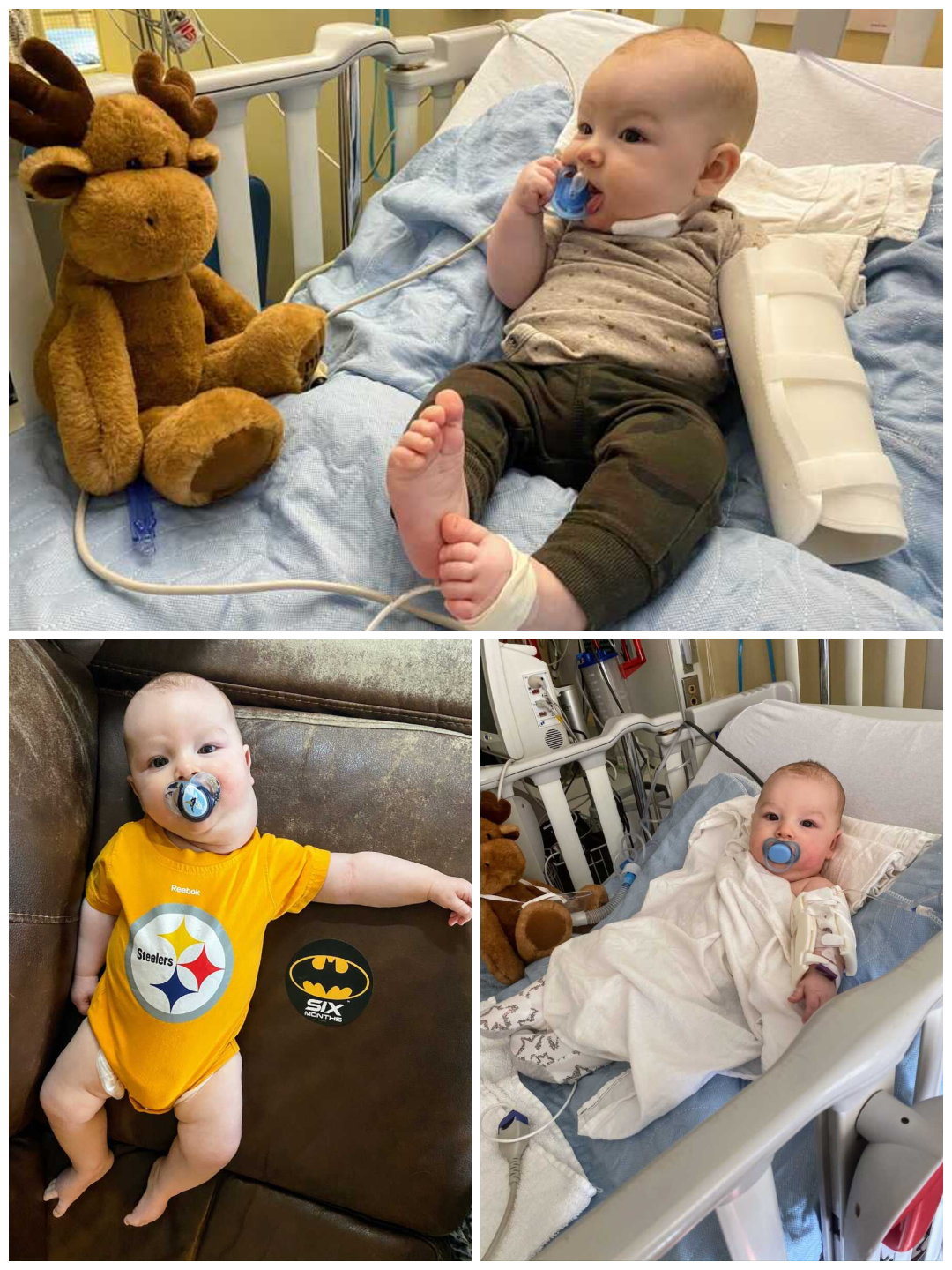
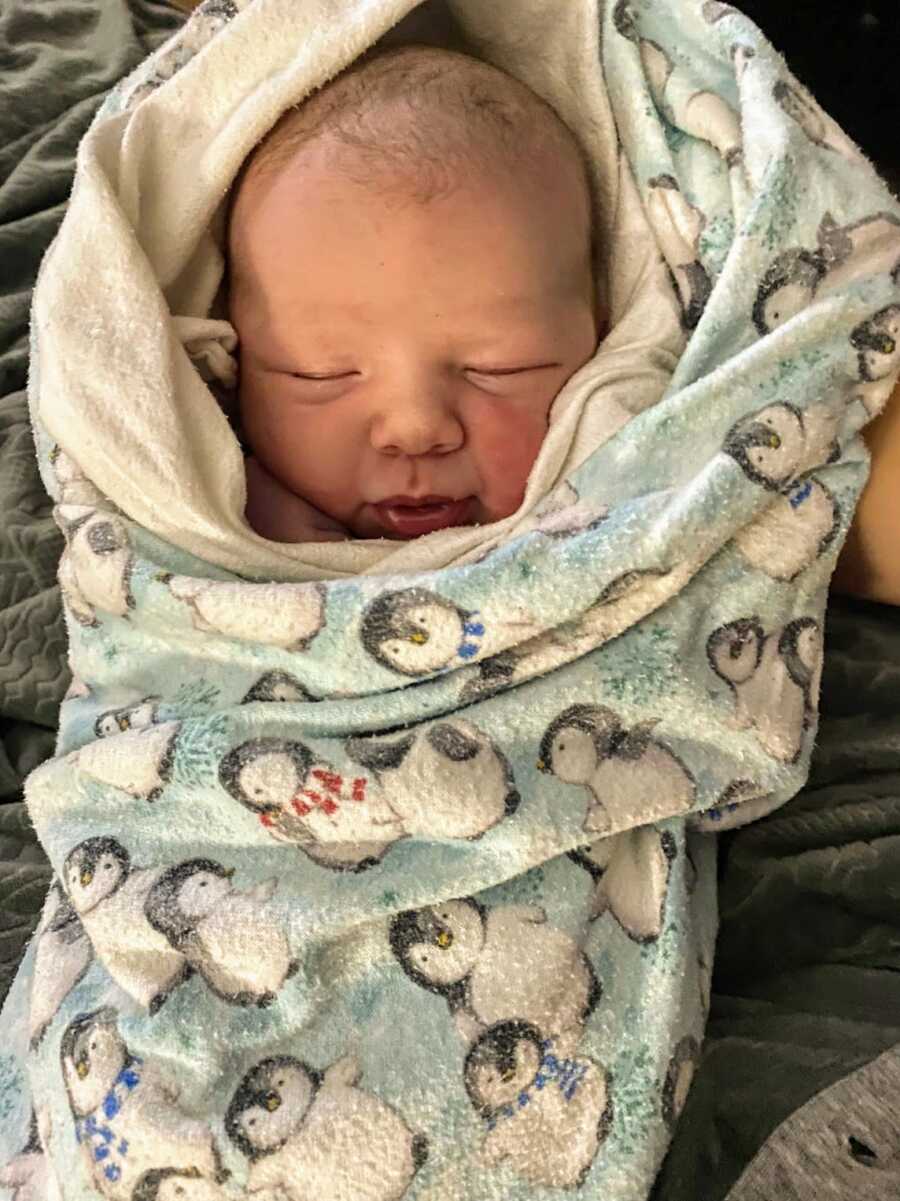
Hunter entered the world looking completely healthy.
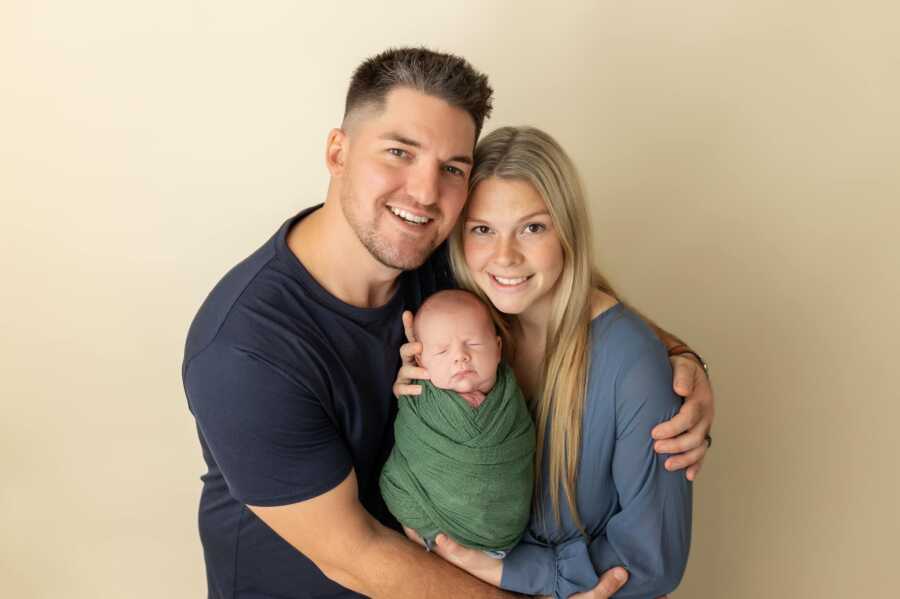
Born at home in October 2021, the 8-pound, 11-ounce baby was his parents’ third child and their first son. His birth was uncomplicated, and his family settled into life with a newborn alongside his two older sisters.
Then, when Hunter was only about a week old, his mother Lindsay noticed something unusual.
His breathing sounded raspy and louder than she expected.
Not long afterward, another sign appeared—far more visible and impossible to ignore.
A lump roughly the size of a golf ball had developed on his neck.
What initially appeared to be two manageable childhood conditions would eventually send Hunter repeatedly to the hospital, where doctors discovered that the growing mass was a rare lymphatic malformation capable of interfering with his breathing.
Two Early ER Visits Did Not Reveal the Real Problem
During Hunter’s first month, his parents took him to the emergency room twice.
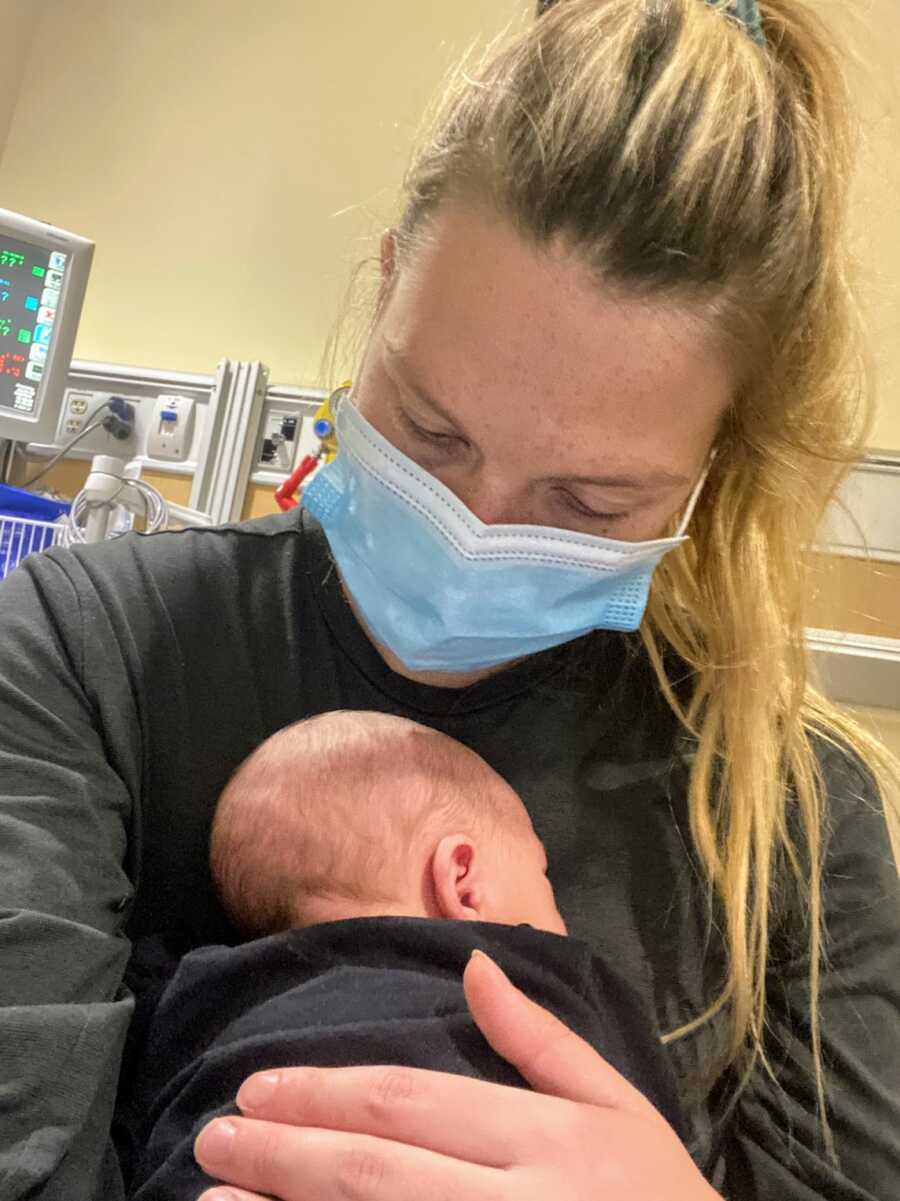
The visits were especially stressful because COVID-era restrictions meant only one parent could stay with him. Lindsay sat inside frightened and alone with her newborn while her husband waited separately in the hospital.
After the second visit, the family left with explanations that seemed reassuring.
Hunter’s noisy breathing was diagnosed as laryngomalacia, sometimes described as a “floppy” voice box.
The lump on his neck was believed to be a benign cyst.
His parents were told both problems would likely improve as he grew.
And for several months, that seemed possible.
Hunter remained happy and otherwise healthy. His breathing was noisy, but the family gradually adjusted to the sound.
The lump remained part of life too.
Then, at 5 months old, the situation changed dramatically.
The Swelling Suddenly Became Dangerous
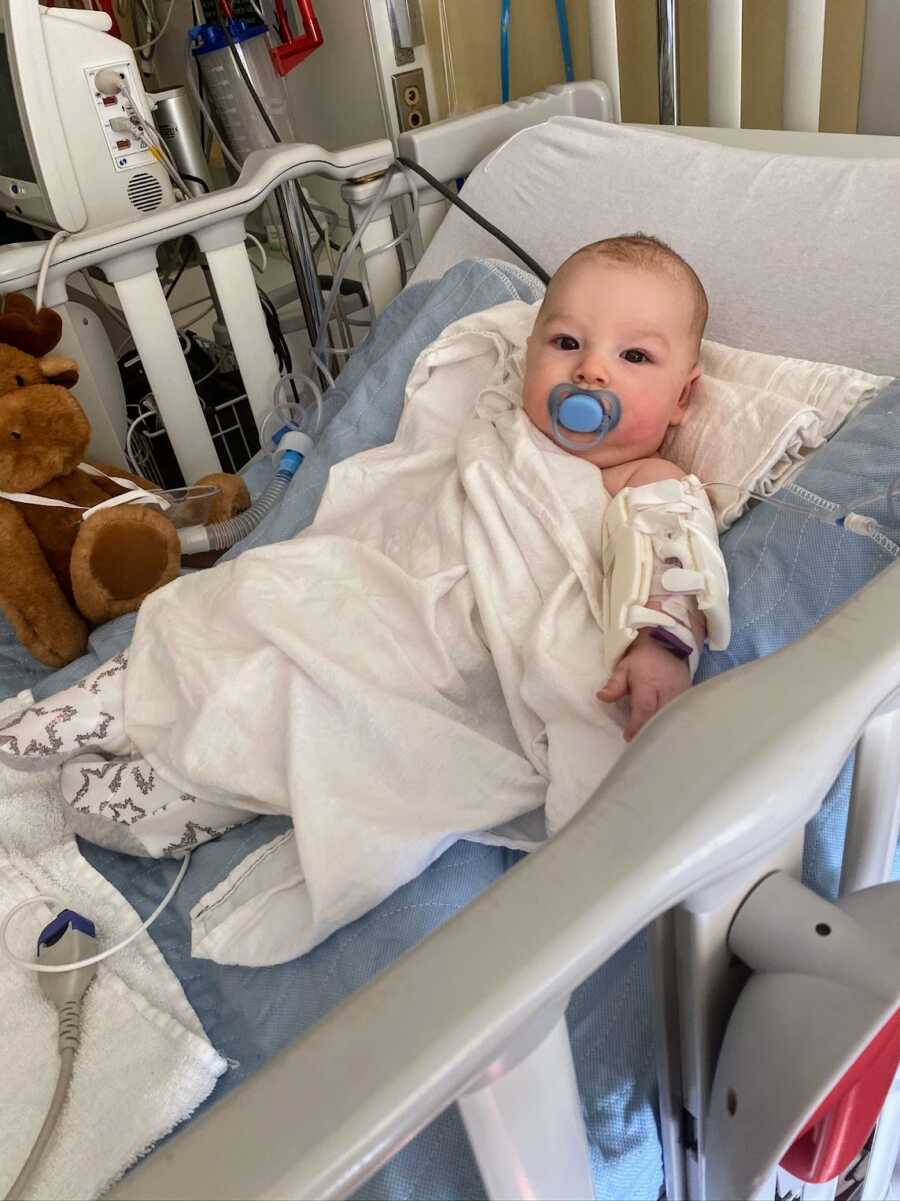
In April, Hunter’s neck began swelling until the enlarged area started compromising his airway.
His parents rushed him back to their local children’s hospital.
This time, he was admitted.
The family spent approximately a week in the hospital, separated from Hunter’s two older sisters while trying to balance parenting, medical decisions and the demands of running their own business.
Lindsay’s husband had to continue managing work while also supporting his wife and son.
Their extended family stepped in to care for the girls.
The experience made Lindsay think about parents facing similar medical crises without that support system. Even with relatives helping, the emotional and practical demands were enormous.
Through it all, Hunter surprised the medical staff.
Despite the hospital environment and the discomfort caused by the swelling, Lindsay remembered him continuing to smile and charm the nurses.
But doctors still needed to determine what was happening inside his neck.
Doctors Drained 90 Milliliters From His Tiny Neck
The medical team drained the swollen area to relieve the pressure.
Approximately 90 milliliters of fluid were removed from Hunter’s neck.
The difference was immediate.
With the pressure reduced, he could breathe more comfortably.
Doctors then performed an MRI and had the images reviewed by a pediatric radiologist.
The result finally gave Hunter’s family an accurate diagnosis.
He had a lymphatic malformation, which his doctor also described as a lymphatic birthmark.
For Lindsay, receiving an answer brought two very different emotions at once.
There was relief because months of uncertainty finally had an explanation.
But there was also fear.
The condition was rare, her family had never heard of it before, and she learned there was no simple permanent cure.
Fortunately, the pediatric radiologist treating Hunter had significant experience with the condition.
That gave his parents something they desperately needed: confidence that their son was being cared for by someone who understood what they were facing.

The Family Learned This Might Be Part of Hunter’s Life
Hunter’s parents were told that lymphatic malformations involve abnormal lymph vessels that develop into disorganized clusters of fluid-filled cysts.
The condition can behave differently from one person to another.
For Hunter, the most immediate concern was location.
His malformation was in his neck, meaning that when it enlarged, it could begin pressing on his airway.
Illness could also create problems. Lindsay learned that colds and viruses might trigger swelling because the lymphatic system is involved.
Initially, she became intensely protective.
After leaving the hospital, she found herself worrying constantly about something happening to Hunter. She searched online for information and tried to find other parents who understood the diagnosis.
Even many people around the family—including healthcare providers they had previously encountered—had never heard of the condition.
Slowly, however, Lindsay reached an important conclusion.
Hunter could not spend his childhood being treated as though he might break.
His condition needed attention, but he was still a happy little boy.
She and her husband decided they would avoid additional procedures while he was so young unless treatment became necessary.
They hoped to spare him sedation if they could.
That plan lasted exactly one month.
The Swelling Returned
In May, Hunter’s neck enlarged rapidly again.
Once more, the swelling began affecting his airway.
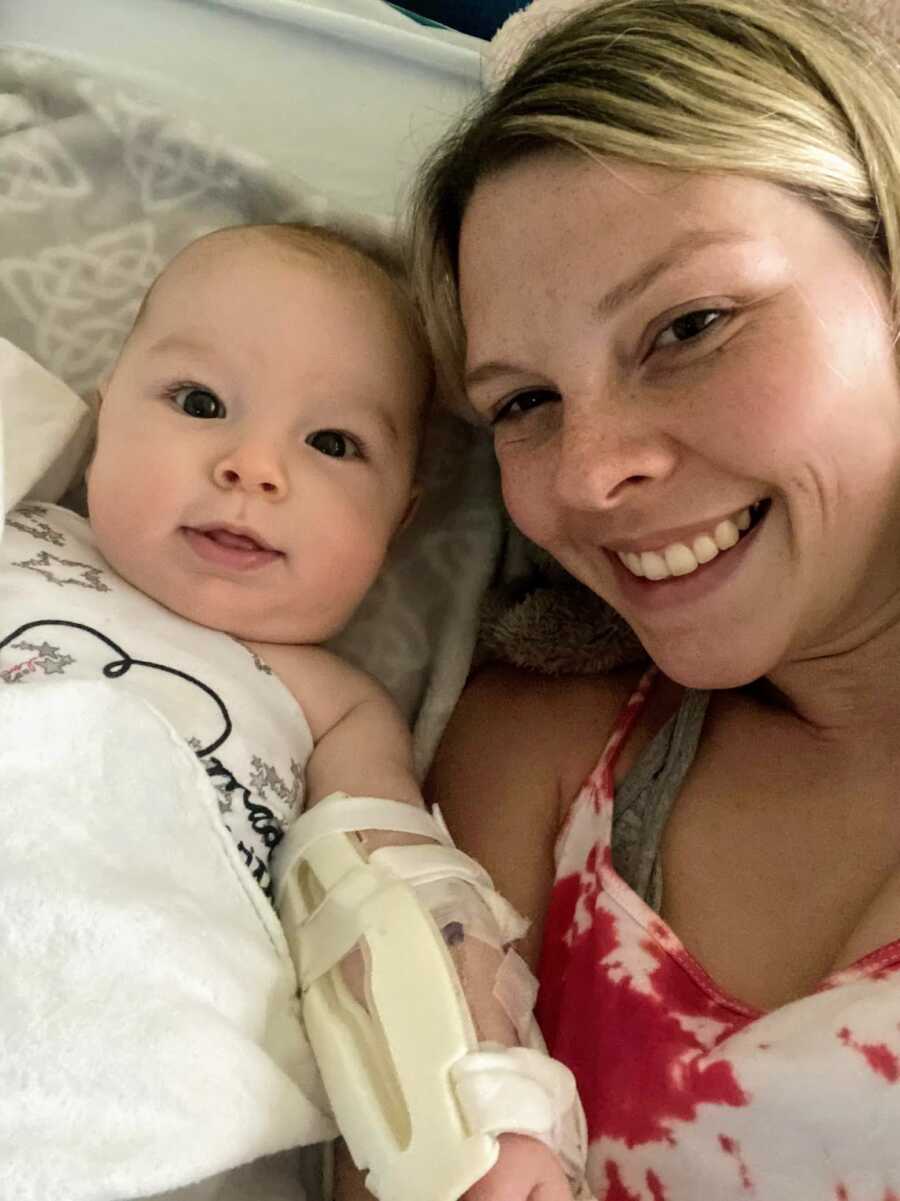
The family returned to the emergency room, and doctors admitted him immediately.
This time, they could not simply wait.
Hunter was scheduled for sclerotherapy, the treatment his medical team considered the safest option for his particular malformation.
During the procedure, treatment is directed into the abnormal area with the goal of shrinking it.
Lindsay stayed beside Hunter through pre-op.
Then came the part she dreaded.
Her baby had to be sedated, and she had to leave him with the medical team and wait.
Her husband could not be physically present during the procedure because the family’s business was in the middle of its busy season, so important conversations and updates had to happen by phone.
When Hunter’s doctor finally emerged, the news was good.
The procedure had gone well.
The relief was enormous.
Hunter continued surprising everyone afterward. Lindsay said he did not even need pain medication following the treatment.
At 9 Months, Hunter Was Thriving
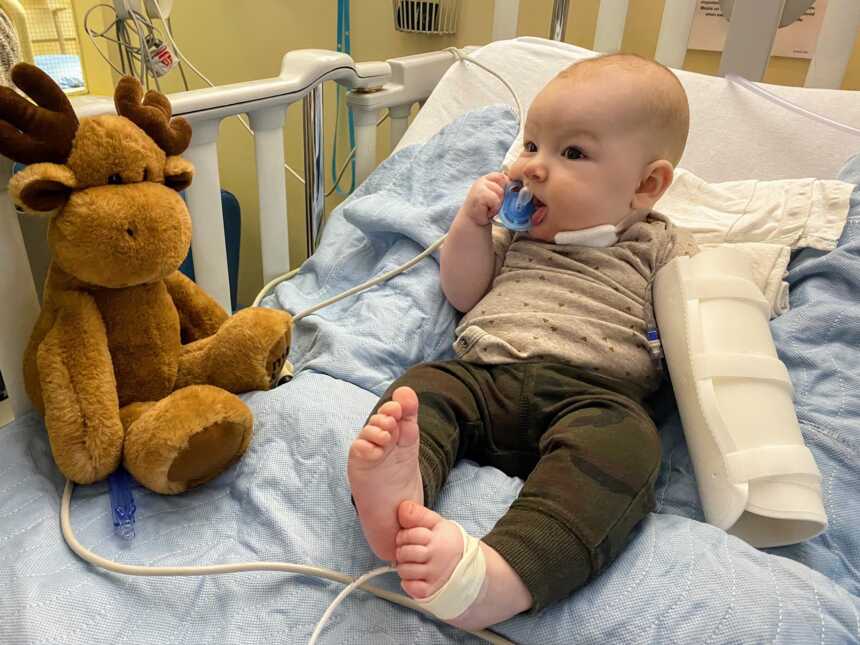
In the months after sclerotherapy, the family finally experienced some calm.
By the time Lindsay shared Hunter’s story, he was 9 months old.
He had not needed another hospital stay.
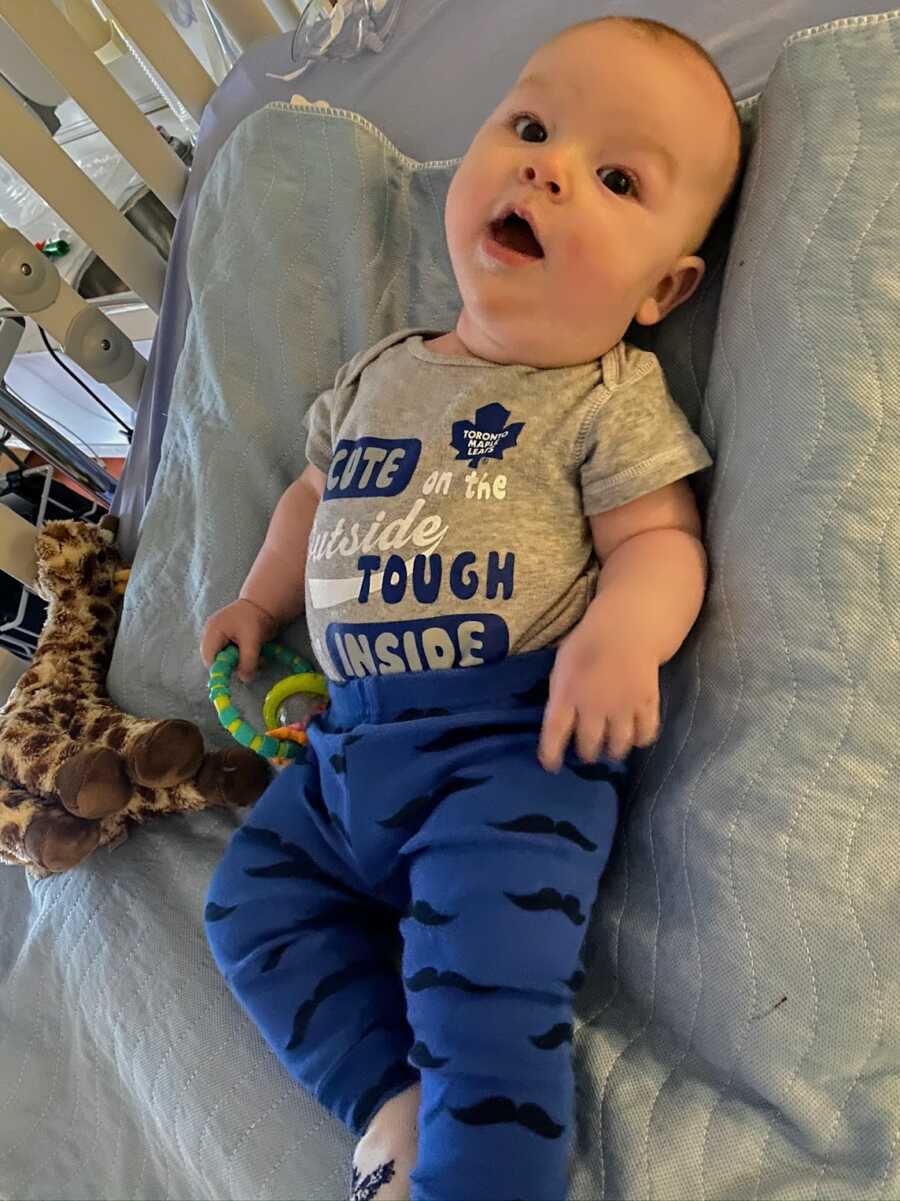
He remained cheerful, full of smiles and giggles, and his most recent checkup indicated that he did not need another treatment at that point.
The future was not completely predictable.
Because lymphatic malformations vary widely, Hunter could potentially experience another flare-up later.
If that happened, however, his parents no longer felt as lost as they had when the mysterious lump first appeared.
They knew what it was.
They knew what signs required urgent attention.
And most importantly, they trusted the medical team caring for him.
His Mother Stopped Seeing Him as Fragile
Perhaps the biggest change occurred in Lindsay herself.
After the diagnosis, she initially became consumed with questions.
Why had this happened?
Had something gone wrong?
What if the swelling returned?
Could a common childhood illness send them back to the hospital?
With time, she learned to loosen her grip on some of that fear.
Hunter had already shown his family how resilient he could be—from calmly charming nurses during hospitalization to recovering from sclerotherapy without needing pain medication.
His diagnosis remained part of his life.
It did not have to become his entire identity.
Lindsay also found comfort through connecting with other parents online who were raising children with lymphatic malformations.
For families confronting a rare diagnosis, she discovered, simply finding someone who understands the terminology, fear and uncertainty can make an enormous difference.
Her advice grew from that experience: ask questions, find knowledgeable specialists, seek out other families and remember that every case can look different.
Most of all, she learned not to let fear define the child in front of her.
Hunter began life as a healthy-looking newborn with a big smile.
Then came noisy breathing, a mysterious lump, repeated hospital visits, an airway emergency and a diagnosis his family had never heard of.
Months later, the smile was still there.
The difference was that his parents now understood what was hiding beneath it—and knew their son was stronger than they had first imagined.