At 66, Avtar Singh Found the Story His Mother Never Got to Tell
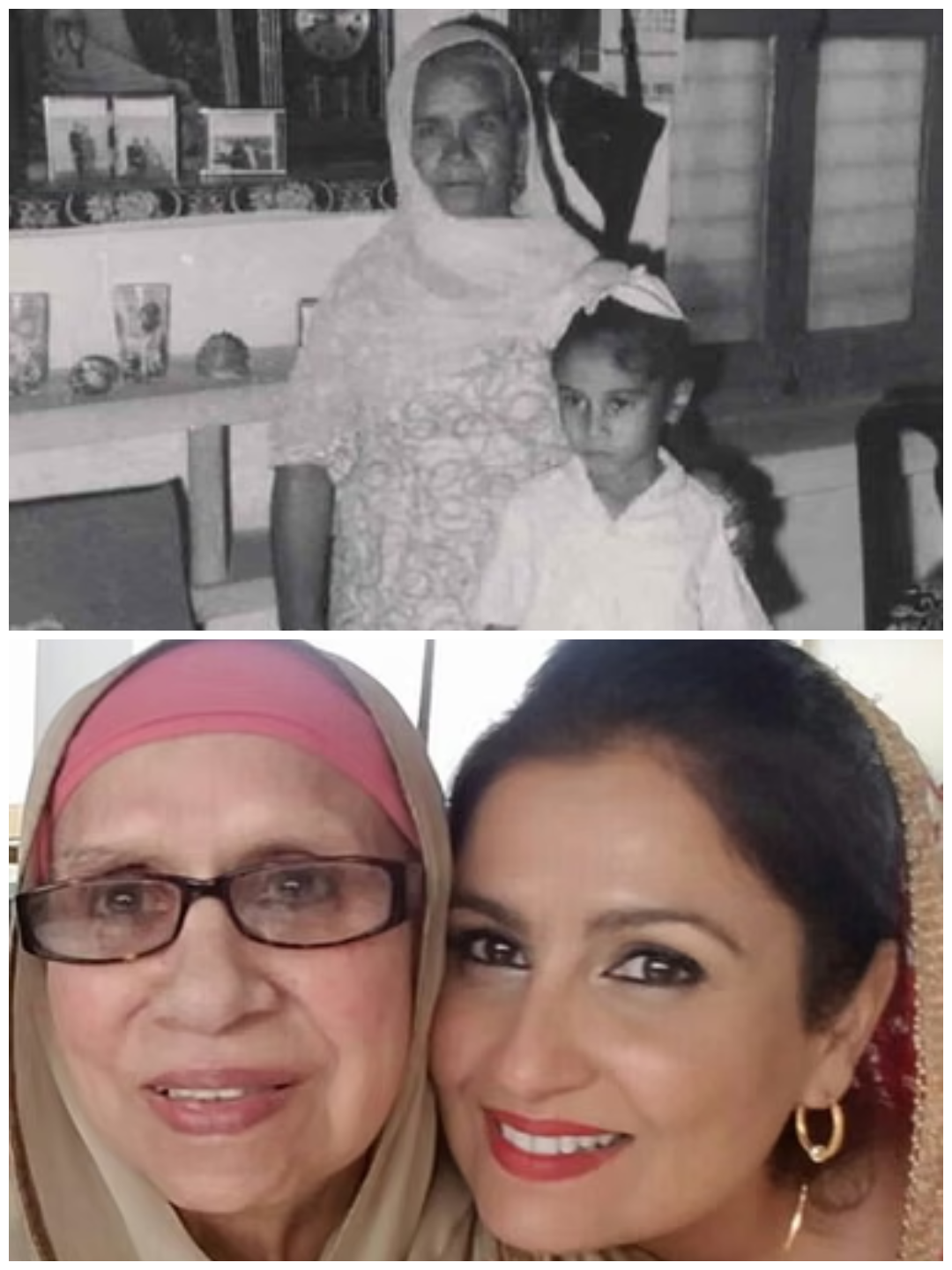
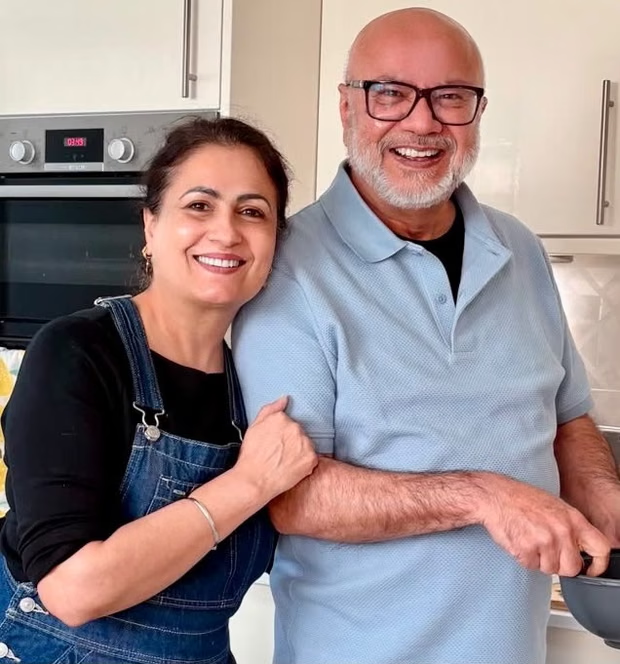
For most of his life, Avtar Singh had only fragments.
A first name: Savinder. A family connection to Africa. A possibility that she had once lived in Britain. He had been told that the woman who raised him in Amritsar, India, was his grandmother, and that his birth mother belonged to a part of the family no one seemed willing to discuss.
He kept asking anyway.
Avtar, now 66 and living in Abbotsford, British Columbia, had spent decades trying to learn what became of the mother he barely knew. By the time he finally reached her family in 2026, Savinder Kaur Nagi had been dead for more than a year.
The Family Story No One Wanted to Tell
Avtar was around 3 when he and Savinder were separated. He remained in India with his father’s family, while Savinder returned to Kenya.
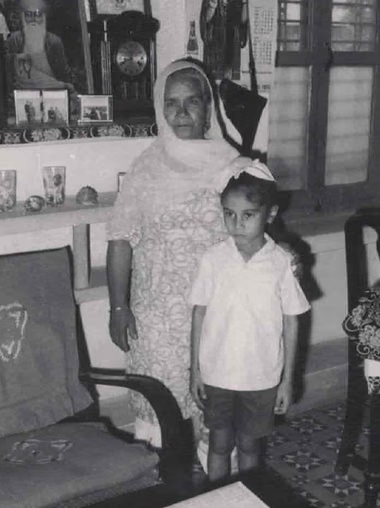
At age 9, on Christmas Eve 1968, Avtar flew alone to Halifax, Nova Scotia, to join his father and the family he had been told were waiting for him. He spoke no English. Over time, he learned the language, changed his childhood nickname from Titu to the more Canadian-sounding Tito and settled into his new life.
Questions about his mother never settled with him.
Years later, when Avtar’s own son needed information for a family-tree assignment, Avtar pressed his father for a name. His father finally gave him one: Savinder. Nothing more followed.
The search stretched across years. Avtar looked online, traveled to the National Archives at Kew in London in 2009 and contacted a British Asian radio station. He considered a television program about long-lost relatives, then decided against it.
There was too little to work with.
In Another Home, Savinder Was Still Saying His Name
Thousands of miles away, Savinder’s daughter Nicci Dhamu had grown up in a family that also kept parts of the past quiet.
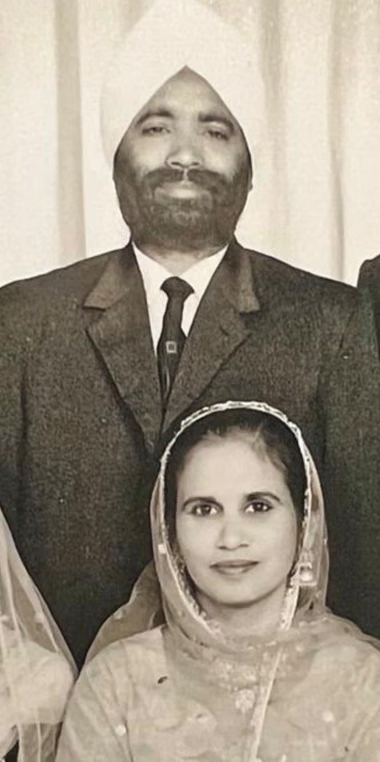
Nicci, now 58, knew her mother had lived in Kenya and later moved with the family to Britain in 1973. She didn’t learn until adulthood that Savinder had been married before.
Then an older cousin told her something else.
Savinder had a son.
Nicci learned that her mother had been married young in India and had raised the little boy until he was about 3. After that marriage broke down, family members told Nicci, the child went back to his father’s family and Savinder returned to Kenya alone.
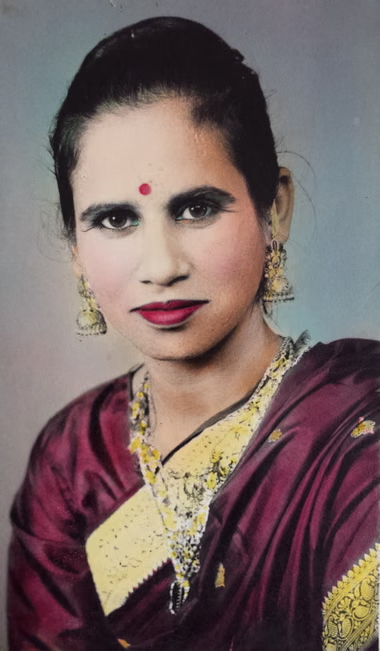
She never forgot him.
Relatives remembered Savinder taking out her son’s baby clothes and crying. During the last five years of her life, when she had dementia, old memories began surfacing again.
“Mera bacha,” she would cry. My child.
A few years before Savinder died, Nicci began trying to find that child. Her relatives could give her pieces of the story: her mother’s first husband was Mohan Singh, he had taught at a school in Amritsar, and the boy had been called Titu.
But no one knew his full name.
Nicci searched online, asked relatives questions and even created a DNA profile for her mother. After Savinder died in her sleep in December 2024 at age 88, Nicci kept looking. She traveled to Amritsar in April 2025 and visited the school where Mohan Singh had once taught.
Again, no one could tell her where Titu was.
Nicci Gave Her Mother the Voice She Never Had
After her mother’s death, Nicci did something that wasn’t meant to solve the mystery.
She wrote about Savinder.
“Mummy never really had a voice,” Nicci told The Guardian, which first reported the family’s story.
The piece celebrated her mother’s creativity and the life she had built. Nicci described it as a digital legacy for her mother and published it online through her jewelry brand, Sohavi, and on a South Asian Heritage Month website.
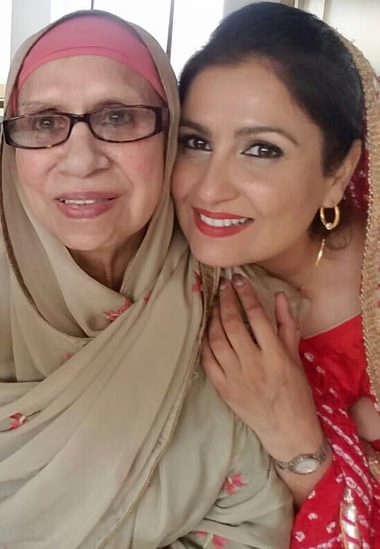
The tribute included family history and photographs. Among them was an image of a dressmaking certificate Savinder had earned at a college in Dhariwal, near Amritsar, in 1962.
Nicci had no way of knowing who might one day read it.
On May 8, 2026, Avtar was vacationing with his wife, Rosey, in the south of France after finishing cancer treatment. He tried one more online search, this time using ChatGPT to see whether it could locate a Savinder Kaur who matched the few facts he knew.
A result pointed him to Nicci’s tribute.
The name caught his attention. The photograph of Savinder did not bring instant recognition. Then Avtar saw the certificate.
Dhariwal.
It was the place where he had been born, and the certificate had been issued only a few years after his birth.
That was enough for him to write.
The Story Reached the Son It Was Missing
At 8:36 that morning, Avtar emailed Nicci and asked whether there might be a family connection.
The date carried another detail neither search could have planned: it would have been Savinder’s 90th birthday.
Within hours, they were speaking by phone. Nicci told him her mother had been married and divorced in India. Avtar asked whether she had a child.
She did. A son.
Then Nicci used the name almost no one in Avtar’s life still knew.
“Titu, is that you?”
Avtar and Rosey began to cry.
They spoke for two hours. Within days, Avtar and Rosey flew to London, where he met Nicci in person. She introduced him to Savinder’s surviving brother, who remembered Avtar from when he was small.
Avtar also met the younger half-brother he had never known he had and began connecting with maternal relatives in other countries. He and Nicci have decided they don’t need a DNA test to confirm what the family details already told them.
For Nicci, the reunion came with one absence that could not be fixed. Savinder had spent years mourning a son whose name her later children didn’t know. Nicci had tried to find him while her mother was alive, then wrote about Savinder because she wanted the woman she loved to have a voice after death.
That voice traveled farther than she expected.
Avtar now knows that his mother had kept his baby clothes, cried for him and carried his memory into the years when dementia was taking other things away. He also has the family Savinder left behind.
“It just feels so good to know that I was loved,” he said.