Beneath the Ozark Hills, One Family Built a Home from Stone and Desperation During America’s Hardest Years
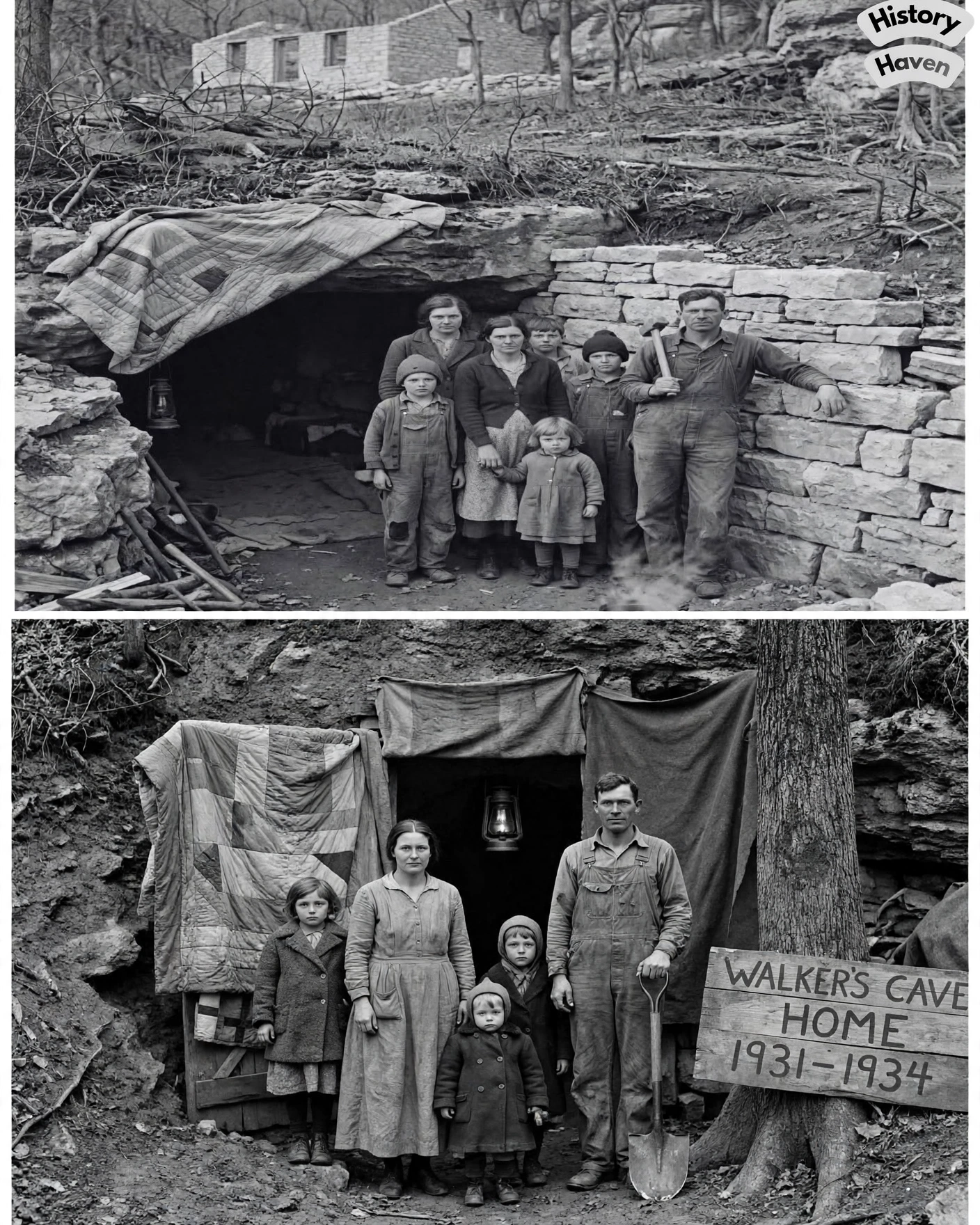
The wind howled across the hills, but inside the cave, there was warmth.
It wasn’t the kind of home most people would recognize—no painted walls, no wooden floors, no front door to close at night. Instead, there were rough stone surfaces, flickering light, and the steady determination of a father who refused to let his family go without shelter.
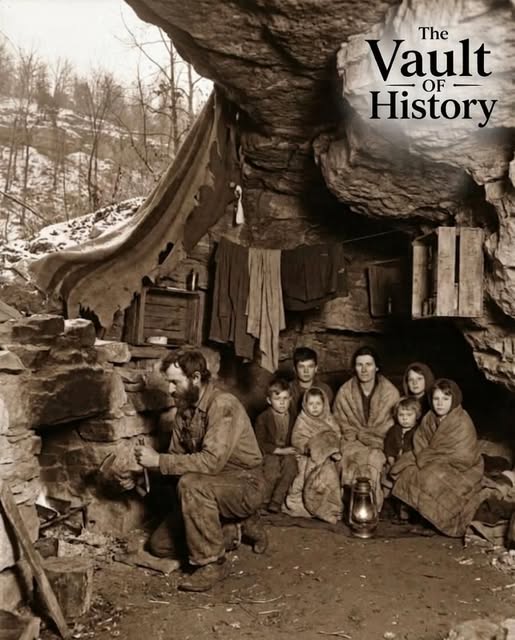
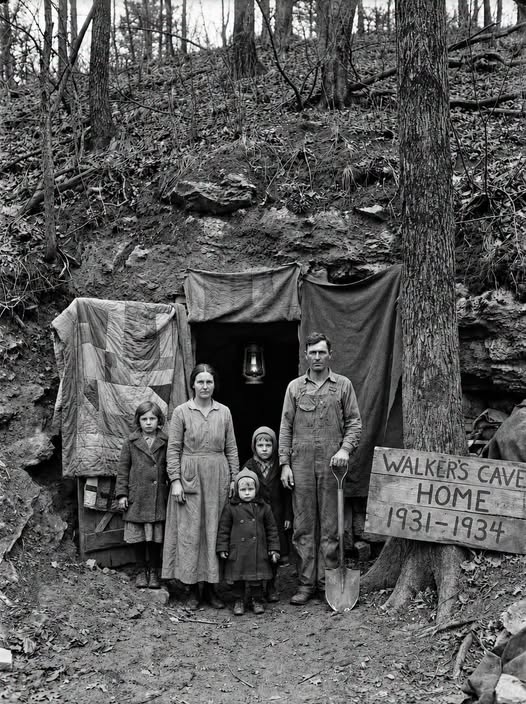
During the darkest years of the Great Depression, when millions of Americans were struggling just to survive, one family in the Ozark region found refuge in a place few would consider livable. Beneath the hills, inside a natural cave, they built a life out of necessity—and resilience.
The story began when economic collapse swept across the country in the early 1930s. Jobs disappeared almost overnight. Families who once had stability were suddenly left without income, without food security, and, in many cases, without a place to live.
For this particular family, the crisis became deeply personal.
The father, faced with the harsh reality of unemployment and limited options, had to make a decision. Traditional housing was no longer within reach. Rent could not be paid. Resources were scarce, and opportunities even scarcer.
But giving up was not an option.
Instead, he looked to the land around him.
The Ozark hills, known for their rugged terrain and hidden caves, offered something few places could provide during such desperate times: natural shelter. While others might have seen darkness and danger, he saw possibility.
The cave became their home.
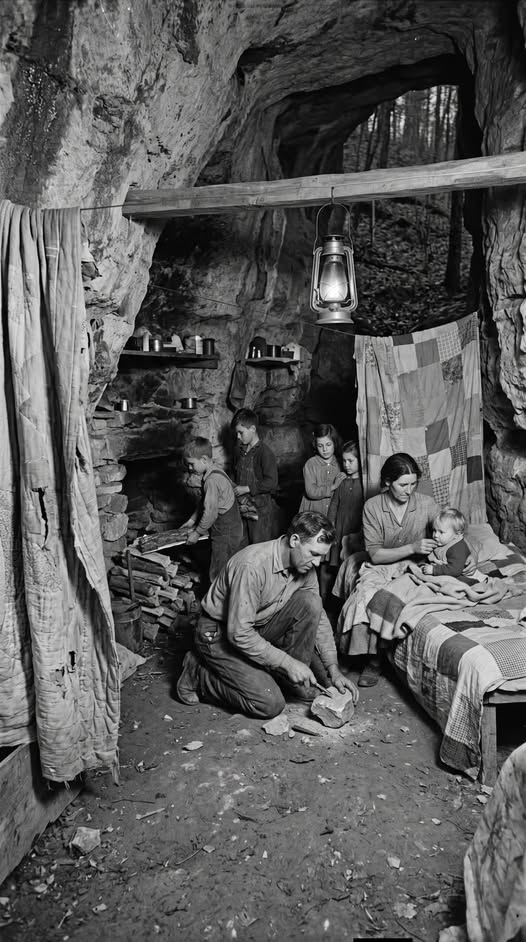
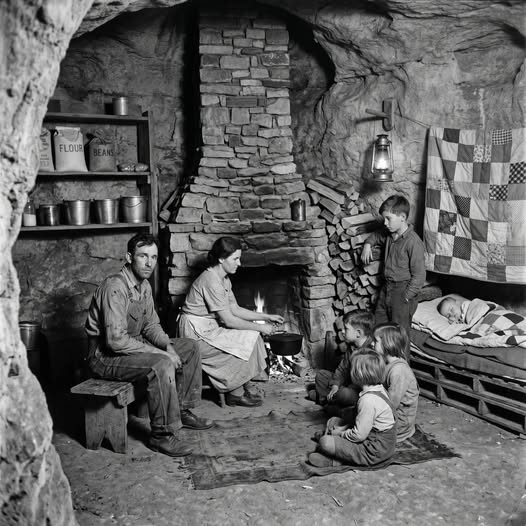
At first, it was little more than a place to escape the elements. The ground was uneven, the air damp, and the interior cold despite protection from the wind. But slowly, through effort and ingenuity, the father began transforming the space into something more livable.
He cleared areas for sleeping.
He created sections for cooking.
He worked to make the environment safer for his children.
Every improvement required time, creativity, and persistence—resources just as valuable as money during that era.
Life inside the cave was far from easy.
There were no modern conveniences. Water had to be gathered. Food was never guaranteed. Lighting came from simple sources, casting long shadows across the stone walls. The constant presence of moisture and the isolation of their surroundings added to the daily challenges.
Yet, within those limitations, the family found a way to endure.
The children adapted to their unusual home, learning to navigate the cave’s spaces as naturally as others might move through rooms in a house. What could have been a place of fear became, over time, a place of familiarity.
Outside, the world continued to struggle.
The Great Depression affected communities across the United States, forcing people into difficult choices. Some migrated in search of work. Others relied on government assistance or the help of neighbors. Many, like this family, turned to whatever solutions they could create on their own.
Their cave dwelling stood as a quiet reflection of that broader reality.
It was not simply a story of hardship, but of resourcefulness.
The father’s determination shaped the family’s experience. He refused to allow circumstances to define their future. Instead, he focused on what he could control—finding shelter, maintaining safety, and preserving a sense of dignity despite overwhelming odds.
His actions left a lasting impression on those around him.
Neighbors and local communities, aware of the family’s situation, often viewed their story with a mixture of sympathy and respect. Living in a cave was not a choice made lightly. It was a response to a crisis that offered few alternatives.
But within that response was something powerful.
The ability to adapt.
The strength to continue.
And the willingness to do whatever was necessary to protect loved ones.
Over time, the cave became more than just a shelter.
It became a symbol of survival.
The family’s daily life, though difficult, carried moments of normalcy. Meals were shared. Conversations echoed against stone walls. Children found ways to play, even in limited space. In many ways, the emotional bonds within the family grew stronger because of the challenges they faced together.
Hardship, rather than breaking them apart, brought them closer.
As the years passed and the country slowly began to recover from the Great Depression, opportunities gradually returned. Economic conditions improved, and families across America started rebuilding their lives.
For this family, the cave represented a chapter they would never forget.
It was where they endured one of the most difficult periods in modern history.
It was where a father’s determination turned desperation into shelter.
And it was where resilience took shape in the most unexpected of places.
Stories like this rarely appear in official records or economic reports. The Great Depression is often remembered through statistics—unemployment rates, financial collapse, national recovery.
But behind those numbers were countless individual experiences like this one.
Families who improvised.
Parents who sacrificed.
Children who adapted.
The cave in the Ozarks stands as a reminder that survival is not always defined by comfort. Sometimes, it is defined by creativity, perseverance, and the refusal to give up when circumstances seem impossible.
The father who chose that cave did more than find a place to live.
He created a space where his family could continue.
And in doing so, he proved that even in the harshest conditions, a home is not always built with walls—it is built with determination, care, and the will to endure.