Bob Mackie Dies at 87 From Pneumonia, Leaving Behind a Glittering Hollywood Legacy
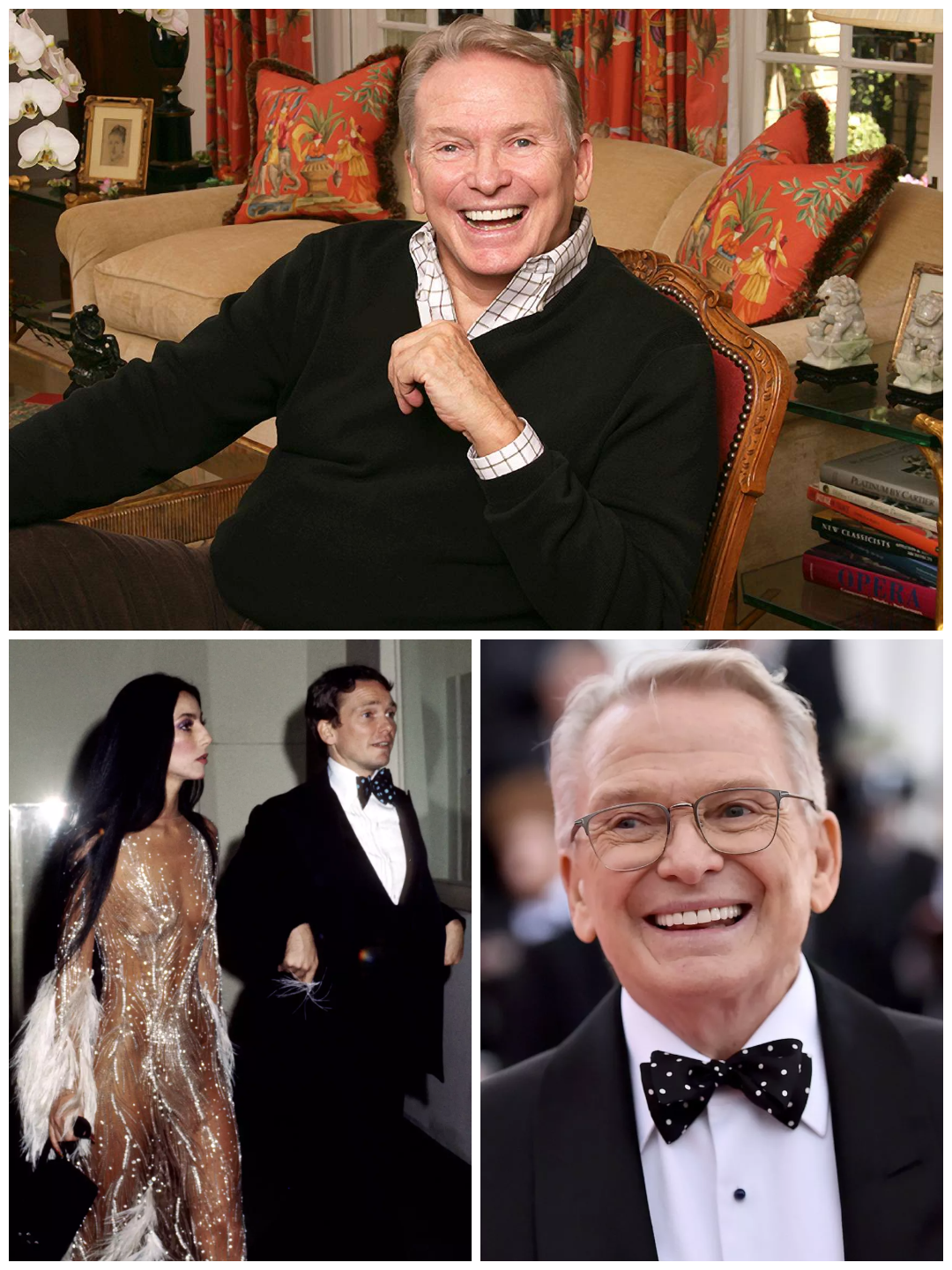
Bob Mackie, the legendary costume designer whose sequins, feathers and fearless silhouettes helped define some of the most unforgettable images in entertainment history, has died at the age of 87.
A representative confirmed that Mackie died from pneumonia on Sept. 14, 2026, in Palm Springs, California. His team announced his death in a statement saying that he had lived his 87 years “to the fullest” and had fulfilled the dream he carried throughout his life: becoming a fashion and costume designer.
For decades, Mackie was more than a designer.
He was one of the people who helped stars become icons.
Cher in a barely there beaded gown.
Carol Burnett descending a staircase in a curtain dress complete with the rod still attached.
Elton John taking the stage at Dodger Stadium in a crystal-covered baseball uniform.
Tina Turner in glittering stage costumes that seemed to move with her.
These were not simply clothes.
They became part of the cultural memory surrounding the performers who wore them.
Mackie’s career stretched across television, film, concert stages, Broadway and red carpets.
He worked with an extraordinary list of entertainers, including Cher, Carol Burnett, Tina Turner, Diana Ross, Barbra Streisand, Liza Minnelli, Bette Midler, Ann-Margret, Elton John and many others.
His specialty was spectacle.
He understood that when a performer stepped onto a stage or appeared on television, an outfit could communicate personality before the person said or sang a single word.
For Mackie, glamour was never supposed to disappear quietly into the background.
It was supposed to perform too.

His collaboration with Cher became perhaps the most famous of his career.
The two began working together in the early 1970s, during the period when Cher and Sonny Bono were becoming television stars. Mackie designed for The Sonny & Cher Comedy Hour, and the partnership quickly developed into one of fashion’s most enduring creative relationships.
Cher had the confidence and physical presence to wear clothes that many performers would never attempt.
Mackie had the imagination to create them.
Together, they pushed celebrity fashion into new territory.
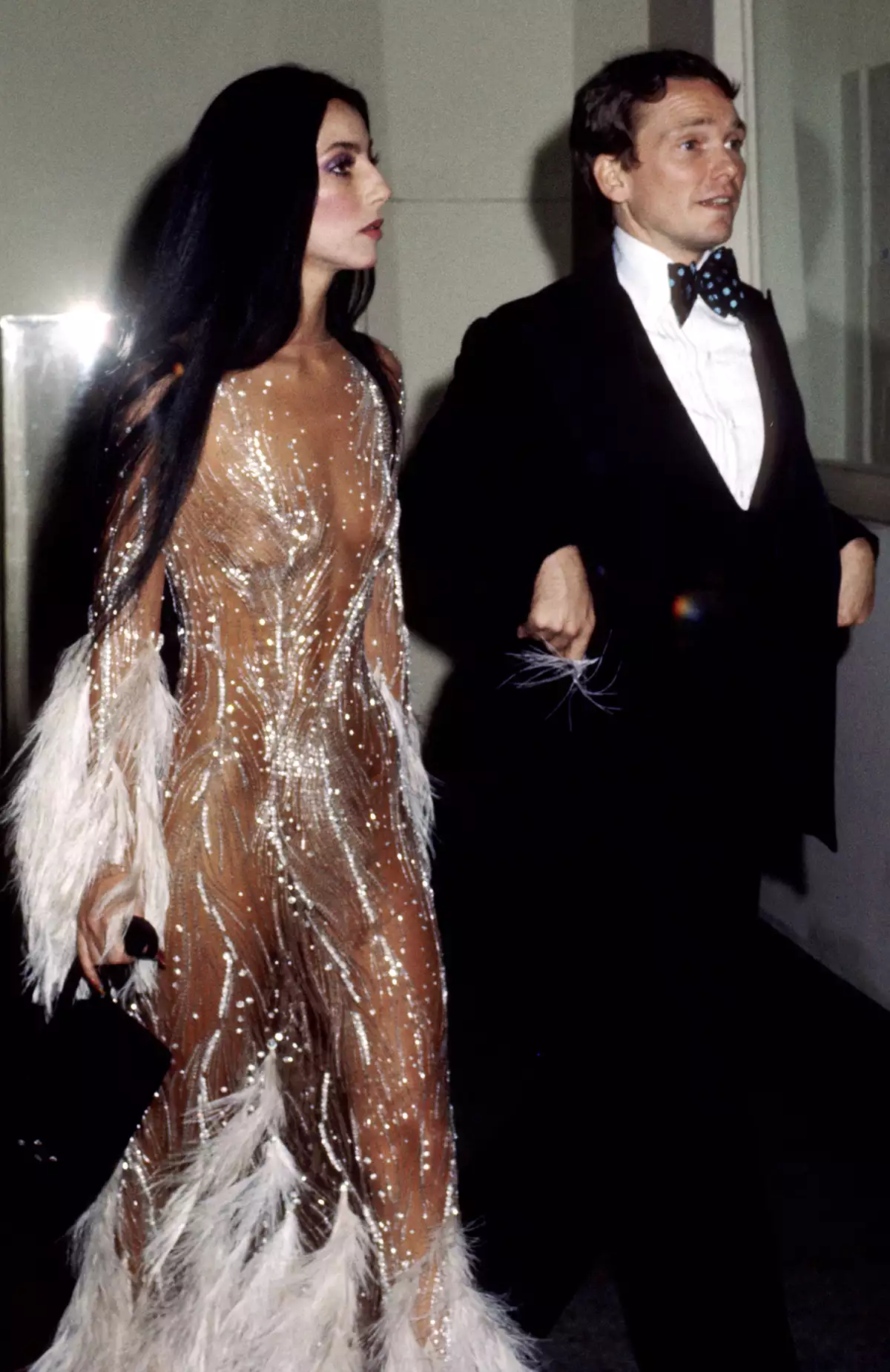
One of their most celebrated looks was the sheer, feathered ensemble Cher wore to the 1974 Met Gala. Years later, Mackie also created the dramatic black outfit she wore to the 1986 Academy Awards, with an enormous feathered headdress and exposed midriff.
The point was never simply to shock.
Mackie believed costume should amplify the personality of the person wearing it.
With Cher, that meant boldness, humor and absolute confidence.
Following his death, Cher remembered him warmly, calling him a “sweet Prince” and imagining him arriving in heaven with sequins, beads and his sketch pad.
But Mackie’s career cannot be reduced to Cher alone.
His work on The Carol Burnett Show demonstrated another side of his talent.
The costumes had to be glamorous one moment and hilariously ridiculous the next.
Perhaps no design illustrates that better than the legendary curtain dress from Burnett’s “Went With the Wind!” sketch.
The costume parodied the famous curtain-gown scene in Gone With the Wind. Burnett walked down the stairs wearing a green velvet “dress” with an entire curtain rod still stretched across her shoulders.
The visual joke became one of the most famous moments in American television comedy.
Mackie later said that audiences began laughing before Burnett even delivered the punch line.
That was the power of costume.
The joke was already visible.
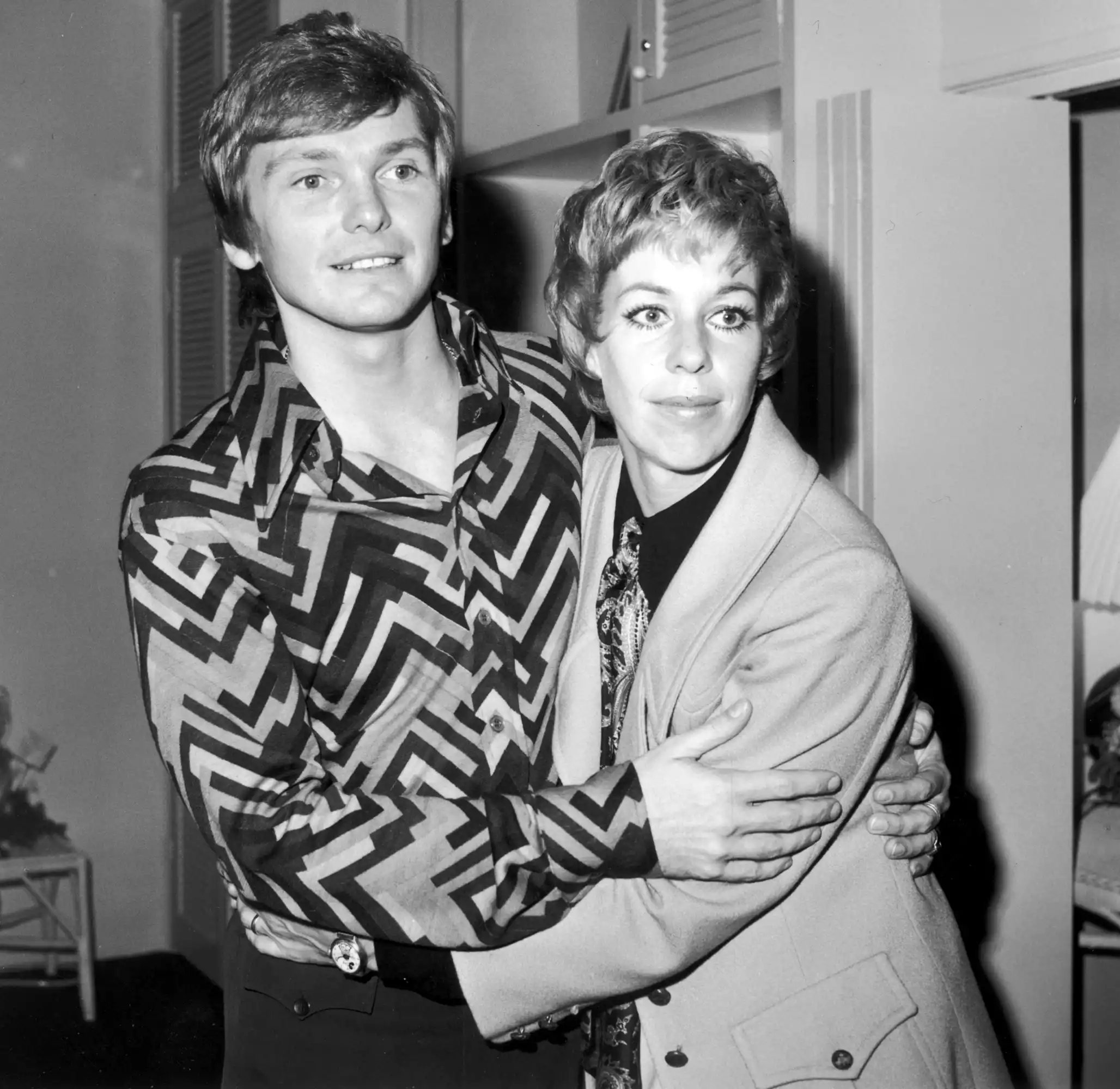
Over his years on The Carol Burnett Show, Mackie’s team sometimes had to produce dozens of costumes in a single week, an extraordinary pace that required creativity as well as technical discipline. Bernadette Peters later remembered Mackie as both brilliant and exceptionally talented, noting the scale of what he accomplished in television.
Recognition followed.
Mackie earned 32 Emmy nominations and won nine times. He received three Academy Award nominations for costume design and later won a Tony Award for The Cher Show, the Broadway musical that required him to recreate and reinterpret hundreds of looks from Cher’s career.
The Tony was particularly fitting.
By that point, Mackie was being honored not simply for designing new costumes but for recreating the history he had helped make.
His influence continued long after the height of 1970s television variety shows.
Modern performers repeatedly returned to Mackie’s archives.
Madonna wore a Marilyn Monroe-inspired Mackie gown at the 1991 Oscars.
Sabrina Carpenter later wore the same vintage piece to the 2024 MTV Video Music Awards.
Miley Cyrus purchased and wore archival Mackie designs, while younger stars and stylists increasingly treated his work as fashion history rather than simply old Hollywood wardrobe.
Even Marilyn Monroe’s famous “Happy Birthday, Mr. President” dress is connected to his early career. Mackie drew the original sketch while working under designer Jean Louis, long before Mackie himself became a household name.
There were also profound personal losses behind the public glamour.
Mackie’s son, Robin, died from AIDS-related complications in 1994.
His longtime partner, costume designer Ray Aghayan, died in 2011.
Yet Mackie continued working well into later life.
In January 2026, only months before his death, he was still making public appearances and remaining connected to the fashion world he had helped shape.
That longevity is significant because the entertainment industry around him changed dramatically.
The television variety shows that once employed enormous costume departments largely disappeared.
Celebrity styling became a separate profession.
Red-carpet fashion became a global online industry.
Yet Mackie’s visual language — sparkle, theatricality, body-conscious silhouettes, feathers and unapologetic glamour — kept returning.
Part of the reason may be that Mackie never treated glamour with embarrassment.
He understood its artificiality and enjoyed it.
He knew that feathers were feathers, sequins were sequins and stage costumes were fantasy.
That was exactly the point.
His clothes did not ask performers to look ordinary.
They gave them permission to look larger than life.
That philosophy is increasingly rare in an era when fashion can sometimes become overly serious.
Mackie’s work was serious in craftsmanship but joyful in effect.
A performer wearing Bob Mackie was supposed to make an entrance.
The designer himself once earned the nickname “the sultan of sequins,” though his legacy went far beyond glitter.
He understood television, movement, comedy, music and personality.
He designed for cameras as much as for bodies.
He knew that an outfit had only seconds to register with millions of viewers.
And again and again, his costumes did exactly that.
Mackie is survived by his former wife, Lulu Porter, his granddaughter Alyssa Townsend and his great-granddaughters Kyla and Keira Townsend.
His death closes one of the most influential chapters in American costume design.
But the images remain.
Cher beneath a mountain of feathers.
Carol Burnett with a curtain rod across her shoulders.
Elton John sparkling under stadium lights.
Tina Turner moving across a stage in fringe and crystals.
Those moments belonged to the performers.
But Bob Mackie helped make them unforgettable.
At 87, the man behind the sequins is gone.
The glamour he created is not.