Caleb Flynn Trial Opens With 100,000 Messages, a Missing Gun and Questions About Alleged Home Intruder

Jurors in the murder trial of former American Idol contestant Caleb Flynn heard dramatically different explanations Friday for how his wife, Ashley Flynn, was shot to death inside the couple’s Ohio home.
Prosecutors say the 40-year-old former worship pastor killed Ashley while she was sleeping, staged the scene to resemble a home invasion and then called 911 claiming an unknown intruder had entered the house.
Flynn’s defense says investigators focused on him too quickly after discovering his years-long affair and constructed a murder theory around damaging personal messages rather than direct forensic proof.
The opening day of testimony on Sept. 18 gave jurors their first detailed look at the evidence surrounding Ashley’s death, including Flynn’s emotional 911 call, police body-camera footage, the location of two spent shell casings, an apparently missing 9mm handgun and extensive searches that investigators say failed to identify an intruder fleeing the property.
Flynn has pleaded not guilty to charges including aggravated murder, murder, felonious assault, tampering with evidence and intimidation of a witness, attorney or victim.
Prosecutors Reveal More Than 100,000 Messages
One of the most significant revelations came before the first witnesses were called.
Prosecutor Paul Watkins told jurors investigators recovered more than 100,000 messages exchanged between Flynn and a woman prosecutors describe as his longtime mistress during the year before Ashley’s death.
The woman has not been charged with wrongdoing.
According to prosecutors, some of those messages went far beyond complaints about an unhappy marriage.
In one message presented during opening statements, Flynn allegedly described staying awake until 4 a.m. thinking about ways his wife could die without him going to prison.
In another, prosecutors say he wrote that if he could kill Ashley without going to hell, he would do it.
Perhaps most important to the state’s timeline is a message prosecutors say Flynn sent shortly before Ashley was killed in which he told the other woman, “I choose you. I’m free,” followed by a reference to actions occurring the next day.
The prosecution argues those messages provide evidence of motive and intent.
The defense argues they prove something very different: that Flynn was unhappy in his marriage and behaving badly, but not that he committed murder.
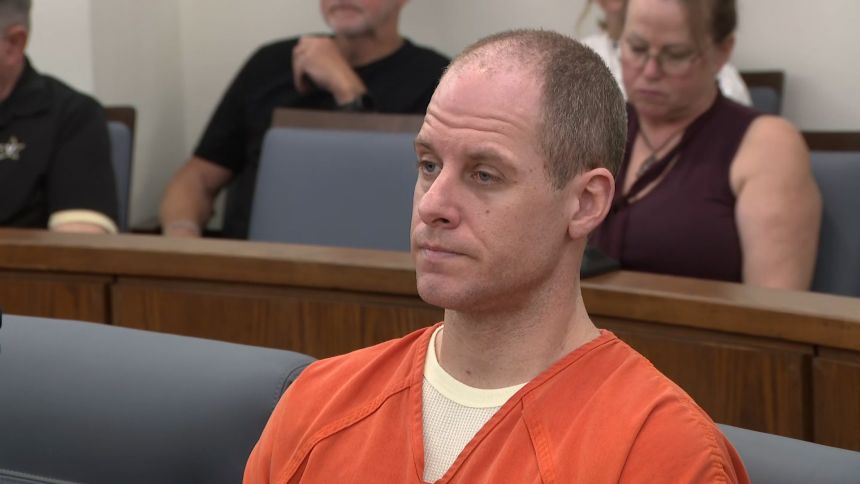
Defense Admits Affair but Rejects Murder Theory
Defense attorney Emily Smith did not attempt to excuse Flynn’s relationship with another woman.
She told jurors plainly that Flynn had betrayed his wife.
But she emphasized that infidelity is not evidence of homicide.
The defense says investigators developed “tunnel vision” after learning about the affair and began interpreting subsequent evidence in a way that supported a conclusion they had already reached.
Smith told jurors there is no eyewitness who saw Flynn shoot Ashley.
She also pointed to what the defense says is missing from the case: no recovered murder weapon, no gunshot-residue evidence establishing that Flynn fired a weapon and no fingerprint evidence directly tying him to the shooting.
The defense is expected to argue throughout the trial that prosecutors are attempting to turn motive and angry private communications into proof of an act they cannot directly connect to Flynn.
Ashley Was Found in Bed
The first police witnesses described what officers encountered after arriving at the Flynn home during the early morning hours.
Sgt. Corey Rismiller was among the first officers to arrive.
He testified that Flynn was outside and told police his wife had been shot twice and that the couple’s daughters were still inside.
When Rismiller entered the bedroom, he found Ashley in bed with severe trauma to the back of her head.
Two spent shell casings were found on the floor.
Prosecutors described Ashley’s position as significant.
They contend she appeared to have been sleeping when she was shot twice in the back of the head.
The state argues those circumstances are inconsistent with a random burglar entering the bedroom and unexpectedly encountering her.
The defense has not conceded that interpretation.
Flynn’s Emotional 911 Call Played for Jurors
Jurors also heard the emergency call Flynn made after discovering his wife.
During the call, Flynn told the dispatcher that someone had broken into the house and shot Ashley.
He repeatedly asked responders to hurry and said there was blood everywhere.
Flynn told the dispatcher that a door leading through the garage was open.
Body-camera footage recorded later showed him visibly distressed as officers searched the home.
Witnesses have described him crying, gagging and appearing overwhelmed.
The prosecution argues those reactions do not eliminate the possibility that the scene was staged.
The defense is expected to present Flynn’s behavior as consistent with a husband who had discovered his wife had been violently killed.
The Missing 9mm Handgun
A central piece of the state’s circumstantial case involves a firearm that investigators say has never been found.
When officers asked Flynn about weapons inside the home, he described several guns and told them a handgun was normally kept inside his truck.
Police later found the truck’s center console and glove compartment open.
Prosecutors say the 9mm handgun normally stored there was missing.
Investigators have never recovered the weapon used to kill Ashley.
The state argues the missing handgun is another piece of evidence pointing toward Flynn.
The defense emphasizes the opposite: without recovering the weapon, prosecutors cannot forensically establish that Flynn’s gun was the firearm used in the killing.
That disagreement is likely to become increasingly important when ballistics and forensic witnesses testify.
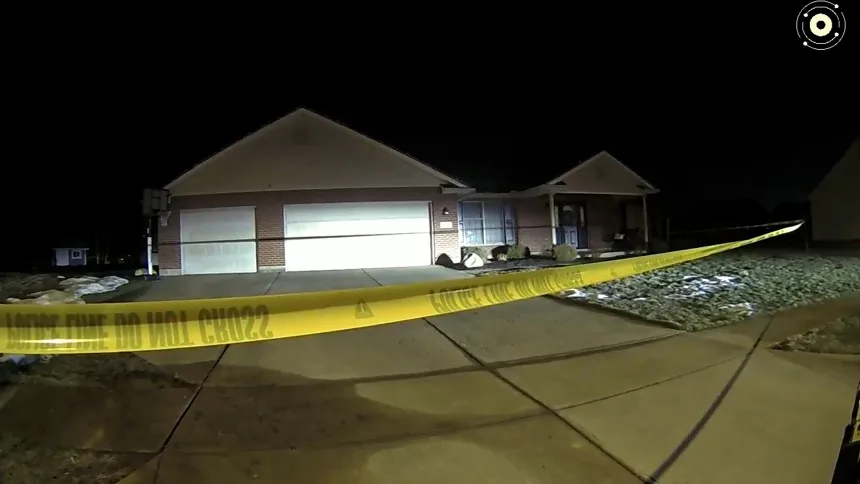
Police Found an Open Garage Door
Officer Alexandra Giampapa testified that she helped clear the residence and garage after responding to the scene.
During the search, officers found a side door in the garage open to the outside.
Flynn had told authorities he believed an intruder had escaped through the garage area.
The open door initially appeared consistent with at least part of his account.
But investigators say other evidence created problems for the intruder theory.
Officers searched the property and surrounding neighborhood.
A drone equipped to detect heat signatures was deployed over the area.
No fleeing person was detected.
Police also brought in a K9 team to search for a possible trail.
Police Dog Did Not Track a Suspect Away From the Home
Deputy Dave Laycock testified about using a police dog to search for evidence that someone had fled the property.
Investigators began the scent track near the side garage door.
But instead of following a path away from the house, the dog repeatedly pulled back toward the garage.
The K9 team searched around the perimeter and did not locate a scent trail leading away from the residence.
The prosecution is expected to use that result to argue that the supposed intruder may never have existed.
However, tracking evidence has limitations, and the defense will have an opportunity to challenge what conclusions can reasonably be drawn from the dog’s behavior.
FBI Agents Canvassed More Than 80 Homes
The search expanded beyond the Flynn property.
Federal agents joined local and state investigators and canvassed more than 80 nearby homes over several days.
Investigators sought security-camera footage, witnesses and anything that might show a person entering or leaving the neighborhood around the time Ashley was killed.
Prosecutors say the investigation failed to produce evidence supporting Flynn’s claim that an unknown attacker escaped from the home.
That absence forms part of the state’s larger theory that the open doors and disturbed areas were intentionally arranged to create the appearance of a burglary.
The defense contends investigators failed to adequately explore alternatives after deciding Flynn was their primary suspect.
Jurors Visited the Flynn Home
Before hearing much of the testimony, the jury was taken to the family’s Tipp City residence.
The defense had requested the visit, arguing that seeing the property in person would help jurors understand distances, sight lines and the layout described throughout the trial.
That firsthand look may become important as witnesses testify about the bedroom, garage, children’s rooms and possible paths an intruder could have taken.
The couple’s two daughters were home when Ashley was killed.
They are expected to testify later in the trial behind a partition intended to protect them from public view.
The woman prosecutors identify as Flynn’s mistress is also expected to take the stand.
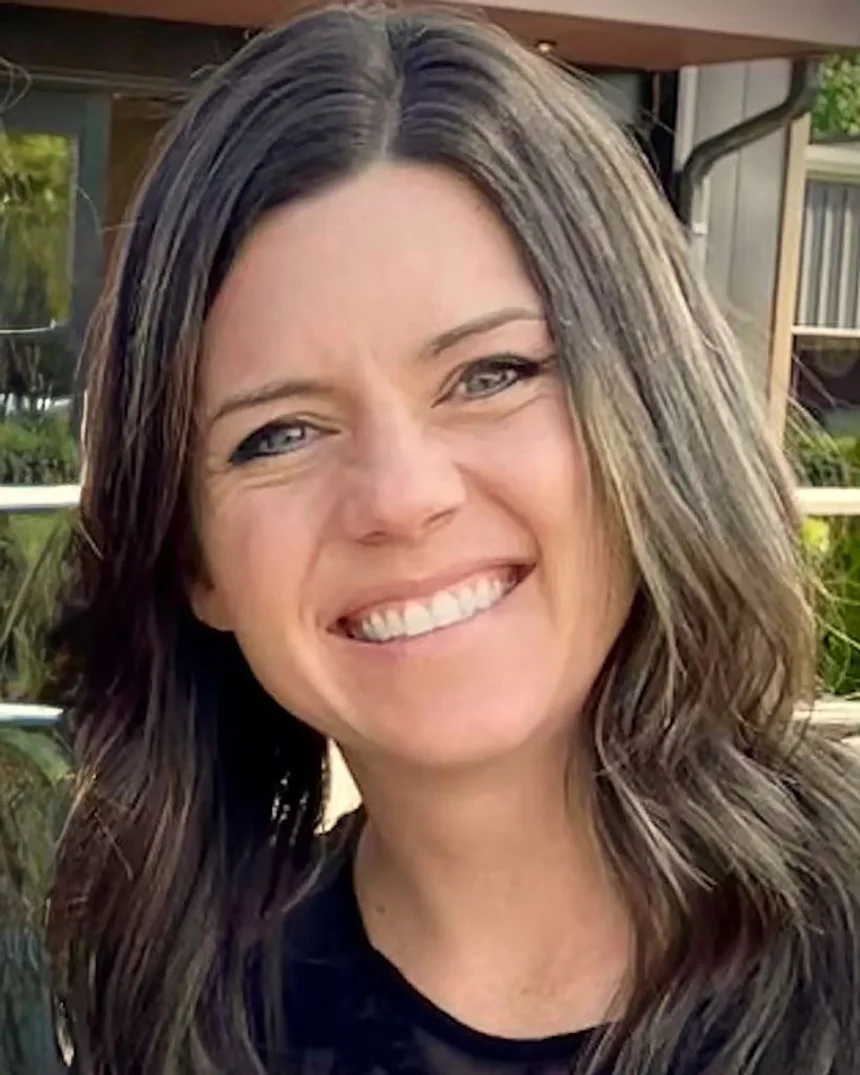
Ashley Flynn’s Life at the Center of the Case
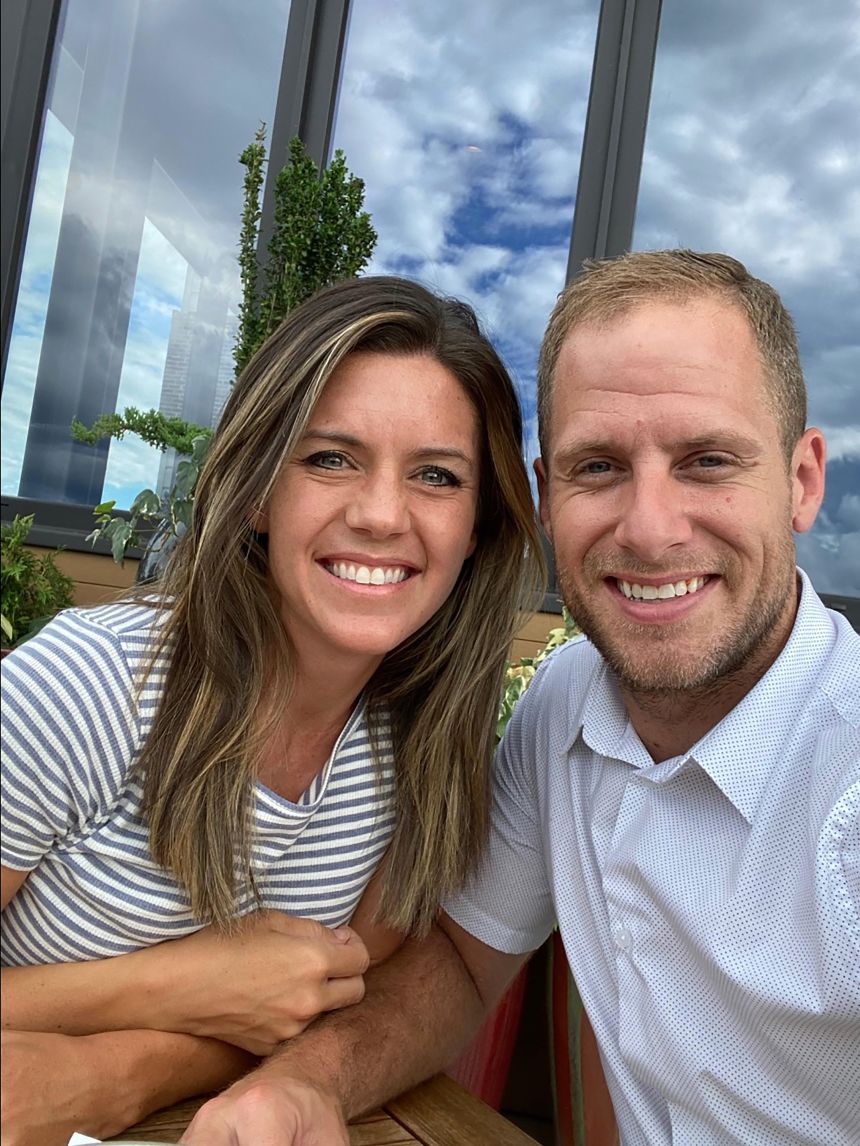
Ashley, 37, was known in the Tipp City community as a mother, substitute teacher and youth sports coach.
She and Caleb had been married for nearly 16 years.
Years earlier, when Flynn appeared briefly on American Idol in 2013, he publicly credited Ashley with encouraging his music ambitions and spoke enthusiastically about his love for her.
The contrast between those old public comments and the private messages prosecutors introduced Friday is likely to become a recurring theme during the trial.
Still, the legal question facing jurors is narrower.
They are not being asked whether Flynn was a faithful husband or whether he privately resented his wife.
They must determine whether prosecutors can prove beyond a reasonable doubt that he was the person who killed Ashley and then manipulated the crime scene.
Two Competing Stories
After the first day of evidence, the two sides have established sharply different narratives.
Prosecutors say Flynn wanted a future with another woman, wrote repeatedly about wanting Ashley gone, used a missing handgun to shoot his sleeping wife and manufactured an intruder story afterward.
The defense says police discovered an affair, treated Flynn as the obvious suspect and then worked backward while failing to produce the direct forensic evidence necessary to prove murder.
The trial is expected to continue with testimony from investigators, forensic experts, family members, the couple’s daughters and Flynn’s alleged mistress.
For now, Flynn remains presumed innocent.
But after only one day of testimony, jurors have already been confronted with the central question that will define the case: whether the open garage door represents the escape route of an unidentified killer — or part of a staged scene designed to make them believe one existed.