Farrah Fawcett’s Famous Red-Swimsuit Poster Almost Looked Completely Different
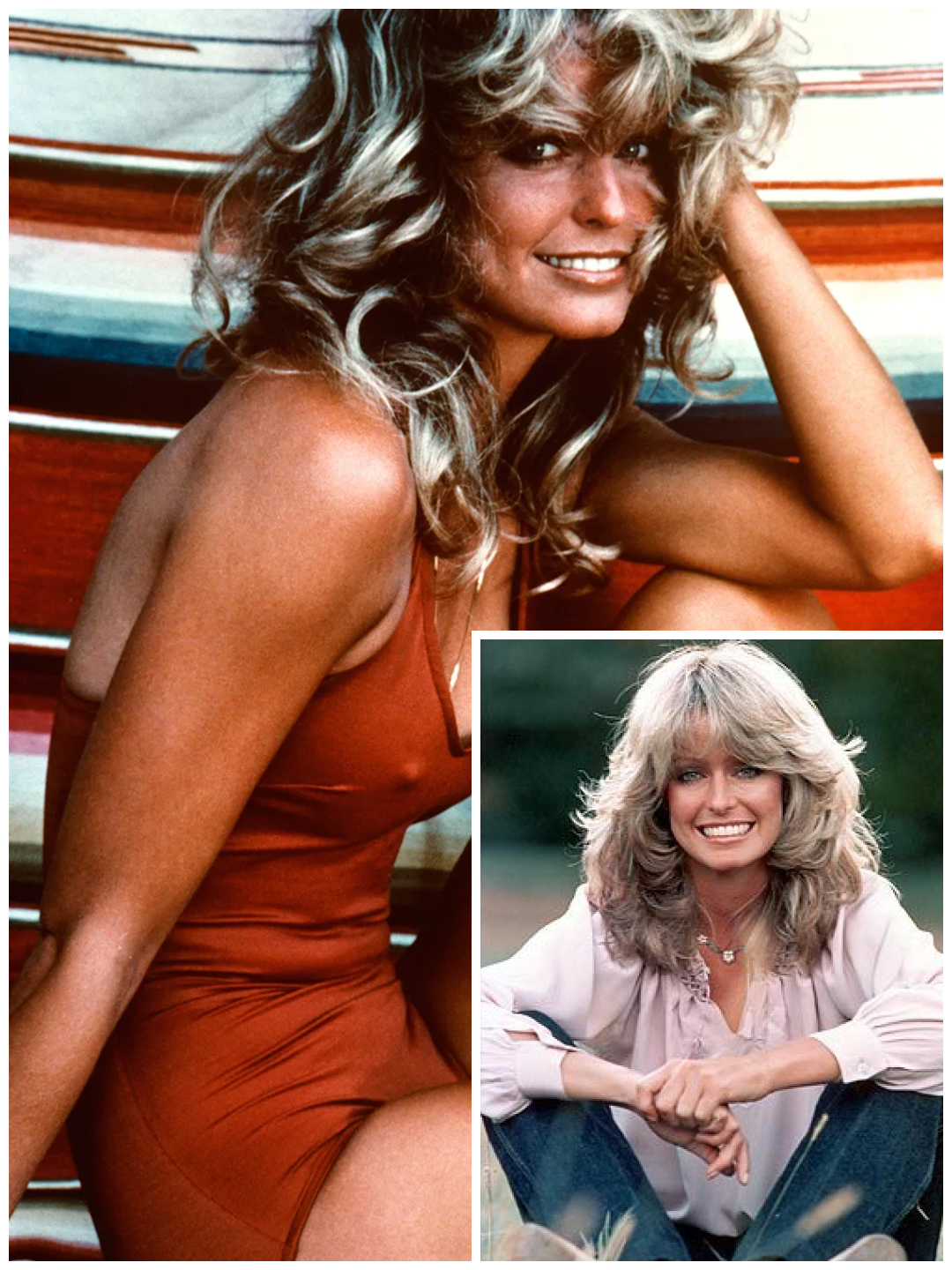
Few photographs captured the 1970s as completely as Farrah Fawcett smiling into the camera in a red one-piece swimsuit.
The image ended up on bedroom walls across America, helped turn Fawcett into an international star and eventually became the bestselling poster of all time.
But the photograph almost never existed.
The 1976 shoot that produced it was not an elaborate Hollywood production with stylists, assistants and carefully designed sets. In fact, photographer Bruce McBroom remembered spending much of the session convinced that they simply were not getting anything good enough.
He shot roll after roll.
Nothing felt right.
Eventually, he asked Fawcett whether she had something different to wear.
She disappeared into the house.
Then she came back wearing a red swimsuit she already owned.
McBroom took one look at her and knew the entire shoot had changed.
The Assignment Was Originally Supposed to Be a Bikini Poster
At the time, Fawcett had not yet become the full-blown Charlie’s Angels phenomenon America would soon know.
McBroom was already familiar with her, however.
He had met Fawcett through Lee Majors, her then-husband, and had photographed her before. McBroom was also shooting still photography for ABC and had taken promotional photographs connected to the Charlie’s Angels pilot.
Then a poster company approached Fawcett with an offer.
The basic idea was straightforward: photograph her in a bikini and sell the resulting image as a poster.
Fawcett agreed, but with an unusually important condition.
She wanted control over the final photograph.
According to McBroom, previous photographers had already tried shooting her, and Fawcett had rejected the results. She eventually insisted that the company call McBroom instead.
That decision ended up being crucial.
So did her refusal to simply wear what everyone else expected.
Farrah Didn’t Think She Looked Good in a Bikini
The poster company may have envisioned a bikini photograph, but Fawcett did not.
McBroom later recalled that she did not like how she looked in bikinis and did not even have one ready for the shoot.
Instead, she kept going inside the house and emerging in different swimsuits.
The shoot took place at the Mulholland Drive home Fawcett shared with Majors.
There was no professional styling team.
Fawcett did her own hair and makeup.
McBroom had his Nikon camera.
That was essentially the production.
They tried different locations and backgrounds around the property, including the swimming pool.
McBroom kept taking photographs.
But the feeling photographers sometimes describe as simply knowing they have the image never arrived.
He later compared a photo assignment to fishing: sometimes you know you have caught something, and sometimes you know you have missed.
This felt like a miss.
Fawcett was obviously beautiful, but McBroom did not see a photograph that could carry an entire poster.
Then they started running out of ideas.
One Question Changed Everything
Eventually, McBroom asked Fawcett whether she was certain she did not have a bikini — or at least something different.
Fawcett went back into the house to look.
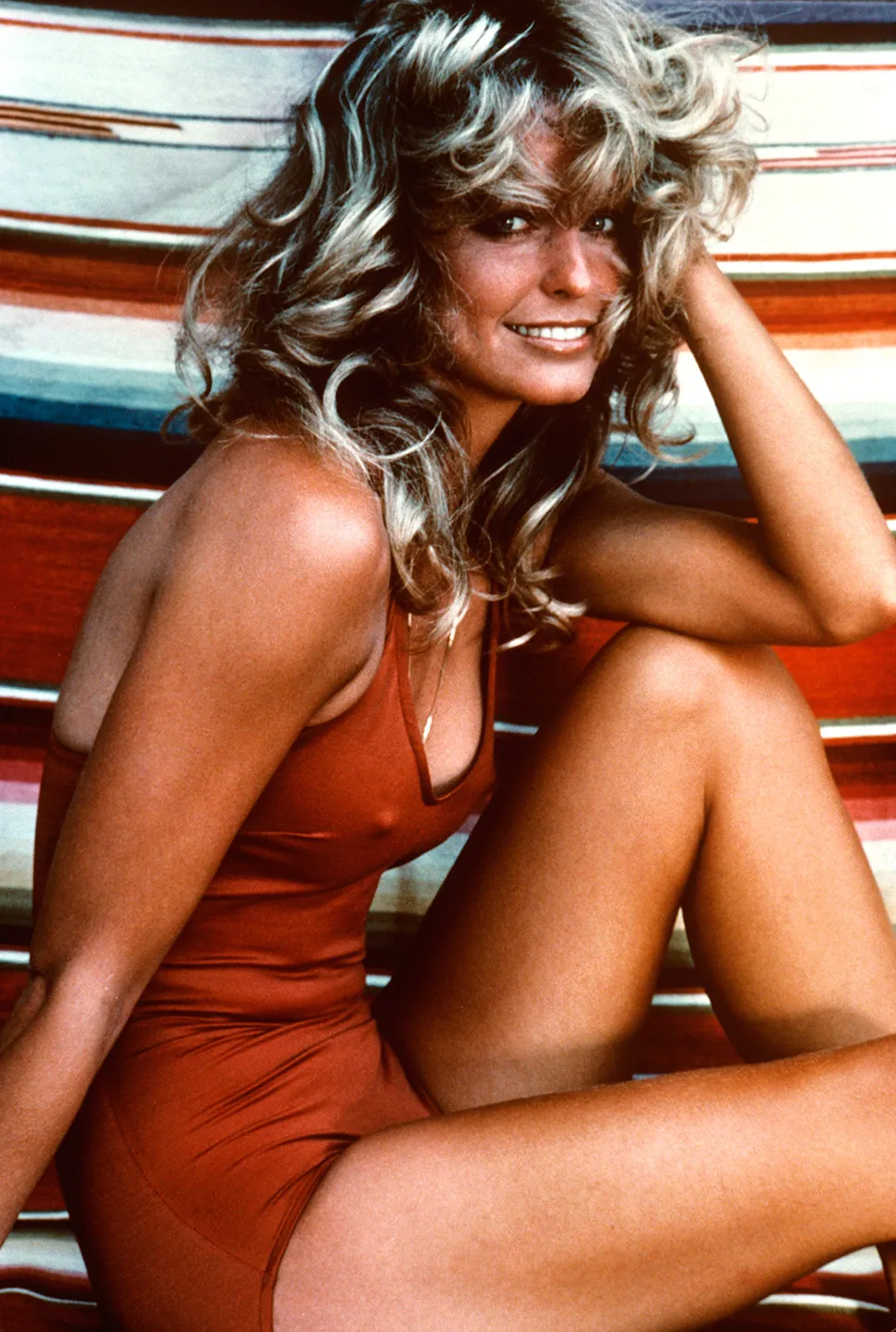
When she returned, she was wearing the red one-piece.
According to McBroom, she stood in the doorway and casually asked whether the suit might work.
His internal reaction was immediate.
This was it.
There was something about the color, the cut and the way Fawcett looked in it that suddenly made the session feel completely different.
The swimsuit was Fawcett’s own.
There had been no elaborate wardrobe plan.
And despite the image eventually becoming one of the defining examples of 1970s glamour, the background was equally improvised.
That Famous Blanket Came From an Old Pickup Truck
McBroom needed something behind Fawcett that would complement the bright red suit.
He remembered an Indian blanket from Mexico that he had with him.
It was not a studio backdrop.
He used it as a seat cover in his beat-up 1937 Chevrolet pickup.
The colors looked right.
So the photographer took the blanket from the truck and used it behind Fawcett.
McBroom later described the entire combination as a happy accident rather than some carefully conceived artistic plan.
That detail makes the finished image almost more remarkable.
A photograph that would eventually become part of the Smithsonian’s collection was built from Fawcett’s own swimsuit, her own hair and makeup, one photographer and a blanket being used to protect the seat of an old truck.
There was no enormous budget.
No focus group.
No fashion director.
The ingredients largely came from whatever happened to be available that afternoon.
McBroom Let Farrah Do the Rest
Once the swimsuit and blanket were in place, McBroom did not try to overdirect her.
He positioned Fawcett and encouraged her to bring her personality to the image.
That became another crucial element.
The poster is glamorous, but Fawcett is not staring at the camera with a carefully manufactured fashion-model expression.
She is smiling.
The photograph feels casual and approachable.
McBroom believed that quality helped explain why the poster became so popular. Fawcett could look glamorous without seeming remote.
She looked, in his words, like the girl next door.
After the film was processed, he knew there was a poster somewhere among the frames.
But McBroom was not the person who ultimately decided which photograph became famous.
Farrah did.

Farrah Chose the Final Picture Herself
Fawcett’s deal gave her approval over the image.
McBroom took the photographs back to her house and showed her the results.
She selected her favorites and ultimately chose the frame that became the poster.
That means nearly every famous element of the final image had come directly from her.
Her swimsuit.
Her hair.
Her makeup.
Her pose.
Her final selection.
McBroom later summarized it simply: the picture was largely Farrah’s creation.
Even the poster company was not initially convinced.
According to McBroom, the man who had commissioned the shoot complained that Fawcett was not wearing the bikini originally envisioned and initially disliked the photographs.
Other people in the business eventually changed his mind.
That turned out to be fortunate.
The Poster Sold More Than 12 Million Copies
Once released, the image became a phenomenon.
By March 1977, it had already sold 5 million copies, according to the Smithsonian.
Over time, sales surpassed 12 million, making it the bestselling poster of all time.
The timing was extraordinary.
The photograph was taken before Charlie’s Angels premiered in September 1976.
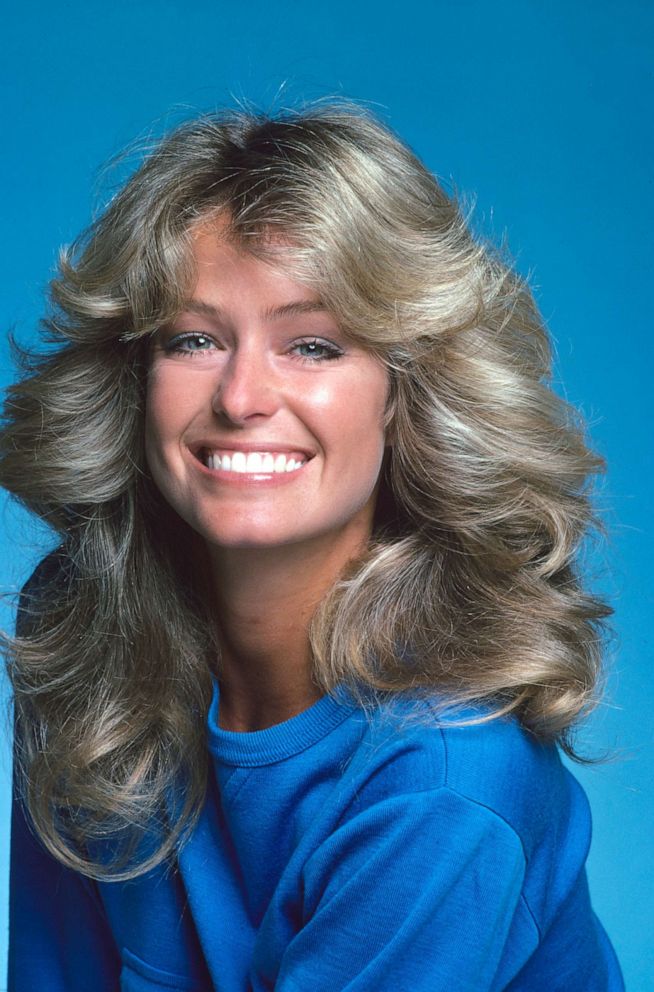
Fawcett’s role as Jill Munroe would soon make her one of television’s biggest stars, and her feathered hairstyle would inspire women across the country.
But the poster was already helping build the “Farrah phenomenon.”
Her face, hair and red swimsuit became visual shorthand for an entire era.
Other Charlie’s Angels stars subsequently pursued posters of their own, McBroom recalled.
None came close to matching Farrah’s.
The Swimsuit Eventually Became a Museum Object
Decades later, the outfit that had emerged almost accidentally from Fawcett’s closet acquired a very different status.
In 2011, objects from her estate were donated to the Smithsonian’s National Museum of American History.
Among them were the red swimsuit and an original copy of the poster.
The museum now describes the 1976 photograph as one of the most iconic images of the decade and notes that it helped propel Fawcett into global superstardom.
It is a remarkable destination for something that nearly never made it in front of McBroom’s camera.

The Iconic Image Was Built From Things That Weren’t Planned
Looking back, the poster feels so perfectly constructed that it is easy to assume a team of professionals must have designed every detail.
The reality was almost the opposite.
The bikini concept failed.
The early photographs were not working.
The famous swimsuit was something Fawcett already owned.
The backdrop came from a pickup truck.
She styled herself.
And then she chose the image.
That may be exactly why the photograph worked.
It was glamorous without looking overly engineered.
It captured Farrah Fawcett at the moment before enormous fame changed how the world saw her.
More than 12 million copies later, the red swimsuit became part of American pop culture.
But on the afternoon it was photographed, there was no guarantee anyone would ever see it.
A photographer thought the shoot was failing.
He asked Farrah if she had anything else.
She went inside.
And when she came back through the door in red, everything changed.