From Prisoner to Oscar Winner: How Robert Downey Jr. Rebuilt a Career Hollywood Had Nearly Abandoned
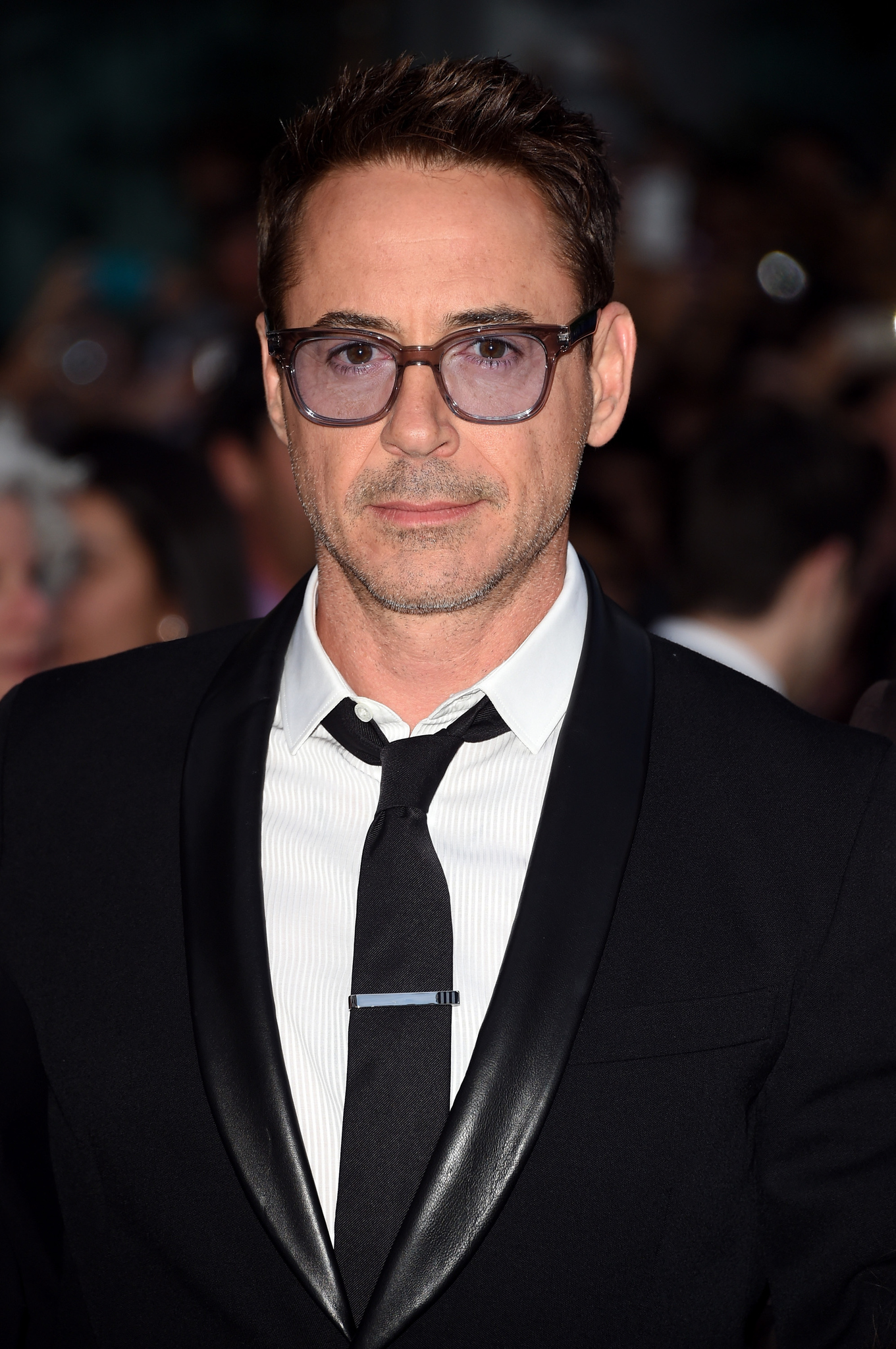
When Robert Downey Jr. stepped onto the Academy Awards stage on March 10, 2024, he was not simply accepting the first Oscar of his career.
He was completing a journey that once appeared impossible.
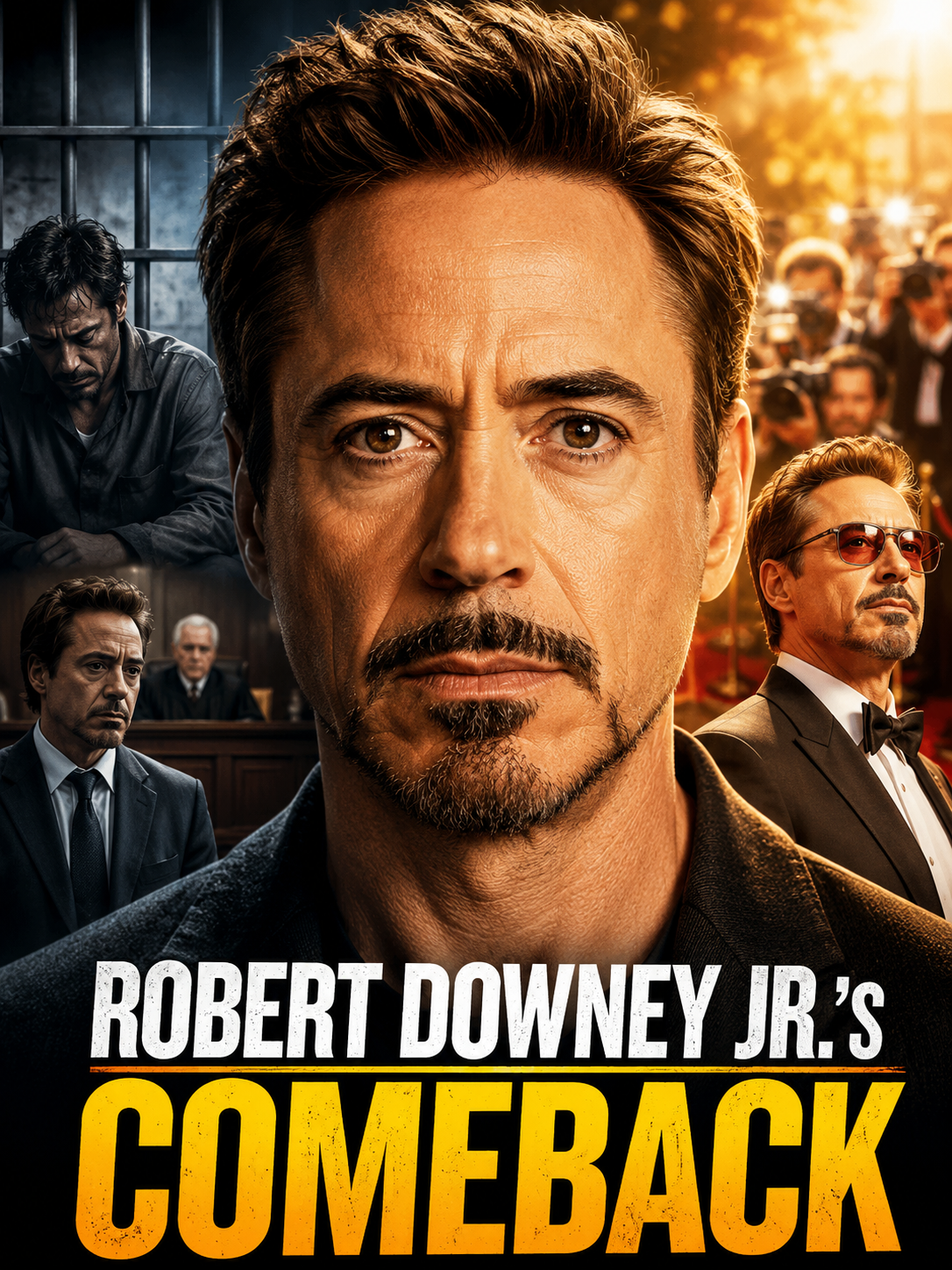
More than two decades earlier, Downey had been inside a California state prison, identified by an inmate number rather than the famous name that had once appeared above movie titles. His addiction had brought repeated arrests, broken professional commitments, lost roles, and public humiliation. Studios that admired his talent increasingly viewed him as an unacceptable risk.
Yet the actor who came close to losing everything eventually became the face of one of cinema’s largest franchises. Then, after leaving the superhero armor behind, he delivered a dark, controlled performance in Oppenheimer that finally earned him the industry’s highest acting honor.
His return was not built around one miraculous opportunity. It happened through recovery, relationships, professional trust, and years of proving that his past no longer controlled his future.
The Gift That Could Not Protect Him
Downey’s talent was visible almost from the beginning.
Born in Manhattan in 1965, he grew up around independent filmmaking as the son of underground director Robert Downey Sr. He appeared in his father’s films as a child and later left school to pursue acting full time.
By the 1980s, he was gaining recognition through movies including Weird Science and Less Than Zero. The latter cast him as a young man consumed by drug addiction—a role that would later appear disturbingly close to the struggles unfolding in Downey’s own life.
His reputation as a gifted performer continued to grow. In 1992, he portrayed silent-film legend Charlie Chaplin in Richard Attenborough’s Chaplin. The demanding performance demonstrated his physical precision, dramatic depth, and ability to disappear into a complicated historical figure.
It earned him his first Academy Award nomination for Best Actor.
Downey seemed positioned for a long and respected career. But talent could not shield him from the addiction that was becoming increasingly destructive.
Arrests, Relapses and a Career in Collapse
The most damaging period began publicly in 1996, when police stopped Downey for speeding and discovered cocaine, heroin, and a firearm in his vehicle. Soon afterward, while intoxicated, he entered a neighbor’s home and fell asleep in a child’s bedroom.
The incident became one of the most widely reported episodes of his decline.
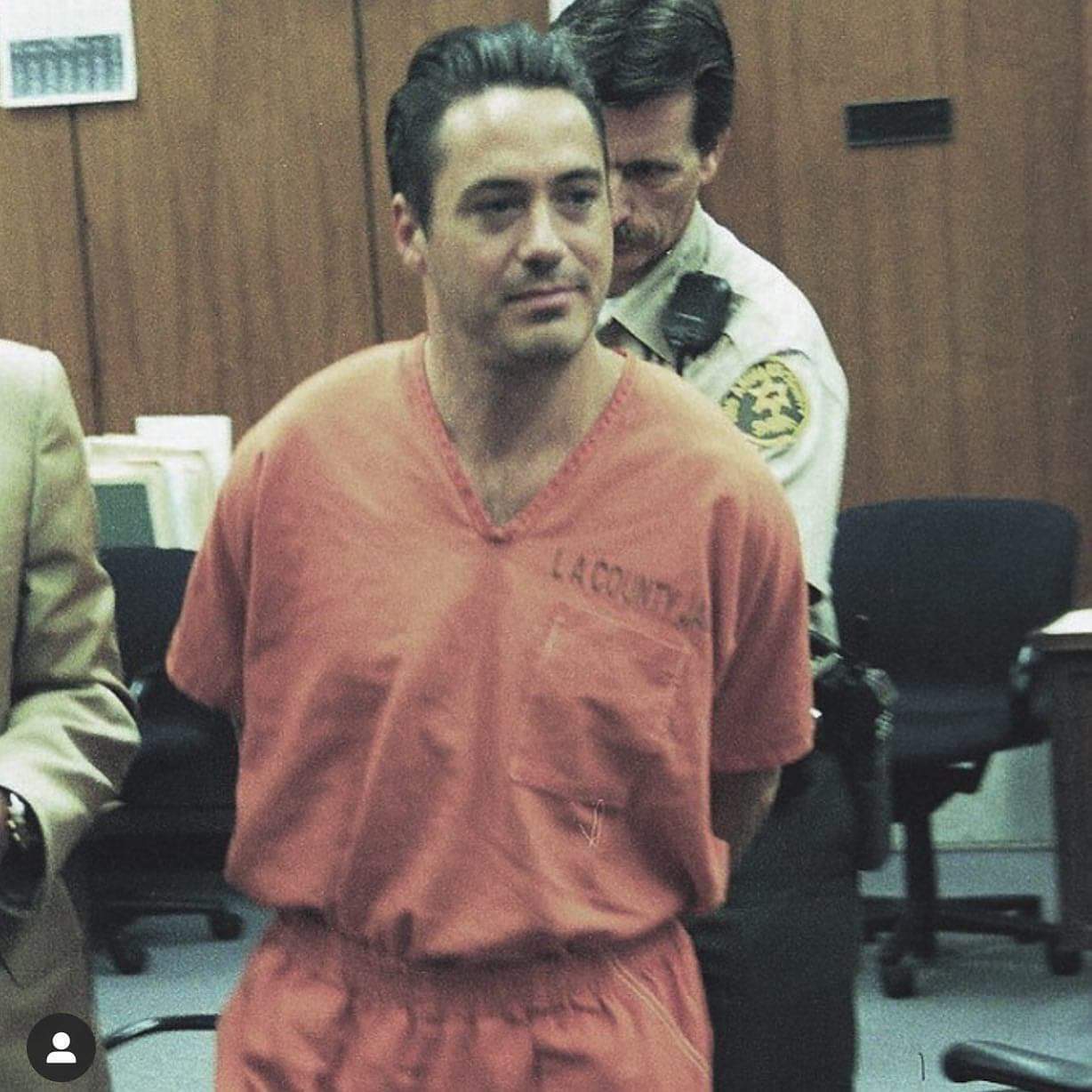
Court supervision, rehabilitation programs, and further arrests followed. Downey repeatedly received opportunities to recover, but he struggled to remain stable. After missing required drug tests, he spent months in Los Angeles County Jail.
In 1999, another missed test brought a far more severe consequence: a three-year prison sentence at the California Substance Abuse Treatment Facility and State Prison in Corcoran.
The acclaimed actor who had once played Chaplin was suddenly living under prison rules, performing assigned work and confronting the possibility that his career might be over. Accounts from that period described an environment in which his celebrity offered little protection from the fear, isolation, and vulnerability of incarceration.
Downey was released after serving roughly a year, and another remarkable opportunity soon arrived. He joined the television drama Ally McBeal in 2000, playing attorney Larry Paul. His performance was warmly received and earned him a Golden Globe.
For a moment, it looked like his comeback had already begun.
Then he was arrested again.
A second incident in 2001 led the show’s producers to dismiss him, forcing writers to remove his character and abandon plans that had placed him at the center of the series. The consequences were no longer confined to courtrooms. His instability disrupted productions, increased insurance costs, and made employers hesitant to hire him.
Hollywood still recognized the talent. It simply no longer trusted the man carrying it.
The Slow Work of Beginning Again
Downey has said that he finally committed to sobriety in 2003. Recovery, however, did not immediately restore the career he had lost.
Producers and insurers remembered the arrests, abandoned projects, and expensive uncertainty. He needed people willing to stake their own reputations and money on the belief that he had changed.
One of those people was Mel Gibson, who had worked with Downey on Air America. Gibson helped make Downey employable by supporting the insurance arrangement required for The Singing Detective, released in 2003.
The film did not transform Downey into a blockbuster star, but it reopened a door.
He began rebuilding through a series of performances that reminded audiences of his range. He appeared in Gothika, Kiss Kiss Bang Bang, Good Night, and Good Luck, A Scanner Darkly, and Zodiac. These roles were not merely steps back toward visibility. They allowed him to demonstrate that he could arrive, work, and complete a production reliably.
During this period, his personal life also became a source of stability. Downey met producer Susan Levin while making Gothika. They married in 2005, and he has repeatedly credited her as a crucial force in the life he built after addiction.
There was no single morning when the damage disappeared. Trust returned gradually, one job and one decision at a time.
The Role That Changed the Balance
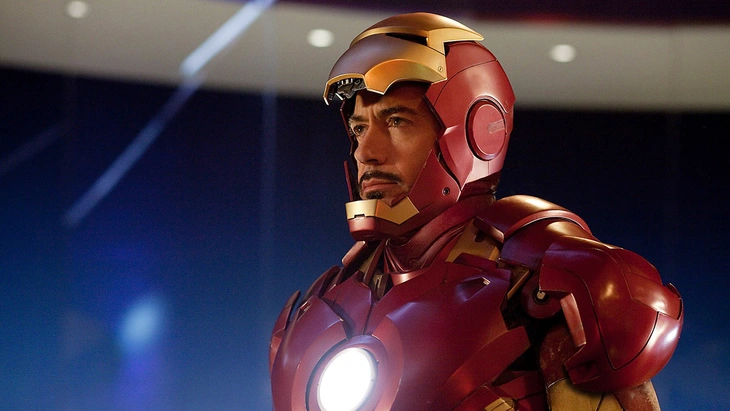
By the time Marvel Studios began preparing Iron Man, Downey had repaired much of his life—but he was still an unconventional choice to lead an expensive superhero movie.
Marvel was attempting to launch its own interconnected film universe. The studio needed an actor capable of playing Tony Stark, a brilliant weapons manufacturer whose arrogance, self-destruction, humor, and capacity for change drive the story.
Director Jon Favreau believed Downey was uniquely suited to the role.
The resistance was understandable from a business perspective. Downey’s past remained part of his professional identity, and Iron Man carried enormous financial importance. But Favreau continued advocating for him. A screen test helped settle the argument: Downey’s intelligence, speed, vulnerability, and wit made his connection to Tony Stark difficult to deny.
Favreau later recalled that once the camera captured Downey in the role, the choice became effectively undeniable.
Released in 2008, Iron Man became a commercial and critical success. Downey did not play Stark as a flawless hero. He made him funny, damaged, egotistical, restless, and unexpectedly human.
The similarities between actor and character gave the performance additional weight. Tony Stark had survived his own destructive choices and emerged with a chance to become useful again. Downey understood the emotional architecture of that transformation.
The film launched the Marvel Cinematic Universe and turned him into a global star.
He returned as Stark across multiple movies, including the Iron Man sequels, four Avengers films, Captain America: Civil War, and Spider-Man: Homecoming. His performance became the emotional foundation of a franchise that reshaped the modern film industry.
At the same time, he expanded his renewed success beyond Marvel. Tropic Thunder earned him a second Academy Award nomination, while Sherlock Holmes established another major franchise.
The actor once considered too dangerous to insure had become one of Hollywood’s most valuable leading men.
Recognition Beyond Redemption
In 2015, California Governor Jerry Brown granted Downey a pardon for his 1996 felony conviction. The pardon did not erase the history, but it formally recognized the rehabilitation he had demonstrated after leaving the criminal justice system.
Still, the fullest artistic confirmation of his comeback arrived after his long tenure as Iron Man ended.
Christopher Nolan cast Downey as Lewis Strauss in Oppenheimer, asking him to suppress much of the charm and improvisational energy audiences associated with his most famous performances. Beneath carefully controlled mannerisms and restrained emotion, Downey revealed Strauss as a man driven by insecurity, ambition, and resentment.
The performance reminded audiences that the movie star inside the metal suit had always been a formidable dramatic actor.
At the 96th Academy Awards, Downey won Best Supporting Actor for the role. It was his first victory after three acting nominations and came more than 30 years after Chaplin had first brought him close to the prize.
The Oscar did not make his recovery real; he had already spent years proving that. Nor did professional success erase the people affected by his past behavior or reduce addiction to an inspirational plot device.
What the award represented was endurance.
Downey’s comeback was extraordinary not because Hollywood suddenly forgot what had happened, but because he built a new record strong enough to exist beside it. He accepted smaller opportunities, regained trust, sustained his recovery, and transformed the role that once looked like a dangerous gamble into the foundation of a cinematic empire.
When he finally held the Oscar, the distance between the prison cell and that stage could be measured in more than years.
It was measured in every choice required to travel from one to the other.