Julia Roberts Never Forgot the Advice Dolly Parton Gave Her on the Steel Magnolias Set
Julia Roberts Never Forgot the Advice Dolly Parton Gave Her on the Steel Magnolias Set
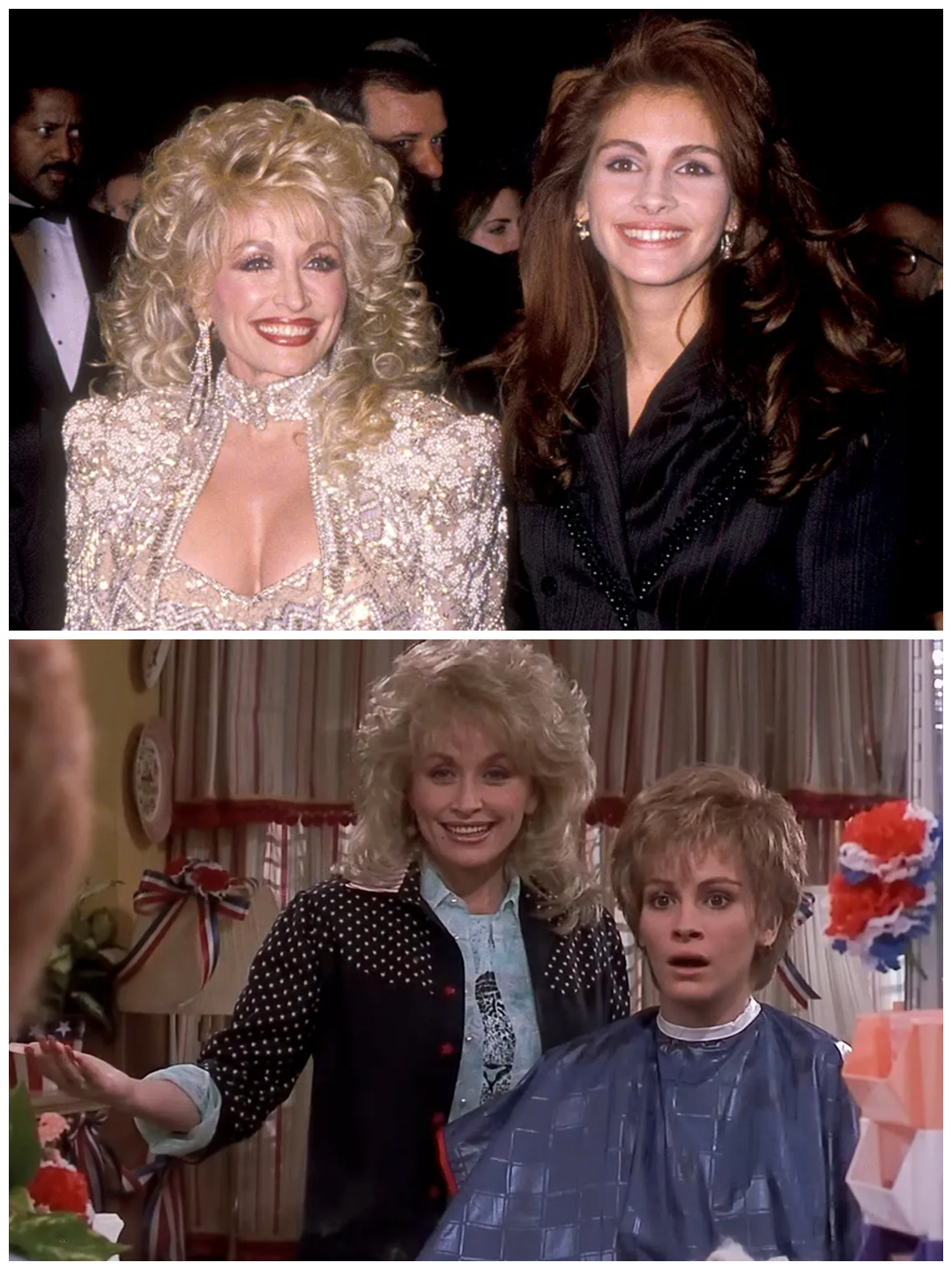
When Julia Roberts arrived in Louisiana to make Steel Magnolias, she was still near the beginning of her career.
She was only a few years into acting professionally, surrounded by women who were already major stars: Sally Field, Shirley MacLaine, Olympia Dukakis, Daryl Hannah — and Dolly Parton.
The production would become a breakthrough for Roberts. Her performance as Shelby Eatenton Latcherie earned her the first Academy Award nomination of her career and helped establish her as one of Hollywood’s most promising young actresses.
But one of the things she carried away from the movie had nothing to do with awards.
It was a sentence Dolly Parton said to her on a brutally hot day.
Roberts later revealed that she “never” forgot it.
The lesson was simple: if you once dreamed of becoming famous and successful, do not spend all your time complaining when that dream actually comes true.
Filming in Louisiana Was Brutal
Steel Magnolias was shot on location in Natchitoches, Louisiana, during an intensely hot summer.
Director Herbert Ross wanted the film to feel rooted in the real Southern community where Robert Harling’s story was set, so the production used actual locations and local residents rather than recreating everything on a Hollywood soundstage.
That authenticity came with a price.
Temperatures during filming could climb above 100 degrees, and the actresses were often working in costumes that were hardly designed for comfort in Louisiana heat.
Years later, Roberts remembered one especially miserable day.
Everyone was struggling.
People were putting ice on their wrists.
Cast and crew members were asking for water.
Complaints about the heat were everywhere.
Then Roberts looked at Parton.
Dolly was wearing exactly the kind of outfit anyone would expect Dolly Parton to wear: a wig, substantial clothing and all the carefully constructed glamour that had already become part of her identity.
Yet she was not complaining.
Roberts finally challenged her.
Surely Dolly had to be hot too.
Why wouldn’t she just admit that the conditions were awful?
Parton’s answer stayed with Roberts for decades.
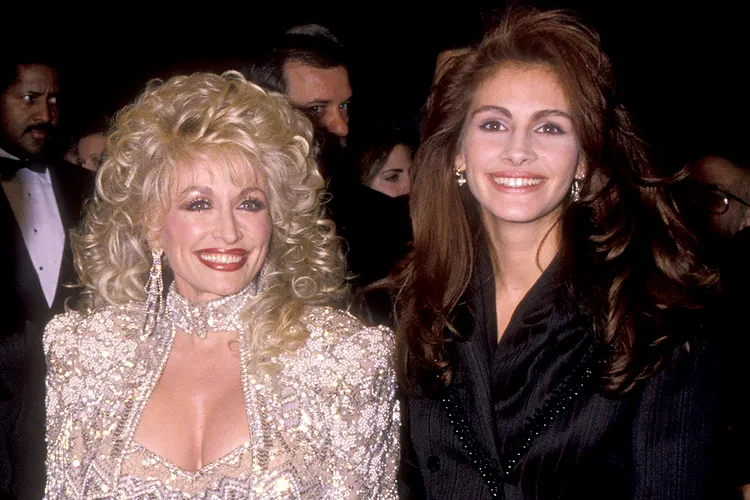
Dolly Said She Had Asked for This Life
Roberts recalled the exchange during a 1989 appearance on The Oprah Winfrey Show while the cast was promoting Steel Magnolias.
According to Roberts, Parton explained that when she was a little girl, she had dreamed of becoming famous.
She had dreamed of becoming rich.
Now she had achieved both.
So she was not going to complain about the inconvenience that came with the life she had wanted.
It was not a lecture.
That may be why Roberts remembered it.
Parton was simply explaining the rule she applied to herself.
The heat was real.
The wig was hot.
The work could be exhausting.
But from Dolly’s perspective, those problems existed because she had been fortunate enough to build exactly the career she once dreamed about.
Roberts said the message made an immediate impression.
She realized that Parton had a point.
Roberts Was Learning Much More Than Acting
The advice arrived at an important moment in Roberts’ life.
She was not yet the Julia Roberts who would soon become one of the biggest movie stars in the world.
Pretty Woman had not been released.
There was no Notting Hill, My Best Friend’s Wedding or Erin Brockovich yet.
During Steel Magnolias, Roberts was still proving herself.
Shirley MacLaine later recalled that Roberts had made only a few films when she joined the production, but that her star quality was obvious almost immediately.
Roberts was also entering a difficult working environment.
Ross was known for being extremely demanding with performers, and accounts from the production suggest that he was particularly tough on Roberts and Parton.
MacLaine later wrote that Ross tried to control Roberts’ appearance, including her hair, beauty marks and diet.
Roberts resisted.
The more established women around her noticed and supported her.
In that environment, Parton’s advice offered something different.
It was not about technique.
It was about perspective.
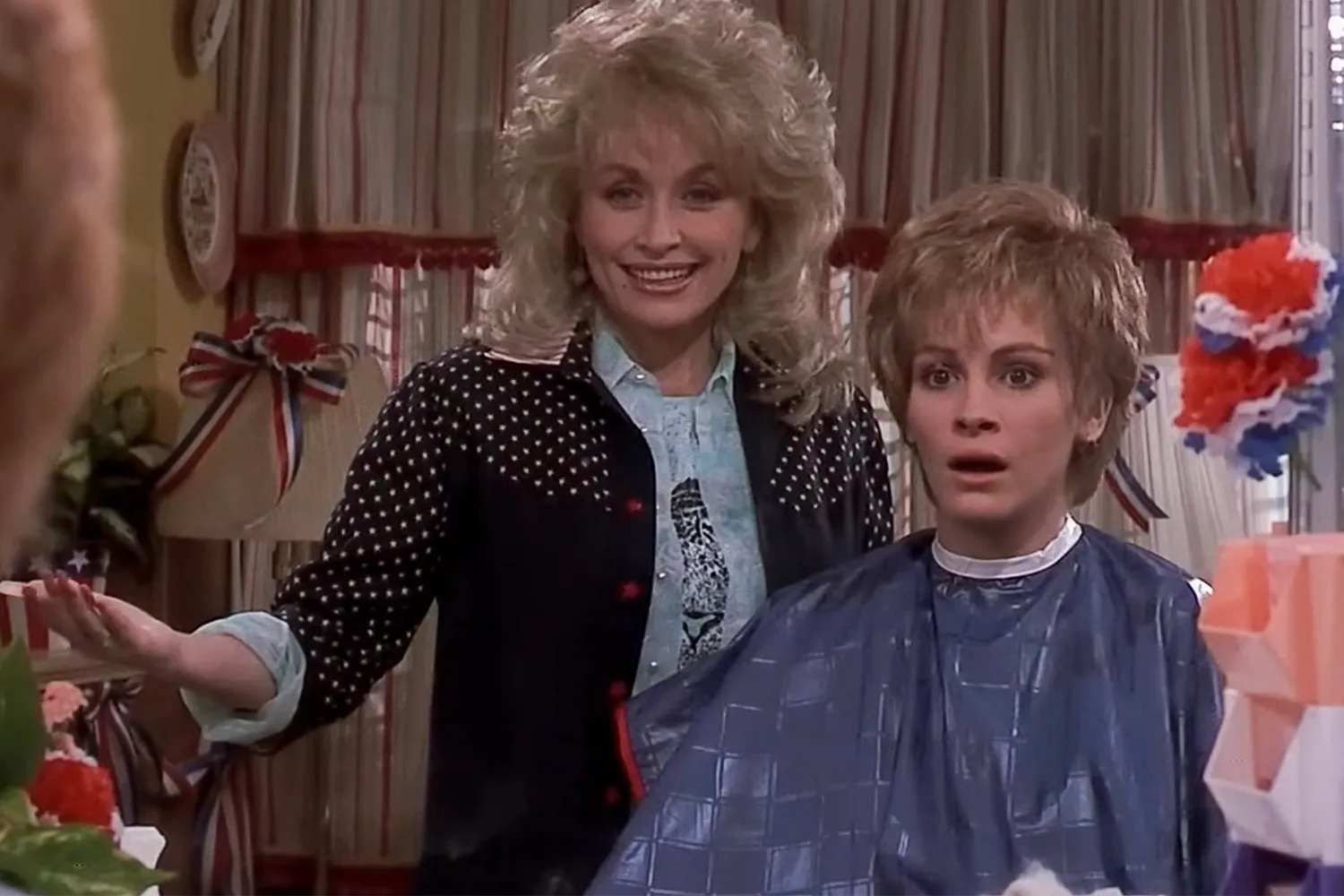
Dolly Was Having Her Own Problems With the Director
Parton was not simply floating through the production untouched by criticism.
She later said Ross told her directly that she could not act.
Her response became another famous Steel Magnolias story.
Parton essentially told him she already knew she was not a conventional actress. She had been hired because she was Dolly Parton, and if he was a good director, then it was his job to make her look like she could act.
The exchange shows why the advice she gave Roberts carried weight.
Parton was not preaching gratitude because everything was easy for her.
She was being criticized too.
She was hot too.
She was dealing with the same director and the same exhausting production.
She had simply decided that difficulty was not the same thing as injustice.
Some discomfort came with the opportunity.
And Dolly believed the opportunity was still worth appreciating.
The Women Became a Real Team
Despite the tension with Ross, the actresses themselves developed a remarkably close bond.
Parton later remembered that people seemed to expect trouble because so many strong female personalities were sharing one movie.
Instead, the opposite happened.
They supported one another.
MacLaine described the actresses as a “bonded team” who were there for each other through insecure moments and creative problems.
That connection became essential to the movie.
Steel Magnolias depends on viewers believing that these women genuinely know and love one another.
Parton played Truvy Jones, the owner of the beauty salon where much of their community life unfolds.
Roberts’ Shelby begins the film as a young bride preparing for marriage, but her story eventually becomes the emotional center of the movie.
Their characters were different generations.
Off camera, the relationship had some of the same qualities.
Roberts was surrounded by women who had already survived decades in show business.
She watched them.
She listened.
And sometimes, she remembered exactly what they said.
Roberts’ Career Soon Exploded
The timing of Dolly’s advice now seems almost prophetic.
A year after Steel Magnolias, Roberts became a global star with Pretty Woman.
Suddenly, the young actress who had been complaining about heat on a Louisiana porch was experiencing exactly the kind of fame Parton had described.
The attention became enormous.
So did the opportunities.
Roberts would eventually become one of the highest-paid and most recognizable actresses in Hollywood.
That makes Parton’s lesson even more relevant in hindsight.
Roberts had heard it before she truly understood what major stardom would feel like.
Parton already did.
She had spent years balancing touring, recording, interviews, business commitments and public expectations.
She knew fame could be tiring.
She also remembered wanting it.
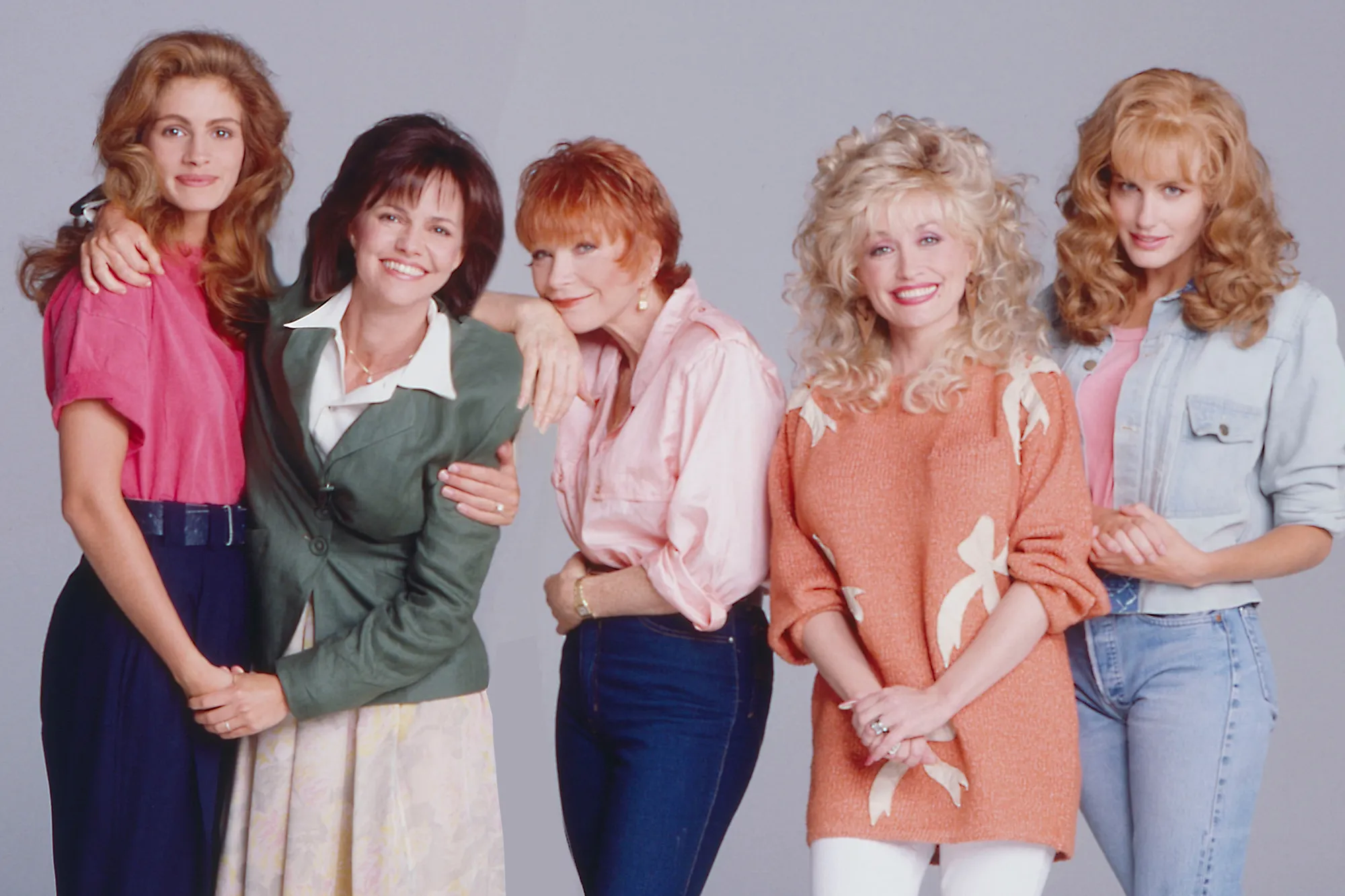
More Than Three Decades Later, Roberts Still Remembered
After Parton died at age 80 on Aug. 25, 2026, Roberts joined the many friends and costars who paid tribute to her.
Roberts called Parton “a magical and joyous human” and said she considered knowing her a treasure.
“The sun has dimmed today,” Roberts said.
The old Oprah clip resurfaced as fans looked back at their relationship.
Suddenly, a conversation from a hot Louisiana movie set nearly four decades earlier felt like a small summary of Dolly Parton’s philosophy.
She did not deny that success could be uncomfortable.
She simply refused to forget that she had once prayed for the chance to experience those problems.
It Was Very Dolly Advice
Parton spent her career making wisdom sound simple.
She rarely delivered it like a lecture.
She usually wrapped it in humor, a story or a one-liner.
That is exactly what happened with Roberts.
A young actress wanted Dolly to admit that the day was miserable.
Dolly gave her something larger instead.
Yes, it was hot.
Yes, the wig was uncomfortable.
Yes, the work was exhausting.
But Dolly Parton had once been a little girl in Tennessee dreaming about becoming rich and famous.
Now she was standing on a major Hollywood movie set.
She knew which part of that equation mattered more.
Julia Roberts understood the lesson.
And decades after Steel Magnolias ended, she still had not forgotten it.