She Didn’t Fire a Gun. Prosecutors Still Charged the 17-Year-Old With Murder in the San Diego Mosque Attack
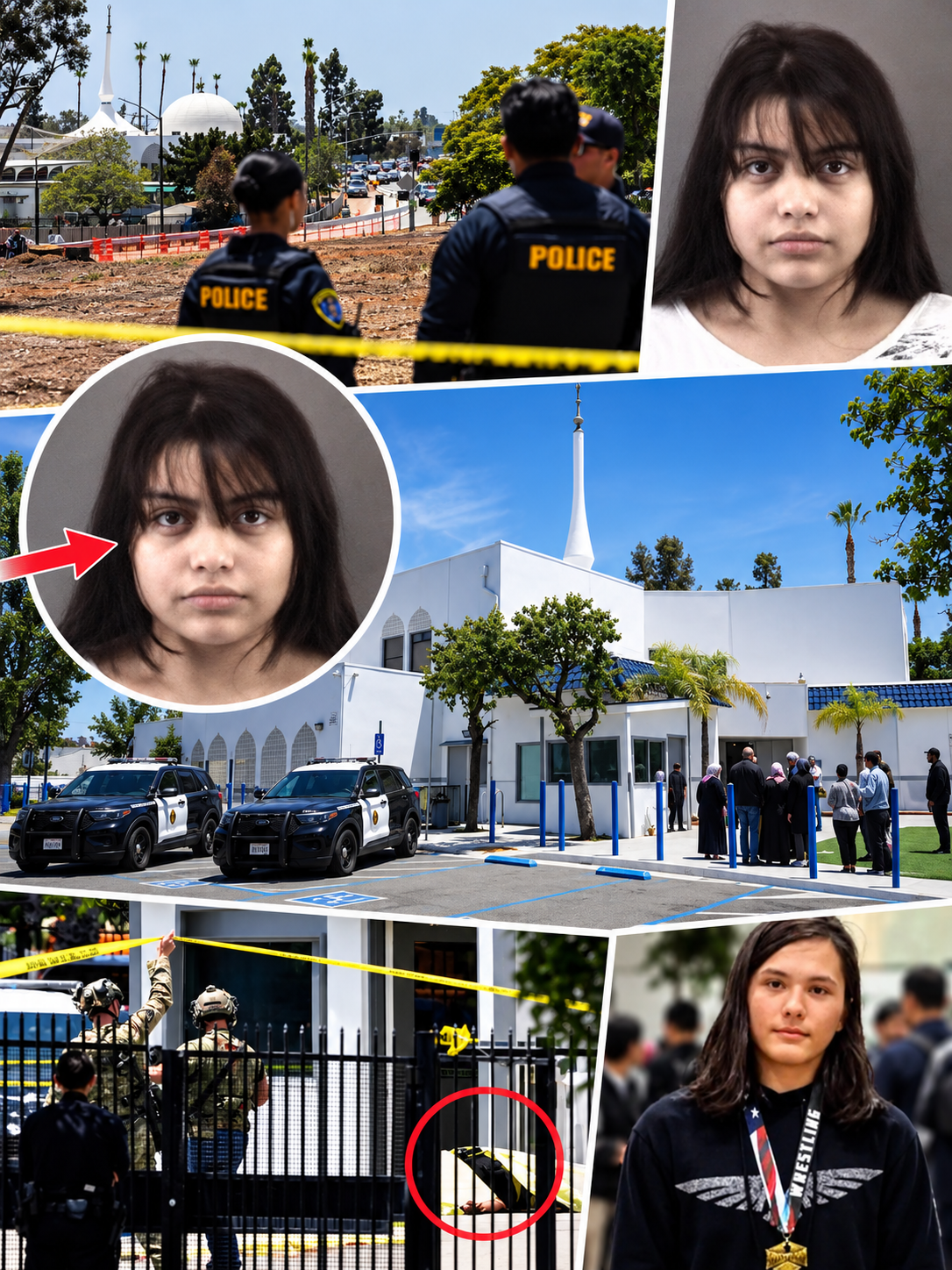
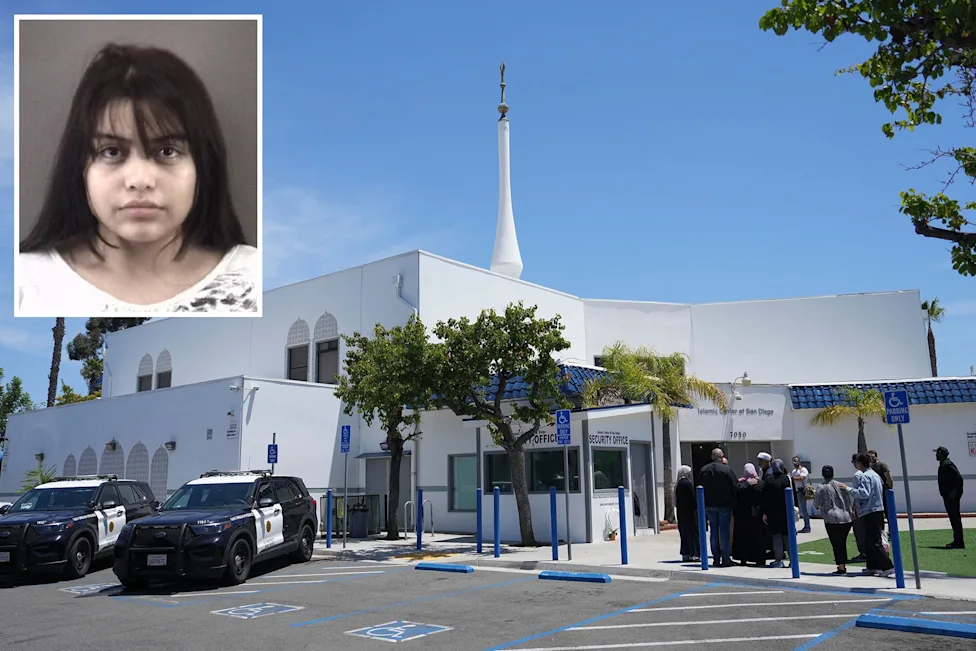
Sarah Santiago is not accused of walking into the Islamic Center of San Diego with a gun.
She was not even in California when three men were killed there on May 18.
Yet the 17-year-old high school student from North Carolina now faces three counts of first-degree murder.
The reason is a striking legal theory that has become one of the most unusual developments to emerge from the deadly mosque attack: prosecutors say Santiago helped the two gunmen prepare to broadcast their violence, recorded and distributed their livestream and helped release their writings afterward.
Under North Carolina’s aiding-and-abetting laws, Forsyth County District Attorney Jim O’Neill argues that those alleged actions can make Santiago criminally responsible for the killings just as if she had participated at the scene.
Santiago was indicted Aug. 31 on three counts of first-degree murder and one count of conspiracy to commit first-degree murder. She is being prosecuted as an adult and has been held without bond.
Her attorney says she is innocent.
The allegations have not been proven in court.
But the case raises a difficult question that could extend far beyond this one prosecution: How much legal responsibility can someone bear for a mass killing when prosecutors say that person did not pull the trigger but actively helped the attackers prepare, document and amplify what they planned to do?
Three Men Killed at the Islamic Center
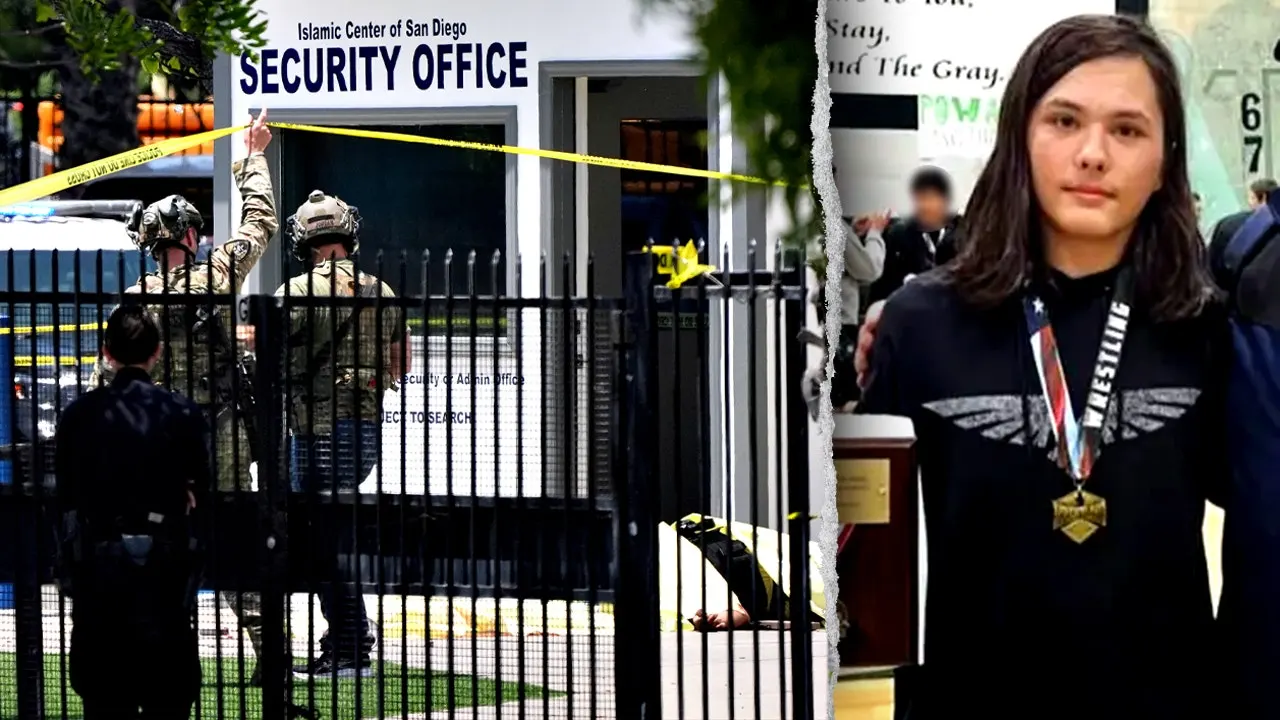
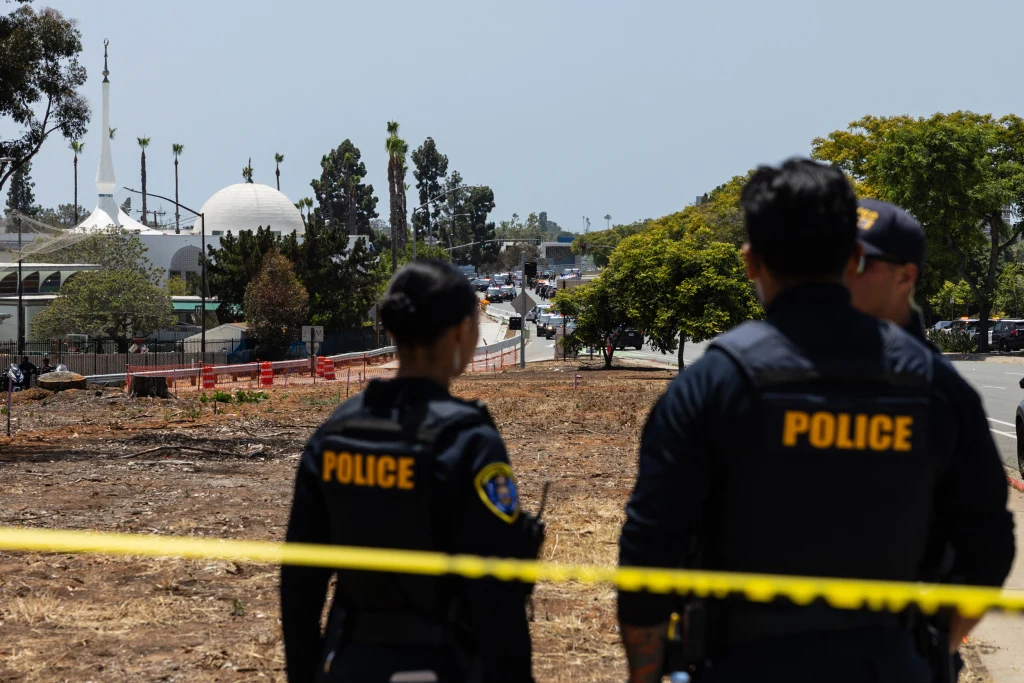
The underlying attack began on the morning of May 18 at the Islamic Center of San Diego.
Authorities identified the gunmen as Cain Clark, 17, and Caleb Vazquez, 18.
Police say the two teenagers arrived armed and opened fire at the mosque while approximately 140 children were nearby.
Security guard Amin Abdullah confronted the attackers and exchanged gunfire with them while helping initiate a lockdown. Prosecutors and police have credited Abdullah’s actions with protecting people inside the building.
Abdullah was killed, along with Mansour Kaziha and Nader Awad.
Clark and Vazquez later died by suicide in a vehicle nearby.
Investigators subsequently discovered writings attributed to the gunmen expressing racist, antisemitic and anti-Muslim hatred and discussing other potential attacks.
Authorities have said the pair had contemplated additional violence targeting a Jewish temple and Black students at a public high school.
The attack quickly became a national story.
But investigators were also looking at people who may have interacted with the shooters online before May 18.
That inquiry eventually led more than 2,000 miles away, to North Carolina.
Prosecutors Say Santiago Was Part of the Plan
According to prosecutors, Santiago’s role went beyond simply watching the attack online.
The indictment alleges that she had communicated and coordinated with Clark and Vazquez beforehand.
O’Neill said Santiago agreed before the shooting to help record and disseminate the attack livestream and later publish the attackers’ manifesto.
The gunmen themselves wore GoPro cameras during the attack. Santiago, according to authorities, was receiving and recording the livestream remotely rather than physically filming the shooting at the mosque.
Prosecutors also allege that she distributed the resulting footage and writings.
Authorities say she purchased and sent one of the gunmen a Sonnenrad patch — a symbol widely used in white-supremacist and neo-Nazi circles — which was allegedly worn during the attack.
Those allegations form the foundation of the murder case.
O’Neill has argued that Santiago was not merely an observer who stumbled across a livestream after the shooting started.
His office alleges she knew about the plan in advance, shared the gunmen’s criminal purpose and provided assistance intended to help them broadcast and promote the attack.
That distinction is crucial.
How Can Someone Who Didn’t Shoot Be Charged With Murder?
North Carolina law allows prosecutors to hold a person criminally responsible for a crime committed by someone else if that person intentionally aids or encourages the offense.
O’Neill put the prosecution’s position plainly when announcing the indictment: someone who aids and abets a crime can be guilty of that crime as though he or she had personally committed the acts.
In practical terms, prosecutors do not necessarily have to prove that Santiago fired a weapon.
They instead must establish the elements required to show that she knowingly participated in or encouraged the murders with the necessary criminal intent.
That is where the legal battle is likely to become far more complicated.
Merely viewing violent material online would not automatically make someone a murderer.
Nor would simply knowing people who later commit a crime necessarily establish aiding and abetting.
The prosecution’s case therefore depends on proving that Santiago’s alleged conduct crossed the line from association or spectatorship into active assistance.
Legal experts interviewed about the case have described the factual pattern as unusual, particularly because Santiago was allegedly in North Carolina while the killings happened in California.
University of North Carolina law professor Ronald Wright told the San Diego Union-Tribune that North Carolina precedent can permit liability where a person’s encouragement helps make it more likely that another person will carry out a criminal plan.
But Wright also said he found no North Carolina precedent with precisely this geographic pattern — alleged assistance in North Carolina connected to murders physically committed in another state.
That could lead to arguments not only about whether Santiago aided the shootings, but also about whether North Carolina is the proper place to prosecute the murders.
The Defense Says She Is Innocent
Santiago’s attorney, Alan Doorasamy Sr., has rejected the charges.
“At this time I can confirm that my client is innocent of all these charges,” he told the Associated Press after the indictment.
Doorasamy said at the time that he had not yet received the government’s evidence and did not elaborate publicly on Santiago’s relationship with Clark or Vazquez.
That leaves several important questions unresolved.
How much did Santiago allegedly know before the attack?
What exactly did she say to the gunmen?
Did prosecutors find evidence showing that she believed the attack would actually occur?
And did anything she allegedly did materially encourage or facilitate the killings?
Those issues could become central if the case reaches a jury.
Legal analysts have noted that online conversations among teenagers sometimes include extreme rhetoric that participants may not expect to become real-world violence.
The prosecution will therefore likely have to establish not merely that disturbing communications existed, but that Santiago knowingly aligned herself with an actual murder plan.
A Case About Violence — and Its Audience
The case also reflects a broader challenge law enforcement agencies increasingly face when attackers design violence for an online audience.
Mass shooters have previously livestreamed attacks, prepared manifestos for distribution and sought attention within extremist online communities.
In the San Diego case, prosecutors are taking the position that someone allegedly responsible for helping that media operation can become part of the underlying criminal act itself.
O’Neill described Santiago as sharing responsibility with the attackers rather than simply witnessing their crimes from afar.
The consequences are enormous.
Because she is being prosecuted as an adult, the murder counts could expose Santiago to severe punishment if she is convicted, though sentencing rules involving juvenile defendants create additional constitutional considerations.
She has been denied bond, and court records indicated another appearance was scheduled for Sept. 21.
The Question a Jury May Eventually Have to Answer
The facts that are not disputed are devastating.
Three men were killed.
Two gunmen carried out the attack and later died.
A livestream existed.
And prosecutors say a teenager in North Carolina had contact with the attackers before the shooting.
Everything beyond that will require evidence.
Santiago is not accused of firing a weapon.
She is accused of something prosecutors argue was legally just as significant: helping make the attack part of a coordinated plan to record, publish and amplify violence.
Whether those alleged actions are sufficient to make her guilty of three murders is now a question for the courts.
For prosecutors, physical distance from the mosque does not erase responsibility if Santiago intentionally helped the killers carry out their plan.
For the defense, the state will still have to prove that connection — and the required intent — beyond a reasonable doubt.
That is what makes the case so unusual.
The 17-year-old was allegedly thousands of miles from the gunfire.
But prosecutors say she was still part of the crime.