Tim Curry’s Legend Transformation Took Nearly a Full Workday — Then Removing Darkness Went Horribly Wrong
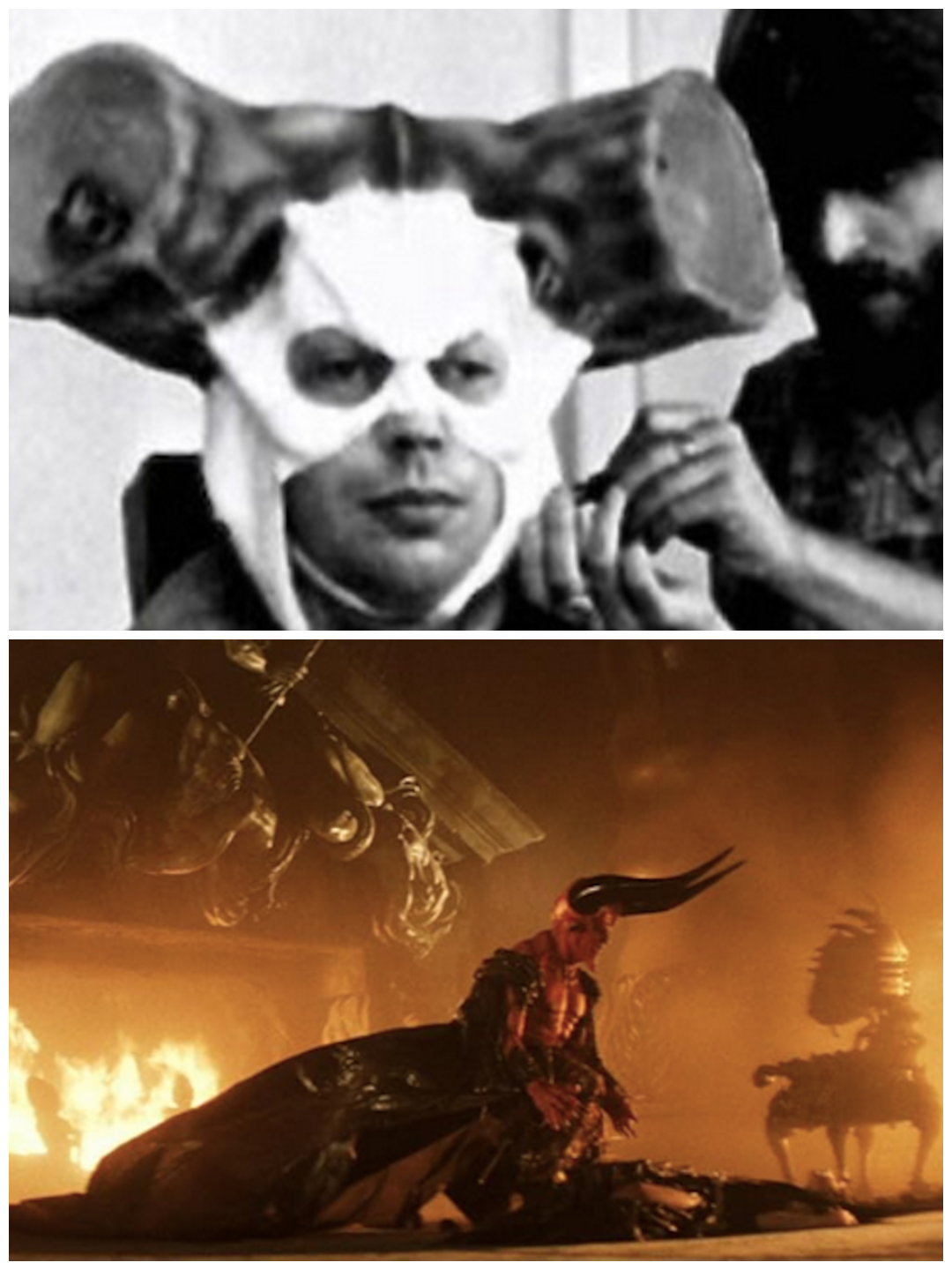
When Tim Curry appears as Darkness in Ridley Scott’s Legend, he barely looks human.
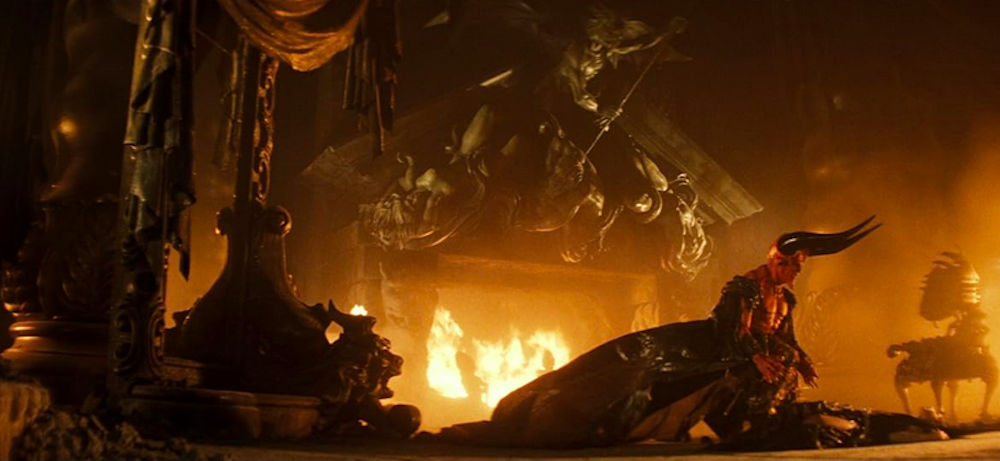
His skin is blood red. His body is covered in elaborate prosthetics. His fingers end in claws. His legs and feet are transformed. And above everything rise two enormous black horns that make him look less like an actor in costume than a creature pulled out of a medieval nightmare.
The transformation remains one of the most memorable examples of practical makeup in 1980s fantasy cinema.
But what audiences saw for a few minutes on screen required Curry to endure hours of preparation before cameras even started rolling.
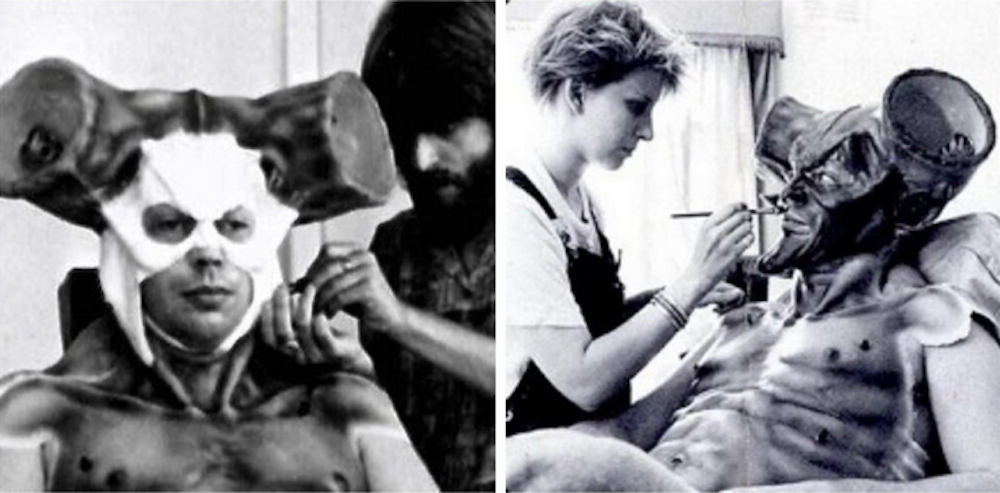
The process usually took around five and a half hours, according to accounts from the production. In the earliest days, director Ridley Scott said it could stretch to eight hours.
Then Curry still had to act.
And when filming ended, he faced another long process just to become himself again.
One night, that removal went badly enough that the production had to work around him for roughly a week.
Darkness Was Designed to Look Almost Impossibly Large
Released in 1985, Legend starred a young Tom Cruise as Jack, a forest-dwelling hero trying to save Princess Lili, played by Mia Sara, and prevent the Lord of Darkness from destroying the world’s remaining unicorns.
Scott wanted the film to feel like a living fairy tale.
That meant practical creatures rather than ordinary-looking actors in simple costumes.
Makeup effects artist Rob Bottin, fresh from his extraordinary work on John Carpenter’s The Thing, was given the challenge of creating the film’s fantasy beings.
Darkness became the production’s most ambitious transformation.
Curry was only about 5-foot-9, but the character needed to appear enormous and physically overwhelming.
The solution involved altering nearly every visible part of him.
Unlike performers whose prosthetics were limited primarily to the face, Curry’s upper body also had to be covered because Darkness spends much of the movie bare-chested. That meant more makeup, more adhesive and much more time.
Then there were the horns.
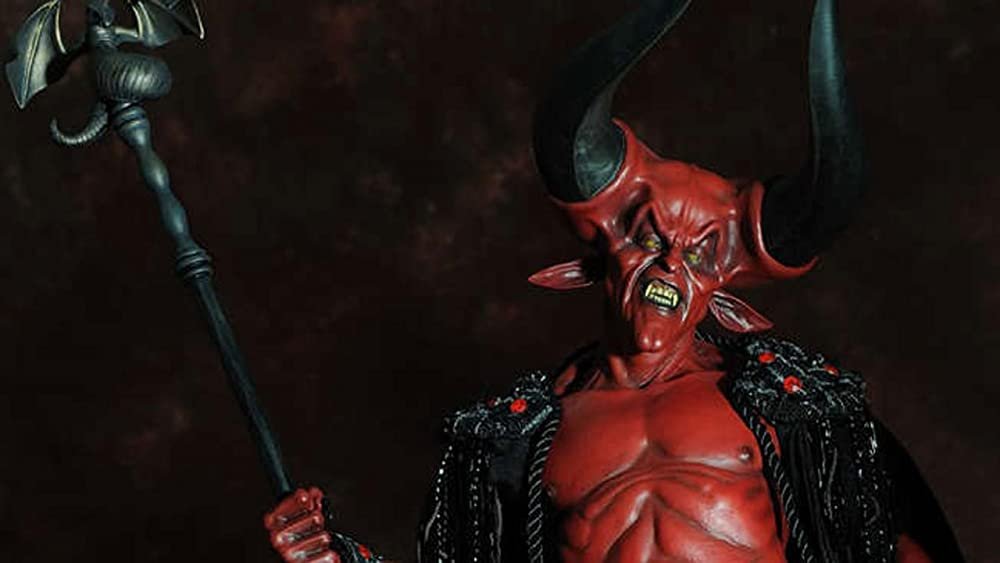
Those Horns Were Three Feet Long
Darkness’s horns became the defining feature of the design.
Each was roughly three feet long and made from fiberglass.
But the horns could not simply be attached to Curry’s head.
They required a supporting harness beneath the makeup to distribute their weight.
Even then, early versions created problems because the horns projected outward in a way that placed considerable strain on Curry’s neck.
The effects team eventually redesigned them to make them lighter and more manageable.
Only after the harness was in place could the rest of the transformation proceed.
Multiple prosthetic pieces had to be applied and blended into Curry’s body. The entire surface was then painted into the deep red color audiences associate with Darkness.
Other actors on Legend also endured lengthy makeup sessions, but Curry’s was in another category.
The average application for the film reportedly took about three and a half hours.
Curry’s usually took about five and a half.
Scott recalled that during the early stages, before the makeup team perfected the procedure, the transformation could take as long as eight hours.
For most people, that would already constitute a full workday.
For Curry, it happened before the actual work began.
Curry Remembered an Eight-Hour Makeup Day of His Own
Years later, Curry gave his own estimate while discussing another famous transformation.
During a 1990 interview on the set of Stephen King’s It, he was asked about the makeup required to become Pennywise.
By then, the team could turn him into the clown in roughly three hours.
That was easy compared with Legend.
Curry remembered his Darkness makeup taking about six and a half hours to put on and another hour and a half to remove.
As he dryly pointed out, that amounted to an eight-hour day without actually doing any work in front of the camera.
And he had to do it repeatedly.
Curry said he worked on Legend for about three months and underwent the full transformation many times.
That meant sitting still while teams of artists applied adhesive, prosthetics and body paint — followed by hours carrying the physical weight of the design through scenes.
Yet putting Darkness on was only half the problem.
Taking him off could be worse.
Removing the Makeup Required an Hour in a Bath
The prosthetics were attached using soluble spirit gum.
At the end of filming, Curry could not simply peel everything away.
He had to sit in a bath for around an hour so the adhesive could gradually dissolve.
Scott later explained that completely enclosing Curry in makeup required enormous patience during removal.
On one occasion, Curry had had enough.
Whether from exhaustion, claustrophobia or both, he became impatient while waiting for the adhesive to loosen.
He started pulling the prosthetics away too quickly.
According to Scott’s recollection, Curry tore off some of his own skin in the process.
It was not a minor inconvenience.
Scott did not want more heavy makeup applied over damaged skin, so the production had to change its plans.
Ridley Scott Shot Around Curry for About a Week
Curry needed time to recover.
Rather than immediately forcing him back into the makeup chair, Scott adjusted the shooting schedule and filmed material that did not require Curry for approximately a week.
The setback even had an unexpected creative consequence.
Because Scott had to delay some of Darkness’s material, the character’s full appearance could be held back longer.
That suited the film’s structure surprisingly well.
Darkness is discussed and anticipated before audiences finally see Curry in his complete form.
The delay makes the eventual reveal feel bigger.
A production problem caused by one of the movie’s most uncomfortable practical effects therefore ended up reinforcing the mystique surrounding the villain.
The Physical Ordeal Barely Shows in Curry’s Performance
Perhaps the most remarkable part is how little of that discomfort appears on screen.
Darkness does not look like a man carefully balancing a fiberglass structure while buried beneath adhesive.
He looks completely at home.
Curry moves slowly and deliberately.
His enormous silhouette fills the frame.
His voice — deepened and manipulated for the character — gives Darkness a theatrical grandeur that prevents the makeup from becoming the entire performance.
That distinction is important because Curry later spoke thoughtfully about the limits of prosthetics.
During the same 1990 It interview, he said elaborate makeup could sometimes do too much work for an actor.
He preferred horror that came from performance and intention rather than simply from latex and visual effects.
Legend was an extreme exception.
The makeup was enormous, but Curry still found a character inside it.
Legend Wasn’t a Major Hit at First
Despite Scott’s visual ambition, Legend did not immediately become the fantasy classic its creators might have hoped for.
The film underwent significant changes between versions, including different edits and musical scores depending on the market.
Its theatrical reception was mixed.
But the movie gradually developed a strong cult following.
And Curry’s Darkness became the image most difficult to forget.
Even viewers who barely remember the plot often remember the red demon stepping out of the shadows.
The makeup effects became widely celebrated, with Bottin’s work on the film receiving an Academy Award nomination.
Tom Cruise would go on to become one of Hollywood’s biggest stars, but Curry’s villain frequently dominates retrospective discussion of the film.
Curry Had Already Learned What Heavy Makeup Could Cost
That experience also helps explain something Curry would say five years later while making It.
When producers experimented with a much more heavily prosthetic Pennywise, Curry resisted.
He had already spent months becoming Darkness.
He knew what it was like to spend most of a workday entering and escaping from a character before acting even began.
For Pennywise, he preferred to keep more of his own face visible.
Darkness demanded the opposite.
The role required Curry to disappear almost completely.
And he paid for that transformation physically.
Five and a half hours was normal.
Early sessions could take longer.
Removal added another lengthy ordeal.
And once, impatience turned that routine into an injury serious enough to disrupt filming for days.
The result, however, remains difficult to argue with.
Nearly four decades later, Darkness still looks extraordinary.
Audiences see the horns, red skin and enormous silhouette.
What they do not see is Tim Curry underneath it all — sitting for hours before dawn, carrying three-foot fiberglass horns through a day of filming, then lowering himself into a bath at night and waiting for the monster to slowly dissolve.
For Curry, becoming Darkness was only half the performance.
Getting out of him was sometimes the dangerous part.