He Was 3 and Unresponsive in a Freezing Storm. Fifteen Years Later, the Deputy Who Saved Him Handed Him His Diploma
David Lew has almost no memory of the night that nearly ended his life.
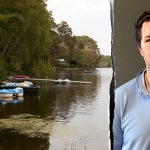
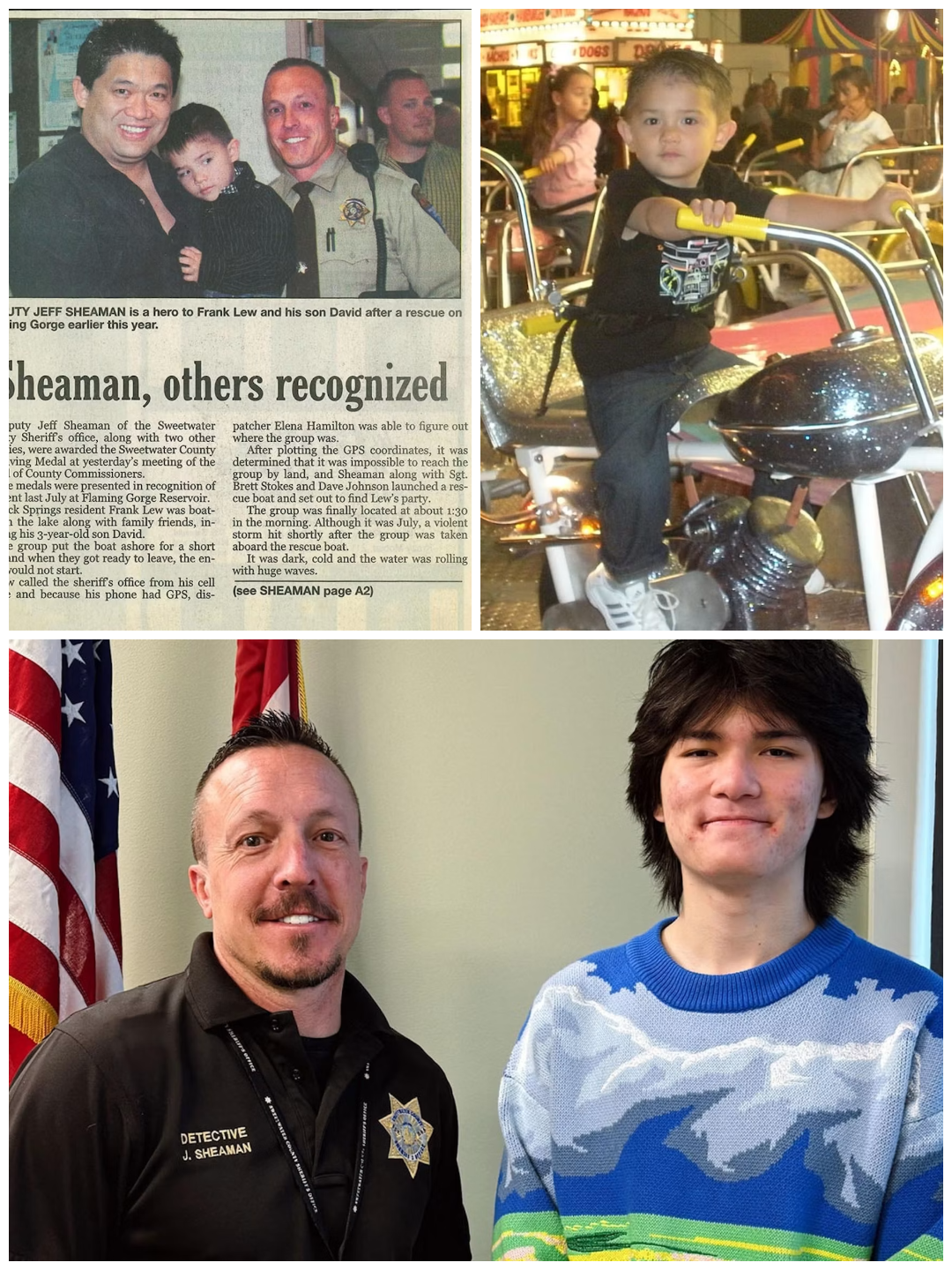
He was only 3 years old when a family boat broke down on Flaming Gorge Reservoir in southwest Wyoming in July 2010. What remained in his mind years later was little more than a feeling: being wet and terribly cold.
His father remembered much more.
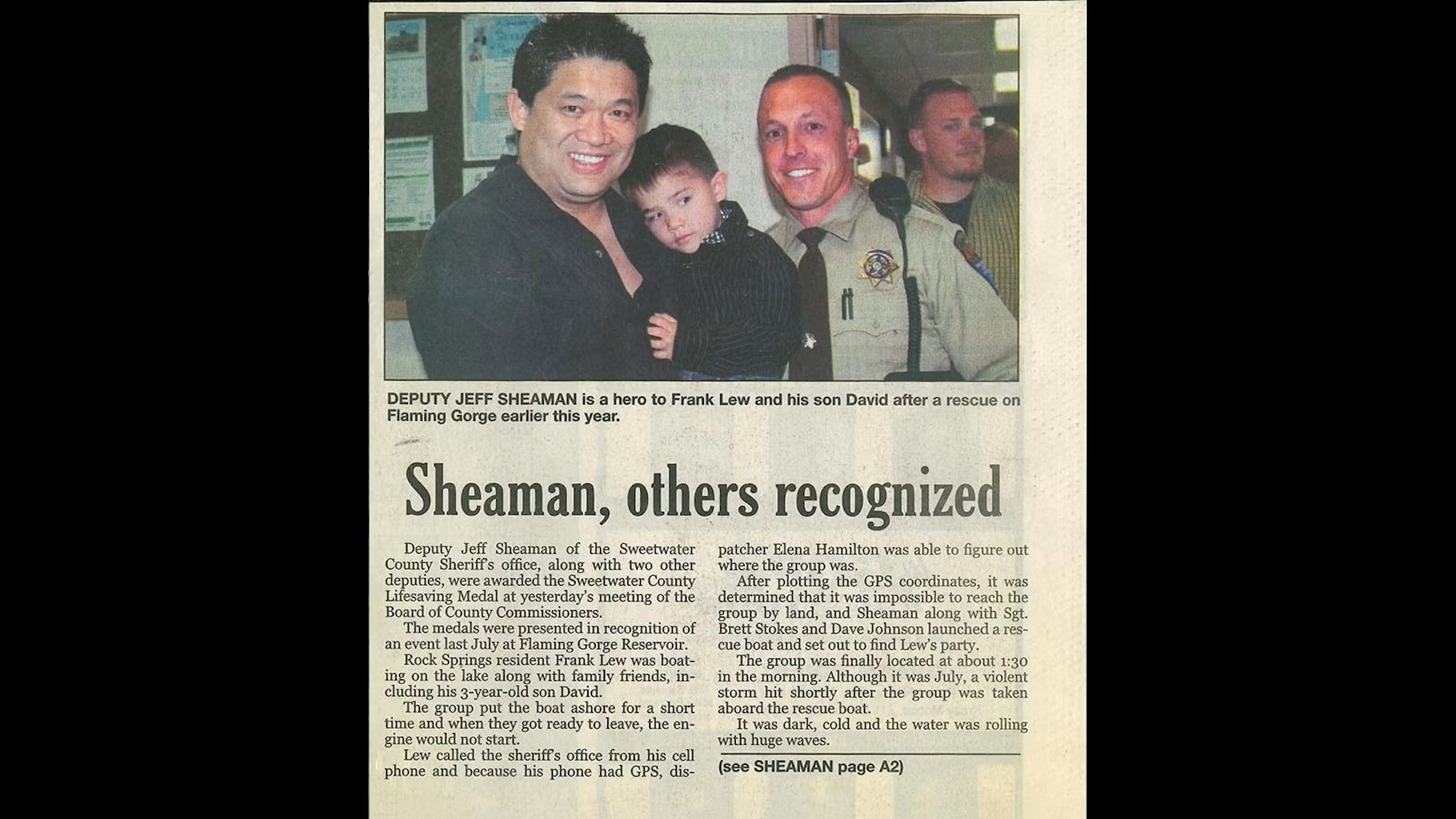
So did the sheriff’s deputy who held the unconscious little boy against his bare chest and tried desperately to warm him as freezing rain battered their rescue boat.
Fifteen years later, that same deputy was preparing to stand beside David for a moment no one could have guaranteed on that stormy night.
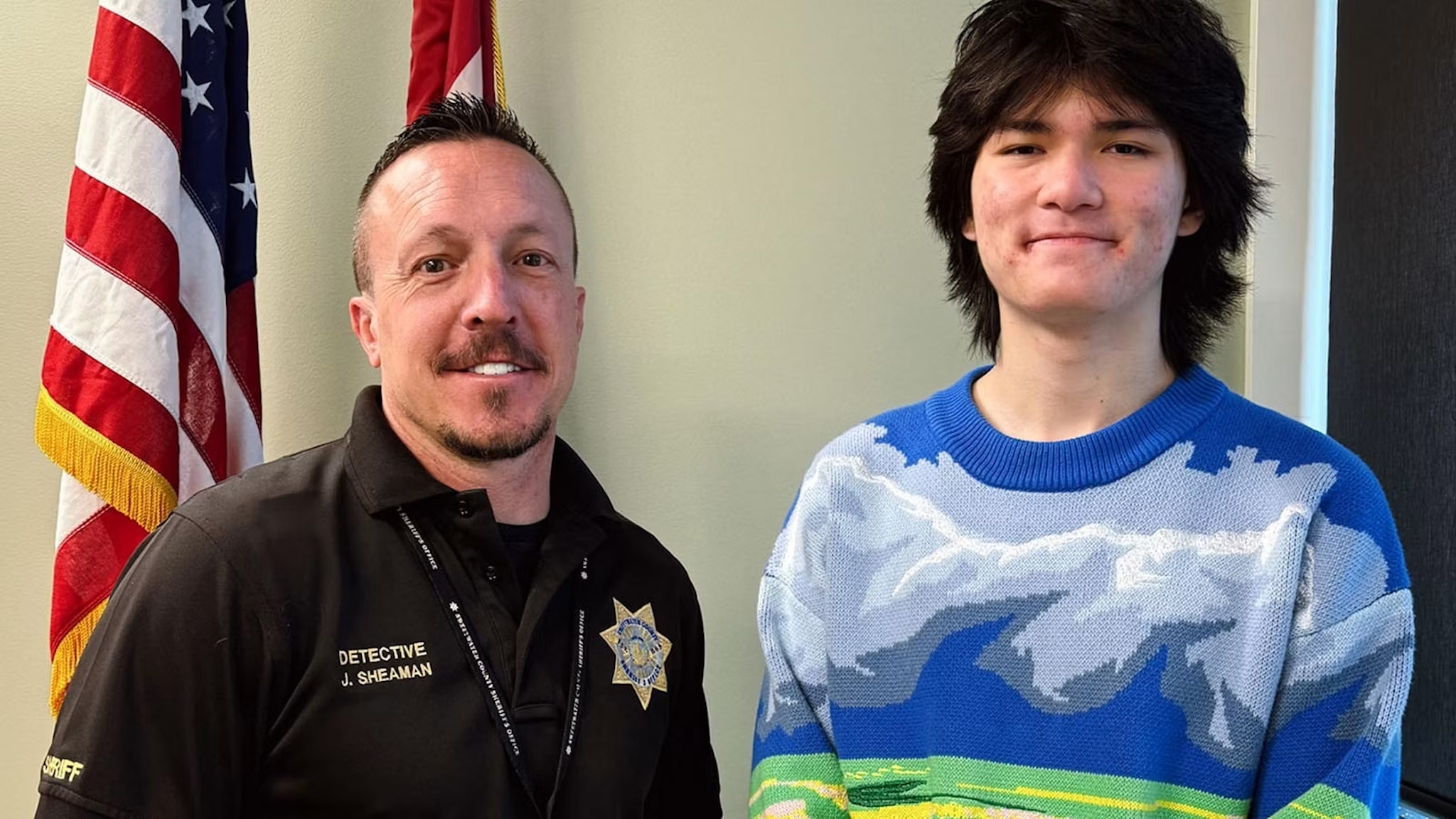
When David graduated from Rock Springs High School on May 27, 2025, he wanted Detective Sgt. Jeff Sheaman — the man he credits with saving his life — to be the person who handed him his diploma.
For David, the choice was simple.
He believed he would not be walking across that stage without him.
A Boat Ride Turned Into a Nighttime Emergency
The crisis began on July 20, 2010.
David’s father, Frank Lew, had taken David and his older son onto Flaming Gorge Reservoir while checking out a boat he was considering buying.
They were traveling across the water when the engine suddenly quit.
Frank managed to get the disabled boat onto shore, but the family was stranded in a remote area with no easy access to help.
To make a 911 call, Frank had to climb to the top of a hill in search of cell service.
By the time he succeeded, darkness had fallen.
Then came another unsettling detail.
As the family made its way back down toward the boat, Frank remembered hearing rattlesnakes around them.
Authorities were able to identify their coordinates and sent a Sweetwater County Sheriff’s Office rescue boat from Firehole Canyon, about 29 miles southwest of Rock Springs.
Sheaman, then a deputy, was aboard with two sergeants.
At first, reaching the stranded family went relatively quickly.
Getting everyone back would be much harder.
The Weather Turned Violent
Just as rescuers arrived, severe wind and rain swept across the reservoir.
The rescue boat struck a sandbar with its propeller, creating engine problems of its own.
With the Lew family aboard, the deputies began the return trip toward Firehole.
They could move only slowly.
The rain kept falling.
There was no nearby shelter.
Sheaman later remembered shining spotlights into darkness but being able to see very little. Even the GPS was difficult to rely on as they tried to navigate through the storm.
The return trip eventually took about an hour and a half.
For Sheaman, who had spent years responding to emergencies in harsh Wyoming winters, the cold that night stood apart from nearly everything else he had experienced.
He later said it was the coldest he had ever been.
But the worst moment came when Frank realized something was wrong with his 3-year-old son.
David Stopped Responding
Frank had been holding David against him as the rescue boat crawled through the storm.
The little boy had his arms wrapped around his father’s neck.
Then Frank called to him.
There was no answer.
He tried again.
Nothing.
David had become unresponsive.
Frank attempted to lift him away from his body, but the child’s arms were so tightly locked around his neck that Frank later compared pulling him off to removing a T-shirt.
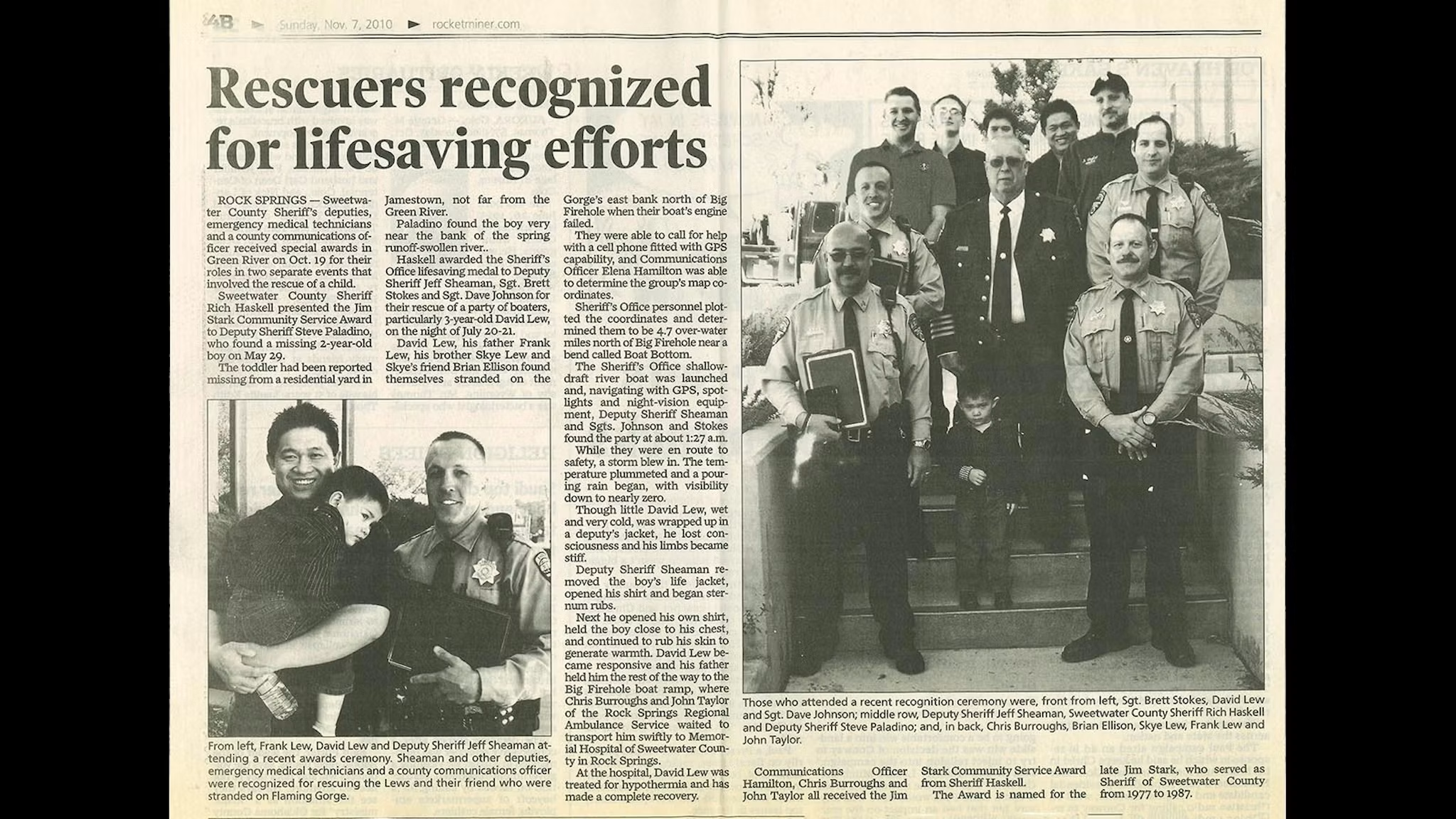
He handed his unconscious son to Sheaman.
The deputy immediately recognized how serious the situation had become.
David was dangerously cold.
Sheaman removed the child’s life vest and shirt.
Then he took off his own jacket and shirt.
He placed David directly against his bare chest, pulled his own shirt over them both and zipped his jacket around the two of them.
Then he started rubbing the boy’s back.
Sheaman later described David as feeling like a “popsicle.”
He simply held him close and tried to create as much warmth as possible.
Then David Moved
For approximately 15 to 20 minutes, Sheaman kept the child pressed against his body.
There was no instant dramatic recovery.
He rubbed his back.
He waited.
And then he felt movement.
Sheaman opened his jacket slightly.
David lifted his head.
The boy looked at the unfamiliar man holding him and became frightened.
For Sheaman, that reaction was exactly what he needed to see.
David was conscious again.
He returned the child to Frank for the remaining trip to Firehole, where an ambulance was waiting.
David was taken to the hospital and treated for hypothermia.
The cold had been so intense that Sheaman and one of the other sergeants also required hospital treatment.
Frank would later call the deputy’s actions heroic.
From his perspective, Sheaman had done what was necessary to keep his son alive.
And it had worked.
The Little Boy Grew Up
David recovered.
Then life continued.
The rescue became one of those family stories that returned in conversation from time to time.
David himself retained almost no detailed memory of it.
He remembered cold.
He remembered wetness.
Everything else came from what his parents told him.
Over the years, those stories taught him something difficult to fully comprehend: one choice made by a stranger during one terrible night had helped determine everything that came afterward.
David could go to school.
He could grow into a teenager.
He could begin thinking about college.
He could reach milestones his family once came dangerously close to losing.
The connection between rescuer and child, however, did not immediately continue after the emergency.
Sheaman said he did not remember seeing David again until about 2020.
That year, he encountered David’s mother, Mishelle Cuin, in a pet store.
She called David over.
The teenager shook the deputy’s hand.
It was a brief reunion, but the significance of what had happened years earlier remained.

Graduation Brought the Story Full Circle
As David’s senior year approached its end, he and his mother began talking about graduation.
That conversation eventually returned to Sheaman.
David wanted to do something meaningful for the man who had saved him.
He decided to ask Sheaman to personally hand him his diploma.
His mother left the decision to him.
David’s reasoning was straightforward: without Jeff, he believed, there would be no graduation stage for him to cross.
School officials approved the special arrangement.
David then went to the sheriff’s department with a handwritten letter requesting Sheaman’s presence at the ceremony.
He also prepared a framed graduation photograph as a gift.
For Sheaman, the request landed at an unusually emotional moment in his own life.
One Ending Arrived as Another Began
Earlier in 2025, Sheaman had responded to a fatal crash at the Green River tunnels and discovered that people he knew were involved.
The experience pushed him toward retirement after roughly 20 years in law enforcement.
He planned to retire on May 9.
Then David arrived with his letter.
For a deputy whose career had included frightening, chaotic and heartbreaking calls, the teenager standing in front of him represented the opposite side of police work.
He was proof that sometimes an emergency ends with someone getting an entire lifetime back.
Sheaman said David reminded him of the good law enforcement officers can do.
The graduation request gave the end of his career a sense of closure he had not expected.
His retirement would come first.
Then, on May 27, he planned to return to town and stand beside the young man he had once held inside his jacket on a freezing rescue boat.
David Was Not Worried About What Anyone Else Thought
Graduation ceremonies usually follow a predictable rhythm.
Names are announced.
Students walk across the stage.
Diplomas are handed over.
Families cheer.
David knew his moment would be different.
He was not concerned.
He said he did not care whether classmates or people in the audience wondered why a sheriff’s detective was handing him his diploma.
The gesture was not for them.
It was for Sheaman.
At nearly 18, David was preparing to attend community college, though he had not yet settled on a specific career.
In many ways, he was standing where thousands of other high school graduates stand: unsure of exactly what comes next, but with options ahead of him.
That uncertainty itself was a gift.
Fifteen years earlier, his future had depended on whether a deputy could warm his small body quickly enough in the middle of a freezing storm.
Now David had years ahead in which to decide what he wanted to do with that future.
And Sheaman, preparing to leave law enforcement and begin his own next chapter, could look at him and see the lasting consequence of one decision made in darkness.
The child who had once gone limp in his father’s arms had grown up.
The deputy who had wrapped him against his chest had grown older too.
And on graduation day, their lives crossed once more — not in an emergency, but on a stage.
This time, instead of handing David back to his father alive, Jeff Sheaman was there to hand him a diploma.