The Surprising Story Behind Phineas and Ferb: How Disney’s Wildest Summer Adventure Came to Life
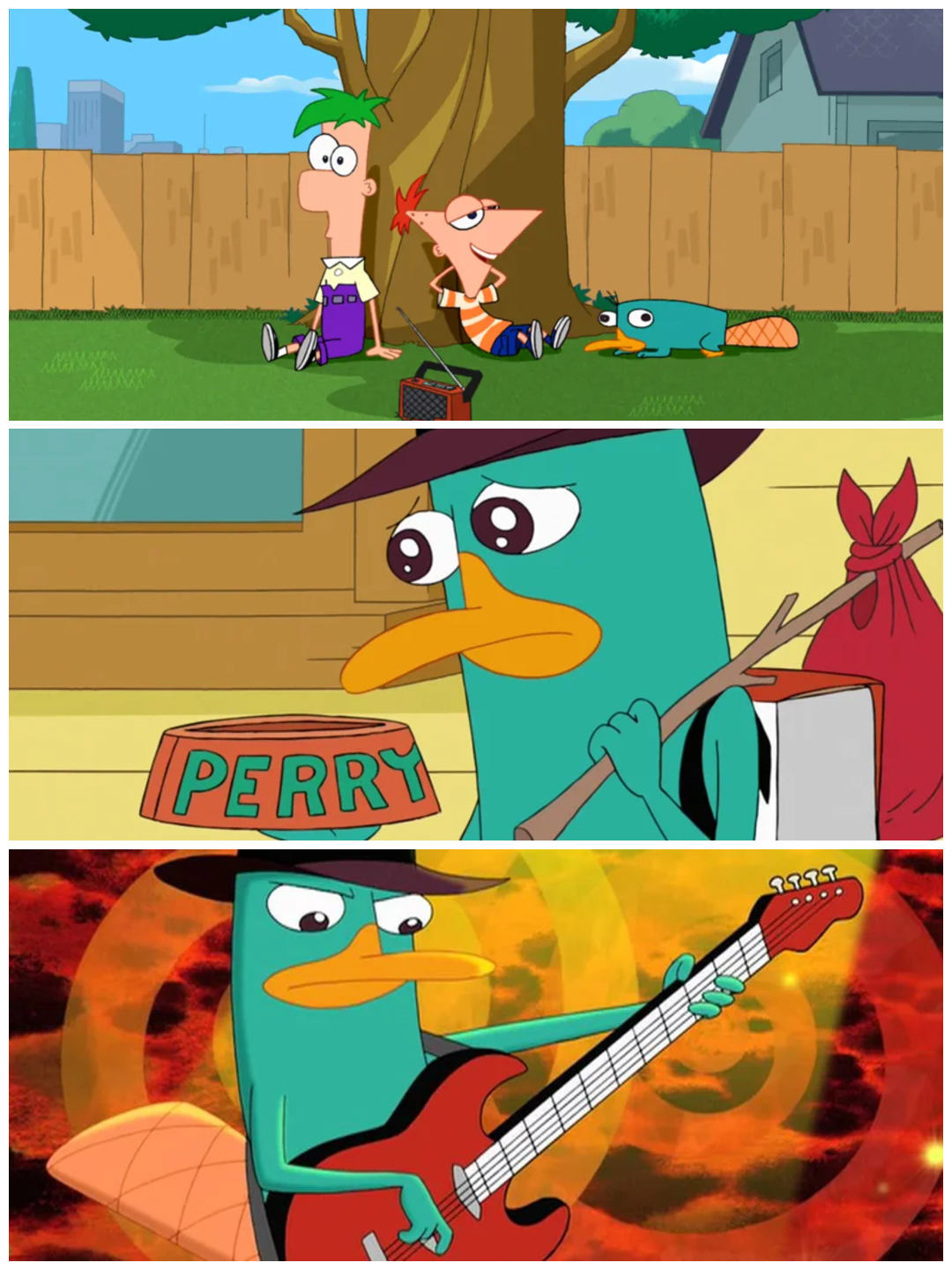
For a cartoon built around the idea of children refusing to waste a single day of summer vacation, Phineas and Ferb took an ironically long time to become a television series.
Once it finally arrived on Disney Channel, however, the concept seemed almost ridiculously simple.
Phineas Flynn and his stepbrother Ferb Fletcher wake up every morning with another enormous idea. They might build a roller coaster, travel somewhere impossible, create a new invention or attempt a project that would require an engineering team in the real world.
Their older sister Candace repeatedly tries to expose them to their mother.
She almost always fails.
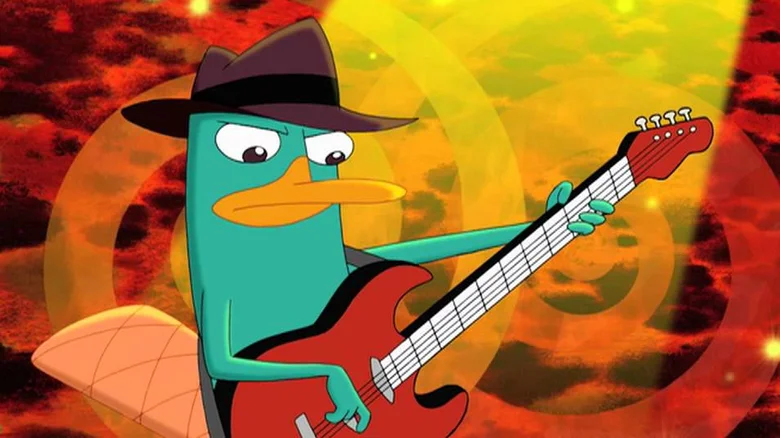
Meanwhile, the family’s apparently ordinary pet platypus quietly disappears, puts on a fedora and becomes Agent P, a secret operative whose daily assignment usually involves stopping Dr. Heinz Doofenshmirtz from unleashing another bizarre “-inator” on the Tri-State Area.
Somehow, all three stories usually collide before dinner.
That unusual formula helped Phineas and Ferb become one of Disney Channel’s most recognizable animated series. But behind the colorful characters, catchy songs and seemingly endless summer are some surprisingly unusual stories about how the show was created.
Dan Povenmire and Jeff “Swampy” Marsh Met Before Either Became Disney Legends
The partnership behind Phineas and Ferb began long before Phineas had a triangular head or Perry had a fedora.
Dan Povenmire and Jeff “Swampy” Marsh both arrived in television animation through somewhat unconventional routes.
Marsh didn’t begin seriously pursuing animation until he was around 28. He had worked in computer marketing before assembling a portfolio and eventually landing a job as a layout artist on The Simpsons.
Povenmire had studied film and initially pursued live-action work. When opportunities became scarce, his artistic background led him toward animation.
He also ended up working on The Simpsons.
The two were in the same professional orbit, but their creative partnership really developed after they were hired to work together on Nickelodeon’s Rocko’s Modern Life.
That experience would become particularly important.
Not only did they discover that they worked well as a team, but they also learned a style of cartoon storytelling that encouraged artists and storyboarders to contribute visual comedy instead of relying entirely on conventional scripts. That philosophy would later become central to Phineas and Ferb.
Phineas Started as a Drawing on a Restaurant Table
One of Disney’s most recognizable cartoon characters began with a casual doodle.
During the 1990s, Povenmire was eating at a restaurant in Pasadena, California, when he drew a strange triangular-headed child on the butcher paper covering the table.
That drawing became the earliest version of Phineas.
Povenmire showed it to Marsh, and the two began developing a larger idea around the character.
They imagined children who treated summer vacation as an opportunity to accomplish something spectacular every day. From that central idea came more characters, recurring situations and eventually the world that would become Danville.
There was only one major problem.
Television networks weren’t buying it.
Povenmire and Marsh repeatedly pitched the project and repeatedly came close without actually getting a series order. Each rejection sent the idea back onto the shelf.
Life moved on.
Marsh eventually relocated to England. Povenmire worked on other productions, including Family Guy.
Then Disney reconsidered.
By the time Phineas and Ferb finally premiered in 2007, roughly 16 years had passed since Povenmire first sketched that strange triangular boy in a restaurant.
Two Very Different Children’s Shows Helped Create the Formula
The structure of a typical Phineas and Ferb episode feels extremely specific.
There is usually a massive Phineas-and-Ferb project.
There is Candace desperately trying to expose that project.
And there is Perry battling Dr. Doofenshmirtz in an apparently unrelated spy adventure that somehow helps erase or destroy whatever Phineas and Ferb built before their mother can see it.
That complicated structure was partly inspired by two older television programs that don’t initially seem to have much in common: The Adventures of Rocky and Bullwinkle and Sesame Street.
Povenmire admired the way Rocky and Bullwinkle could juggle different storylines and return to them throughout an episode.
The Candace element owed something to an old Sesame Street running gag involving Big Bird and Snuffleupagus.
For years, Big Bird would try to show Snuffleupagus to the adults, only for the creature to disappear before anyone else could see him.
Candace experiences essentially the same frustration.
She knows something incredible is happening.
She finally brings her mother to witness it.
And somehow, seconds before Linda arrives, everything disappears.
Put those influences together with a secret-agent platypus and some absurd engineering, and the basic Phineas and Ferb formula begins to make much more sense.
The Creators Deliberately Wanted to Avoid School
Most shows about children eventually send them to school.
Povenmire and Marsh wanted almost nothing to do with that.
Instead, they built an entire series around summer vacation.
Their reasoning was partly creative exhaustion. Television had already produced countless stories about classrooms, homework, teachers, popularity and school problems. They wanted to explore a different part of childhood.
Both creators remembered summers when children spent hours outside inventing their own entertainment.
They built forts.
They dug holes and trenches.
They constructed things simply because there was an entire day available and nothing more important to do.
That became the emotional foundation of the show.
Phineas and Ferb don’t spend their summer staring at screens waiting for something interesting to happen. They create the interesting thing themselves.
The show’s famous opening song refers to “104 days of summer vacation,” and the original series famously treats its enormous number of adventures as occurring during essentially one impossibly eventful summer.
Real-world chronology was never the point.
The idea was to capture what summer felt like when you were young enough to believe one day could contain almost anything.
Disney Saw the Potential for Its Own SpongeBob-Sized Franchise
Once Phineas and Ferb became successful, Disney realized it had something bigger than an ordinary animated show.
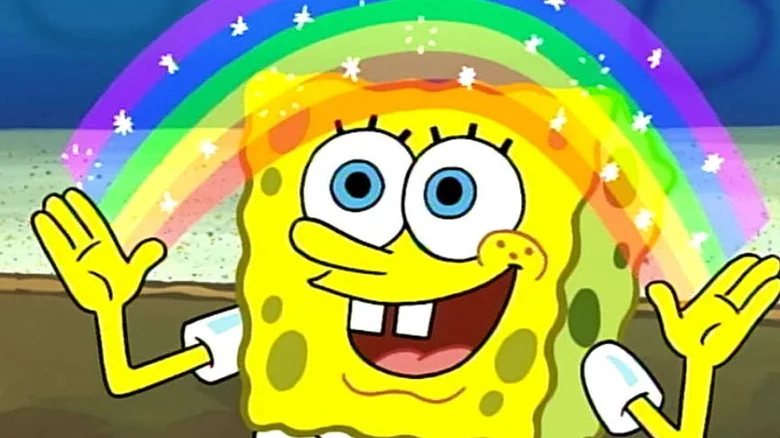
At the time, Nickelodeon had SpongeBob SquarePants, a cartoon character who had grown far beyond television into toys, merchandise, movies, theme-park appearances and an enormous licensing business.
Disney saw similar possibilities in Phineas, Ferb and Perry.
By 2010, the company was pushing the franchise aggressively.
Characters appeared at Disney parks.
Stores carried increasing amounts of merchandise.
There was a magazine.
There were branded food products.
Disney even experimented with Take Two with Phineas and Ferb, a short-form series in which the animated brothers interviewed real celebrities.
Not every expansion became a long-term success.
Take Two survived only briefly, and plans for a theatrical movie went through years of changes and delays.
Still, the effort demonstrated how valuable Disney believed the characters could become.
A cartoon that had spent years struggling to get approved had become a franchise the company wanted to place almost everywhere.
Those Strange Head Shapes Were Completely Intentional
Nobody in Phineas and Ferb looks remotely anatomically correct.
Phineas’ head is essentially a triangle.
Ferb’s is rectangular.
Other characters are built from similarly exaggerated geometric forms.
That wasn’t merely a desire to make the cartoon look weird.
Povenmire had learned an important character-design principle during his time working around The Simpsons: a successful animated character should be recognizable even in silhouette.
You don’t need to see Homer Simpson’s facial details to know you’re looking at Homer.
Povenmire and Marsh wanted the same instant recognition.
They also wanted children watching the show to be able to draw the characters themselves.
Simple geometric forms made that possible.
The colors followed another deliberate philosophy.
Characters were designed with extremely bright, candy-like palettes, while much of the surrounding environment used comparatively natural colors.
The contrast allowed the characters to pop visually without making their entire world feel equally artificial.
That balance mattered because, despite the insane things happening in every episode, Danville still needed to feel like an ordinary suburban place where something extraordinary could suddenly appear in the backyard.
The Show Didn’t Originally Plan to Put a New Song in Almost Every Episode
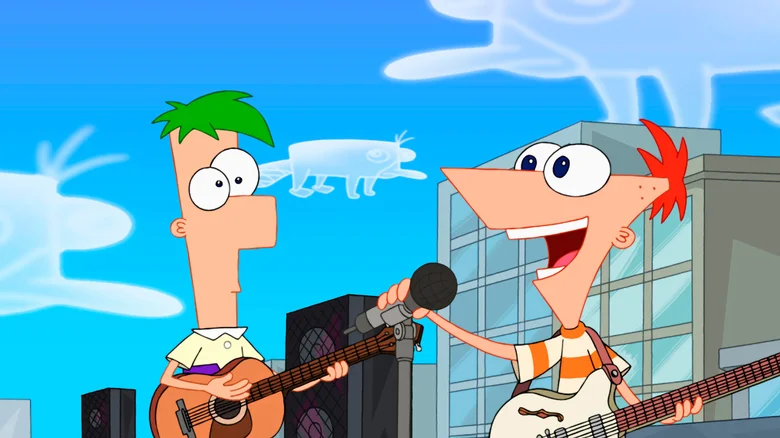
Music eventually became one of the defining ingredients of Phineas and Ferb.
There were rock songs, ballads, jingles, parody numbers, villain songs and elaborate musical sequences covering almost every genre imaginable.
But that wasn’t necessarily the original plan.
The change came after “Flop Starz,” an early episode in which Phineas and Ferb become pop stars.
Povenmire and Marsh created an original song for the story and played it for Disney executives.
The reaction was strong enough that Disney encouraged them to keep doing it.
From then on, creating an original musical number became part of the show’s regular production rhythm.
The method could be surprisingly informal.
Povenmire, Marsh and musical members of the writing team might develop a song near the end of the working week and send the basic version to composer Danny Jacob.
Within days, the rough concept could begin evolving into a proper track.
That process eventually produced an enormous catalog of music and helped give Phineas and Ferb an identity unlike almost any other animated series of its era.
The Giant Floating Baby Head Exists Because Someone Thought It Was Funny
Trying to explain every joke in Phineas and Ferb is probably a mistake.
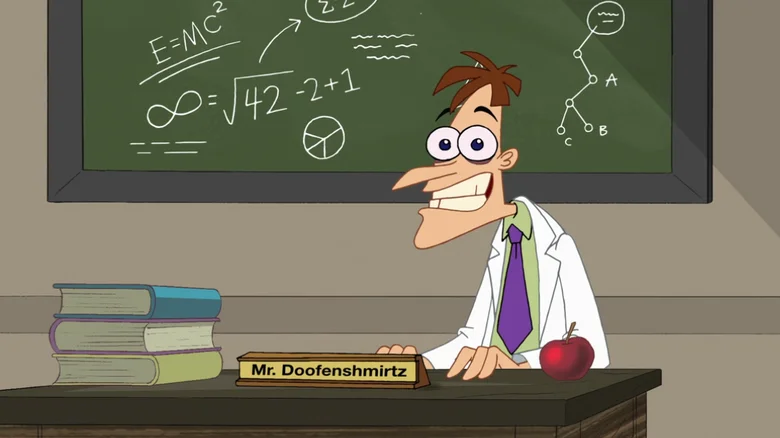
The Giant Floating Baby Head is a perfect example.
The bizarre object occasionally appears without much explanation: an enormous smiling infant’s head floating through the world.
There is no deep mythology required to understand it.
It began as a visual gag.
Because Phineas and Ferb was developed with unusually heavy involvement from storyboard artists, members of the visual team had significant freedom to contribute jokes that might never have existed in a traditional script-first production.
One storyboard panel included the strange baby head.
A director found it hilarious and expanded the idea.
The gag survived.
And then it kept coming back.
Marsh and Povenmire never seemed particularly interested in giving it an elaborate meaning.
It made them laugh.
For Phineas and Ferb, that was sometimes enough.
Perry Was Chosen Because Almost Nobody Had Strong Feelings About Platypuses
A secret-agent dog might have been too obvious.
A spy cat wasn’t much better.
So the creators gave Phineas and Ferb a platypus.
The obscurity of the animal was actually one of Perry’s biggest advantages.
Povenmire and Marsh believed most children didn’t already have a strong mental image of how a platypus should behave.
That gave the show creative ownership.
Once children met Perry, the strange teal creature who disappeared whenever he put on a fedora could become their default image of a platypus.
There was also a more practical reason.
The creators didn’t want the show to create a craze in which children begged their parents to buy the same animal they saw on television.
Hollywood has occasionally triggered exactly that problem when movies featuring certain dog breeds cause sudden demand for those pets.
Nobody was likely to walk into the local pet store and casually leave with a platypus.
And so Perry became perfect: unfamiliar, visually strange and almost impossible to imitate as an ordinary household pet.
He also became arguably the show’s biggest breakout character.
A platypus who barely speaks somehow turned into one of Disney Channel’s most recognizable heroes.
Disney Considered Expanding the World With More Spinoffs
With such a large supporting cast, Phineas and Ferb naturally generated ideas for other shows.
A few actually made it onto television.
Others disappeared during development.
One proposal focused on the Fireside Girls, the endlessly capable scout-like group led by Isabella. Considering how frequently they helped Phineas and Ferb complete impossible construction projects, they certainly had enough personality for their own adventures.
That project never became a regular series.
Another idea centered on Perry’s spy organization, O.W.C.A. — the Organization Without a Cool Acronym.
That concept did reach audiences in the form of the hour-long special The O.W.C.A. Files, following Perry and other animal agents.
But it never turned into a continuing standalone series.
Meanwhile, Take Two with Phineas and Ferb had already offered another unusual extension of the franchise by allowing Phineas and Ferb to “interview” real celebrities.
The various experiments showed just how expandable the show’s world had become — even if the original formula remained difficult to improve upon.
One Fan’s Drawing Eventually Helped Her Work on the Show
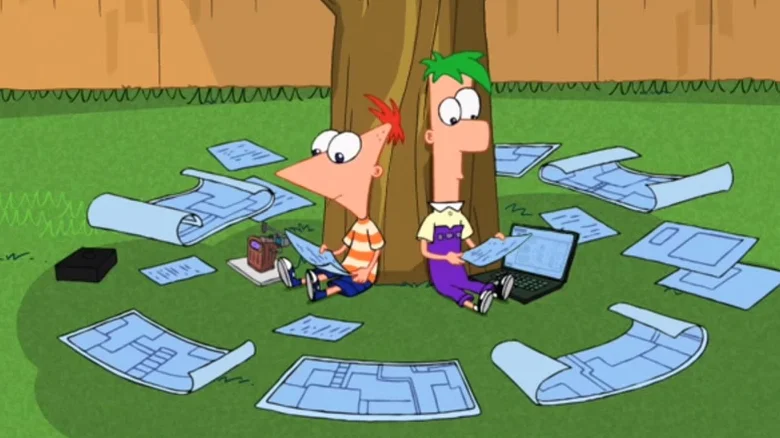
Perhaps the most fitting behind-the-scenes story involves a fan who did exactly what the show constantly encouraged its young audience to do:
She created something.
A Canadian animation student named Ashley attended San Diego Comic-Con in 2012 hoping to meet Povenmire and Marsh.
She brought them artwork imagining Phineas and Ferb as teenagers.
The creators responded enthusiastically.
For Ashley, simply receiving that encouragement would already have made the encounter memorable.
But the story didn’t end there.
Marsh later found her work online and invited her to visit Disney Television Animation.
Then came an even more remarkable message.
The production asked whether she would be interested in doing character design work for Phineas and Ferb.
A fan who had approached the creators with her own drawing ended up receiving her first professional freelance opportunity from the very show she admired.
It almost sounds like the plot of an episode.
Someone has a crazy idea.
They make something.
They show it to the world.
And suddenly that idea opens a door they never expected.
The Long Road Was Part of What Made Phineas and Ferb Special
It is easy to look at Phineas and Ferb now and imagine that its appeal must have been obvious from the beginning.
Two relentlessly optimistic brothers.
A sister who can never prove what they’re doing.
A nearly silent stepbrother.
An evil scientist with ridiculously specific inventions.
A secret-agent platypus.
Original songs almost every episode.
It sounds like a formula designed to become a hit.
But it wasn’t.
The concept spent years being rejected before Disney finally gave it a chance.
Perhaps that long development period helped Povenmire and Marsh understand exactly what they wanted the series to be.
At its heart, Phineas and Ferb was never really about roller coasters, robots or enormous backyard inventions.
It was about possibility.
Phineas rarely asks whether an idea is practical. Ferb doesn’t waste much time explaining why something might fail. They simply decide that today is available, so they might as well do something with it.
That optimism gave the show a quality that survived all the absurdity around it.
The inventions disappeared.
Candace rarely got her proof.
Doofenshmirtz’s plans collapsed.
And tomorrow, Phineas and Ferb simply came up with another idea.
For a cartoon about making the most of summer vacation, that may have been the biggest idea of all.