Nathan Lane Recalls Working with ‘Kind and Brilliant’ Robin Williams on The Birdcage
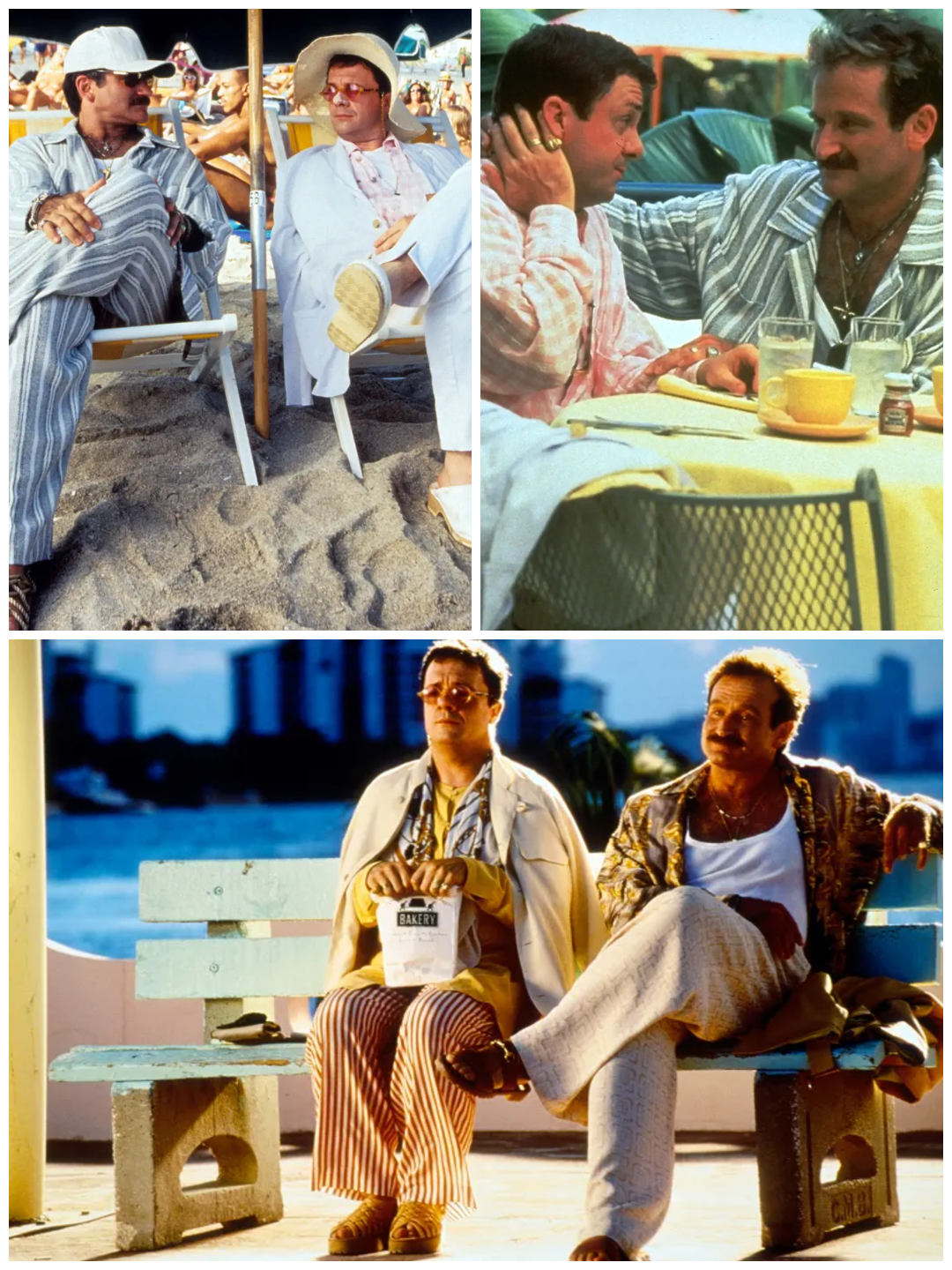
Thirty years after The Birdcage became one of the most beloved comedies of the 1990s, Nathan Lane is looking back at the man who helped make his breakthrough possible.
Robin Williams was already one of the biggest movie stars in the world when the 1996 comedy was being assembled. Lane, by comparison, had not yet become the household name he would later be.
But according to Lane, Williams never treated that difference in status as a reason to push him aside.
Quite the opposite.
Lane recently recalled that Williams had originally been expected to play the flamboyant role of Albert Goldman — the character Lane ultimately made famous. Steve Martin was supposed to play Armand, Albert’s more restrained partner.
When Martin became unavailable, however, Williams made a surprising choice.
Rather than simply taking over as the biggest comic personality in the movie, Williams decided to play Armand instead.
That opened Albert for someone else.
And eventually, that someone was Nathan Lane.
Robin Williams Was Originally Supposed to Play Albert
During an appearance on The Howard Stern Show, Lane explained that the original version of The Birdcage would have looked dramatically different.
“It was supposed to be Steve Martin and Robin,” Lane said.
Williams was going to play Albert, while Martin was set to play Armand.
But when Martin had another commitment, the plan changed.
According to Lane, Williams felt that after making Mrs. Doubtfire, he should take the more subdued role this time.
That meant Armand.
And suddenly, Albert was available.
It is fascinating to imagine the alternate version.
Williams had already demonstrated in Mrs. Doubtfire that he could create a large, theatrical comic character. Albert, a drag performer prone to dramatic reactions and emotional flourishes, would have given him another opportunity to dominate the screen with that kind of energy.
Instead, Williams deliberately stepped into the quieter role.
That decision created the opportunity that would transform Lane’s film career.
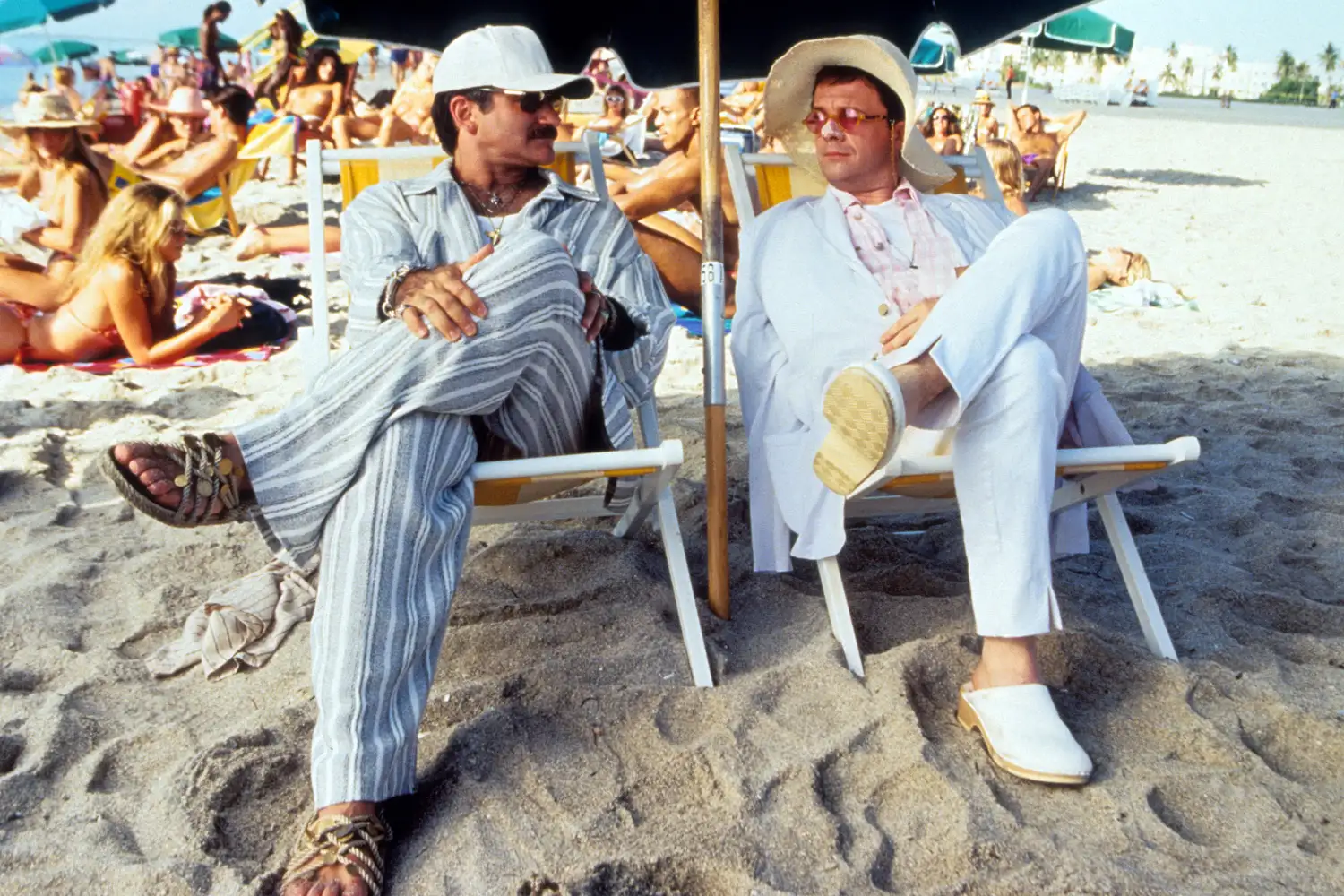
Lane Was Not Yet a Major Movie Star
By 1996, Lane had already built a strong career in theater and had appeared in movies, but The Birdcage was by far the biggest film role he had been given.
Williams, meanwhile, had already starred in Good Morning, Vietnam, Dead Poets Society, Aladdin, Mrs. Doubtfire and numerous other hits.
The imbalance in Hollywood status was enormous.
Lane told Stern that Williams could easily have demanded another famous actor as his costar.
“He was an enormous movie star,” Lane recalled.
Williams could have insisted that the production find someone like Billy Crystal — another established star capable of matching his name recognition.
He did not.
Instead, Williams saw Lane’s screen test and supported the casting.
Lane said Williams trusted director Mike Nichols’ judgment that he was right for the role.
For Lane, that support mattered enormously.
Williams did not simply tolerate an actor with a smaller film profile.
He backed him.
Williams Had Given Up the Part With the Biggest Comic Opportunities
There was one potentially awkward element to the arrangement.
Albert gets many of The Birdcage’s biggest comic moments.
He is emotional, theatrical and frequently outrageous. Lane gets to wear elaborate costumes, deliver enormous reactions and push scenes toward chaos.
Williams, meanwhile, spends much of the movie playing Armand as the calmer force trying desperately to hold everything together.
Howard Stern asked Lane whether that ever bothered Williams.
Lane said no.
He described Williams as “kind,” “brilliant” and extraordinarily generous.
After the film was finished, however, Williams did admit something to him.
During a dinner, Williams said that there had been moments when he watched Lane playing Albert and wondered whether he had made the right decision.
It is easy to understand why.
Albert is an actor’s playground.
But Lane said Williams never allowed that private thought to turn into jealousy or competition.
“No one could have been more supportive and loving,” Lane recalled.
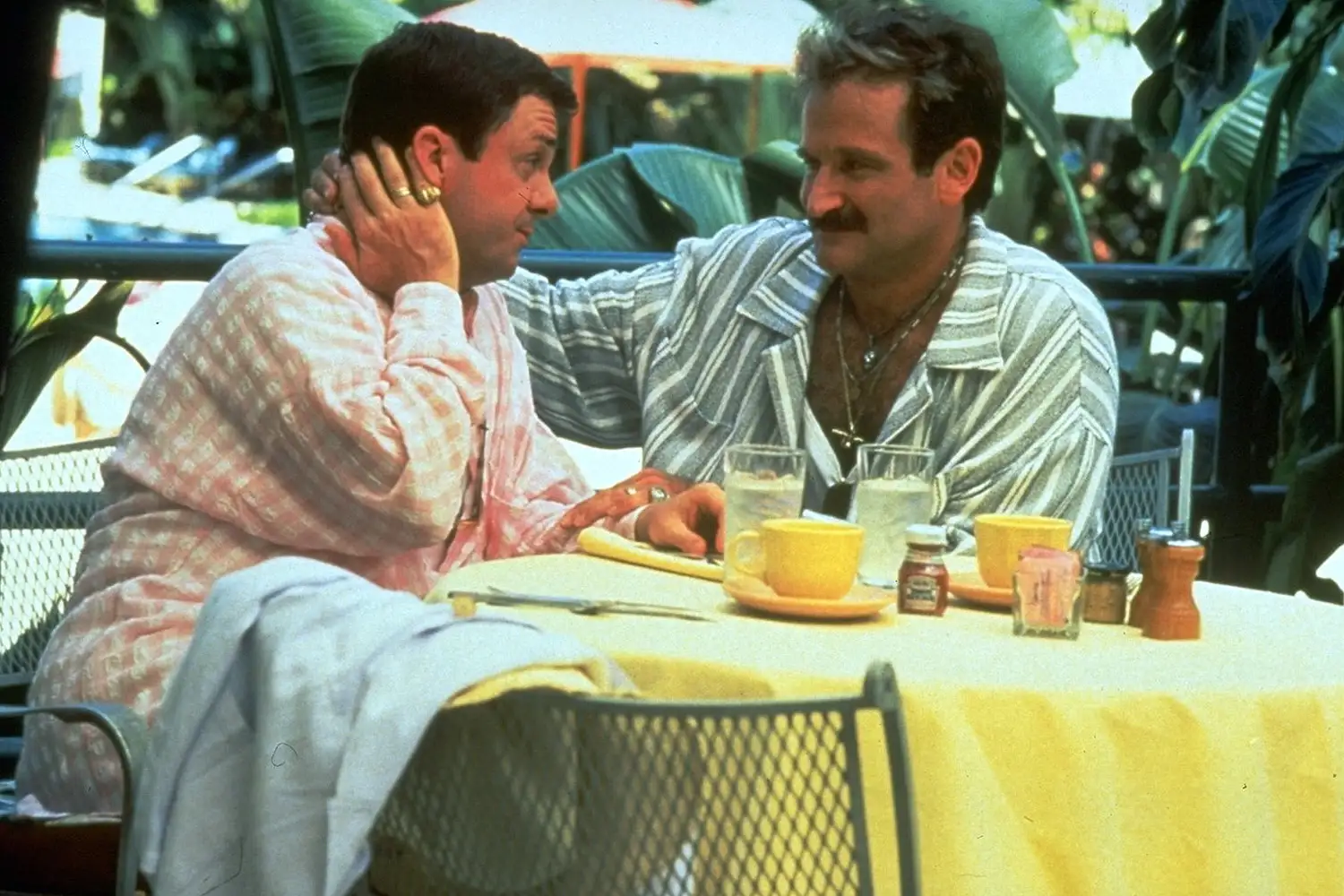
Their Different Energies Are Exactly Why the Movie Works
In retrospect, the casting seems almost perfectly balanced.
Lane’s Albert is explosive.
Williams’ Armand often has to react to him.
In one of the movie’s central setups, Armand and Albert learn that their son Val is engaged to Barbara, the daughter of ultra-conservative Senator Kevin Keeley.
Val is terrified that Barbara’s parents will discover that his father owns a drag club and lives with another man.
So the family attempts to reinvent itself for one disastrous dinner.
Armand tries to appear conventional.
Albert is initially supposed to stay away.
Naturally, almost nothing goes according to plan.
The film depends on a careful comic contrast: Albert can go enormous because Armand is constantly trying to contain the situation.
If both characters had been played at the same level of comic intensity, the movie might have felt completely different.
Williams’ willingness to underplay certain moments gives Lane more room to explode.
And Lane’s theatricality gives Williams something wonderfully unpredictable to react to.
Lane Could Keep Up When Williams Improvised
There was another reason Williams apparently enjoyed working with Lane.
Improvisation.
Williams was famous for abandoning the exact wording on the page and taking scenes into unexpected territory.
For another actor, that could be intimidating.
Lane could follow him.
“He loved that if he improvised, that I could go with him where he wanted to go,” Lane remembered.
That ability helped turn their scenes into genuine exchanges rather than one performer simply trying to survive Robin Williams’ comic instincts.
Lane clearly still considers that experience extraordinary.
“He was the greatest,” he said.
The compliment carries additional weight because Lane was not just praising Williams as a comedian.
He was talking about Williams as a scene partner.
In Lane’s telling, Williams’ greatness was partly defined by how willing he was to make the other actor better.
The Birdcage Became a Major Breakthrough
Directed by Mike Nichols from a screenplay by Elaine May, The Birdcage also starred Gene Hackman, Dianne Wiest, Calista Flockhart, Dan Futterman and Hank Azaria.
The movie became a major commercial success and helped introduce Lane to a far broader audience.
Lane would go on to build an acclaimed career across Broadway, television and film.
But he has never forgotten what The Birdcage meant at that stage of his career.
When Stern mentioned that the movie represented an enormous break for him, Lane agreed.
It was the biggest film role he had received up to that point.
And the opportunity existed partly because Williams was willing to give up the role that originally belonged to him.
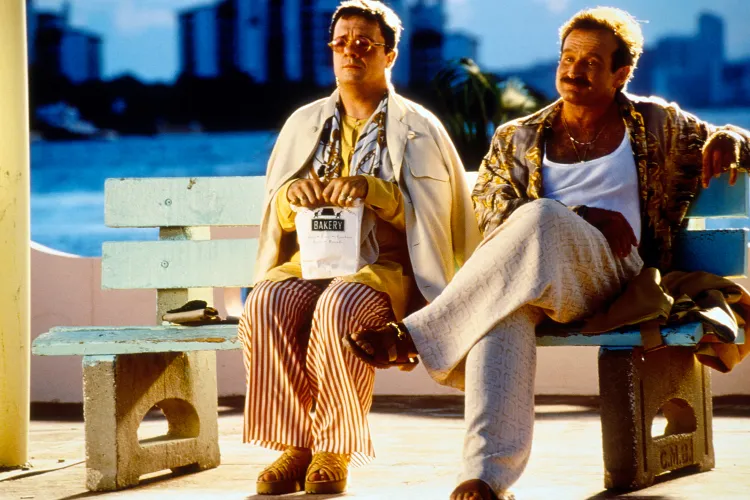
Williams’ Generosity Extended Beyond the Screen
Lane’s recollection is especially poignant because Williams died in 2014 at age 63.
In the years since, many of Williams’ costars have shared stories about his improvisational genius.
But some of the most revealing memories have focused on something else: his generosity.
Lane’s story combines both.
Williams was an enormous star who could have used his influence to shape The Birdcage around himself.
He could have demanded an equally famous costar.
He could have taken Albert, the role with many of the movie’s loudest laughs.
He could have resented watching another performer take advantage of material that once might have been his.
Instead, according to Lane, he supported him.
That choice helped create one of the most memorable screen partnerships of both actors’ careers.
Thirty Years Later, Lane Remembers the Man Behind the Performance
Watching The Birdcage today, it is difficult to imagine anyone other than Nathan Lane playing Albert.
His gestures, delivery and emotional intensity became inseparable from the character.
But it almost did not happen.
Robin Williams was originally expected to play the role.
Then circumstances changed.
Williams moved to Armand.
Lane got his chance.
And rather than treating the younger film actor as competition, Williams encouraged him.
Three decades later, that is the detail Lane still seems to treasure.
Williams was brilliant enough to know how funny Albert could be.
He even admitted that there were moments when he wondered whether he should have kept the role.
But he was also generous enough to let Lane make it entirely his own.
For Nathan Lane, The Birdcage was a career-changing opportunity.
Robin Williams helped open the door.