Target Pulls Clown Halloween Costume After Backlash, Says ‘We Got This Wrong’ in Apology Note
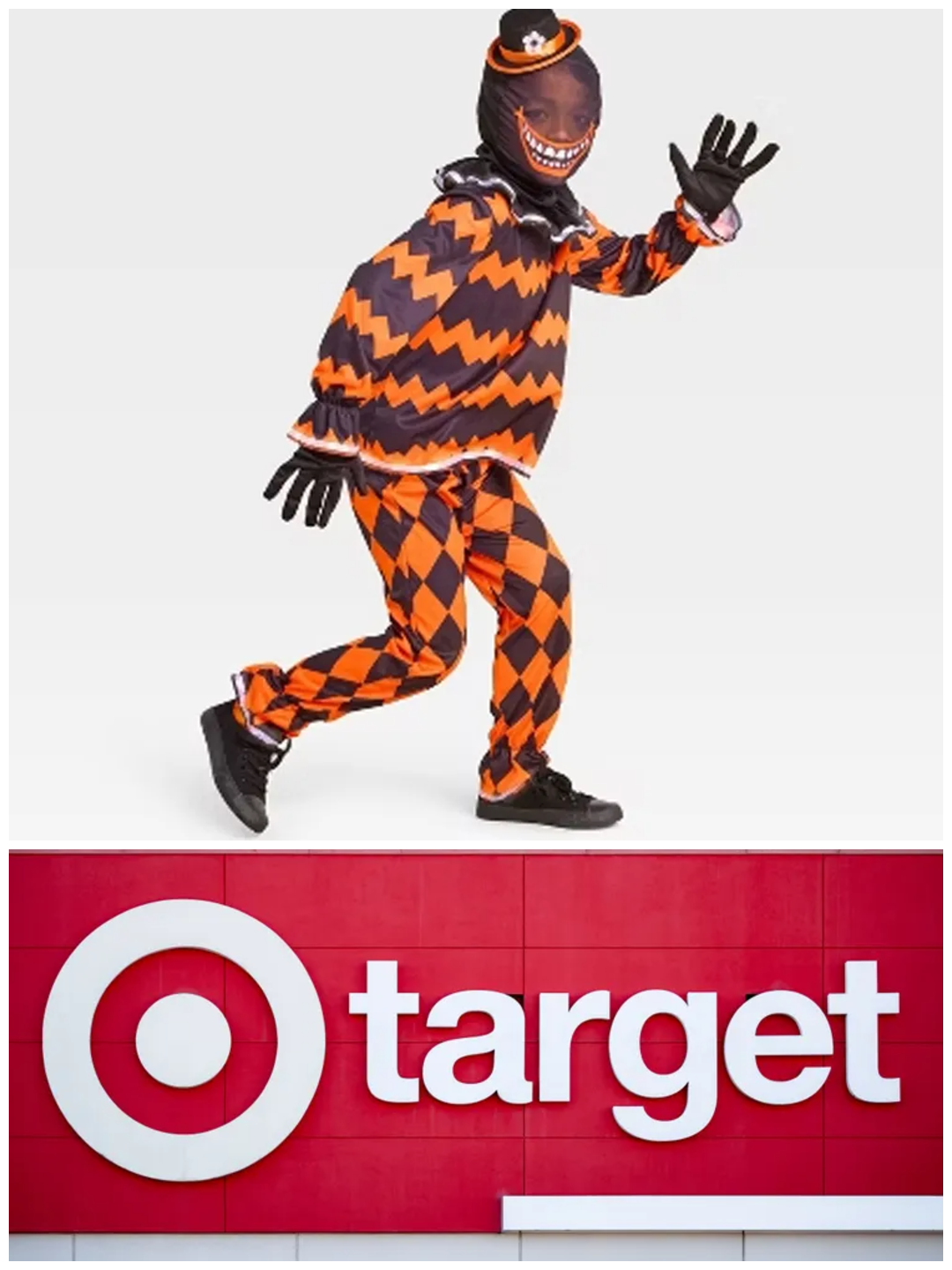
Target has removed a children’s Halloween costume from sale after images of the outfit triggered widespread criticism online, with shoppers arguing that its design evoked racist imagery associated with blackface and minstrel shows.
The retailer issued a public apology on Aug. 24 after the costume, sold as the “Kids’ Glows Under Blacklight Circus Clown Halloween Costume,” began circulating on social media.
Target did not attempt to defend the design.
Instead, the company acknowledged that the product never should have made it into stores or onto its website.
“As a company, we know we got this wrong, and we are deeply sorry,” Target said in its statement.
The retailer confirmed that the costume had been removed from sale and said it was now examining how the product was approved in the first place.
“The costume is offensive and should never have been part of our assortment,” Target said.
The Costume Featured an Exaggerated Smile and Black Gloves
The controversy centered on the way the children’s clown costume was designed and marketed.
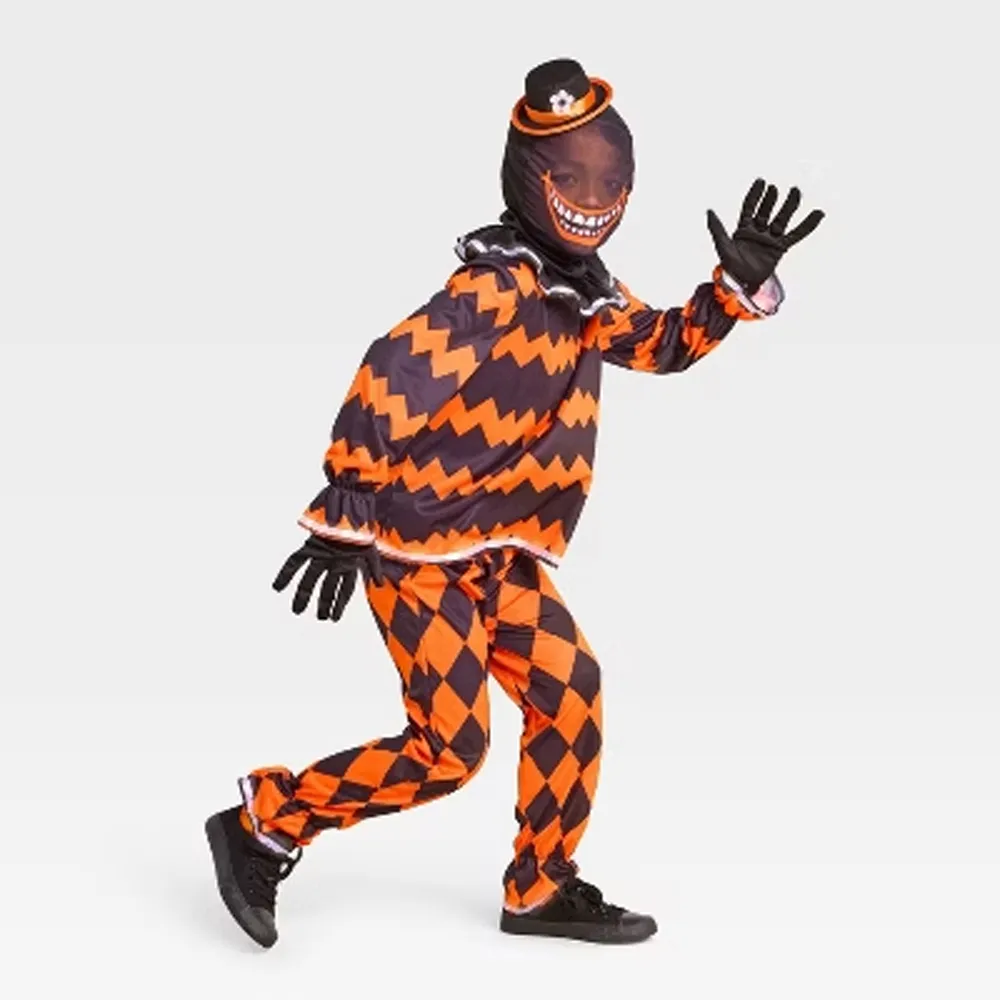
Photos from Target’s website showed a Black child modeling an orange-and-black circus-style outfit.
The costume included solid black gloves, a dark hood and a face covering featuring an exaggerated, wide toothy smile. A small top hat completed the clown look.
The product was part of Target’s seasonal Hyde and EEK Boutique Halloween collection and reportedly sold for about $25.
On its own, Target apparently intended the outfit to resemble a creepy circus clown that would glow under blacklight.
But once photos began spreading online, many viewers said they saw something very different.
Critics argued that the combination of the Black child model, dark face covering, oversized smile, gloves and posing strongly resembled racist caricatures used during the history of blackface minstrelsy.
Those comparisons quickly transformed an ordinary seasonal product into a much larger controversy.
Social Media Users Asked How the Costume Was Approved
Much of the criticism focused not only on the costume itself but on the number of decisions that presumably had to occur before customers ever saw it.
Someone designed the outfit.
Someone approved it.
It was produced, photographed, placed on a child model, marketed and eventually offered for sale by one of America’s largest retailers.
That sequence led critics to question how no one involved in the process recognized the potential racial associations before the costume reached consumers.
Comedian LaTrez Anderson was among those who publicly criticized the product, while other social media users shared images of historical minstrel caricatures alongside Target’s promotional photograph to explain why they found the resemblance disturbing.
The backlash grew quickly enough that Target removed the product.
By Monday, the company was issuing a formal apology.
Target Specifically Apologized to Black Customers and Employees
Target’s statement went beyond saying that some customers had misunderstood the costume.
The company itself described the product as offensive.
Target also acknowledged that the incident could be especially painful for Black people connected to the retailer.
“We know this is especially hurtful for our Black guests, team members and partners,” the company said.
Target described removing the costume as only an “important first step.”
The retailer said it is now investigating both how the product entered its Halloween assortment and what internal changes may be necessary to prevent something similar from happening again.
The company did not publicly identify the individual or team responsible for designing or approving the costume.
Reuters reported that Target declined to provide further information about who created the product or exactly how it passed through the company’s approval process.
That unanswered question has become one of the most significant parts of the controversy.
Target has acknowledged the mistake.
Now shoppers want to know how the mistake traveled so far before anyone stopped it.
Why the Imagery Drew Such a Strong Reaction
The criticism surrounding the costume is rooted in a particularly painful part of American entertainment history.
Blackface minstrel performances became popular in the 19th century and frequently featured white performers darkening their faces while portraying Black people through exaggerated stereotypes.
Those performances often included oversized mouths, exaggerated expressions and other visual caricatures designed to mock Black Americans.
The imagery persisted in American popular culture for decades and is now widely recognized as racist.
Critics of Target’s costume said that history made its design especially troubling.
The concern was not simply that the costume contained black fabric.
Rather, critics pointed to the full combination of the exaggerated smiling mask, dark facial presentation and marketing photograph featuring a Black child.
Target’s decision to call the product offensive rather than defending it indicates that the company agreed the criticism was serious enough to warrant immediate removal.
The Timing Is Particularly Difficult for Target
The controversy arrives during an already complicated period for the retailer.
In January 2025, Target announced changes that rolled back several diversity, equity and inclusion initiatives.
That decision generated its own backlash and led some customers and activists to call for boycotts of the company.
Reuters reported that Minneapolis business leader Sheletta Brundidge, who had previously worked with Target, questioned whether the Halloween-costume controversy demonstrated the consequences of having fewer diverse voices involved in corporate decision-making.
That context has made the clown-costume incident more damaging than an isolated product mistake might otherwise have been.
For critics already unhappy with Target’s DEI changes, the question became larger:
Would someone inside the company have flagged the costume earlier if more people with different cultural backgrounds had been involved in reviewing it?
Target has not said that its DEI policy changes were responsible for the product reaching shelves.
But the timing has inevitably linked the two issues in the public conversation.
Target Has Faced Other Culture-War Controversies
The company has spent several years navigating disputes over how it handles socially sensitive merchandise.
In 2023, Target faced criticism and threats over parts of its Pride Month collection.
The retailer eventually moved some merchandise and removed other products, a response that in turn angered LGBTQ+ advocates who accused Target of giving in to intimidation.
Then came the 2025 retreat from several diversity initiatives.
Now the Halloween-costume controversy has created another reputational challenge.
Unlike some earlier disputes in which Target attempted to balance competing political or consumer pressures, the company’s response this time was unequivocal.
It did not describe the costume as misunderstood.
It did not blame the reaction on social media.
It said Target itself had failed.
The Product Is Gone — but the Bigger Question Remains
For customers searching Target’s Halloween collection, the clown costume is no longer available.
That is the immediate consequence of the controversy.
But Target’s own apology makes clear that the company considers the issue larger than simply deleting one product listing.
It has promised to review how the costume reached the market and what must change internally.
That investigation may ultimately be the more important part of the story.
A major retailer can remove an offensive product within hours once public outrage begins.
Preventing that product from ever appearing in the first place is a much more complicated task.
For now, Target has offered one unusually direct acknowledgment.
The company says critics were right that the costume should not have been sold.
“We got this wrong,” Target said.
And after days of shoppers asking how such a product could make it through the company’s approval process, Target is now asking essentially the same question itself.