Beyoncé Honors Dolly Parton After Her Death, Remembering the Country Legend Who Welcomed Her Into ‘Cowboy Carter’
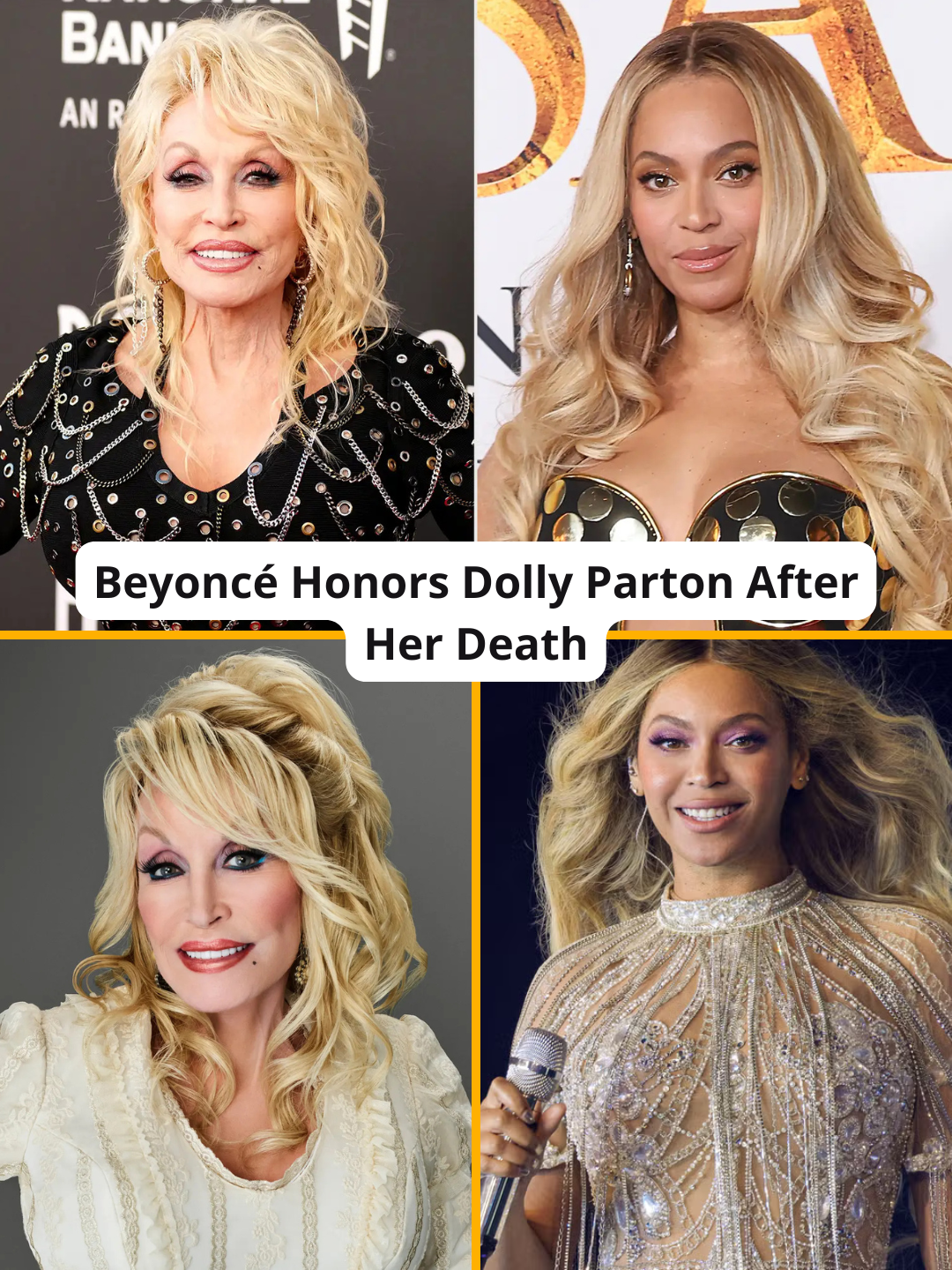
Beyoncé is remembering Dolly Parton not simply as a country music legend, but as an artist whose individuality, generosity and creative fearlessness helped set a standard for generations who followed her.
Hours after Parton’s death was announced on Tuesday, Aug. 25, Beyoncé shared an emotional tribute on her official website honoring the woman she had worked with only two years earlier on her groundbreaking album Cowboy Carter.
Calling Parton both a guiding light and a singular creative force, Beyoncé reflected on what it meant to collaborate with someone whose career had stretched across decades, genres and generations.
“You were the barometer. The North Star,” Beyoncé wrote, describing Parton as bold, brilliant, talented and tenacious. She added that Parton had shown countless people how to remain unmistakably themselves even while navigating an industry that often encourages artists to fit into established categories.
For Beyoncé, however, the tribute was also personal.
She expressed gratitude for Parton’s music, humor, generosity and entrepreneurial spirit before acknowledging how much she valued their brief professional connection.
“I’m honored that I had the privilege to work with you,” Beyoncé wrote. “I will treasure that forever.”
Beyoncé Called Parton an ‘Angel’
Beyoncé accompanied her message with a black-and-white photograph of Parton smiling in a cowgirl hat and plaid shirt — an image that captured the playful country style that had become inseparable from her public persona.
But Beyoncé’s words focused less on Parton’s familiar image than on what she believed existed behind it.
She thanked Parton for the lasting effect she had on the world and described her as an “angel” whose joyful work had made life happier for others.
Her tribute concluded by calling Parton “one of one” and wishing her peace.
The message was one of many that poured in from musicians, actors and public figures after Parton’s death at age 80.
Parton died peacefully in Nashville following what her representatives described as a brief battle with cancer. She was surrounded by loved ones at Vanderbilt-Ingram Cancer Center, according to her publicist.
The loss immediately prompted tributes from across entertainment, underscoring how unusually broad Parton’s influence had become during her nearly seven-decade career.
For Beyoncé, that influence had recently become part of her own musical story.
Dolly Became Part of ‘Cowboy Carter’
When Beyoncé released Cowboy Carter in March 2024, the album was far more complicated than a simple move into country music.
It explored the history of Black artists within country, folk, Americana and other musical traditions while challenging assumptions about who gets to belong in particular genres.
Parton became one of the most recognizable voices connected to the project.
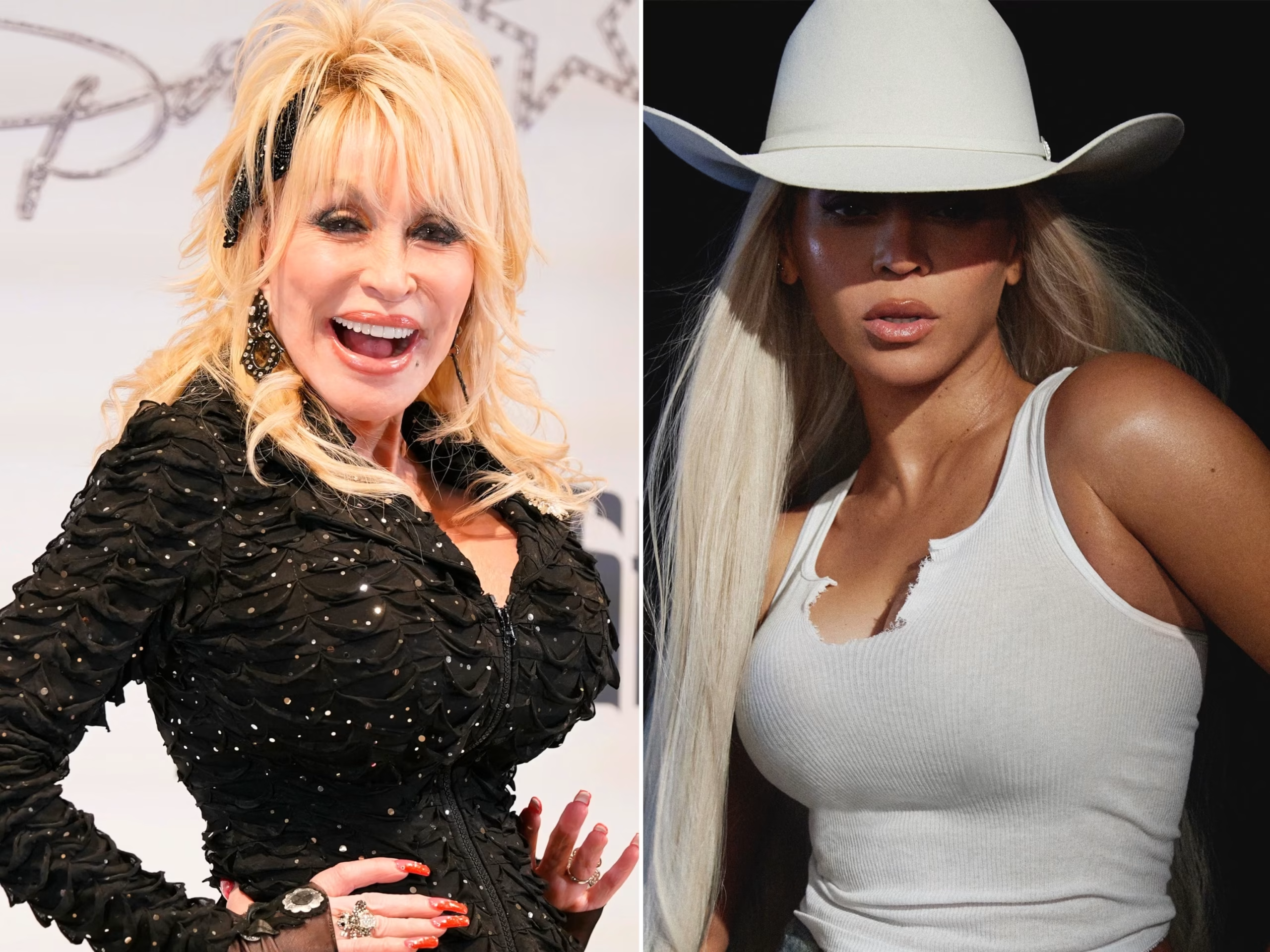
She appeared on the brief spoken-word interlude “Dolly P,” which leads directly into Beyoncé’s reinterpretation of “Jolene.” Parton also appeared on “Tyrant.”
The inclusion carried obvious symbolic weight.
Parton had written and released “Jolene” in 1973, turning a simple plea to another woman into one of the most enduring songs in country music history.
More than 50 years later, Beyoncé approached the famous story very differently.
Rather than pleading with Jolene not to take her partner, Beyoncé transformed the narrator into a woman issuing a warning.
That change was impossible to miss.
And Parton loved it.
Parton Praised Beyoncé for Changing ‘Jolene’
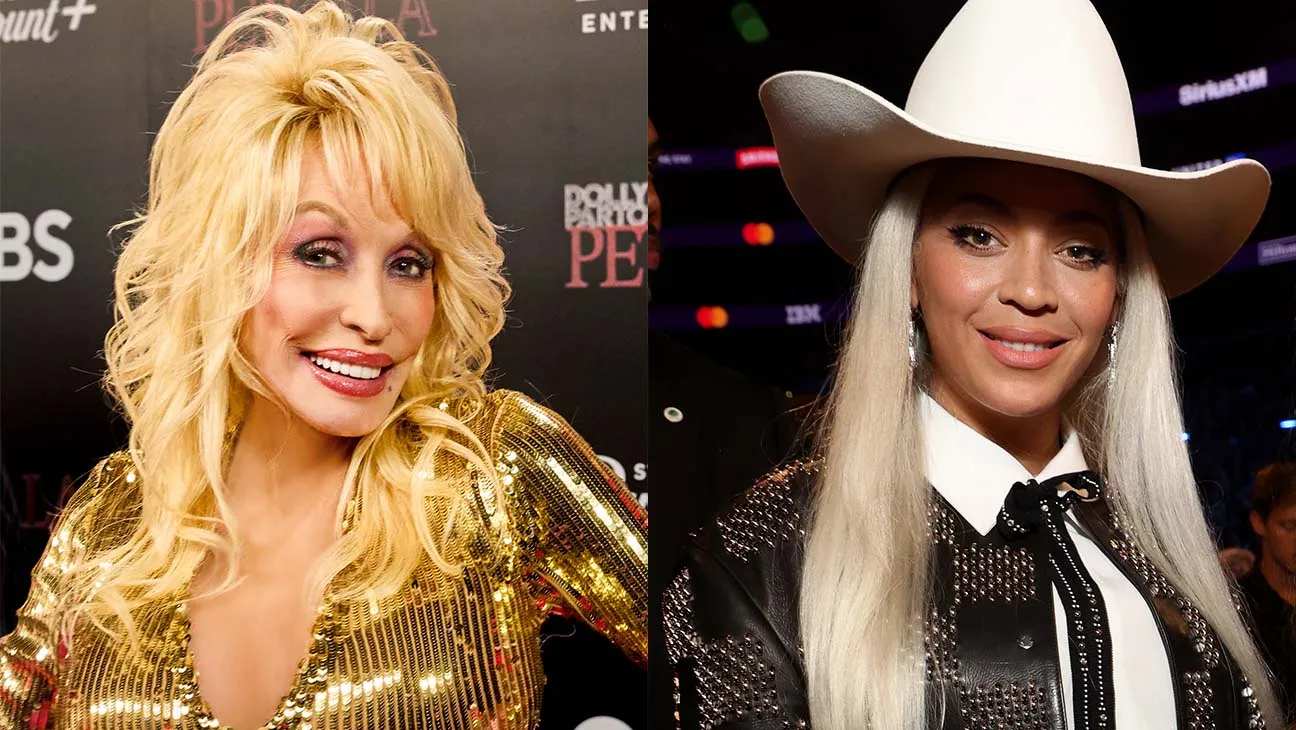
In a June 2025 interview with PEOPLE, Parton spoke enthusiastically about Beyoncé’s decision to rewrite parts of the song rather than simply reproducing the original.
Parton explained that her own narrator was essentially begging Jolene to stay away, while Beyoncé’s version sounded far more confrontational — more like a declaration that Jolene would have to get through her first.
Instead of objecting to the changes, Parton saw them as part of what makes songwriting interesting.
She said she enjoyed hearing how other artists interpreted her music and appreciated the ways they could place their own personalities inside songs she had originally written from a different perspective.
Parton said she was proud of Beyoncé’s version and also praised Cowboy Carter as a very strong album.
Her admiration extended well beyond that particular recording.
“I’m a huge fan of hers,” Parton told PEOPLE, calling Beyoncé a magnificent artist and praising not only her singing but her performance ability.
That mutual admiration makes Beyoncé’s tribute following Parton’s death especially meaningful.
Their collaboration was not simply an older country star granting approval to a younger artist experimenting with the genre.
It represented two enormously successful women from very different musical traditions recognizing something familiar in each other: the determination to control their own identities.
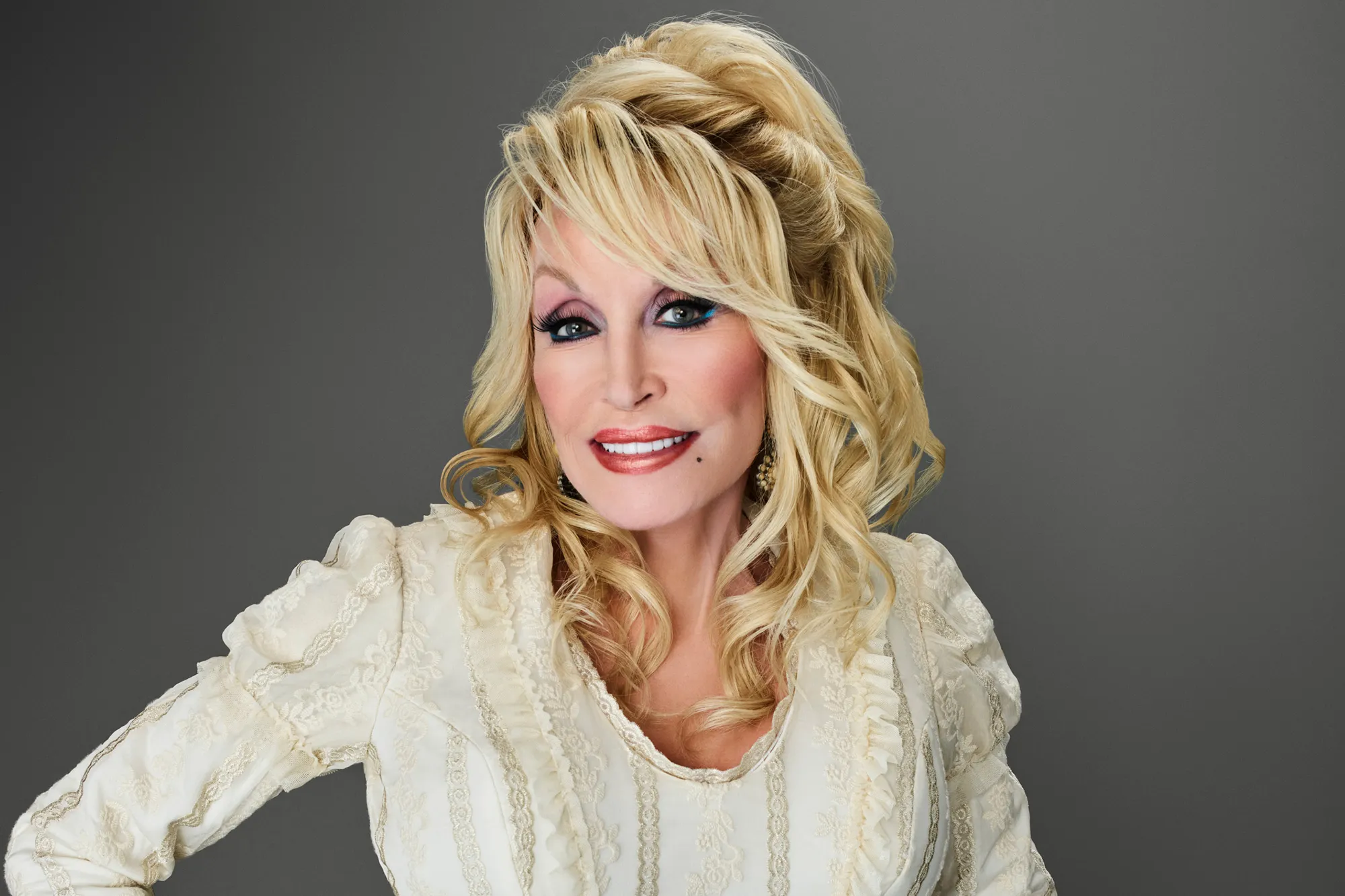
Two Careers Built Around Refusing to Fit Neatly Into One Box
There is an obvious connection between the qualities Beyoncé praised in Parton and the choices Beyoncé has made throughout her own career.
Parton spent decades navigating assumptions about how a female country singer should look, behave and conduct business.
She turned an exaggerated glamorous image into part of her brand while quietly becoming a prolific songwriter, businesswoman, actress and philanthropist.
She wrote thousands of songs, built businesses including Dollywood and established the Imagination Library, which has provided hundreds of millions of books to children.
Beyoncé has similarly spent years moving beyond the boundaries that once defined her.
From R&B and pop to rock, dance music and eventually the sprawling Americana influences of Cowboy Carter, she has repeatedly resisted the idea that one genre should determine what kind of artist she is allowed to become.
That helps explain why Beyoncé’s description of Parton as someone who taught people “how to be uniquely oneself” felt particularly fitting.
It was praise for Parton, but also an acknowledgment of the artistic freedom she represented.
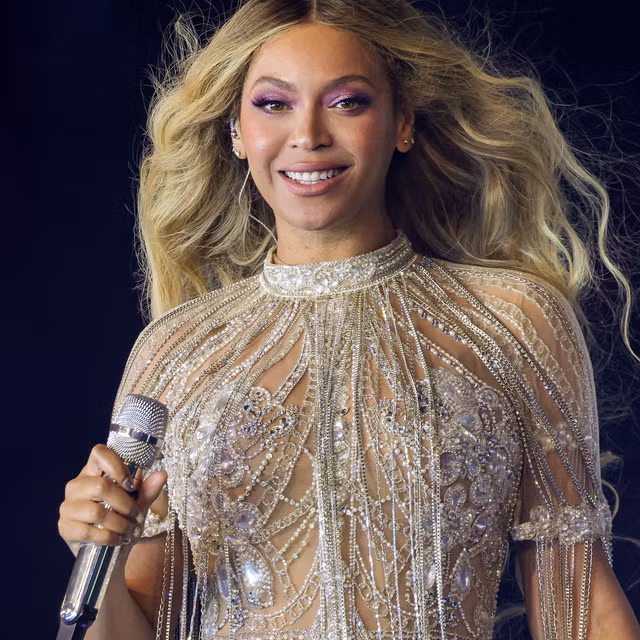
Their Collaboration Now Carries a Different Meaning
When Cowboy Carter arrived in 2024, hearing Parton’s voice on the album felt playful and celebratory.
She introduced Beyoncé’s version of one of her most famous songs and became part of an ambitious project examining the boundaries of American music.
Two years later, those recordings now carry the additional weight of being among Parton’s late-career collaborations.
Parton remained creatively active well into her final years, continuing to record music, appear publicly and encourage younger artists long after she had already secured her place in country music history.
Her career produced songs such as “Coat of Many Colors,” “9 to 5,” “I Will Always Love You” and, of course, “Jolene.” She sold more than 100 million records and became equally recognizable for her acting, humor and philanthropy.
But Beyoncé’s tribute focused on something achievements and statistics cannot fully measure.
She remembered the person whose work had brought joy to millions — and the woman who had welcomed Beyoncé’s reinvention of one of her most treasured songs rather than insisting that it remain untouched.
For an artist famous for constantly reshaping her own music, that approval clearly mattered.
And now, as Beyoncé put it, the chance to have worked with Dolly Parton is something she intends to treasure forever.