Faint Voices Lead Rescuers to Two Workers Trapped for 9 Days in Nepal Tunnel
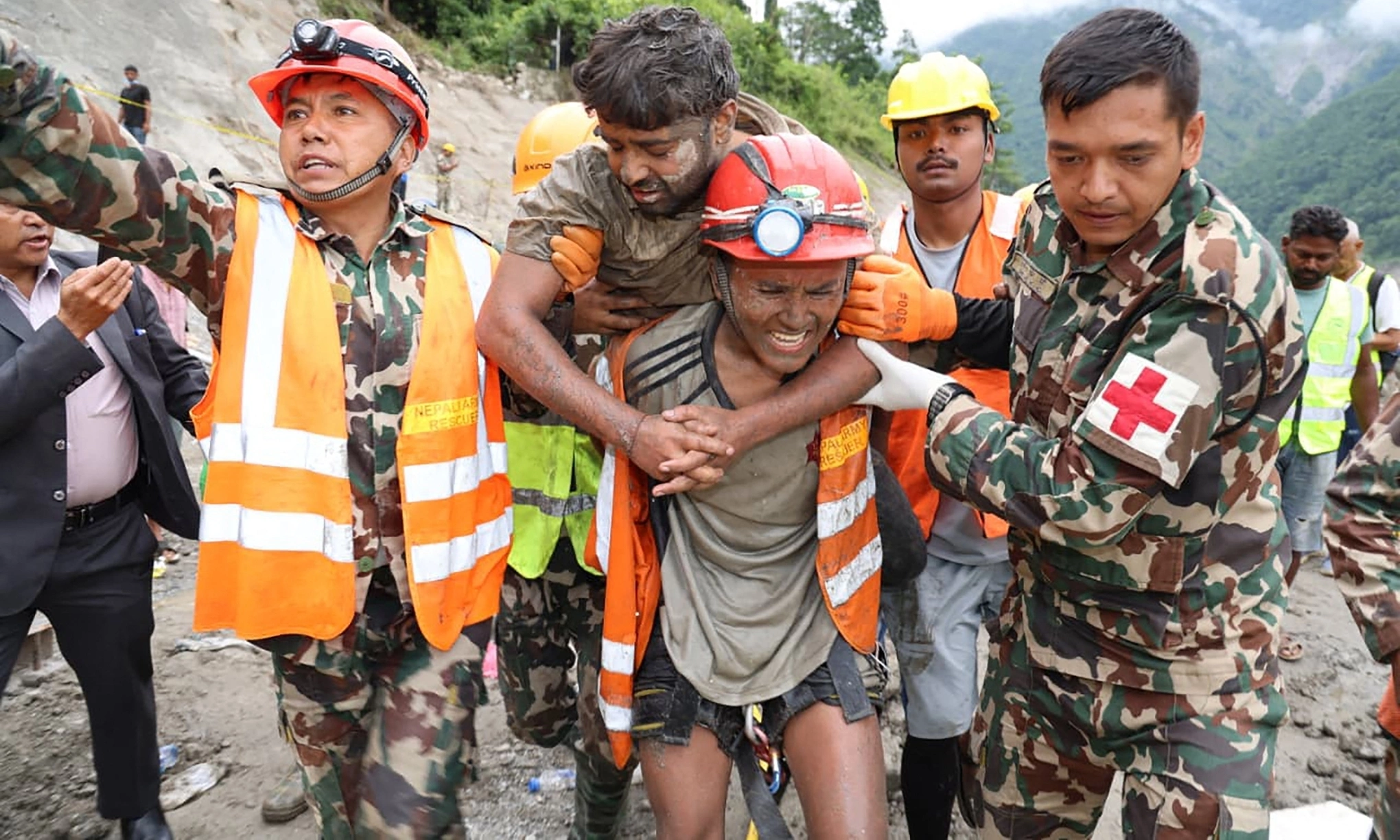
A faint voice echoing through the darkness of a mud-filled hydropower tunnel has led to the dramatic rescue of two workers who survived for nine days after devastating floods struck Nepal.
Australian geologist and engineer Arnold Dix was asked by the Nepalese authorities to help search for workers who could still be trapped inside hydropower tunnels following last week’s catastrophic flash floods.
He quickly realized the rescue operation would present extraordinary challenges.
The first task was simply finding the hydropower plant and identifying the entrances to its underground tunnels. Floodwaters and mud had destroyed much of the surrounding area, leaving rescuers with few visible landmarks.
“We spent almost two days just finding where the power plant used to be,” Dix said.
Hundreds of workers were reported missing inside hydropower tunnels after a glacial landslide on August 26 triggered powerful floodwaters across two river valleys. More than 1,300 people were killed and over 4,000 remained missing in Nepal and neighboring areas of China, according to the figures cited in the report.
Nepal has rapidly expanded its hydropower industry by harnessing the powerful rivers flowing through the Himalayas. The projects require complex underground tunnel systems built deep into the mountains.
Several hydropower facilities are located along the Bhotekoshi and Trishuli rivers, two areas that suffered some of the worst destruction.
Searching for a Safe Zone Underground
Dix and his team focused their efforts on the Trishuli 3A hydropower project.
Rescuers relied on engineering drawings, satellite images and old maps to identify potential “safe zones” — small underground spaces where people might have been able to survive the disaster.
Those records helped the team determine where to begin the search.
Much of the rescue effort was concentrated on a cable tunnel connecting the underground power plant to Nepal’s national electricity grid.
Dix traveled from Australia to Nepal to oversee the operation at the disaster site. He has previously advised underground rescue operations around the world, including a Himalayan tunnel collapse three years ago in which 41 workers were successfully rescued after being trapped for 17 days.
The Trishuli 3A operation was slow and extremely difficult.
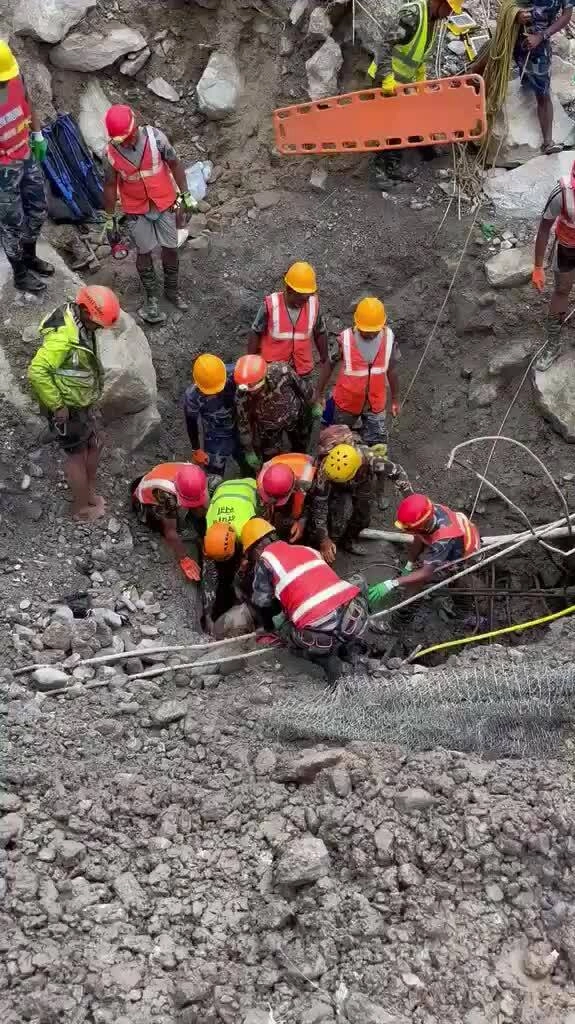
Rescuers had to dig through thick layers of mud and use explosives to break apart massive rocks as large as cars. Once they reached deeper sections of the tunnel, they faced another major threat: rising water.
The team had to dig a large drainage channel to redirect water toward a newly formed river created after the flood dramatically altered the landscape.
Dix said rescuers feared that water rushing into the tunnel could sweep away both the rescue team and anyone who might still be alive inside.
Faint Voices After Nine Days in Darkness
Eventually, rescuers managed to create a small opening along the roof of the cable tunnel and crawled inside.
They began calling out, hoping someone might respond.
On September 4, their efforts finally produced a remarkable breakthrough.
Dix said rescuers heard a faint response coming from the darkness.
At least two workers were found alive.
The survivors were immediately brought out and transported to Kathmandu for emergency medical treatment. One of them was reportedly in critical condition.
The two rescued workers were identified as Sanjay Sah, a mechanical foreman, and Kabir Maharjan, a mechanical supervisor. Both worked for the Nepal Electricity Authority.
According to two sources familiar with the rescue operation, more than 40 people were believed to remain trapped inside the tunnel.
Rescuers also reportedly heard additional voices coming from underground, raising hopes that more survivors could still be found. However, the exact number of people still alive remains unclear.
“I burst into tears,” Dix said when he learned that the two workers had been found alive.
But the rescue was far from over.
Dix said the two survivors had been completely isolated from the outside world for more than a week.
“They don’t know what has happened,” he said, explaining that the workers had spent more than nine days in darkness, unaware of the scale of the disaster.
They will eventually have to confront the devastating news that thousands of people have died, including friends and colleagues.
With little time to rest, Dix and the rescue teams immediately began documenting what they had learned at Trishuli 3A to develop strategies for reaching other underground hydropower facilities along the border.
“The efforts of the rescue team are extraordinary,” Dix said. “They are creating a real miracle amid the devastation.”
Course: NY Post