The Waves Were Too Powerful for His Rescue Tube. So the 16-Year-Old Lifeguard Held Onto the Boy Himself
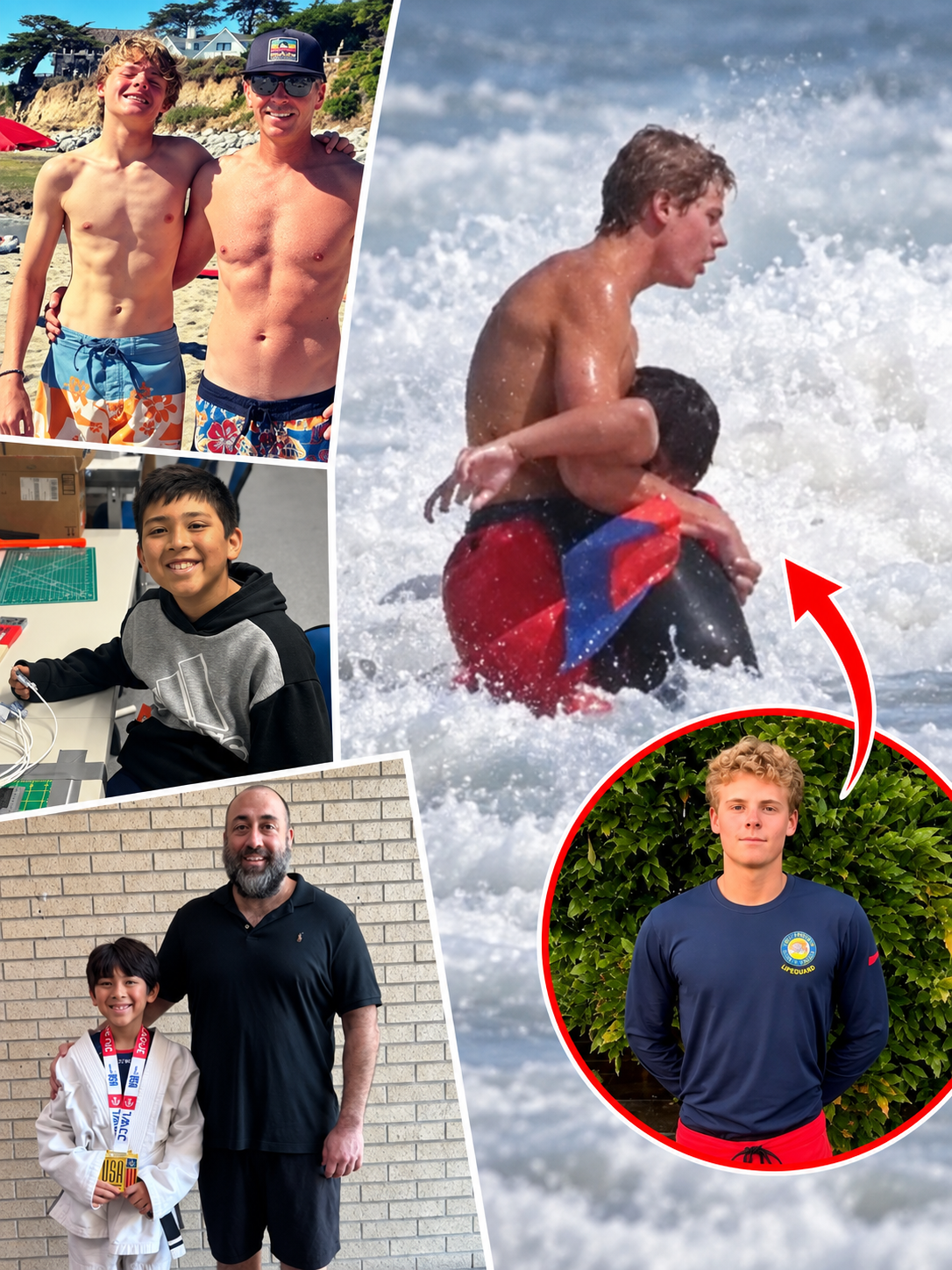
Ryder Williams went into the water with the tool lifeguards are trained to depend on.
Then the conditions changed what was possible.
At Seabright State Beach in Santa Cruz, California, on July 25, 2026, 16-year-old Ryder was trying to reach 10-year-old Nathaniel Rai during a day of unusually powerful surf.
According to California State Parks, the ocean that day was producing a large swell. Waves were regularly reaching about four to six feet, with some sets climbing as high as eight to 10 feet.
Ryder had a rescue tube with him.
But once he reached Nathaniel, the strength and frequency of the waves made it impossible to use the equipment in the ordinary way.
So the teenager adjusted.
He held onto Nathaniel himself.
That decision became the center of a rescue captured in footage later released by California State Parks: two young people repeatedly disappearing behind or beneath incoming waves, then becoming visible again as the surf continued to move around them.
The video is striking, but the sequence matters.
Ryder did not begin the day looking for a dramatic moment.
He was working as a lifeguard.
According to California State Parks, he saw Nathaniel lose his footing in relatively shallow water and recognized that the boy was in trouble.
Ryder moved toward him.
The danger was not defined simply by how far Nathaniel was from shore.
The conditions made even shallow water difficult.
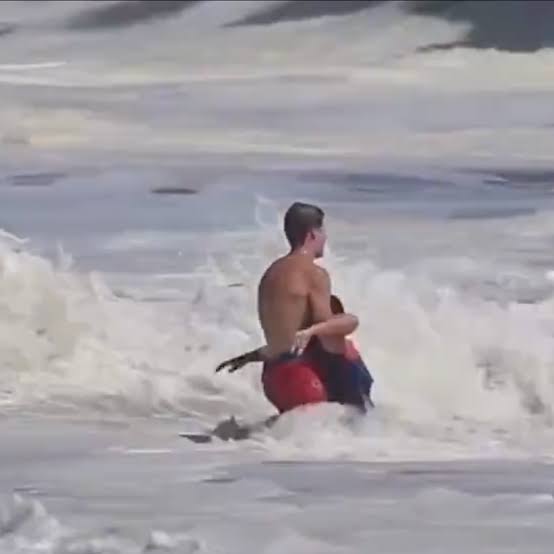
California State Parks later described the day as one of heavy surf, with waves consistently in the four- to six-foot range and larger sets reaching approximately eight to 10 feet.
Those numbers help explain why the rescue did not unfold according to the clean sequence people might imagine from training demonstrations.
A rescue tube is designed to give a lifeguard and a person in distress buoyant support.
But equipment still has to be used within the conditions actually present.
On this day, the surf was strong enough that Ryder could not position and use the tube in the usual manner, according to California State Parks.
The solution was more direct.
He kept hold of Nathaniel.
And he kept doing it as multiple waves came through.
Footage released after the rescue shows the difficulty without needing any exaggeration.
At several points, Ryder and Nathaniel are obscured by the water. They disappear from view and then reappear as another wave passes.
The video does not establish what either of them was thinking in those moments, and there is no need to guess.
What it does show is that the rescue was not a single movement from danger to safety.
It was a process.
Ryder had to maintain contact with Nathaniel while the conditions kept changing around them.
That is where the detail about the rescue tube becomes important.
The equipment did not fail.
There is no indication that it broke or was discarded.
Rather, California State Parks said the wave conditions prevented Ryder from using it in the standard way.
That distinction matters because the rescue was not a story about a lifeguard losing his tools.
It was a story about using training when the expected method no longer fit the situation.
Ryder later said in interviews that his preparation helped make his reaction feel almost automatic.
That does not mean the conditions were routine.
They were not.
But training gave him a framework for responding without having to invent a plan from nothing.
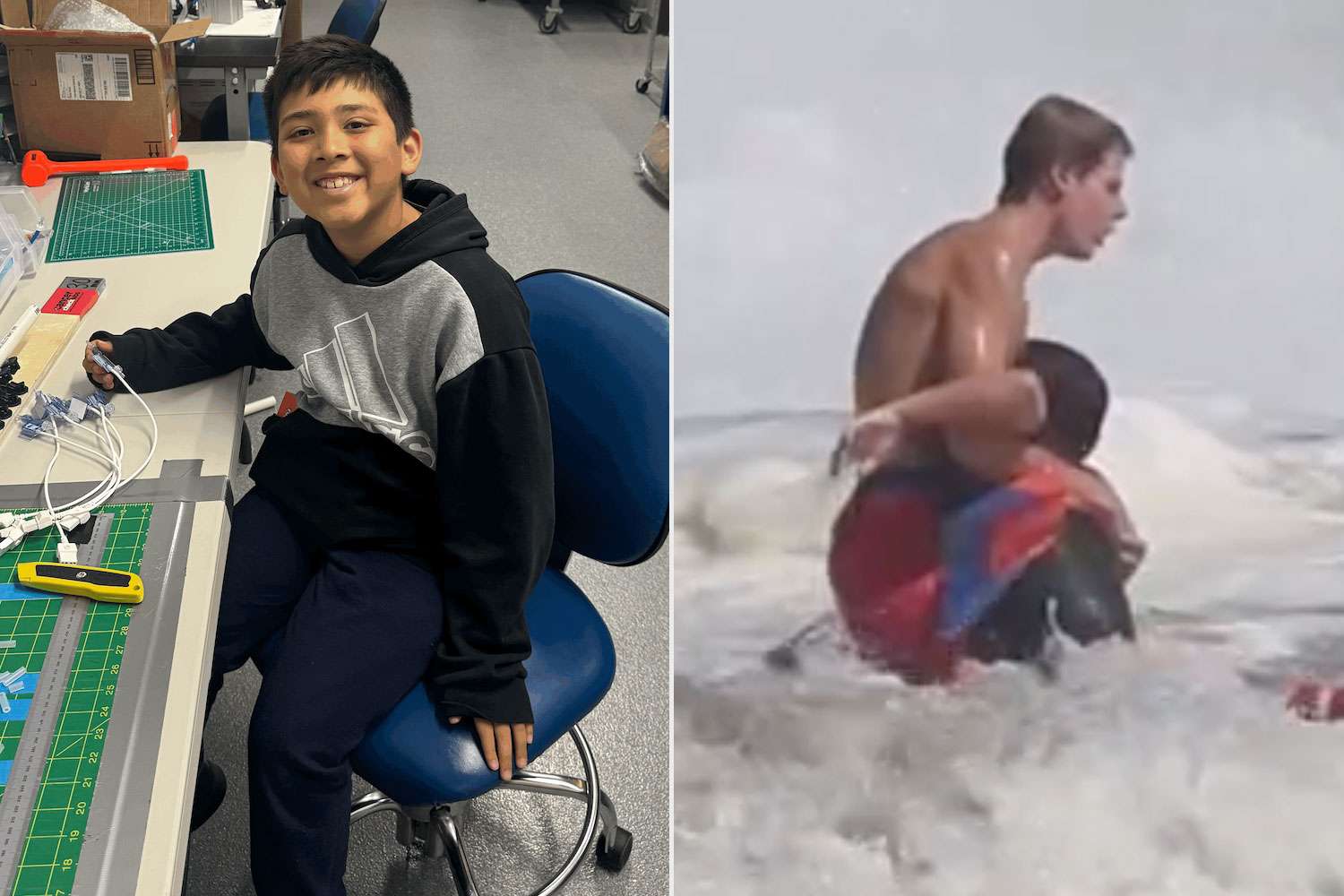
He had recognized that Nathaniel needed help.
He had entered the water.
He had reached him.
And once the rescue tube could not be used as expected, he changed methods and concentrated on keeping hold of the boy.
Even then, Ryder was not the only lifeguard involved.
Aaron Bohnen arrived later in the rescue and helped complete the effort.
That part of the story is important because it prevents the rescue from being reduced to a simpler but less accurate version in which one teenager single-handedly defeated the ocean.
Ryder played a critical role.
Bohnen did too.
The successful outcome depended on both the first response and the support that followed.
Nathaniel ultimately recovered without serious injury, according to California State Parks and subsequent reporting by AP, CBS and Good Morning America.
That outcome is the clearest measure of what the rescue accomplished.
A 10-year-old who had lost his footing in dangerous surf was brought out of the situation safely.
For Ryder, however, the rescue was not even the only one he performed that day.
California State Parks said the 16-year-old completed five rescues during the same shift.
That detail puts the incident in a broader context.
The footage of Ryder holding Nathaniel is the moment that attracted public attention, but it occurred during a day when lifeguards were repeatedly responding to hazardous ocean conditions.
The combination of strong swell and large sets meant that people could get into trouble quickly, even without being far from shore.
For a young lifeguard, the job required more than physical ability.
It required recognizing when a situation had changed and when a standard technique had to be adapted.
That is what makes the rescue notable beyond Ryder’s age.
Sixteen is young for someone to be placed in a position where another child’s safety may depend on decisions made in seconds.
But the most important part of the story is not that Ryder was unusually fearless, because the available sources do not tell us that.
Nor is it that he somehow acted without help.
The record shows something more specific.
He relied on training.
When the rescue tube could not be used in the usual manner, he changed his approach.
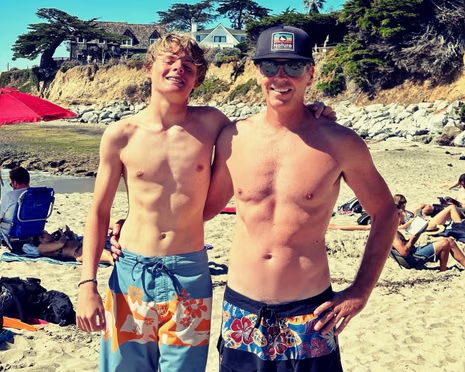
He maintained direct contact with Nathaniel through repeated waves.
Then another lifeguard arrived and helped finish the rescue.
Those details offer a clearer picture of what emergency training can mean in practice.
Training can prepare someone for a procedure.
Real conditions may still refuse to cooperate with that procedure.
At Seabright State Beach, the waves did not stop while Ryder adjusted his technique.
The surf did not become easier because a lifeguard had arrived.
The rescue had to continue inside the conditions that already existed.
Ryder later credited his training with helping him respond instinctively.
That may be the most useful takeaway from what happened.
The visible part of the rescue lasted only a short time.
The preparation behind it did not.
By the time Ryder saw Nathaniel struggling, many of the decisions that shaped his response had already been practiced.
The training had given him something to fall back on when the equipment could not be used exactly as intended.
And when additional help arrived, the rescue became a coordinated effort rather than a solo one.
Nathaniel came through the incident without serious injury.
Ryder finished the day having participated in five rescues.
And the video that spread afterward captured only one part of the larger story.
It showed a teenager holding onto a child as wave after wave passed over them.
What it did not show was everything that had come before that moment: the training, the procedures, the preparation and the judgment required to know when the usual method needed to change.
In the end, the rescue was not remarkable because Ryder ignored his training.
It was remarkable because he knew how to adapt it.