New Medical Examiner Detail and Presley Gerber’s Final Treatment Posts Reveal More About His Last Months

Newly available medical examiner information and Presley Gerber’s own final public comments about treatment are providing a clearer picture of the difficult months that preceded his death at age 27.
Gerber, the eldest child of Cindy Crawford and businessman Rande Gerber and the older brother of model and actress Kaia Gerber, died Sunday, September 20, 2026. A family representative confirmed his death and asked for privacy as relatives cope with the loss.
The most significant new detail is where he died.
Records from the Los Angeles County Medical Examiner indicate Gerber was at a rehabilitation facility at the time of his death. As of September 21, officials had not announced a cause or manner of death, and available reporting indicated that an autopsy and further investigation were still pending.
That distinction is important. Although Gerber had openly discussed addiction and mental-health difficulties, there is currently no official finding connecting either issue to his death. Any claim about exactly what happened inside the treatment facility would therefore be speculation until forensic investigators complete their work.
What has emerged, however, is a deeply personal trail left by Gerber himself — one showing how actively he had been trying to confront the problems that had shaped much of his adult life.
A Revealing Post Months Before His Death
One of the most significant pieces of new context comes from a post Gerber shared in March, roughly six months before his death.
Gerber wrote publicly about undergoing ibogaine treatment as part of an effort to address addiction. Ibogaine is a psychoactive substance derived from a West African plant and has attracted attention as an experimental addiction treatment, although it is not approved for that purpose in the United States.
In his post, Gerber described the experience not as a quick solution but as another attempt to deal with problems he had struggled to escape.
He expressed hope that the treatment would be the last time he needed such an intervention, while acknowledging the fear and emotional difficulty involved in surrendering control and confronting his past.
The message carries added weight now because it documents Gerber’s state of mind during one of his final publicly discussed attempts at recovery.
It does not explain his death. But it does show that the young model was actively seeking treatment rather than simply discussing recovery from a distance.
Family members publicly encouraged him during that period, with both his mother and sister expressing support for the openness he had begun showing about his struggles.
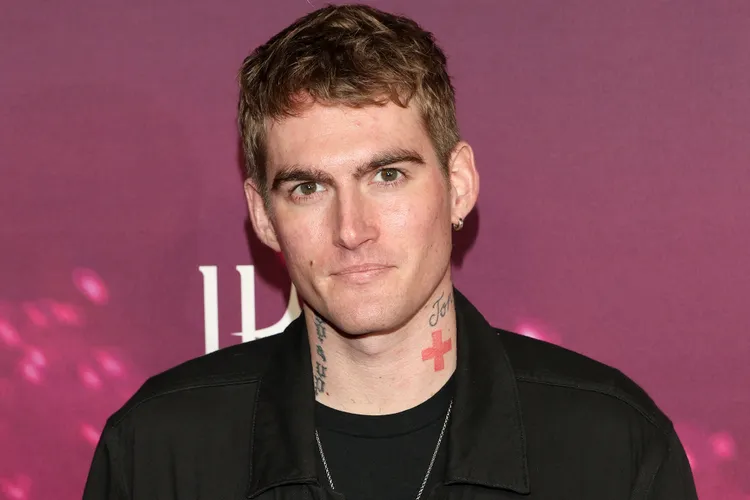
His Sister Had Spoken About the Family’s Struggle Weeks Earlier
Another striking development is the timing of comments made by Kaia Gerber only weeks before her brother’s death.
In an interview published shortly before the tragedy, Kaia discussed the profound effect Presley’s long struggle with addiction had had on their family.
She described how having one child experiencing serious difficulties could reshape the roles adopted by everyone else in the household. Kaia said she had begun thinking of herself as the child who should require less attention or help because so much emotional energy was already being directed toward her brother.
Her comments also offered an unusually candid glimpse into a family long associated publicly with glamour, fashion and carefully managed celebrity.
Kaia explained that their parents had historically been private about family difficulties, while Presley eventually chose a very different approach: speaking publicly about what he was experiencing rather than trying to hide it.
She said she was deeply proud of that decision.
Viewed after his death, the interview now reads as an important record of how significant Presley’s recovery journey had become not only to him but to the people closest to him.

From High-Fashion Runways to Public Recovery Discussions
For years, Presley Gerber was primarily known through the extraordinary visibility of his family.
He began modeling as a teenager and worked for major international fashion houses. He appeared on runways, in advertising campaigns and alongside his sister Kaia, whose own modeling career grew rapidly.
At 18, Presley also appeared alongside his mother in a 2018 Super Bowl campaign that revisited one of the most recognizable advertisements from Cindy Crawford’s career.
But his public identity gradually changed.
A 2019 DUI case brought greater attention to problems away from the runway. In later years, Gerber increasingly spoke about depression, medication, addiction and treatment instead of maintaining the polished image typically associated with his famous family.
He eventually began using social media to discuss mental health more directly, including through a recurring series focused on conversations that are often kept private.
That openness became central to how he presented himself.
Rather than portraying recovery as a completed transformation, Gerber often described it as an ongoing process — one involving setbacks, difficult treatment decisions and repeated efforts to regain stability.

The Rehab Facility Detail Raises New Questions
The medical examiner’s confirmation that Gerber died at a rehabilitation facility introduces an important investigative question: what happened during his final hours?
At this stage, authorities have not publicly released enough information to answer it.
The name of the facility has not been broadly confirmed in official information, nor have authorities announced whether Gerber had recently entered treatment, how long he had been there, what medical care he was receiving or whether an emergency occurred before his death.
There is also no publicly confirmed toxicology result.
Those gaps are significant because medical examiner investigations frequently require laboratory testing, review of medical records and examination of the circumstances surrounding a death before a final cause can be certified. The Los Angeles County Medical Examiner explains that its responsibility is to determine both the cause and circumstances of deaths falling within its jurisdiction.
Until that process is completed, Gerber’s history should not be treated as proof of what caused his death.

One of His Final Public Chapters Was About Trying Again
Perhaps the most poignant element to emerge from the new timeline is how strongly Gerber’s final months were connected to attempts at recovery.
His March treatment post showed someone entering yet another difficult chapter and hoping it might finally produce lasting change.
His sister’s comments shortly before his death showed that the struggle had affected the entire family for years — but also that those closest to him respected his willingness to stop pretending everything was fine.
And the newly publicized medical examiner detail establishes that, when his life ended on September 20, Gerber was once again in a place associated with treatment and recovery.
For now, that is where the confirmed evidence stops.
The precise circumstances surrounding Presley Gerber’s death remain unresolved, and investigators have not announced a definitive medical explanation.
What the emerging records do reveal is a more complicated final chapter than the public image of a celebrity family might suggest: a young man who had spent years struggling privately, eventually chose to speak publicly, repeatedly entered treatment, and was still attempting to confront those problems during the final months of his life.
The next major development is expected to come from the medical examiner’s investigation, which could eventually provide the answers that the existing public record cannot yet give.