For 80 Years, the Children of One Dutch Town Have Honored American Soldiers They Never Met—Keeping a Promise That Refuses to Fade
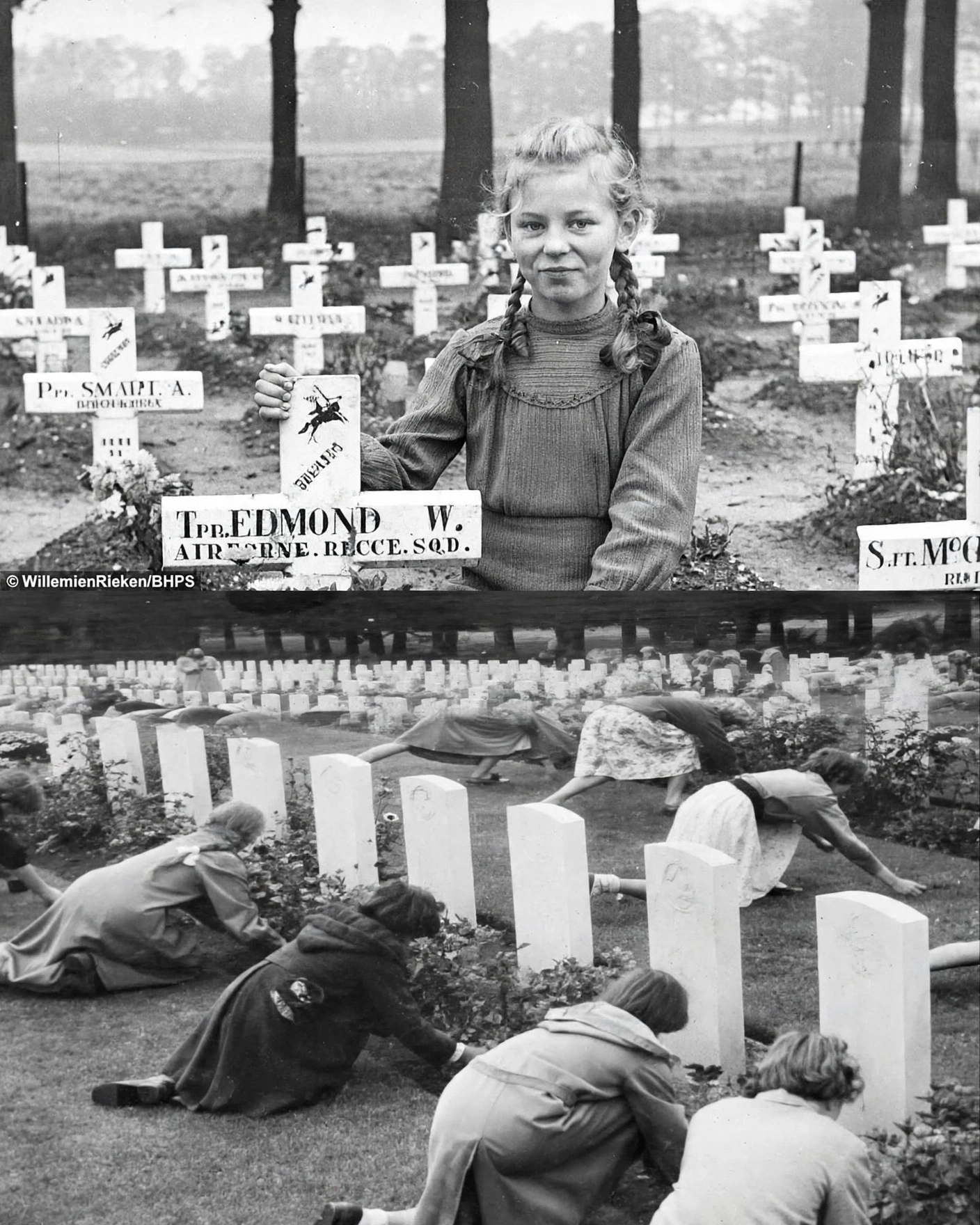
Every spring, long before visitors arrive at the military cemetery in the Dutch village of Oosterbeek, children quietly walk among rows of white headstones carrying fresh flowers. They pause at individual graves, speak the names engraved in stone, and reflect on lives that ended decades before they were born.
None of the soldiers buried there were members of their families.
Yet for nearly eighty years, these children have continued a remarkable tradition born from gratitude, ensuring that the men who sacrificed their lives during World War II are never forgotten.
The story began in the aftermath of the Battle of Arnhem in September 1944, one of the fiercest and most costly operations of the war. Thousands of Allied soldiers fought in and around Oosterbeek during Operation Market Garden, an ambitious campaign intended to secure bridges across the Netherlands and open a direct route into Germany.
Although the operation ultimately failed to achieve its strategic goal, the soldiers who fought there paid an enormous price. Many never returned home, and hundreds were laid to rest in what is now the Arnhem Oosterbeek War Cemetery.
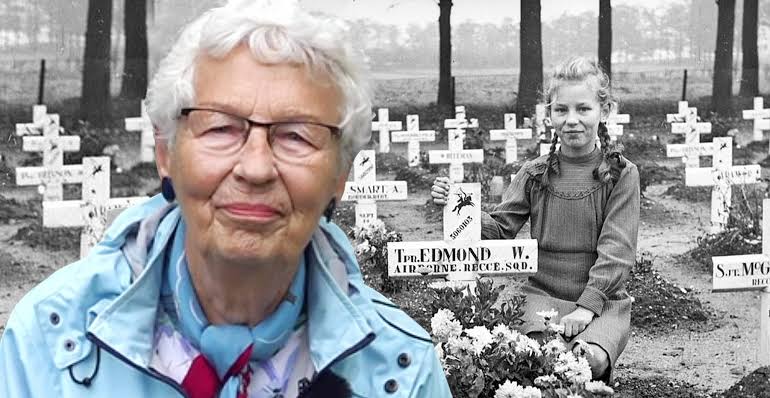
For the people of Oosterbeek, those graves represented more than military history. They marked the final resting place of young men who had crossed an ocean to help liberate a nation under Nazi occupation.
When peace returned, local residents made a quiet but extraordinary decision.
Rather than allowing the cemetery to become simply a historical site, they vowed that every fallen soldier would always be remembered. The responsibility would not end with one generation. Instead, it would be passed from parents to children, then from children to grandchildren.
That promise has endured ever since.
Each year, schoolchildren from the town “adopt” individual graves. They learn the name of the soldier buried there, discover where he came from, how old he was when he died, and the circumstances surrounding his final days.
For many of the students, the assignment becomes deeply personal.
A name carved into white stone gradually transforms into the story of a real person—a teenager, a young husband, a brother, or a son whose future ended on Dutch soil.
During annual remembrance ceremonies, the children place flowers beside the graves they care for. They often stand silently for a moment before moving to the next headstone, treating every resting place with the same dignity and respect.
The ritual has become one of the most meaningful commemorations in the Netherlands.
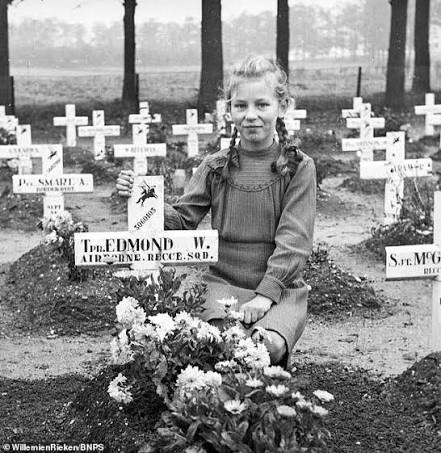
Unlike many memorial traditions that rely solely on official ceremonies or military organizations, Oosterbeek’s remembrance depends on ordinary families and local schools. Every new generation grows up understanding that freedom came at a tremendous cost paid by people they never knew.
Teachers play an essential role in keeping that history alive.
Lessons extend beyond dates and battles. Students are encouraged to explore the lives behind the headstones, learning about the soldiers’ hometowns, their families, and the difficult decisions that brought them to Europe during one of history’s darkest conflicts.
In doing so, history becomes personal rather than distant.
For many children, visiting “their” grave changes how they think about war. Instead of seeing only numbers in textbooks, they begin to understand that every casualty represented an individual with dreams, loved ones, and a life interrupted far too soon.
As decades passed, the tradition became woven into the identity of Oosterbeek itself.
Families who once participated as children often return years later with sons, daughters, and grandchildren, introducing them to the same graves they cared for in their youth. What began as an act of gratitude immediately after the war has become a living inheritance shared across generations.
Visitors from around the world are frequently moved by what they witness.
Many arrive expecting to see a beautifully maintained cemetery. Instead, they discover something far more powerful—a community that has refused to let memory disappear.
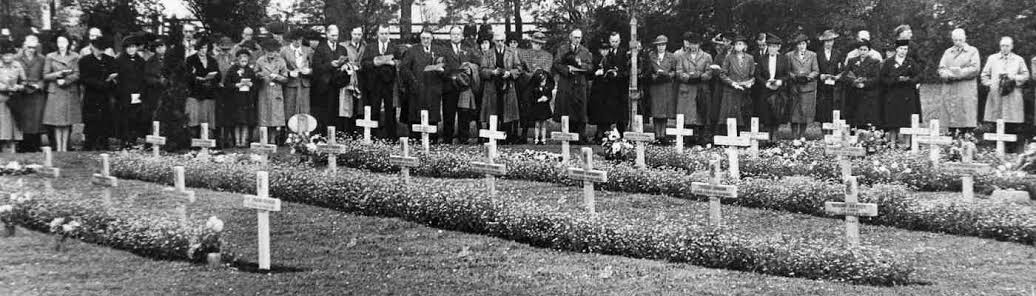
The sight of children carefully placing flowers on graves belonging to strangers serves as a reminder that remembrance does not require personal connection. Compassion alone can preserve history.
For the families of the fallen soldiers, the tradition carries profound emotional significance.
Many relatives have traveled to Oosterbeek over the years, often meeting the young people who have cared for their loved one’s grave. Those encounters have created friendships that span continents and generations, reinforcing the bond between the Netherlands and the countries whose servicemen fought for its liberation.
What surprises many visitors most is the sincerity of the children.
They are not simply participating in a school assignment.
They understand that the men beneath the white headstones never had the opportunity to grow old, raise families, or return home. Remembering them has become a responsibility embraced with remarkable maturity.
Nearly eight decades after World War II ended, fewer eyewitnesses remain alive to tell the story firsthand.
That reality makes traditions like Oosterbeek’s more important than ever.
As history gradually passes from living memory into written records, the children of this small Dutch town continue to ensure that the sacrifices made during the Battle of Arnhem are remembered not only through monuments, but through personal acts of gratitude.
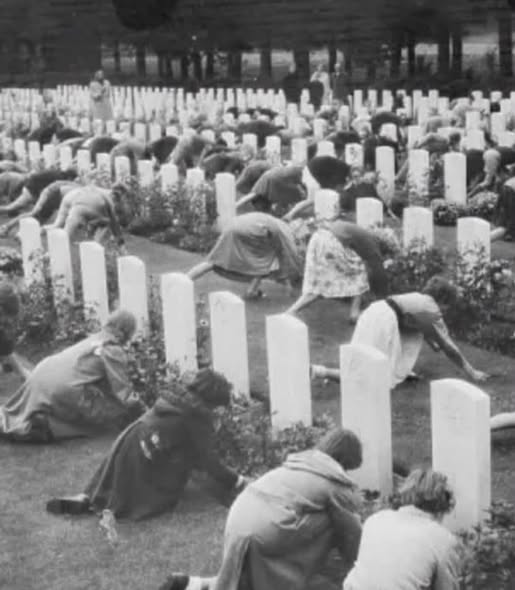
Their promise has survived changing generations, shifting politics, and the passage of time.
It has become a simple yet powerful lesson: remembrance is not measured by whether we personally knew those who gave everything. It is measured by whether we choose to carry their memory forward.
Every flower placed beside a white cross, every name spoken aloud by a child, and every quiet moment of reflection affirms that the soldiers who never returned home are still remembered.
In Oosterbeek, that promise remains as strong today as it was nearly eighty years ago—a lasting tribute to courage, sacrifice, and the enduring power of gratitude.