Brendan Fraser Faded From Hollywood While Fighting to Hold His Life Together—Then the Applause Found Him Again

For several minutes at the Venice Film Festival, Brendan Fraser stood inside a theater as the audience refused to stop applauding.
His performance in The Whale had just premiered, and the emotional response appeared to overwhelm him. Fraser bowed, pressed his hands together and wiped tears from his face. When he seemed ready to leave, the cheering pulled him back.
The moment was quickly celebrated as the return of an actor many viewers felt Hollywood had forgotten.
But Fraser had not simply vanished.
Behind his long absence from leading roles was a man whose body had been damaged by years of physically demanding filmmaking, whose marriage had ended, whose mental health had deteriorated and whose responsibilities as a father had become more important than maintaining the image of an indestructible movie star.
The applause in Venice—and the Oscar that followed—did not erase those years. It revealed how much he had carried through them.
The Star Who Seemed Capable of Surviving Anything
During the late 1990s and early 2000s, Fraser appeared built for the kind of adventure movies Hollywood no longer makes very often.
He swung through trees in George of the Jungle, fought ancient monsters in The Mummy and its sequels, and combined physical comedy with the sincerity of an old-fashioned leading man. He could play broad comedy, action and drama without losing the warmth that made audiences trust him.
The success came at a physical cost.
Fraser performed punishing stunt work and repeatedly pushed himself through injuries. By the time he made the third Mummy film, released in 2008, he has said he was frequently covered with tape and ice packs just to make it through production.
His body eventually demanded payment.
Over roughly seven years, Fraser underwent multiple operations, including a partial knee replacement and spinal surgery. He also needed work on his vocal cords. What audiences had interpreted as effortless athleticism had left him living with pain and moving through a cycle of procedures and rehabilitation.
The roles began slowing down just as his personal life was becoming more complicated.
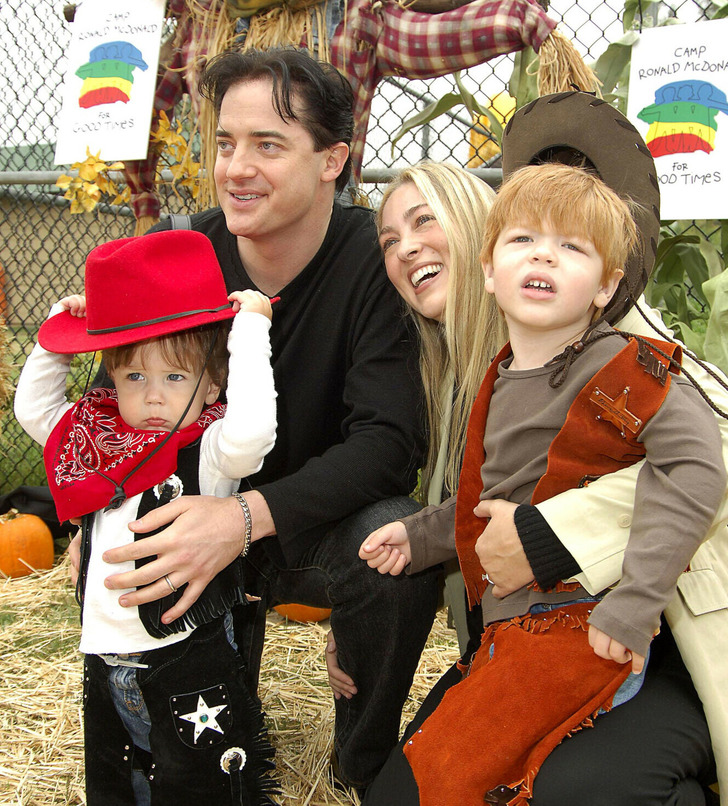
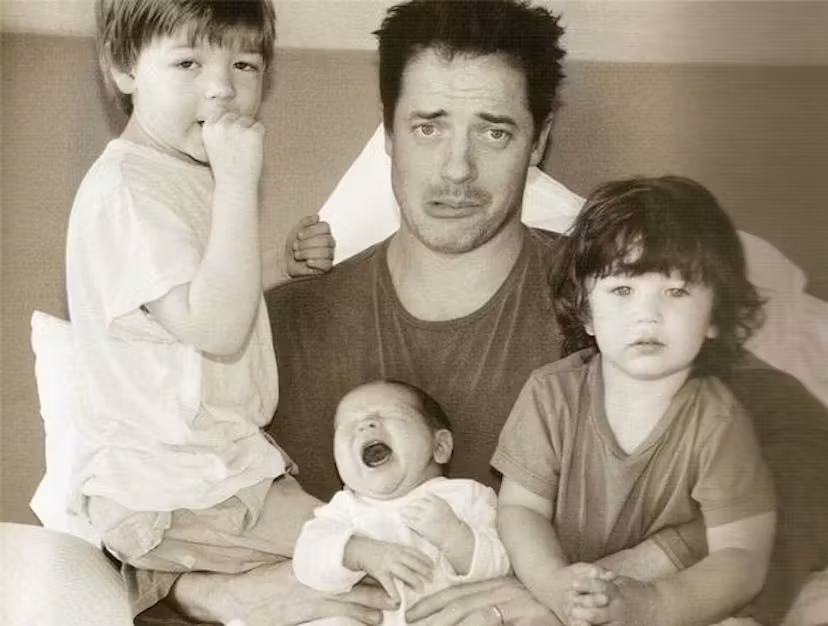
Fraser and actress Afton Smith, whom he married in 1998, separated in 2007 and later divorced. They shared three sons: Griffin, Holden and Leland.
The end of the marriage brought emotional and financial strain, but Fraser’s identity as a father remained central to the life he was trying to preserve.
Griffin Changed His Understanding of Love
Griffin, Fraser’s oldest son, was born in 2002 and diagnosed with autism when he was very young.
Fraser has described receiving the diagnosis as a moment that initially left him stunned. Like many parents encountering unfamiliar medical language, he wanted answers and searched for something he could fix.
Over time, his perspective changed.
He came to see Griffin not as a problem requiring correction, but as a person whose way of experiencing the world could teach others to become gentler and less self-centered.
Fraser has said Griffin needs additional support and receives it. He has also spoken with deep admiration about his son’s lack of cynicism and his ability to bring compassion out of the people around him.
In Fraser’s telling, Griffin does not measure people by social rank, fame or appearance. He responds to warmth and sincerity. Being his father required patience, advocacy and the acceptance that love is not defined by making another person conform to conventional expectations.
That experience shaped how Fraser interacted with autistic fans and their families. When he encountered them at public events, he understood that simply showing up and treating someone with genuine attention could carry enormous meaning.
Fatherhood also placed his professional struggles in a different frame.
Fraser still wanted to work, but celebrity was no longer the only measure of whether his life mattered. He was raising three sons while managing pain, a divorce and the uncertainty of a career that no longer seemed to have a clear place for him.
The Trauma He Kept Quiet
Another part of Fraser’s retreat remained private for years.
In a 2018 interview with GQ, he alleged that Philip Berk, a former president of the Hollywood Foreign Press Association, sexually assaulted him during an industry luncheon in 2003.
Berk denied Fraser’s account, although he had previously acknowledged touching the actor while characterizing it as a joke.
Fraser said the encounter left him feeling frightened, humiliated and deeply unsettled. He questioned himself and became depressed. He also wondered whether speaking up had damaged his standing within the entertainment industry, although he did not claim that the incident alone explained the decline in his career.
There were many forces converging at once: injuries, surgeries, changing Hollywood tastes, the poor performance of some films, his divorce, family responsibilities and the emotional consequences of the alleged assault.
His mother’s death in 2016 added another layer of grief.
The result was not one dramatic exit from Hollywood. It was a gradual disappearance from the center of the industry.
The actor who had once seemed to be everywhere became someone audiences occasionally rediscovered in smaller films or television roles. He appeared in series including The Affair, Trust and Doom Patrol, quietly reminding viewers of the emotional depth beneath his blockbuster image.
He was still working.
He was simply no longer being treated like a star.
A Role Built Around a Father’s Regret
Director Darren Aronofsky spent years searching for the right actor to lead The Whale, an adaptation of Samuel D. Hunter’s play.
Fraser was ultimately cast as Charlie, a reclusive writing instructor living with severe obesity. The character is attempting to reconnect with his estranged teenage daughter while facing the consequences of years of isolation and unresolved grief.
The role required physical transformation, but its real difficulty was emotional.
Charlie is a father who believes he has failed his child. He is ashamed, desperate for reconciliation and running out of time. Fraser approached him without mockery, focusing instead on the character’s intelligence, pain and longing to believe there is something good in the people he loves.
The film drew criticism, particularly over its depiction of obesity and the use of prosthetics. Fraser nevertheless received widespread praise for giving Charlie dignity and emotional complexity.
His own experience as a father did not make him identical to the character. But it gave him an understanding of parental love as something larger than pride or achievement.
Fraser knew what it meant to organize part of his life around the needs of a child. He also understood isolation, physical limitation and the fear that the world had moved forward without him.
That history was visible in the performance.
The Standing Ovations Became Something Larger
When The Whale premiered in Venice in September 2022, the sustained ovation became the first great public symbol of Fraser’s comeback.
Similar scenes followed throughout awards season. Audiences were not only responding to Charlie; they were welcoming back the actor they associated with childhood adventures, comedy and a gentler period of blockbuster filmmaking.
The affection became known as the “Brenaissance,” but the cheerful nickname simplified what was happening.
This was not the return of the same young man from The Mummy. Fraser was older, physically changed and more openly vulnerable. He was returning without pretending the intervening years had been easy.
On March 12, 2023, he won the Academy Award for Best Actor.
Standing on the Oscars stage, visibly struggling to contain his emotions, Fraser thanked the people who had supported him when he felt as though he had been exploring the bottom of the ocean with only a limited supply of air.
He also named his sons.
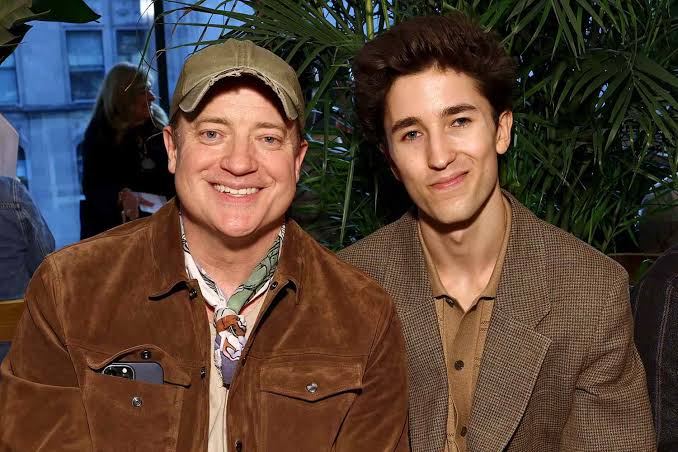
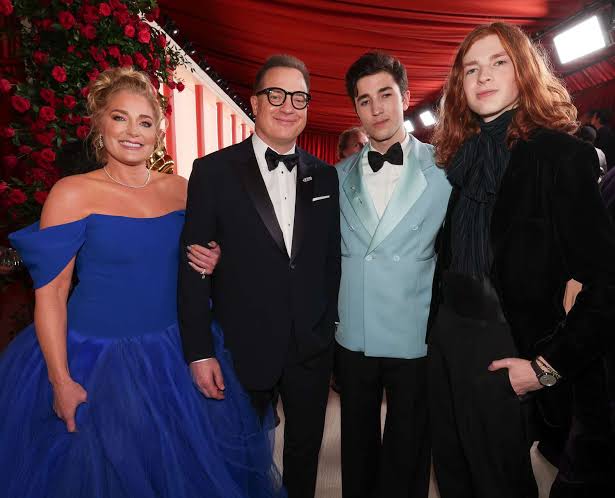
Holden and Leland attended the ceremony, while Fraser sent his love to Griffin from the stage. At the highest point of his professional comeback, he made room for the children whose lives had continued beyond the public’s view while his career was fading.
What His Comeback Really Meant
Fraser’s Oscar victory was often described as Hollywood finally giving him back what he had lost.
The truth was more complicated.
An award could not return the years spent in pain. It could not undo his divorce, eliminate depression or resolve every difficulty faced by a parent raising a child who needs lifelong support. It could not make the alleged encounter he described disappear.
What it offered was recognition.
The industry and the public were acknowledging that Fraser’s value had survived a period when his visibility had not. He had remained an actor through the surgeries, a father through family upheaval and a recognizable source of warmth even when leading roles stopped arriving.
His disappearance was never an empty space.
It was filled with medical procedures, private grief, smaller performances and the daily responsibilities of raising Griffin, Holden and Leland. It was filled with the less visible work of staying present when the version of himself celebrated by Hollywood no longer existed.
That is why the standing ovations mattered.
The world was not simply cheering for a comeback. It was seeing the man who had endured the years between the blockbusters and the Oscar—and telling him that those years had not made him disappear.