Busy Philipps Reveals She Had Two Surgeries After Doctors Found a Rare Brain Tumor

Busy Philipps is opening up about a health crisis she kept private for months.
The 47-year-old actress revealed that doctors discovered a rare brain tumor earlier this year, leading to a five-hour operation in March and then a second surgery weeks later after she developed an infection at the incision site.
Philipps says the experience became “the weirdest six months” of her life.
But after two operations, a frightening complication and an emotional conversation with her daughters, she is now focusing on recovery — and on the fact that the tumor was discovered before she developed more obvious neurological symptoms.
“I’m grateful that I’m alive,” Philipps told PEOPLE.
She Had No Classic Brain-Tumor Symptoms
What makes Philipps’ diagnosis especially surprising is that she was not having seizures or other symptoms that would ordinarily send someone to a neurologist.
Instead, the discovery began with a full-body MRI.
Philipps had become interested in getting a Prenuvo scan after seeing information about the technology online. The scans are designed to look for hundreds of abnormalities throughout the body.
She first mentioned the idea to her primary-care doctor in 2025, but he told her there was no obvious reason for the test. She was relatively young, appeared healthy and had normal results from routine blood work.
Philipps still felt compelled to pursue it.
A physician in her extended family encouraged her, telling her that having more information about her health could be useful.
She eventually scheduled the scan for Jan. 2026, but a blizzard forced her to move the appointment to Feb. 12.
She nearly canceled again.
The timing was emotionally overwhelming. Her friend and former Dawson’s Creek costar James Van Der Beek had died of colon cancer the previous day, and Philipps also had professional meetings and family responsibilities competing for her attention.
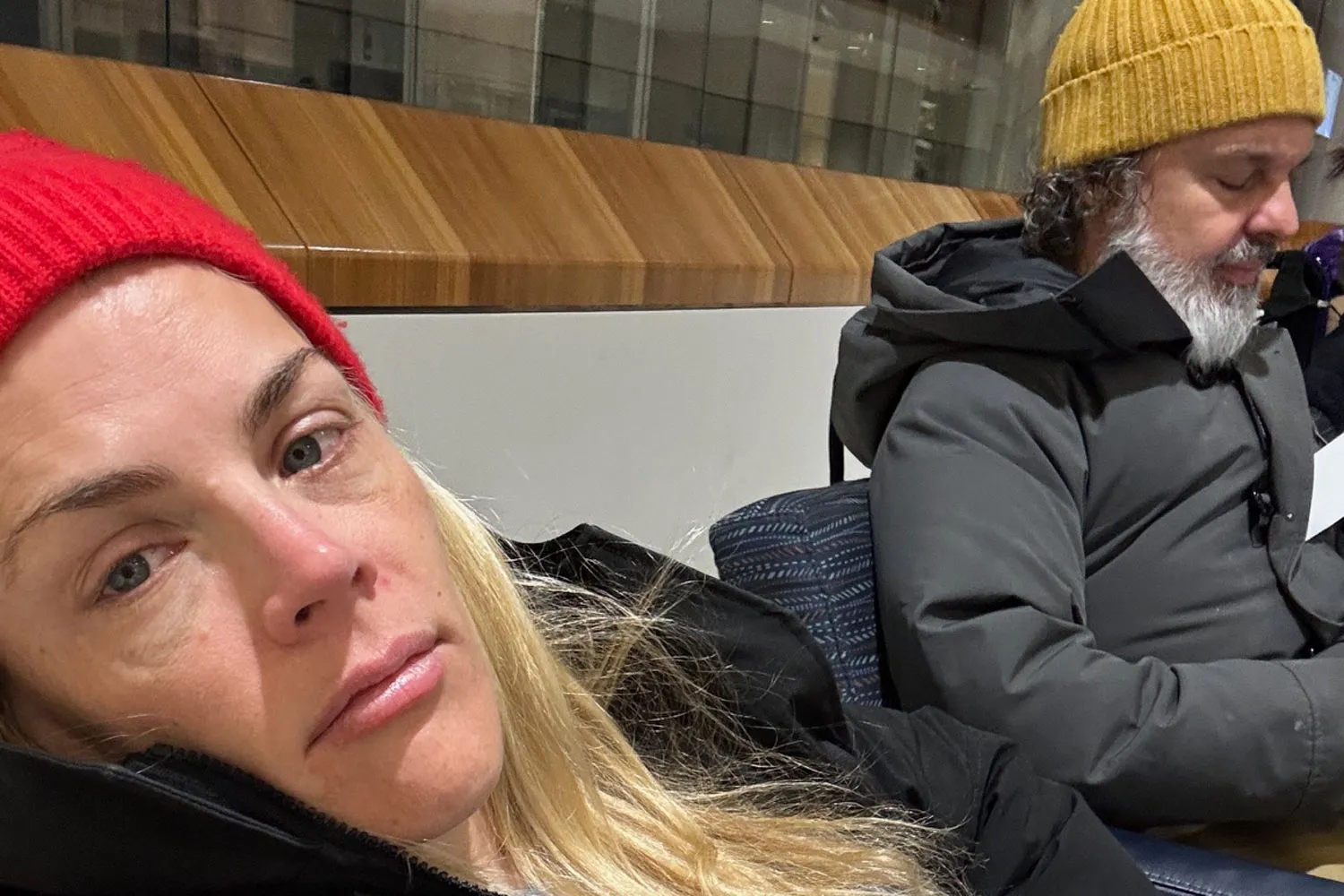
Her ex-husband, filmmaker Marc Silverstein, encouraged her to go.
That decision changed everything.

The Scan Found a Lesion in Her Brain
Philipps had just finished a meeting about the CBS series Cupertino when she learned that the scan had detected something concerning in her brain.
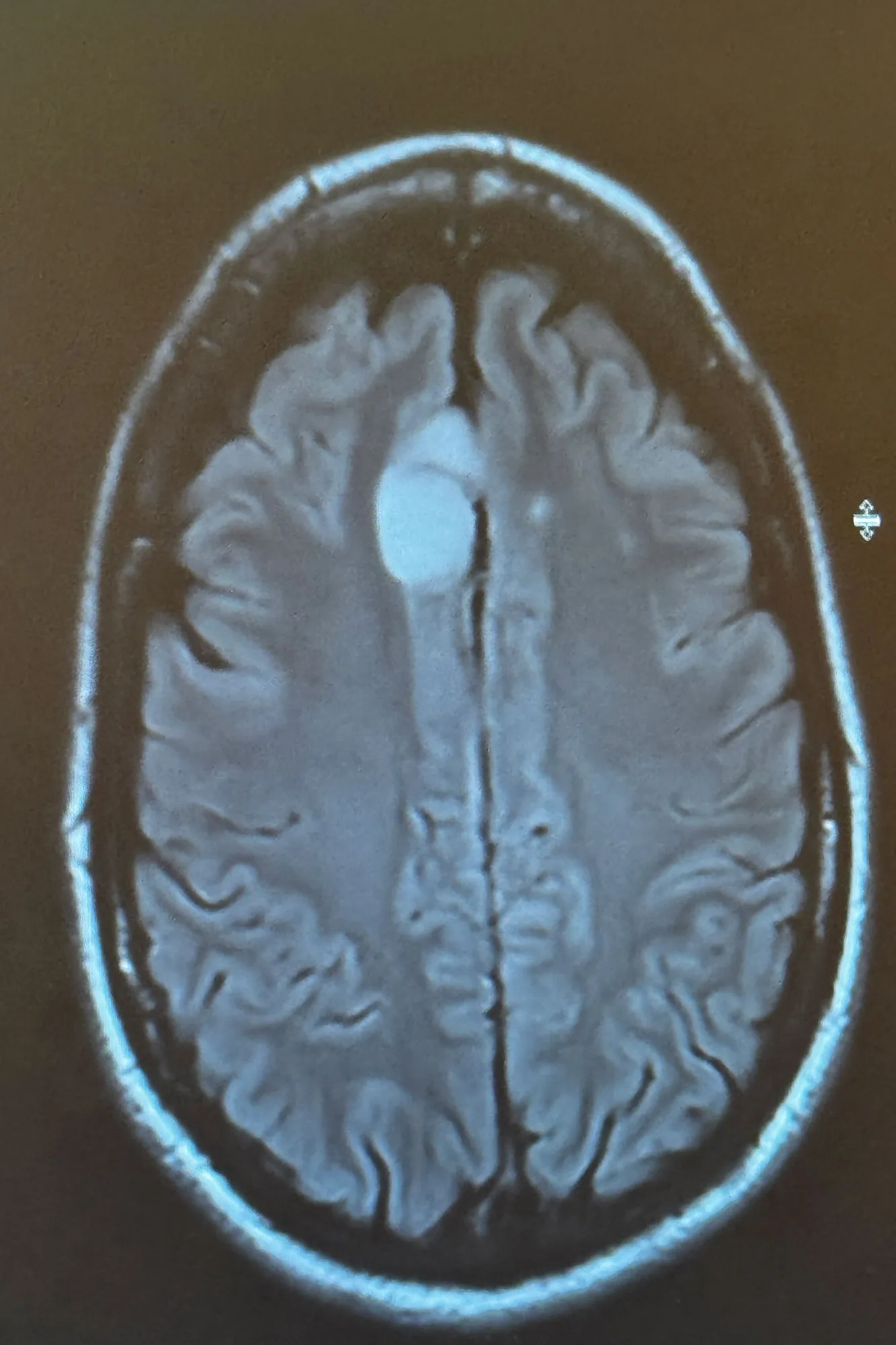
Doctors initially described it as a lesion.
The shape allowed one physician to tell her it did not appear to be glioblastoma, an especially aggressive type of brain cancer, but she still needed a more detailed MRI.
Philipps tried to cope the way she often does: with humor.
She texted Silverstein that she had a brain tumor before quickly adding that it might be benign and that she did not yet know exactly what doctors were dealing with.
Then neurologist Dr. Orrin Devinsky of NYU Langone reviewed her imaging.
His assessment was much more direct.
Philipps recalled him telling her that it was a real tumor, that it was inside her brain and that it needed to come out.
The news left her hyperventilating.
She Had Just Landed a Dream Job
The diagnosis arrived at an especially complicated professional moment.
On the same morning she learned that surgery would be necessary, Philipps also discovered she had been cast in Cupertino.
The role was one she badly wanted.
Rather than immediately stepping away, Philipps began asking doctors how quickly she could recover and return to work.
She even joked with neurosurgeon Dr. John Golfinos about whether he could perform a brow lift while operating on her frontal lobe.
He declined.
The humor helped, but Philipps still faced a much harder conversation at home.
She needed to tell her daughters.
Telling Her Daughters Was One of the Hardest Parts
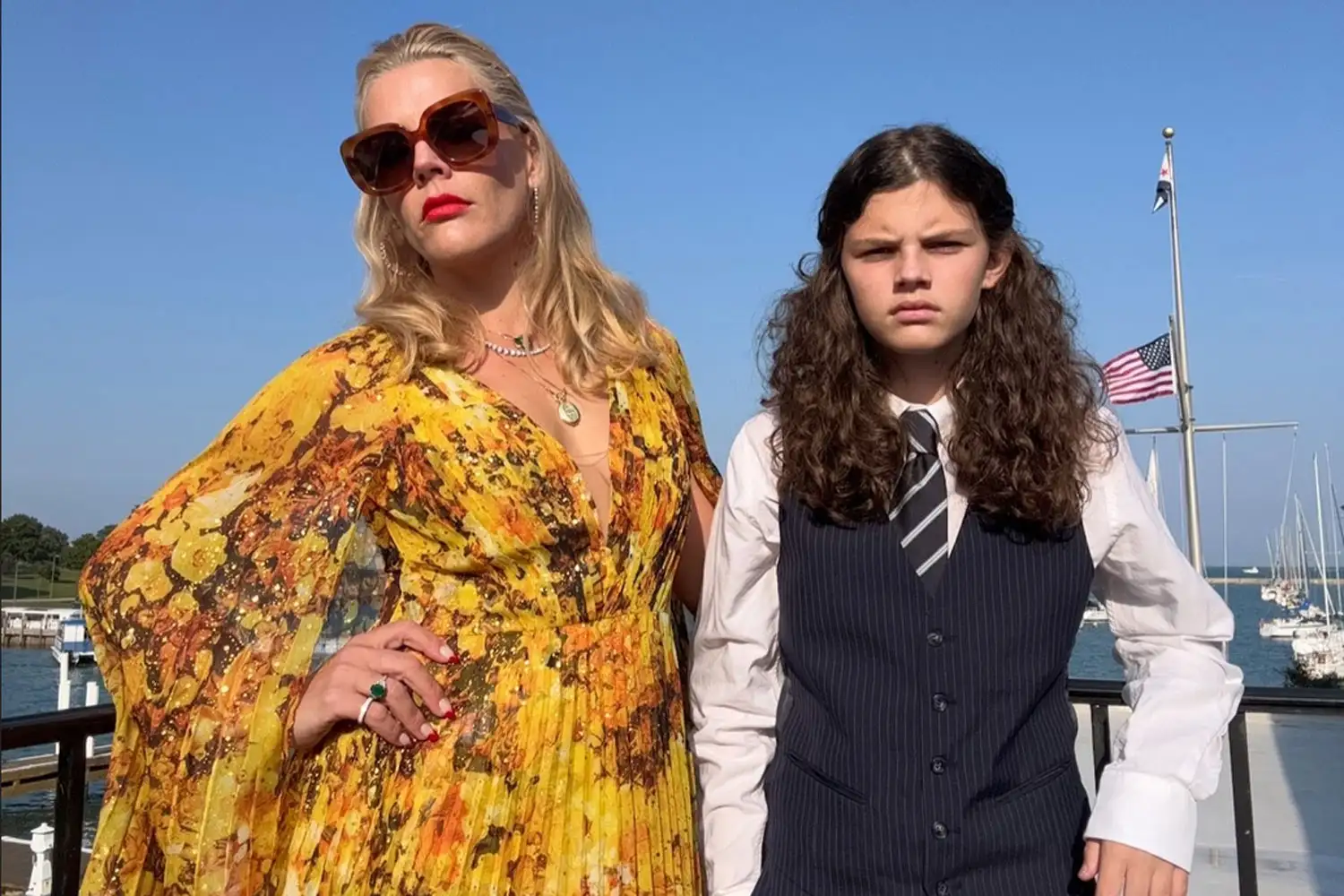
Philipps shares daughters Birdie, 18, and Cricket, 13, with Silverstein.
She initially tried to protect them from uncertainty until doctors could give her clearer information.
When she finally told them, their reactions were very different.
Birdie became deeply frightened and emotional.
Philipps remembered trying to reassure her daughter by framing the situation almost like a movie plot. She told Birdie that she was not living through the story in which her mother dies during her senior year of high school.
Cricket responded more calmly, essentially asking whether Philipps was going to be okay.
Philipps told her she would be.
The confidence she gave her daughters came before she could know precisely what pathology would reveal.

Surgeons Removed a 2.6-Centimeter Tumor
Philipps underwent surgery on March 2 at NYU Langone.
Silverstein accompanied her to the hospital.
The operation lasted approximately five hours, and doctors removed a 2.6-centimeter mass from her frontal lobe.
A biopsy then provided the definitive diagnosis.
The tumor was a grade 2 oligodendroglioma.
Neuro-oncologist Dr. Alexandra Miller told PEOPLE that oligodendrogliomas are rare, with only about 1,100 to 1,300 diagnosed annually in the United States.
The tumor is considered malignant because it has the potential to grow back over time, although Miller said it carries the best prognosis among malignant gliomas.
For Philipps, the timing of the discovery was particularly important.
Golfinos said that because doctors found the tumor before seizures or other obvious symptoms began, they were able to remove it while it was relatively small. Had it been discovered later, it could have been two or three times larger and substantially more difficult to remove completely.
At First, Her Recovery Went Remarkably Well
The first operation itself went smoothly.
Within a day, Philipps was already walking around the hospital.
Her nurses were apparently more concerned that she would do too much too quickly than that she would struggle to move.
Two days after surgery, she was back home.
She had more than 40 staples in her scalp and swelling in her forehead, but she said she was not in significant pain.
Friends rallied around her.
Michelle Williams, Philipps’ longtime friend and former Dawson’s Creek costar, was among those who visited and helped arrange meals while she recovered.
Soon, Philipps was preparing to begin work on Cupertino.
It looked as though the worst might already be behind her.
Then something went wrong.
A Botox Appointment Accidentally Caught a Dangerous Complication
In April, while filming had begun, Philipps went to her dermatologist intending to get Botox.
Instead, the appointment may have prevented a much more serious medical problem.
Her dermatologist saw the surgical incision and immediately became concerned.
She refused to proceed and urged Philipps to photograph the area and send the image to her surgeons.
Their response was immediate: the wound did not look right.
Philipps saw a wound-care specialist and started antibiotics, but the problem ultimately required another hospitalization.
She had developed a staph infection in the surgical incision.
Doctors performed a debridement procedure on April 27 to clean the infected tissue. They also removed one of the tiny titanium tacks that had been placed in her skull during the original operation to hold the bone in position.
Fortunately, Golfinos said, the infection was caught before it became deep.

The Second Surgery Hit Her Harder Emotionally
Philipps had handled the initial brain surgery with striking energy.
The second operation affected her differently.
She said it made her feel as though she had suddenly returned to the beginning of the entire ordeal.
After believing she was recovering and moving forward, she was back in the hospital facing another procedure.
She became deeply upset.
Her surgeon, however, said she again recovered quickly and described her resilience as remarkable.
Today, Philipps does not require chemotherapy or radiation.
She will undergo regular imaging so doctors can watch for recurrence, but Golfinos said there is a strong possibility that the tumor may not return.
Now She Wonders Whether There Were Clues After All
Although Philipps did not experience classic neurological symptoms, she is reconsidering some changes she noticed over the previous several years.
She said she had experienced unusually intense emotional reactions, including episodes of crying until she became physically sick and sending angry messages she later considered inflammatory.
At the time, she wondered whether perimenopause was responsible.
Now she questions whether the tumor pressing against her frontal lobe may have contributed.
Her doctors cannot say for certain.
But Williams reminded Philipps of something else she had repeatedly said before the diagnosis: that her brain felt “broken.”
Philipps had apparently used that phrase for roughly two years without knowing why she felt that way.
After surgery, she says that feeling is gone.
“My brain does not feel broken anymore,” she told PEOPLE.
She Wants Other Women to Trust Their Instincts
Philipps recognizes that her story involves several fortunate coincidences.
She almost skipped the full-body scan.
The tumor was found before seizures began.
Her dermatologist happened to notice the incision before the infection became deeper.
And doctors were able to remove the tumor without her needing chemotherapy or radiation.
That combination has left her feeling extraordinarily lucky.
But she also believes the experience contains a broader lesson.
Philipps says women are often told that there is nothing to worry about even when they sense that something about their bodies does not feel right.
Her message now is not that everyone should automatically undergo the same scan she did.
It is that people should not be afraid of information and should pay attention when their instincts continue telling them something deserves investigation.
Six months after a scan she almost canceled, Philipps has undergone brain surgery twice, returned to work and learned that the strange feeling she had carried for years may have had a physical explanation.
The experience frightened her.
It disrupted her life.
But above everything else, she says it left her grateful to still be here.