He Was Abandoned and Left to Die After Being Branded a ‘Witch.’ Nine Years Later, Hope Walked Across a Graduation Stage
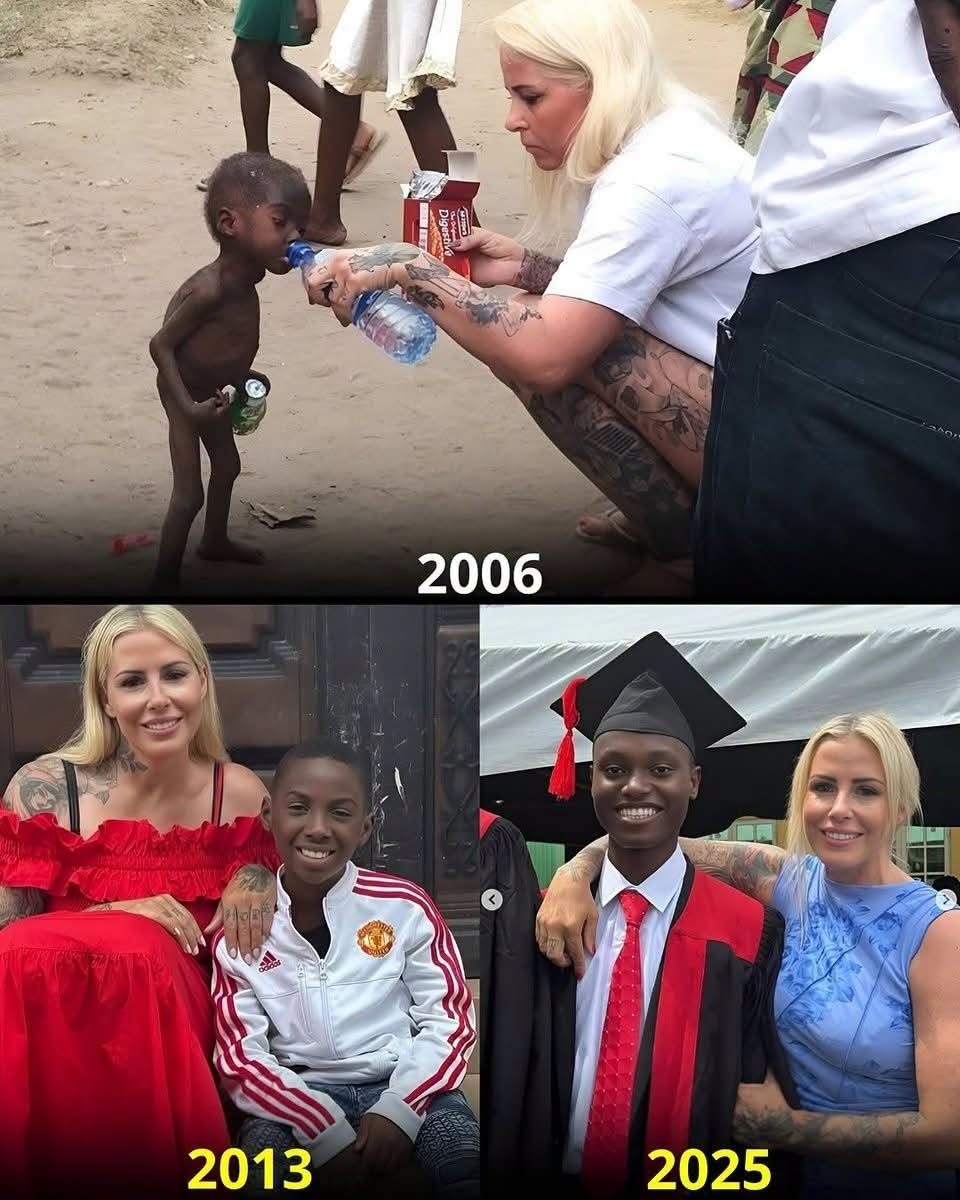
The first time much of the world saw Hope, he was standing barefoot on a dirt road in Nigeria.
His small body was painfully thin. His stomach was swollen. He had been abandoned after being accused of witchcraft and had spent months surviving on the streets.
Then a woman knelt in front of him with a bottle of water.
Her name was Anja Ringgren Lovén.
That moment, captured in a photograph in January 2016, would travel around the world. At the time, however, no one knew whether the little boy in the picture would even survive.
Nine years later, the answer could hardly have been more powerful.
In 2025, Hope graduated from primary school with one of the highest grades in his class.
The child once left without food, protection or a future was now wearing graduation clothes and preparing for secondary school.
It was not simply a before-and-after photograph.
It was nearly a decade of life that almost never happened.
The Rescue That Changed Everything
On Jan. 30, 2016, Danish humanitarian Anja Ringgren Lovén and a rescue team were working in Nigeria’s Akwa Ibom State.
Their original mission that day had been to help two girls who had reportedly been accused of witchcraft. But the situation became dangerous, forcing the team to leave.
As they drove away, Lovén remembered another report they had received earlier.
There was a very young boy who had also been accused and abandoned.
The team turned the cars around.
That decision led them to Hope.
He was believed to be about 2 years old.
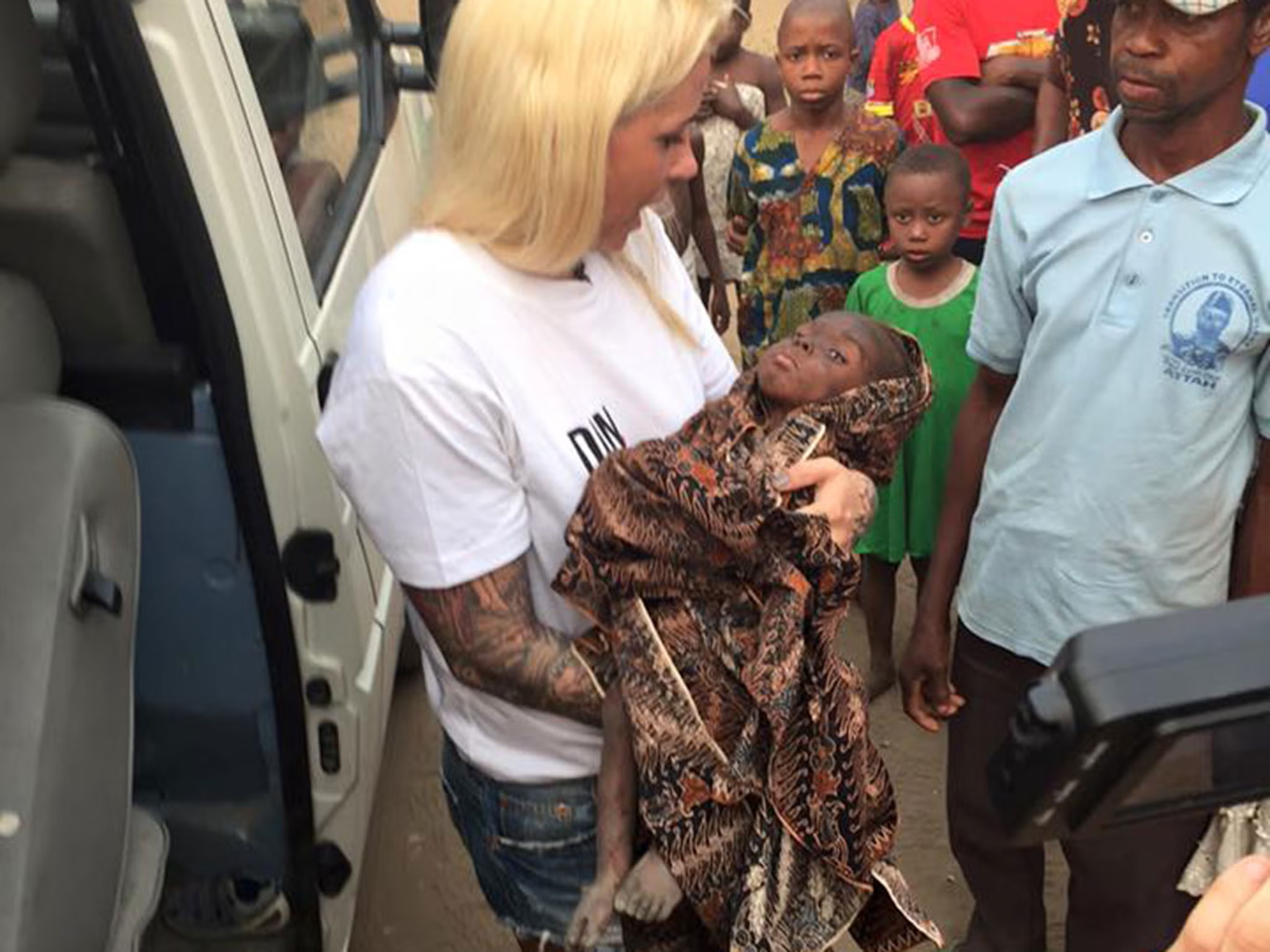
According to Land of Hope, the organization Lovén founded, the child was in critical condition when the rescuers reached him. He had been living on the streets and was severely malnourished.
Lovén offered him water and a biscuit.
Then the team took him with them.
The photographs from the rescue became unforgettable: a tattooed Danish aid worker bending down toward an emaciated child, holding a bottle to his mouth as people watched from nearby.
But behind the image was an urgent medical emergency.
Hope was brought to a hospital, where he received treatment for infections and the effects of severe neglect.
At that point, his future remained uncertain.
He survived.
Why Hope Had Been Abandoned
Hope’s condition was not simply the result of poverty.
He had been accused of being a witch.
It is difficult for many people outside the region to understand how such an accusation could be directed at a child, but organizations working in parts of Nigeria have documented cases in which children are blamed for illness, death, financial hardship or other misfortune.
The consequences can be devastating.
Children accused of witchcraft may be rejected by their families, abused, abandoned or subjected to violent attempts to “cure” them.
Land of Hope says its work is built around fighting those beliefs while protecting children who have already suffered because of them. The organization emphasizes not only rescue, but education within surrounding communities as a way of challenging the superstition over time.
For Hope, intervention came before it was too late.
And slowly, the child the world had seen on that road began to change.
A Very Different Childhood Began
Lovén had already committed her life to helping vulnerable children before she met Hope.
She founded her Danish nonprofit in 2012 under the name DINNødhjælp. It later became Land of Hope. Together with Nigerian humanitarian and lawyer David Emmanuel Umem, she also helped establish the African Children’s Aid, Education and Development Foundation in Nigeria.
Their children’s center became a protected home for children who had been accused of witchcraft, providing shelter, schooling, food and medical care.
Hope became one of those children.
As the years passed, photos of him began telling a completely different story.
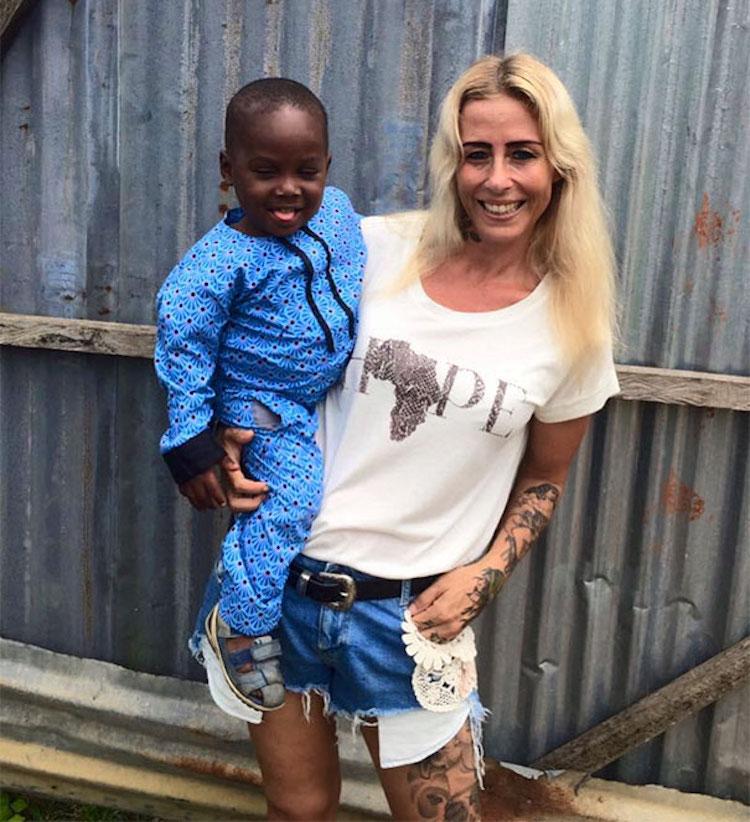
The bones that had once been visible beneath his skin were replaced by the healthy body of a growing child. He went to school. He played. He danced. He smiled.
Land of Hope describes him as funny, affectionate, creative and caring toward the other children around him.
Hope is also hearing impaired and does not use spoken language in the conventional way. Yet that has not stopped him from learning or expressing himself.
The organization says he especially loves dancing and creative activities.
The transformation was remarkable not because every difficulty disappeared.
It was remarkable because Hope finally had something he had been denied at the beginning of his life:
Time.
Time to heal.
Time to learn.
Time to discover who he was beyond the label other people had placed on him.
Then Came Graduation Day
In the summer of 2025, another photograph began spreading.
This time there was no dirt road.
No desperate bottle of water.
No frighteningly thin toddler fighting to stay alive.
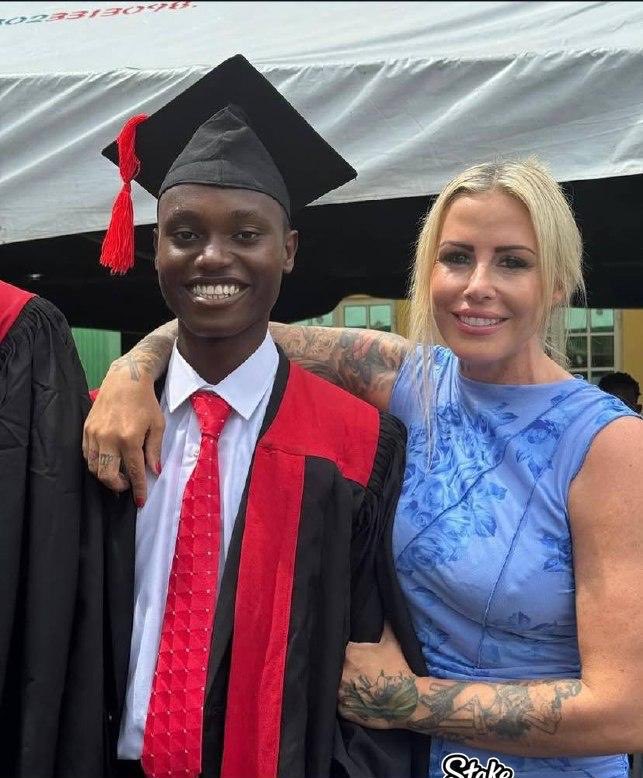
Hope had graduated from primary school.
Lovén announced in August that he had completed his studies with one of the highest grades in his class and was preparing to begin secondary school the following month.
“Hope survived,” Lovén wrote while celebrating the milestone.
For the people who remembered his rescue nine years earlier, those two words carried enormous weight.
Survival had once been the only goal.
Now Hope was succeeding in school and moving toward another chapter of his education.
It was the kind of milestone many families might normally consider routine.
For Hope, nothing about reaching it had been routine.
His Story Became Bigger Than One Child
Hope’s rescue brought international attention to Lovén’s work, but the problem did not end with him.
Land of Hope says its teams have saved hundreds of children over the years. Its children’s center in Nigeria currently houses around 95 children who had been accused of witchcraft and needed protection.
The children receive medical treatment, education, meals and support designed to help them recover from traumatic experiences.
But the organization also acknowledges a painful reality: there are children it never reaches in time.
That reality is part of what makes Hope’s story so emotional.
His graduation does not erase what happened to him.
It shows what became possible because someone arrived before the worst outcome became permanent.
A child who had been treated as though his life had no value was given medical care.
Then a home.
Then an education.
Then years in which to grow.
The Meaning Behind That Famous Photograph
Looking at the photograph from 2016 today, it is tempting to see it only as the beginning of an inspirational story.
But when it was taken, there was no guarantee of a happy ending.
Lovén was not kneeling before a future graduate whose story was already written.
She was kneeling before a critically ill child who needed help immediately.
Everything that came afterward depended on what happened in that moment and in the days, months and years that followed.
That is what makes Hope’s graduation photograph so powerful.
Nine years separate the starving toddler on the road from the student celebrating an academic milestone.
Between those two images are hospital treatments, meals, school mornings, friendships, setbacks, lessons and thousands of ordinary days that Hope once seemed unlikely to receive.
His name was given to him after his rescue.
Years later, it feels almost prophetic.
Because Hope’s story is ultimately not about a miracle that happened all at once.
It is about what can happen when compassion is followed by action — and when a child who has been rejected is finally given the chance to become who he was always capable of being.