Molly Ringwald Was the One Judd Nelson Kept Provoking — Yet She Helped Save His Breakfast Club Role

When The Breakfast Club ends, Judd Nelson’s John Bender walks alone across the football field.
Then he raises one fist into the air.
Freeze frame.
For a movie built around five teenagers trapped together in Saturday detention, it is a remarkably simple final image — and one that became inseparable from John Hughes’ 1985 classic.
Bender is the rebel of the group. Molly Ringwald’s Claire is the princess. Ally Sheedy’s Allison is the outcast. Emilio Estevez’s Andrew is the athlete. Anthony Michael Hall’s Brian is the brain.
Their personalities clash almost immediately, with Bender creating much of the conflict.
But during rehearsals, Nelson apparently did not always leave Bender’s confrontational behavior inside the script.
Ringwald later recalled that he continued provoking her in ways that resembled how Bender antagonizes Claire.
Hughes, fiercely protective of the young actress, became angry enough that he seriously considered firing Nelson.
The surprising part is who helped stop him.
Ringwald herself.
Nelson Was Taking Bender Beyond the Script
Bender is designed to be uncomfortable.
He challenges Principal Vernon, attacks the social identities of the other students and repeatedly pushes Claire in particular. Much of the movie’s energy depends on viewers never being completely sure when Bender is joking, testing someone or deliberately trying to hurt them.
Nelson approached the character intensely.
That could be useful on camera.
Off camera, it became more complicated.
During rehearsal, Nelson reportedly continued needling Ringwald, bringing some of Bender’s behavior into their real interaction.
Ringwald was still a teenager while making the film, and Hughes had already formed a close professional relationship with her through Sixteen Candles. He saw enormous potential in her and was famously protective of his young performers.
When he saw Nelson continuing to provoke Ringwald outside the actual scenes, he did not view it simply as committed acting.
He believed it had gone too far.
And he was prepared to do something drastic.
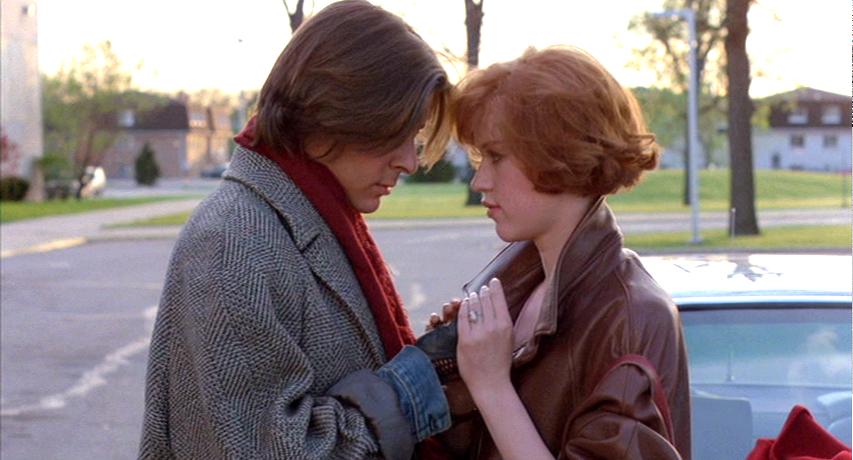
Hughes Seriously Considered Replacing Nelson
Firing one of the five central actors would have been a major decision.
The Breakfast Club depended on its ensemble more than most teenage movies.
Nearly the entire story takes place inside one school during one Saturday. There are no car chases, giant set pieces or complicated plot turns to distract from the characters. The film succeeds or fails based on whether the audience believes these five students could irritate each other, expose each other and eventually understand each other.
Bender was especially difficult to replace.
The role required someone who could be obnoxious without making the audience completely reject him. He needed enough danger to challenge the group but enough vulnerability for the later revelations about his home life to matter.
Nelson had that quality.
Hughes nevertheless reached a point where keeping him no longer seemed worth the trouble.
According to Ringwald’s later recollection, the director was serious about letting him go.
Then the actors Hughes was trying to protect intervened.
Ringwald and Her Costars Asked Hughes to Keep Nelson
The answer to the central question is that Molly Ringwald and other members of the young cast — including Ally Sheedy — urged John Hughes to reconsider firing Judd Nelson.
That is what makes the story more interesting than a simple tale about an actor behaving badly during rehearsal.
Ringwald was the person Nelson had been antagonizing.
Yet she did not believe removing him was the right answer for the movie.
She and her costars understood something important: whatever frustration Nelson created off camera, he was giving them the John Bender The Breakfast Club needed.
They reached out to Hughes and argued for him to stay.
Their intervention worked.
Hughes backed away from firing Nelson.
The five-person ensemble remained intact.
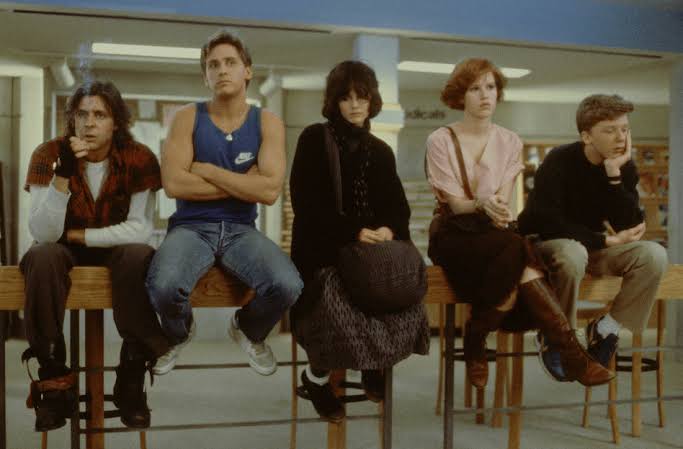
The Cast Could See Something Hughes Risked Losing
That does not mean the actors were excusing every aspect of Nelson’s rehearsal behavior.
The point was the performance.
Nelson had found something difficult to replace.
His Bender creates friction in nearly every early scene. Without him, the five students could remain safely inside their stereotypes for most of the day.
Bender refuses to allow that.
He mocks Brian’s academic identity. He challenges Andrew’s masculinity. He targets Claire’s privilege and popularity. He pushes Allison simply by forcing everyone in the room to notice things they would rather ignore.
Then, gradually, the same character who seems the least interested in emotional honesty reveals some of the most painful information about his own life.
That shift only works if Bender is difficult enough at the beginning.
Nelson understood that intensity.
His costars apparently recognized that replacing him might produce a more comfortable rehearsal room but a weaker movie.
Ringwald’s Position Makes the Story Especially Unexpected
It would have been understandable if Ringwald had simply allowed Hughes to remove Nelson.
Instead, she became part of the reason he stayed.
That distinction matters.
Ringwald has never needed to pretend Nelson’s behavior did not bother her in order to acknowledge the value of his performance.
Those two things can exist together.
She could dislike the way he pushed her during rehearsal and still know he was excellent as Bender.
In fact, the strange tension may help explain why certain Claire-Bender scenes retain such an uncomfortable edge.
Their characters are constantly testing boundaries.
Claire is fascinated by Bender but also repelled by him. Bender mocks the world she represents while clearly paying enormous attention to her.
The film eventually turns that friction into attraction.
Whatever was happening behind the scenes, the chemistry in front of the camera worked.
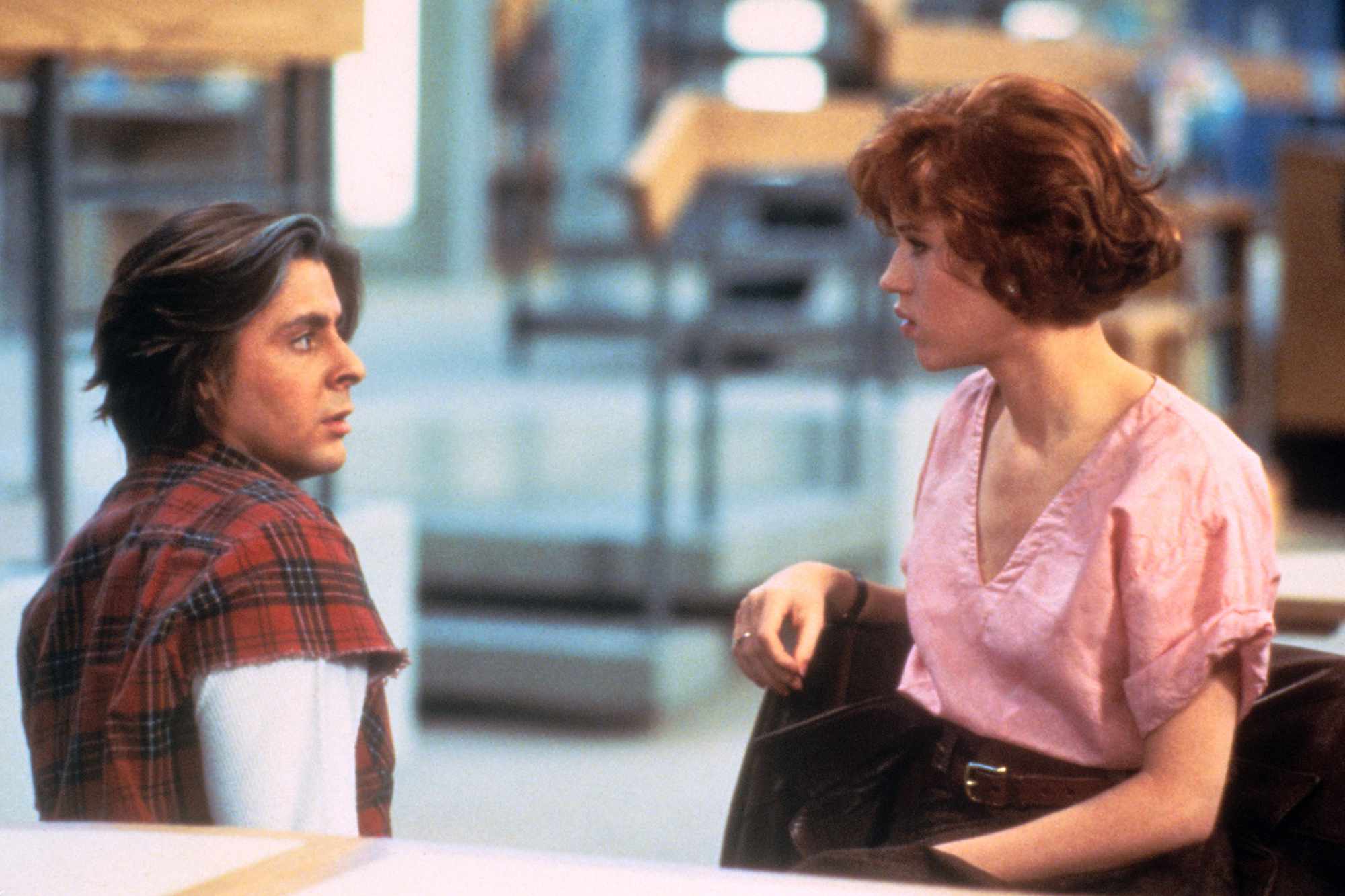
Hughes Kept Nelson — And Bender Became Iconic
Once filming continued, Nelson delivered exactly the kind of performance his costars had fought to preserve.
Bender became one of the most recognizable rebellious teenagers of the 1980s.
The boots, the gloves, the long coat and the aggressive posture made him instantly identifiable, but the character lasted because the film slowly revealed what was underneath all of it.
One of the movie’s crucial ideas is that the five labels introduced at the beginning are incomplete.
The athlete is vulnerable.
The princess is insecure.
The brain is under crushing pressure.
The basket case wants connection.
And the criminal is not simply a troublemaker.
Bender’s cruelty is partly armor.
By the time he describes his home life, the audience is forced to reconsider the character they thought they understood.
That emotional turn would become essential to the film.
The Actor Who Nearly Left Got the Movie’s Final Image
There is a wonderful irony in what happened next.
Judd Nelson nearly did not make it through the production.
Yet when The Breakfast Club reaches its final seconds, he is the last member of the group the audience sees.
Claire has given him one of her diamond earrings.
Bender walks across the football field alone.
Then comes the fist.
The gesture became so closely associated with the movie that it remains one of the first images people think of when The Breakfast Club is mentioned.
That makes the rehearsal story feel almost like an alternate version of film history.
John Hughes was ready to remove the actor playing Bender because he believed Nelson had taken the character’s behavior too far.
Molly Ringwald — the actress on the receiving end of much of that behavior — and her fellow cast members asked him not to.
Hughes listened.
And the man who almost disappeared from The Breakfast Club ended up being the one still frozen on screen when the movie ends.