Rare Twins Were Born Holding Each Other—After Two Months Apart From Home, They Still Refuse to Be Separated
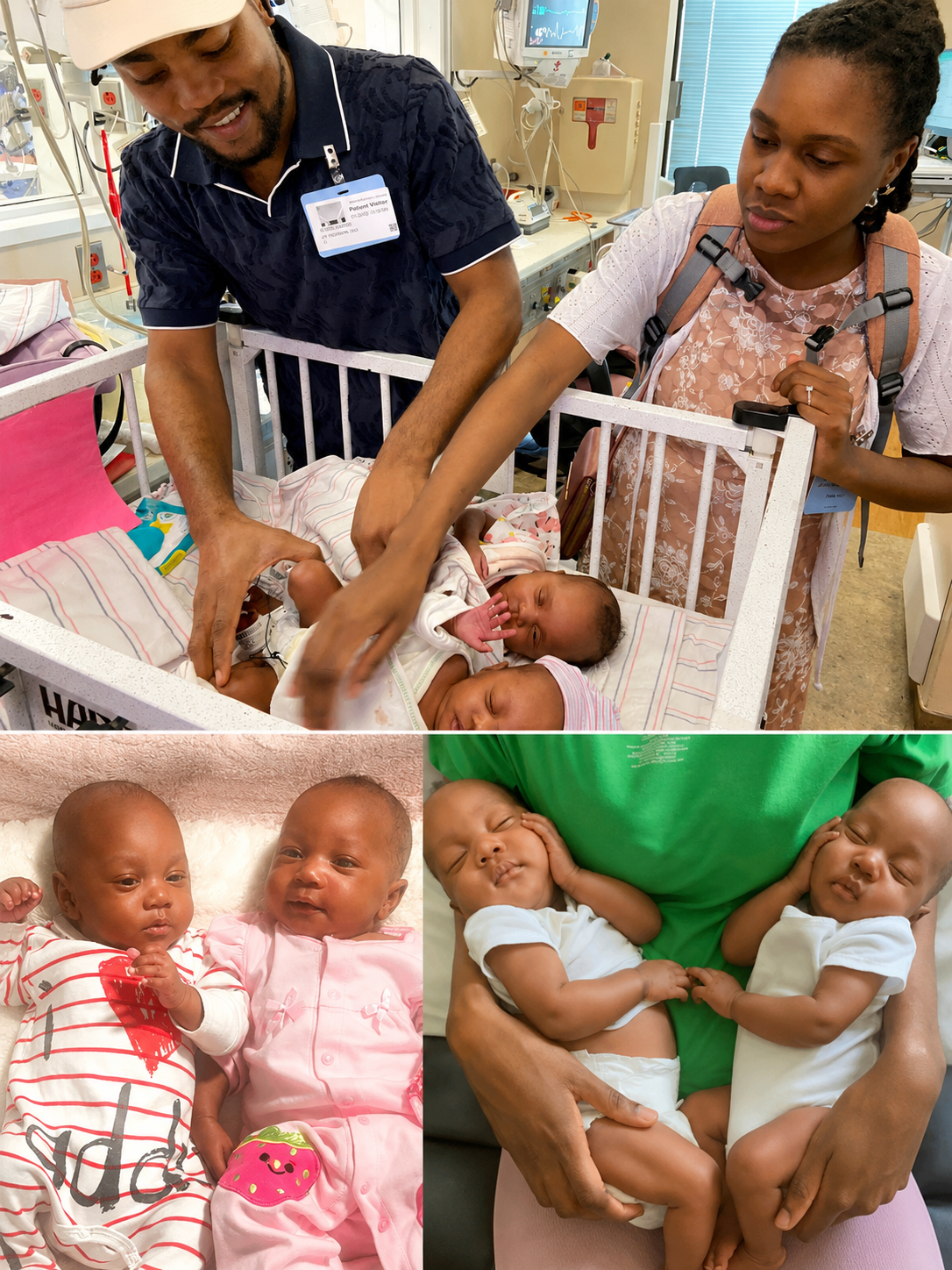
For several seconds after Shednhee and Claydee entered the world, the twin girls remained inside the same amniotic sac, still connected to the placenta and receiving oxygen.
They were not simply lying beside each other.
They appeared to be embracing.
Even after the medical team opened the sac during the May 26 delivery, the premature newborns remained close, as though neither was ready to release the only companion she had ever known.
Their mother, Shedeline Pierre Louis, had spent weeks fearing that the rare pregnancy might end differently. The twins shared one placenta and one amniotic sac, creating a serious risk that their umbilical cords could become dangerously tangled.
The girls survived the pregnancy, a delivery at 32 weeks and nearly two months in intensive care.
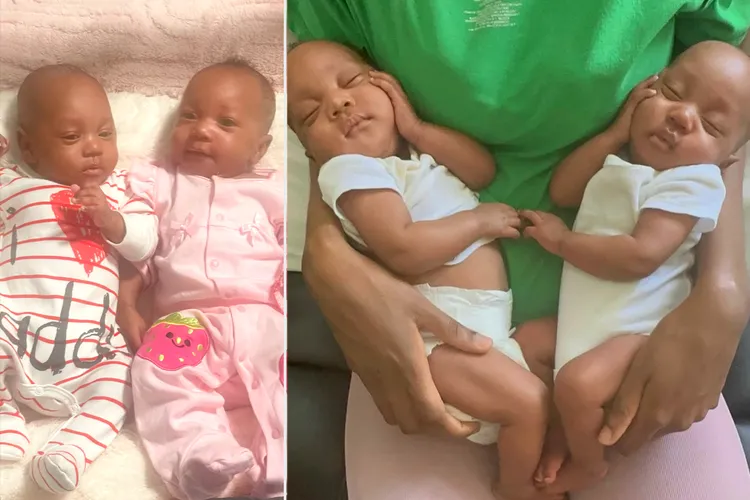
When they finally went home to Roselle, New Jersey, on July 23, their parents noticed that one thing had not changed.
The babies still wanted to be together.
A Surprise Followed by a Frightening Diagnosis
Pierre Louis, a 22-year-old certified nursing assistant, and her husband, 29-year-old forklift operator Evens Claude Bontant, were preparing to become parents for the first time when they learned they were expecting twins.
The news shocked them.
That surprise soon gave way to concern when doctors diagnosed Pierre Louis with a monochorionic-monoamniotic pregnancy, commonly called a MoMo pregnancy.
The condition occurs in roughly one out of every 10,000 pregnancies. Unlike most twins, MoMo babies share both a placenta and a single amniotic sac.
The shared space creates an unusually close beginning, but it also brings potentially deadly complications.
The babies’ umbilical cords can become twisted or compressed because there is no membrane separating them. If a cord tightens enough to interrupt blood flow, one or both babies can die before birth.
Other possible complications include restricted growth and preeclampsia in the mother.
Pierre Louis was frightened when she learned what the diagnosis meant.
Her pregnancy would require far more monitoring than she had expected, with doctors watching closely for changes that might demand an early delivery.
Admitted to the Hospital at 26 Weeks
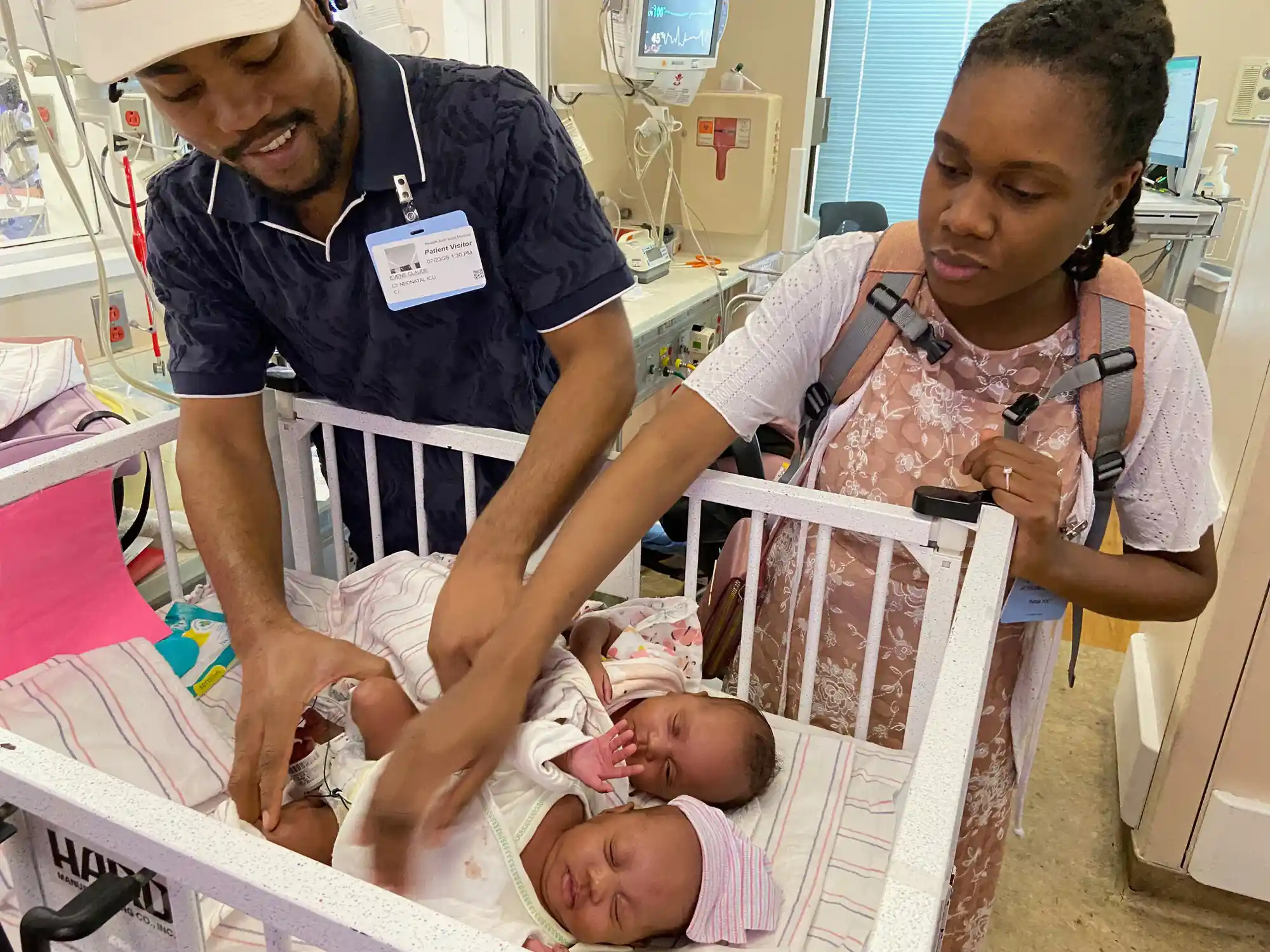
At 26 weeks pregnant, Pierre Louis was admitted to Newark Beth Israel Medical Center for inpatient care.
The hospitalization allowed the medical team to monitor the twins continuously as the pregnancy progressed.
The cords had become entangled, making that surveillance especially important.
Pierre Louis relied on both her faith and her doctors during the uncertain weeks that followed. Hospital staff regularly reassured her that the pregnancy remained stable and that the babies were doing well.
She chose to trust them.
She also placed her faith in God, believing that the medical team and her spiritual convictions could carry her through the fear.
The original goal was to continue the pregnancy until approximately 34 weeks, giving the babies more time to develop before delivery.
That plan changed when doctors noticed that one twin’s growth had slowed.
By May 26, Pierre Louis had reached 32 weeks.
The care team decided it was time to deliver.
Ten Seconds Inside the Unbroken Sac
Dr. Alexander L. Juusela, a maternal-fetal medicine specialist at Newark Beth Israel Medical Center, led the cesarean delivery.
The twins emerged while still enclosed inside their shared amniotic sac.
For about 10 seconds, they remained connected to the placenta and continued receiving oxygen while the medical team observed them.
Inside the transparent sac, the girls were wrapped around each other.
Juusela remembered them appearing to hug as they came out. When the team broke the water, the babies still did not immediately separate.
The image offered an unexpectedly gentle ending to a pregnancy defined by danger.
The same closeness that had created the risk of cord entanglement had also meant the sisters had never experienced a moment alone.
From their earliest development, they had shared the same small space, moving, growing and resting against each other.
Their first moments outside their mother reflected that history.
Premature Birth Began Another Difficult Wait
The successful delivery did not mean the family could immediately go home together.
Born eight weeks early, Shednhee and Claydee needed additional medical support.
The babies received steroids to help their lungs develop and required supplemental oxygen. They were transferred to the neonatal intensive care unit, where they remained for nearly two months.
For Pierre Louis, leaving the hospital without her daughters was emotionally painful.
She had become a mother, but her home remained quiet.
At times, she questioned the reality of motherhood because the babies were still in the hospital while she was elsewhere. She knew they were receiving necessary care, yet the physical separation left her feeling empty and uncertain.
The experience created a painful contrast.
For months, the twins had never been apart from each other. Their mother, however, had to return home without either of them.
She visited and waited as the babies grew stronger, learned to breathe more independently and moved closer to discharge.
A Colorful Goodbye From the Hospital
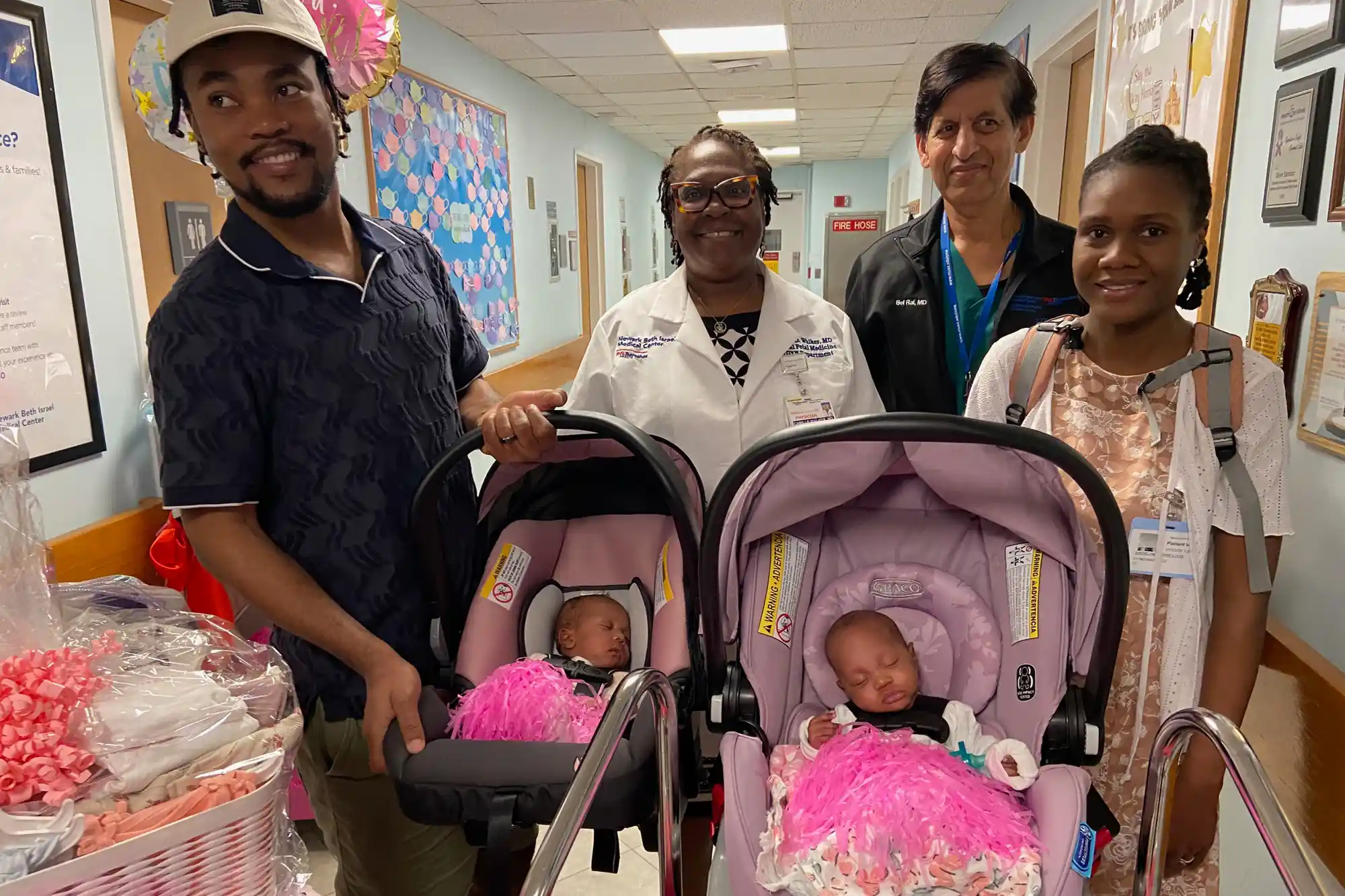
On July 23, Shednhee and Claydee were finally ready to leave the medical center.
Their care team marked the occasion with a colorful send-off, celebrating the end of a hospital journey that had begun before the twins were even born.
Pierre Louis had waited more than two months for the moment.
This time, she and Bontant did not leave the hospital alone.
They carried both daughters home.
The transition brought the ordinary exhaustion of caring for two newborns—feeding schedules, interrupted sleep and the constant work of learning what each baby needed.
It also allowed the parents to begin recognizing the differences between their daughters.
Shednhee is less patient when she becomes hungry. She cries quickly to make sure her parents understand that she wants to be fed.
Claydee is quieter and more willing to wait for her turn.
Their personalities are already beginning to separate.
Their desire for closeness has not.
Two Personalities, One Deep Bond
Bontant said the girls enjoy being together.
That attachment makes sense to their parents. Before birth, Shednhee and Claydee shared the same placenta, the same sac and nearly every inch of their developing world.
They entered life already accustomed to the other’s movement and presence.
Pierre Louis wants to protect that connection as they grow.
She understands that her daughters will develop independent personalities, interests and dreams. Still, she hopes they will remain close because they began their lives together under extraordinary circumstances.
Bontant is already imagining their future.
He looks forward to teaching both girls to play soccer.
Pierre Louis thinks about the values she wants them to carry. She hopes they will respect others, maintain their faith and grow into people who contribute something good to the world.
Those dreams are now possible because the twins survived risks their parents once feared might take them away before they were born.
A Rare Pregnancy With an Ordinary Family Hope
The medical details of Shednhee and Claydee’s birth are extraordinary.
Their pregnancy occurs in only a tiny fraction of cases. Their shared sac created serious danger. Their early delivery required a skilled medical team, weeks of monitoring and a long NICU stay.
But the hopes waiting for them at home are familiar.
Their parents want them to grow, remain healthy, learn, play and become kind people.
Pierre Louis also wants them to preserve the bond that was visible from the moment the doctors first saw them outside the womb.
The photograph of two premature girls appearing to hold each other could easily become the defining image of their story.
Their parents are now watching that image continue in quieter ways.
The sisters settle near each other. They recognize the comfort of a presence that has always been there. Even as they reveal different temperaments, they still seem happiest together.
For weeks, Pierre Louis feared the entangled cords inside the shared sac might separate her daughters from life.
Instead, they entered the world holding on.
After nearly two months in the hospital, they arrived home still doing the same.